


The first Monday in May has long ceased to be a mere fundraising dinner for the Metropolitan Museum of Art. It is the ultimate global centrifuge for cultural relevance, a high-stakes arena where the raw materials of fabric and celebrity are spun into the gold of commercial authority. The 2026 Met Gala, anchored by the theme Costume Art and the dress code Fashion Is Art, served as a showcase in the creation of meaning.
For the modern marketing strategist, the event becomes some sort of North Star in content strategy and creator capital. It demonstrated exactly how narratives are built, distributed, monetised, and occasionally, fiercely contested.
The strategic imperative of the decade is the transition from utility to meaning. A garment is no longer perceived merely by its function; it is an identity. A media brand is a community. A red-carpet appearance is a thesis statement.
When the market grows weary of generic product pitches, relevance becomes the only currency that matters. The 2026 Met Gala illuminated how the smartest players across the media industry, from legacy luxury houses to fast-fashion behemoths, from TikTok creators to grassroots activists, weaponised storytelling to command attention and shape the cultural zeitgeist.
In this article I’ll dissect the interlocking systems of the 2026 Met Gala and explore the audacious repositioning of mass-market retail, the deep-tissue storytelling woven into garment construction, the volatile friction of billionaire sponsorships, the algorithmic mirage of AI, and the total re-engineering of the creator economy.
For decades, the steps of the Met Gala have been fiercely guarded by the titans of haute couture. It has traditionally operated as a fortress of exclusivity, where invitations are curated with ruthless precision and the garments represent the unattainable pinnacle of European craftsmanship. Yet, the 2026 red carpet witnessed one of the most audacious and successful brand infiltrations in modern marketing history. Fast fashion executed the ultimate heist, crashing the velvet ropes and entirely rewriting its market positioning in the process.
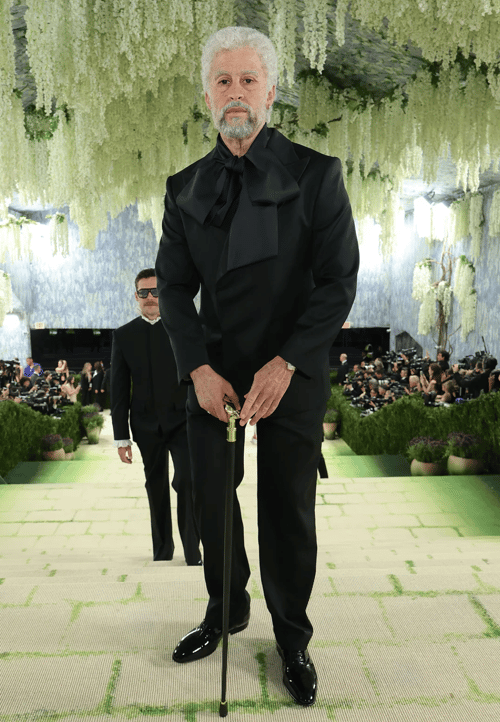
Zara, the Spanish retail juggernaut owned by Inditex, integrated itself into the very intellectual fabric of the evening’s artistic thesis. This was an excellent illustration in category redesign, proving that cultural relevance can outmaneuver legacy constraints when paired with exceptional storytelling.
The core of this strategy was a highly conceptual partnership with global music icon Bad Bunny. The Puerto Rican superstar did not arrive wearing a standard promotional tuxedo. Instead, the collaboration produced a custom all-black suit featuring an oversized bow, a razor-sharp historical reference to Charles James’s 1947 "Bustle" gown, a piece housed within the Costume Institute’s permanent collection.
However, the garment was merely the canvas for a much larger performance piece. Partnering with renowned special-effects makeup artist Mike Marino, Bad Bunny underwent a staggering transformation, artificially aging his face, hands, and neck by 53 years. Complete with a gold-handled cane, snowy gray hair, and hyper-realistic sunspots, the 32-year-old artist physically embodied the aging body, a specific sub-theme of the museum's exhibition that explores the realities of the human form, a subject the youth-obsessed fashion industry routinely ignores.
This execution was a strategic triumph. Through sponsoring a profound philosophical statement on mortality, Zara temporarily shed its identity as a mall-staple retailer and adopted the posture of an avant-garde art patron. When a mass-market brand successfully funds a meditation on the passage of time at the world's most exclusive party, the perceived value of that brand instantly skyrockets. The narrative gravity shifts from the price tag to the concept.
Zara’s narrative dominance extended well beyond a single artist. In a move that sent shockwaves through the fashion press, legendary Fleetwood Mac singer Stevie Nicks made her Met Gala debut wearing a witchy, dramatic two-piece ensemble custom-designed by couturier John Galliano for Zara.
This appearance served as an unofficial, high-impact preview of Galliano's upcoming seasonal capsule collections with the Spanish brand, leveraging the Met Gala as an unprecedented launchpad for future retail drops.
The presence of Inditex chairwoman Marta Ortega, clad in a navy blue satin gown also created by Galliano, cemented the narrative. Following a strategic visit by Anna Wintour to the Inditex headquarters earlier in the year, Zara had fully infiltrated the most coveted space in luxury, pulling off a hat-trick of major red-carpet moments.
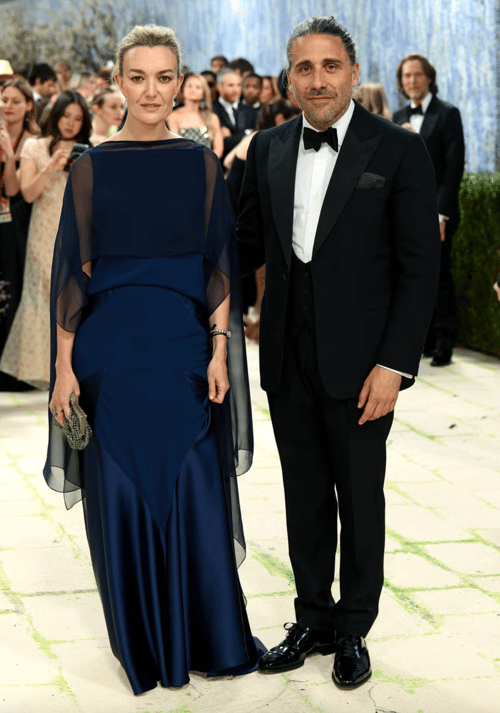
The lesson here is grand. Relevance does not require a luxury price tag, at least not anymore, it requires a luxury narrative. Through investing heavily in intellectual framing over simple product placement, a brand can rewrite its own genetic code in the eyes of the consumer, turning a night of elitist fashion into the ultimate fast-fashion victory lap.
When the dress code dictates that Fashion Is Art, the human body inherently becomes the gallery. The 2026 red carpet illuminated a stark divide between attendees who merely wore beautiful clothes and those who wore their garments as complex narrative devices. The most resonant appearances were those that translated rich artistic histories into digestible, viral moments, providing multiple entry points for audience engagement.
Emma Chamberlain, serving as an official red-carpet host for Vogue, provided the textbook example of this translation. An influencer whose career arc represents the limitless ceiling of the modern creator economy, Chamberlain arrived in a custom Mugler gown designed by creative director Miguel Castro Freitas. The dress was a breathtaking act of literal translation. Rather than relying solely on the structural wizardry for which Mugler is known, the garment was meticulously hand-painted from hem to neckline by artist Anna Deller-Yee.
Drawing inspiration from a wide body of Impressionist and Expressionist works, as well as Chamberlain's own father, an oil and watercolor painter, and an archival 1997 Mugler butterfly dress, the piece required 40 hours of continuous painting and four days of drying time. The final product required a 6-foot-long shipping crate for transport from Paris to New York. Chamberlain was dipped in a rainbow of acrylic ink and thick, glossy paint, becoming a walking, breathing canvas.
The storytelling extended down to the millimeter, proving that the modern consumer craves the"behind-the-scenes reality as much as the final polish. Celebrity manicurist Tom Bachik treated Chamberlain’s nails as a direct structural continuation of the dress, utilizing precise tools from Tweezerman to create a flawless, understated base that allowed the gown's chaotic artistry to command the spotlight.
This total commitment to the bit, where every micro-element of the physical presentation serves the macro-narrative, is the hallmark of supreme systemic storytelling. It gives the audience multiple threads to pull. A follower might not care about the Mugler archives, but they might be deeply invested in the 40 hours of hand-painting, or the meticulous nail prep logic.
Elsewhere on the carpet, narrative was delivered through the sheer gravity of human labour and dramatic execution. Tennis champion Naomi Osaka stunned the press with a theatrical reveal.
Arriving in an edgy Robert Wun white sculptural dress with exaggerated shoulders and a matching headpiece, she unfastened the outer layer on the carpet to reveal a sleek red beaded gown underneath, intricately embellished with motifs of human anatomy. This layered approach physically manifested the exhibition's exploration of the body, turning a static photograph into a dynamic, shareable video moment.
Similarly, Bollywood filmmaker Karan Johar commanded attention in a Manish Malhotra creation that required the efforts of 80 artisans working over 85 days. The hand-painted, multi-gemstone ensemble was a walking monument to time, skill, and cultural heritage, earning widespread acclaim and seamlessly fitting the Costume Art mandate.
Conversely, storytelling can also manifest powerfully through deliberate absence. The Hadid sisters provided a fascinating duality of narrative friction. Gigi Hadid leaned fully into the artistic theme, wearing a floor-sweeping, sheer Miu Miu gown covered in intricate beading, carrying a bouquet of flowers in lieu of a clutch. Her look was a triumph of romantic execution.
Yet, it was the deafening silence of her sister, Bella Hadid, that captured equal attention. Bella noticeably boycotted the event, an absence that spoke volumes in an industry hungry for statement. In the modern attention economy, choosing not to participate can generate as much narrative velocity as walking the carpet itself, provided the absence is perceived as a principled, deliberate stand against the institution.
A cultural crucible of the Met Gala's magnitude creates an irresistible gravitational pull for brands across all sectors. Every marketer yearns to inject their logo into the bloodstream of a globally trending topic. However, the 2026 event clearly demonstrated that audiences possess an incredibly highly tuned radar for inauthenticity. The market can instantly distinguish between a brand that is participating in the culture and a brand that is merely piggybacking on it.
Piggybacking is parasitic but participation is symbiotic.
The prevailing audience mindset demands actual connection, looking for reflections of their own identities, struggles, and values within these massive spectacles. When a brand attempts to hijack a hashtag without contributing meaningful value or entertainment to the conversation, the backlash is swift. If a brand cannot explain its organic connection to the moment in a single, punchy sentence, the audience will immediately reject the intrusion. Brands do not earn attention simply by showing up; they must prove they belong in the room by contributing a unique perspective.
To master participation, the modern strategist must look at activations that successfully bridge the gap between high-end exclusivity and relatable consumer behaviour.
A masterstroke of this bridging technique was the strategic partnership between MAC Cosmetics and musical artist Doja Cat. Recognising that the actual red carpet is untouchable and unrelatable for the average consumer, MAC positioned itself in the highly accessible pre-game phase. They sponsored a pre-Met beauty run, filming Doja Cat, dressed down in casual sweats at home, browsing a local Ulta Beauty store to pick up last-minute essentials before her glamorous transformation.
This execution stripped away the intimidating, elitist veneer of the Met Gala and grounded the event in a deeply human, universally understood ritual: the frantic, last-minute run to the drugstore before a big night out. It felt authentic, it felt human, and consequently, it generated millions of organic views. The brand manufactured credibility on the red carpet while also leveraging its existing credibility in the beauty aisle, acting as a functional bridge between the audience's daily reality and the celebrity's fantasy.
Another brilliant maneuver is the art of strategic translation. Consider the success of Samsonite’s previous Jet Gala campaign. Facing the daunting challenge of making luggage relevant to a haute couture event, Samsonite reimagined its luxury Proxis suitcases as custom gowns inspired by major celebrities. They translated the thrill and allure of fashion into the visual language of travel. It was a seamless creative pivot that respected the theme of the event while staying aggressively true to the core product.
Even brands with absolutely no obvious connection to fashion can hack the system by aligning with the right voices. Cult-favorite Instagram creator Angelica Hicks, renowned for recreating iconic red-carpet looks using mundane household items like balloons and rubber gloves, represents the perfect vehicle for non-endemic brands. Through sponsoring her content, a company that manufactures trash bags or kitchen supplies can suddenly enter the Met Gala conversation natively. The creator holds the cultural authority; the brand simply funds the joke, earning goodwill through self-awareness.
Alexander Wang provided another glimpse into the future of brand integration by debuting a new energy drink alongside a humanoid robot on the carpet, signaling a deliberate expansion of what a fashion brand can encompass and blurring the lines between tech, beverage, and apparel. The strategy is clear: start with what the moment is actually about, identity, art, expression, rather than forcing a predetermined corporate message down the timeline's throat.
No analysis of the 2026 Met Gala is complete without examining the intense socio-political friction that defined its perimeter. A content strategy that ignores external pressures is fundamentally incomplete, operating in a vacuum that does not exist in the real world. Algorithms feast on friction, and this year, the Met Gala provided an absolute banquet.
The controversy was ignited by the announcement that Amazon founder Jeff Bezos and his wife, Lauren Sánchez Bezos, would serve as honorary co-chairs and lead sponsors, reportedly injecting a staggering $10 million into the Costume Institute's coffers. In a sociopolitical climate defined by a growing affordability crisis, rampant inflation, and widening wealth inequality, aligning the world's most extravagant display of excess with one of the world's wealthiest individuals was akin to dropping a lit match into dry timber.
The backlash was immediate, fierce, and highly organized. Critics decried the event as a billionaire circus, arguing that the Gala had been gutted of its artistic meaning in favor of pandering to the ultra-wealthy, reducing the cultural touchstone to publicity for the sake of publicity. An activist collective operating under the moniker Everyone Hates Elon, a deliberate, mocking misdirection referencing another prominent tech billionaire, organised a guerrilla marketing campaign that directly challenged the Met Gala’s curated glamour.
The protesters effectively hacked the city’s infrastructure to run a high-visibility counter-narrative. They plastered bus stops and subway cars with posters reading "Dress code: Willful ignorance" and "Jeff Bezos Proudly Presents the Met x enabling ICE" (a pointed reference to Amazon Web Services' contracts with immigration enforcement).
On the eve of the event, the group projected enormous anti-Bezos slogans, including "If You Can Buy the Met Gala, You Can Pay More Taxes," onto the billionaire’s penthouse, the Chrysler Building, and the Empire State Building. They also projected video testimony from a 72-year-old Amazon warehouse worker battling cancer who struggles to survive paycheck to paycheck.
Perhaps most viscerally, the group infiltrated the Metropolitan Museum of Art itself in the days leading up to the Gala, planting approximately 300 bottles of fake urine throughout the exhibits. This highly provocative, undeniable stunt was designed to highlight long-standing complaints regarding brutal working conditions and a lack of adequate bathroom breaks for warehouse workers.
The friction between the pristine fantasy inside the museum and the gritty, visceral protests outside created a powerful duality that dominated the online discourse. When Lauren Sánchez Bezos stepped onto the carpet wearing a midnight blue Schiaparelli corset gown inspired by John Singer Sargent's "Madame X", a painting that itself caused a massive scandal for its perceived tastelessness when unveiled in 1884, the historical irony was palpable. As she posed for cameras, protesters roared from beyond the foliage-fringed barriers, with one individual even attempting to breach the security line before being apprehended by police. Jeff Bezos, avoiding the flashbulbs entirely, slipped into the event through a side entrance, as did Meta CEO Mark Zuckerberg and his wife, Priscilla Chan.
For the social selling strategist, this tension is not merely a PR crisis to be managed; it is a structural reality of the modern media scene. The online life of the Met Gala splinters instantly into different storylines. While one demographic analyses the hemline of a Mugler gown, a parallel demographic is tracking the fastest-moving protest hashtags, debating labor rights, and dissecting the ethics of billionaire philanthropy.
The protests did not diminish the digital footprint of the Met Gala, they exponentially increased it. Through introducing high-stakes political drama into an event traditionally insulated by wealth, the activists forced the algorithm to push Met Gala content into the feeds of users who ordinarily ignore fashion. Controversy is a highly effective, albeit volatile, distribution mechanism. The modern brand must understand that cultural touchstones are now inherently contested spaces. Neutrality is no longer an option; brands must know exactly what their target audience values, and navigate these friction points with clear-eyed intentionality.
Beneath the veneer of haute couture and political protest, the 2026 Met Gala served as a crystallizing moment for a massive structural shift in marketing: the total re-engineering of the creator economy.
For years, a tension has simmered at the heart of the Met Gala. Traditional New York elite, the legacy socialites, old-money patrons, and classic Hollywood royalty, have grown increasingly frustrated as the guest list morphs to accommodate digital influencers. This frustration is not merely about snobbery; it is economic anxiety. The elite are reportedly withholding donations because they feel displaced by internet personalities, shifting the financial burden back onto the museum.
But the museum, and the fashion houses that sponsor the tables, know exactly where the leverage lies. Influence has been completely decentralized. The cultural center of gravity has shifted from the silver screen to the smartphone screen, and the guest list reflects this undeniable reality.
Creators like Emma Chamberlain are no longer token invitees, they are the connective tissue holding the entire broadcast together. TikTok royalty, such as Sabrina Carpenter, Tate McRae, and a vast range of international creators highlighted on TikTok's Discover List, now command the cultural authority that was once the exclusive domain of movie stars.
The audience for these creators spans from Indonesia to Nigeria, proving that the Met Gala is no longer a local New York party, but a global digital broadcast.
However, the mechanics of how brands use these creators have fundamentally evolved. By 2026, the era of spray-and-pray influencer marketing, mailing PR packages to fifty creators and hoping for a viral spike, is definitively dead. The industry has matured, the stakes are higher, and the metrics of success have been ruthlessly upgraded.
In previous years, brands chased top-of-funnel vanity metrics: likes, comments, and sheer follower count. In 2026, these metrics are considered table stakes, the bare minimum required to enter the game. The new frontier of creator marketing is defined by rigorous, outcome-based analytics and tangible return on investment (ROI).
The debate over whether influencer marketing should drive brand awareness or performance has dissolved into a unified, multi-tiered approach. Marketers are no longer asking if creator marketing works; they are demanding to know how to build the infrastructure to guarantee it works, requiring advanced cross-channel insights and sophisticated attribution models.
.png?width=800&height=450&name=Tables%20(4).png)
This shift toward performance metrics has driven a massive strategic reallocation of capital. Brands that once blew their entire budget on a single mega-creator with 5 million followers are now dividing that same budget among twenty micro- and nano-influencers (creators with 2,000 to 10,000 highly engaged followers).

The logic is flawless. Micro-influencers possess deeper, more authentic relationships with their communities. Their engagement rates are exponentially higher, and because the audience perceives them as peers rather than distant celebrities, their product recommendations carry the weight of a trusted friend. The ROI is consistently superior.
Simultaneously, the rise of User-Generated Content (UGC) creators has structurally altered the ad ecosystem. Brands are paying everyday individuals to produce content that specifically mimics organic, unpolished user posts. This raw, lo-fi content is then deployed as paid advertisements, bypassing the consumer’s natural defense mechanisms against highly polished, studio-grade commercials. It feels real, and in an ecosystem flooded with noise, realness is the ultimate premium.
The smartest brands in 2026 are investing in long-term relationships rather than one-off collaborations. They recognize that a creator is not a billboard; a creator is a strategic partner. Through establishing performance-based compensation structures, offering a base fee coupled with a commission on generated sales, brands align their financial incentives directly with the creator’s output.
This ensures that the creator is deeply invested in the campaign's success, driving higher quality content and dramatically better conversion rates. As the digital scene fractures, the ability to come up with a "Content 360" strategy, repurposing core narratives seamlessly across multiple mediums, is what separates the amateurs from the architects.
As if the collision of fast fashion, billionaire protests, and shifting influencer economics were not complex enough, the 2026 Met Gala also served as the primary battleground for a new existential threat to digital truth, the normalization of AI-generated synthetic media.
Every year, the Met Gala acts as perfect bait for artificial intelligence. The event is inherently theatrical, famous for avant-garde, boundary-pushing, and visually overwhelming outfits.
The audience expects the impossible. Consequently, when hyper-realistic, AI-generated images of celebrities in fantastical, digitally rendered garments flood the timeline, the audience’s critical thinking is easily bypassed. The fakes perfectly match the psychological expectation of the event.
During the 2026 Gala, social media feeds were heavily polluted with AI fabrications depicting stars who were not even in attendance. Elaborate, flawless digital constructs of Doja Cat, Lady Gaga, Demi Lovato, and others went massively viral, racking up millions of views and engagements before being widely debunked by users calling out the confusing AI slop.
The internet even managed to convince itself momentarily that NFL star Travis Kelce arrived in a floor-length mermaid gown with a feathered headpiece, a pure digital hallucination that sent timelines spiraling.
The terrifying reality for marketers and fashion houses is that these AI images often out-serve reality. Physical garments are subject to gravity, sweat, awkward lighting, and the limitations of fabric. AI garments face no such constraints.
They are algorithmically optimized to be the most visually arresting, flawlessly tailored iterations of a theme imaginable. When placed side-by-side on a timeline, the messy reality of a physical red-carpet photo often pales in comparison to the luminous perfection of a synthetic image.
This generative hallucination poses a massive problem for brand strategy. If an AI image of a celebrity in a fake dress generates ten times the Earned Media Value of a real celebrity in a physical dress that took 85 days and $200,000 to construct, how does a brand justify the physical investment?
The answer lies in the shifting desires of the consumer. As platforms enhance their AI content detection algorithms, and as users become increasingly fatigued by the uncanny valley, the market is beginning to place a massive premium on verified human authenticity. The realness premium is becoming a tangible economic factor. Consumers are seeking AI segregated content and retreating to gated communities to find genuine human connection, demanding substance over empty spectacle.
The future of social selling will require brands to actively combat this synthetic noise by anchoring their narratives in undeniable reality. It will necessitate a return to the behind-the-scenes narrative.
Showing the wrinkled fabric, the exhausted artisans, the 40 hours of hand-painting on an Emma Chamberlain gown, the meticulous application of VOESH collagen gloves on Tate McRae's hands, and the chaotic drugstore beauty runs, these messy, undeniable proofs of human effort will become the ultimate differentiator in a sea of flawless AI counterfeits. Humanity, with all its flaws, friction, and texture, is rapidly becoming the ultimate luxury good.
The 2026 Met Gala was a crucible. It burned away outdated marketing dogmas and exposed the raw, operational mechanics of modern cultural commerce. The days of buying relevance through sheer financial force are over; relevance must now be carefully, systematically constructed through narrative framing.
For the marketing leaders, agency operators, and social selling strategists, the takeaways are highly actionable and immediate.
1. Audit for Meaning
Every product, campaign, or activation must be filtered through a narrative lens. A brand must ask itself: Does this action reduce perceived risk? Does it alleviate a specific pain point? Does it offer the consumer a reflection of their own identity? If a brand cannot clearly articulate its narrative thesis—if it is simply piggybacking on a trend for the sake of impressions, it will be rejected by the immune system of the modern internet.
Stop trying to manufacture moments, and start figuring out how to legitimately participate in them. Bad Bunny and Zara proved that intellectual framing can elevate any product.
2. Embrace the Friction
Neutrality is the enemy of attention. The intersection of high culture and social protest at the 2026 Gala proved that the most vibrant conversations happen at the edges, not in the safe center.
Brands must stop fearing tension and start learning how to navigate it. Cultivate strong points of view. If an activation does not provoke a reaction, it has failed. The algorithm rewards bold decisions, whether it is a fast-fashion brand tackling the taboos of aging, or an influencer showing up as a living painting. Risk is the price of admission.
3. Re-Allocate to the Micro-Ecosystem
Divest from the bloated, inefficient legacy systems of mega-influencer marketing. The data is unequivocal: the future belongs to the micro and nano creators who command absolute trust within defined niches.
Build performance-based systems that treat these creators as vital business partners, tying their compensation directly to the revenue and verifiable engagement they generate. Let them translate the brand's complexity into the language their specific community trusts. Move the needle from vanity impressions to Customer Lifetime Value and Video Completion Rates.
4. Anchor in the Real
As the digital landscape becomes increasingly saturated with hyper-realistic AI counterfeits, the value of human effort will skyrocket. Brands must document their processes. Show the work.
The narrative of how a thing is made, the 85 days of labor, the 40 hours of painting, the messy, unpolished reality of execution, is what will anchor a brand in truth and protect its equity against synthetic dilution.
The Met Gala is, ultimately, a mirror. It reflects the anxieties, the aspirations, and the economic realities of the society that watches it. In 2026, that reflection showed a market desperate for authenticity, hungry for meaning, and ruthlessly efficient in how it consumes content.
The brands that thrive in this new era will be those that stop treating marketing as a series of isolated campaigns, and start treating it as the ongoing, meticulous construction of a narrative architecture.








%20and%20How%20Can%20They%20Benefit%20Your%20Brand%20article.jpg?length=628&name=What%20Are%20Key%20Opinion%20Leaders%20(KOL)%20and%20How%20Can%20They%20Benefit%20Your%20Brand%20article.jpg)



.png?length=628&name=Pop-up%20image%201200%C3%97800@1x%20(1).png)