

What separates a successful fashion influencer campaign from a bad one? If you’re familiar with influencer marketing or marketing campaigns in general, you’ve likely asked yourself this question multiple times. There are numerous elements that drive a campaign’s success: from formulating an engaging marketing angle to choosing the right influencer. Finding the right creator to represent your brand, although crucial, doesn’t necessarily guarantee a favourable outcome. You still need to ensure that the message lands from your end. As we consider all these critical elements, one key factor often gets overlooked: the campaign brief.
So, what are the critical content brief mistakes you can avoid? Let’s analyze how some fashion influencer campaigns have missed the mark with their campaign briefs, and find out what we can do to avoid these mistakes.
What Happens When Fashion Influencer Content Briefs Fall Short?
Since fashion is such a visual-first industry, a brief must cover every ground to ensure that it clearly conveys the brand’s vision. But, unlike traditional marketing campaigns where brands have full creative control, influencer marketing requires a unique strategy. Many content briefs fail to find the balance between creative freedom and brand alignment. And the result is apparent:
On the one hand, when your brief presents a guideline that’s too restrictive for the influencer, the outcome is content that feels too manufactured and inauthentic. On the other hand, if it fails to communicate your brand’s identity, you run the risk of producing off-brand content. Since both the fashion brand and the creator have brand images to maintain, the brief must ensure that the balance is maintained.
The number one perk influencer marketing offers is the potential to leverage the trust and cultural relevance an influencer has generated. Unlike traditional ad campaigns, creator collaborations have to demonstrate a certain level of authenticity, something their audience can relate to. Producing content that fails to maintain this authenticity only defeats the purpose.
If a creator doesn’t grasp your vision from the initial brief, the result will be endless back and forth, eventually leaving you with sub-par content neither the brand nor the creator is happy with.
As someone who consumes fashion content daily, I’ve noticed a few fashion influencer collaborations that fell flat despite evidently having all the makings of a good campaign: good brand image, endorsement from a popular influencer, and a chic and exciting collection. The elements are there, but for some reason, these campaigns don’t speak to me the same way other campaigns do. So, what could be the issue? Here’s what I’ve noticed:
Influencers need to have a solid idea of the brand’s identity, which they can then translate to their audience. While it is necessary to produce campaigns that feel honest and in-tune with the creator’s individuality, the content should still accurately represent the brand. Even if the goal is to create an influencer collaboration that doesn’t scream “brand promotion”, we cannot take the brand completely out of the picture either.
When it comes to fashion, the first factor that attracts me to a brand will be its visuals and aesthetics. Like any other consumer, I follow and engage with brands whose visual tone aligns with my personal style and taste. So, when a campaign feels misaligned from that established style, it fails to captivate me.
Another, perhaps the most noticeable, indicator of a bad content brief is the script or caption. Urging creators to follow a rigid script is one surefire way to compromise the authenticity of your campaign. Every influencer has their own unique tone and language, which they use to communicate with their audience on a regular basis. So, what happens when a campaign’s caption or script deviates from this tone? Communication breaks down, and the audience will disengage.
Influencer campaigns don’t always need long, over-elaborate captions about how your brand is the ‘best’. In fact, captions like that can backfire if the audience perceives them as ‘forced’ or ‘scripted’.

To reiterate the points we highlighted earlier, while influencer briefs should allow influencers to take creative liberty, brand input is equally important. When a brief doesn’t provide any visual or emotional direction, creators can’t guarantee content that aligns with our brand’s values and visual tone.
When the brand, agency, and legal team aren’t on the same page, you get content that fails to deliver a campaign goal. Too many conflicting inputs from multiple sources will only lead to confusion.
A good brief clearly spells out the campaign goals. Letting creators know why the campaign exists and who it aims to target should be the number one objective of the brief.
Let’s take a look at how some fashion campaigns in the past have suffered due to inadequate briefs, and see what we can learn from their blunder.
If you’re trying to maximise your reach, targeting several markets through multiple collaborations may seem like a better strategy. However, collaborating with multiple creators for a single campaign presents a unique set of briefing challenges. When multiple creators are involved, consistency is that much more difficult to maintain. That is where the need for a direct and comprehensive content brief comes in.
You might’ve heard of that one fashion influencer campaign where a luxury house partnered with multiple mid-tier creators for a seasonal launch. The inconsistent and misaligned results the campaign effort produced made one thing very apparent: the brief focused solely on deliverables, instead of providing clear visual and emotional directions.
As brands, we’re all perfectly aware of how much trends can impact brand visibility and engagement. However, we need to keep in mind that our eagerness to jump on the latest trend can backfire just as quickly as our engagement grows.
Is virality an end in itself?
When a fast-fashion brand prompted creators to “jump on trending TikTok audios”, we got viral content thatclashed with the brand’s ethos. Even when maximising engagement is the goal, our brief should go beyond cues that focus solely on visibility.
We’ve covered fashion campaigns that suffered due to under-direction, but what happens when there’s too much control?
One fashion brand did exactly that: Instead of general guidelines, the brand provided strict instructions in the form of a 10-page brief. Creators had to act out pre-planned scripts, shoot from a specific angle, and read mandatory phrases. This brief left no room for the creators’ input and contribution.
The result?
Inorganic content that underperformed and frustrated creators who no longer want to work with the brand.
Now that we have evidence to prove how fashion influencer campaigns can flop when briefs miss the mark, another question might come to mind: How badly can one failed campaign really impact the brand?
Many brands have perfected their influencer partnership models by relying on a well-founded briefing strategy. Instead of providing a rigid set of instructions to follow, their briefs focus on communicating some key factors:
For a creator to produce content that aligns with your brand’s ethos, they need to understand what your brand is, what it stands for, its boundaries and objectives.
We’ve highlighted the significance of visual consistency in fashion marketing. But how do you translate this in influencer marketing when the goal is to capture the influencer’s regular audience?
A brand’s signature aesthetic can be subtly incorporated into a wide range of content without it feeling overproduced. Let’s look at some of these GAP partnerships, for example:
While none of these contents strayed away from the creator’s own visual style, these posts still look harmonious and on-brand for GAP.
So, what’s the trick? One identifiable visual element that ties the brand in: hues of GAP’s signature blue.
Something as simple as that can make your influencer campaigns visually align with your brand identity.
Text-heavy briefs can be overwhelming and confusing for creators. A good brief plainly highlights all the non-negotiables — from legal-notes to tags and key messages.
Instead of drawing up a rigid script for creators to post verbatim, offer them a simple non-restrictive prompt to highlight a keyword or feature. An excellent example of this is Adidas’s campaign for Superstar. The brand collaborated with multiple creators, each coming up with their own organic and creative takes on a single keyword: ‘Superstar’. From acting out skits to leveraging trending audios and creative edits, and even incorporating the word into simple witty captions, this simple prompt produced a wide variety of engaging content tied together with a single keyword.
This model works because it doesn’t put a restriction on the influencer’s creativity. The creator has the freedom to strategically incorporate the brand’s keyword while creating content that still feels authentically their own.
Since fashion marketing is heavily dependent on visual storytelling, a good content brief has to communicate what you want the audience to feel. When creators understand the emotions the campaign has to evoke, they can establish an emotional tone either through narrative prompts or visual cues.
Here we have a campaign from a sustainable fashion brand, Armed Angels. When you watch this montage, the calm nature backdrops tell you exactly what the brand stands for.
On top of evoking emotions, these visual and narrative cues will also create a consistent and identifiable tone for your brand.
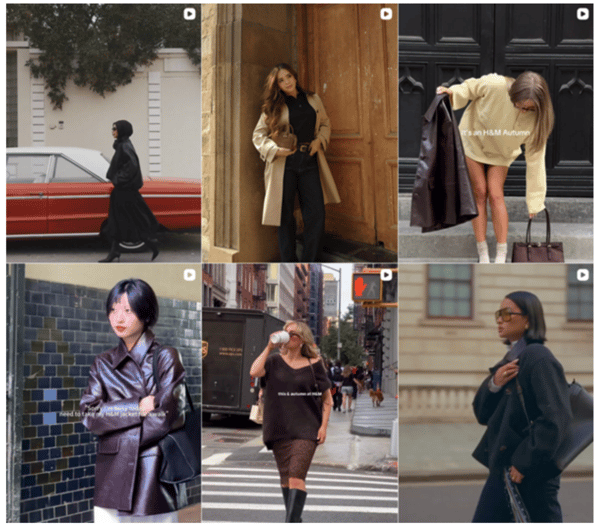
For the past few months, whenever I see a video of someone strutting in the streets, covered head-to-toe in chic neutrals, my first guess goes to one brand: H&M. Although these campaigns feature different creators from around the world, the visual identity and emotional tone remain consistent.
Brands can benefit from a clear visual direction like this that sets the tone and ensures the narrative consistency of your collaborations.
For creators to confidently exercise their creative liberties, they need to understand what is permitted. Good briefs provide a clear outline of areas where creators have full freedom.
When you attempt to maintain a consistent and productive briefing model merely through guesswork, you run the risk of committing these blunders. So what can you do?
Influencity provides a platform for fashion brands and agencies to transform briefs into a structured collaborative system.
.png?width=1882&height=711&name=Tables%20(8).png)
.png?width=1678&height=756&name=Tables%20(9).png)
Since influencer marketing is a collaborative effort, a campaign brief has to maintain the balance between a creator’s creative freedom and the brand’s vision. Fashion campaign briefs backfire when they fail to tread the line between too much and too little control. The success of a content hinges on the quality of the content brief. Therefore, it’s crucial for agencies and brands to understand what your brief needs – from defining clear boundaries and communicating your goals to differentiating “nice-to-haves” from non-negotiables, etc.
Brand Perception is what customers understand and feel about your brand. It represents their long-term emotional and intellectual insight about your brand, your products, and services.
Campaign briefs hold the key to producing successful influencer collaborations. A successful campaign not only increases brand awareness but also influence how the audience perceives your brand. For influencers to produce campaigns that align with your brand identity, your campaign brief has to succeed in communicating who your brand is.
Fashion is an aesthetic-driven industry. Visual cues let you communicate without saying much. Establishing the tone of a campaign with visual storytelling can evoke emotions from the audience.
A rigid script restricts the influencer’s creative freedom and takes away the authenticity from a campaign. Instead of pre-written scripts, a clearly defined goal and keyword suggestions will prove more effective.
From brief templates to performance tracking tools and a centralized communication centre, Influencity’s campaign monitoring tools lets you optimize your influencer collaboration efforts and craft content briefs that work.







%20and%20How%20Can%20They%20Benefit%20Your%20Brand%20article.jpg?length=628&name=What%20Are%20Key%20Opinion%20Leaders%20(KOL)%20and%20How%20Can%20They%20Benefit%20Your%20Brand%20article.jpg)




.png?length=628&name=Pop-up%20image%201200%C3%97800@1x%20(1).png)