

Ever created content that feels like it’ll be a huge hit, only to have it flop (read: low engagements)? I know I have. The idea that sounds really good in my head doesn’t always perform well with followers. That’s why you need data to tell you the real story about what works with your audience (and what doesn’t).
Marketing instincts are valuable. But in 2025, the brands pulling ahead are those that combine emotional storytelling with analytical precision. Whether you’re running influencer campaigns or multichannel launches, data isn’t optional—it’s your strategic edge.

In this post, I take a closer look at how brands can win at data-driven marketing. I also share a few examples of brands that use data to power their influencer campaigns.
Let’s kick things off with a few examples of brands that won over fans by letting data inform their marketing decisions. Each of these examples used data to understand what matters to their audience, allowing them to build campaigns that resonate.
The 2023 live-action “Barbie” movie is a standout example of marketing that wows audiences. From social media campaigns powered by user-generated content to experiential marketing that engages people in real life, the movie was virtually “everywhere.”
It’s no wonder that the movie managed to rake in over $1 billion at the box office within just three weeks.
Behind some of their most successful marketing strategies is data, which helped Mattel and Warner Bros. figure out how to effectively connect with the movie’s target audience. After analyzing early feedback on the #BarbieTheMovie campaign, they pivoted to nostalgic UGC.
The team introduced a selfie generator and encouraged fans to share pictures of themselves against a classic Barbie-style backdrop. This backdrop was also used across various marketing materials showcasing the movie’s cast.
Mattel also created various TikTok videos featuring the iconic doll to promote the movie. These videos used retro color schemes to further drive in the nostalgia.
This helped them appeal to Millennial audiences who grew up with the dolls and are now often engaging with social media content that recalls “the good old days” of being a kid in the ‘90s and early 2000s.
The shift resulted in higher engagement rates (+47%) versus earlier humorous takes.
With the sheer variety of products they carry, a generic, mass-market approach just doesn’t work for Target. Even their food and beverages section alone saw $23.8 billion in net sales in 2024.
So for their vast selection of baby food items, the company needed a more targeted (pun intended) approach to reaching the desired audience. What parents need in baby food drastically differs depending on the age of their little ones and the kind of lifestyle they’re living. While busy parents with toddlers may be looking for easy yet nutritious snacks, some parents may seek out organic food blends for babies trying solids for the first time.
Considering this, Target segmented audiences based on app and web browsing behavior. They used that data to customize influencer messaging—e.g., toddler nutrition vs. first foods—improving CTRs by 31%.
Some creators focused on nutrient-dense food options for their growing toddlers:
Others highlighted discounted items that would help cost-conscious parents save on baby food.
Some also helped to showcase products that would be ideal as a baby’s first foods or help relieve teething pain.
This targeted messaging helped Target to not only highlight their expansive product selections but also effectively position their various offerings to different types of parents.
With nostalgia marketing being one of the greatest tools to appeal to consumers’ emotions, Walmart leaned into it with a full-blown experiential campaign that brought people to their physical stores. In the summer of 2023, the company launched a Summer Rewind campaign involving a touring experience aimed at transporting customers back to Y2K.
The cross-country installation featured classic Walmart experiences from the 2000s, including the Walmart ball cage and a freezer speakeasy with delectable frozen treats. It attempted to create an experience that would allow visitors to indulge in things that they were forbidden to do as kids.
Walmart’s experiential campaign came after the global success of the Barbie movie helped to highlight how audiences were responding to 2000s nostalgia. Understandably, the installation also came complete with a life-sized Barbie box where visitors could take pictures.
While data is often used at the beginning to help conceptualize marketing ideas or inform product development, it can even fuel real-time improvements. Whether you’re watching out for negative comments to prevent backlash or feedback that could help you pivot your messaging, real-time social listening helps you adapt and improve.
That way, you don’t keep spending money on a campaign that clearly doesn’t work or could even harm your brand reputation. It also means that you’re fine-tuning your approach to drive an even bigger impact, resulting in a higher ROI.
However, this only works if your real-time insights are followed by action. You need to follow through on the insights that you gain from your listening efforts.
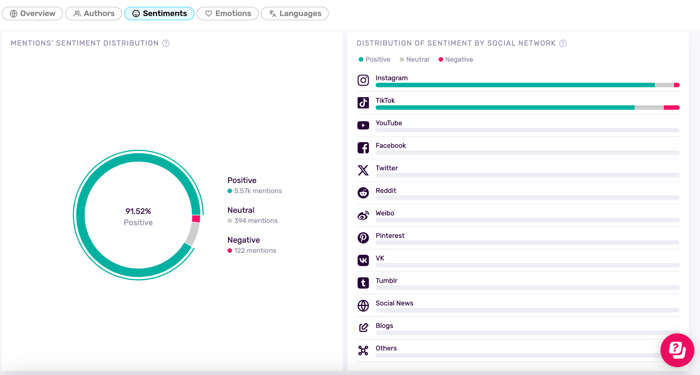
Influencity’s powerful social listening tools give you real-time conversational data to help you understand what your audience is talking about. It also analyzes the sentiment behind these conversations so you can see how people feel about your campaign, allowing you to test and pivot at scale.
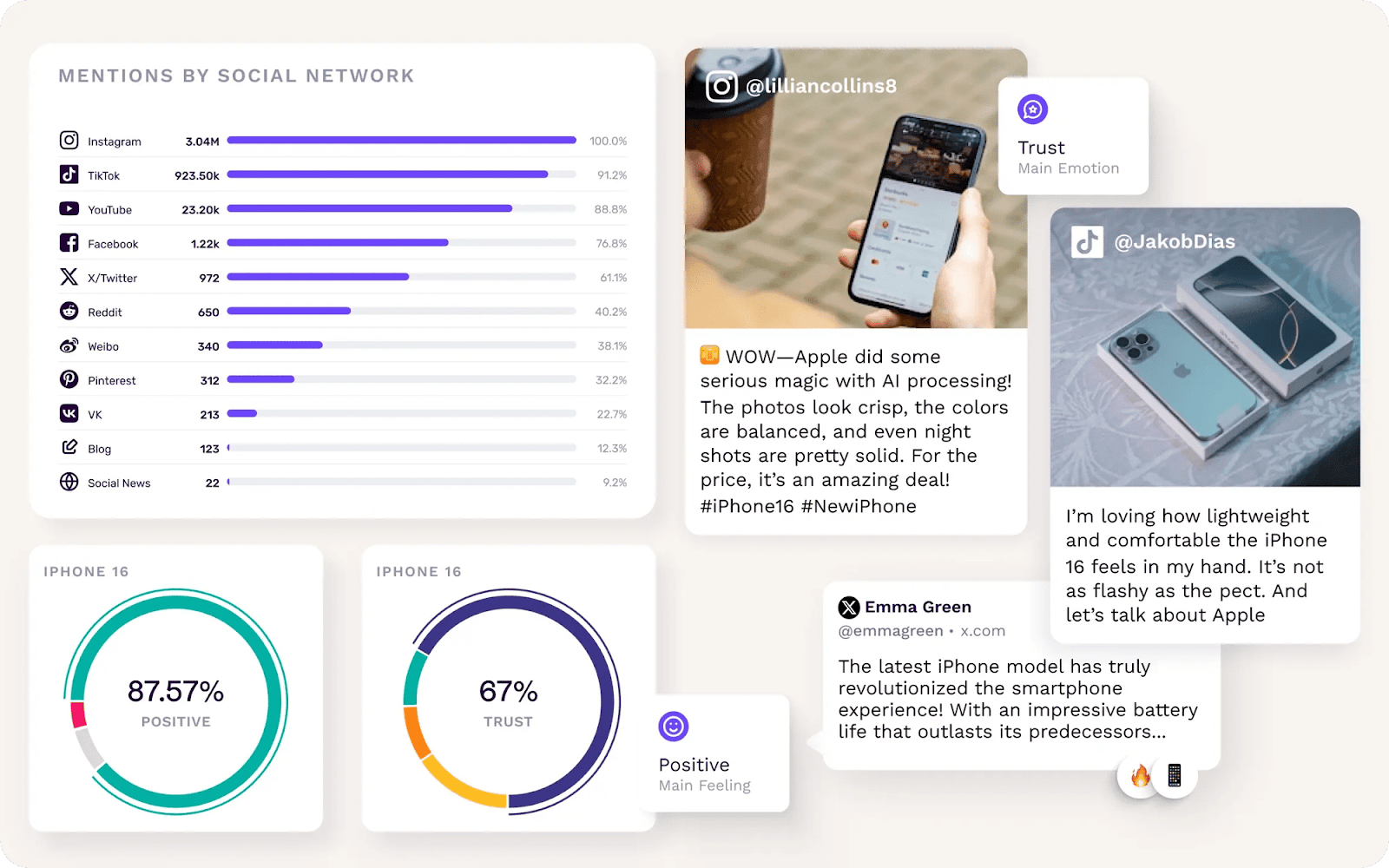
The tool goes beyond simply showing you numbers and figures. It also collects qualitative insights to highlight what is being said about a specific keyword or brand. This can then help you pinpoint the problem and understand the best way to fix it.
For example, a rise in negative sentiment could indicate a need to dig deeper into the conversations to see what people don’t like about your campaign. How can you fix the issue and prevent your reputation from taking a hit? Is there a way to adjust your messaging so it resonates better?
If these brand examples inspire you to ramp up your data-driven marketing, here are a few tips and best practices to get you started.
One thing you need to figure out is how influencers drive real business outcomes for your business. Sure, their content may perform really well. But how does it translate to real results in terms of customer acquisition? In other words, are influencers helping you attract actual customers?
This is why you need to sync your influencer performance data with your customer relationship management (CRM) platform. The multi-touch attribution model helps you map out the customer journey from the time they’re initially exposed to influencer content until they finally convert into buying customers.
You can use this data to analyze your cross-platform campaign performance and identify which content formats and influencer messaging are the most impactful. This will then help you come up with promotional strategies that drive real customers.
Effective data-driven marketing involves ongoing analysis. Instead of waiting until the end of the campaign to evaluate success, make sure to start measuring during the campaign.
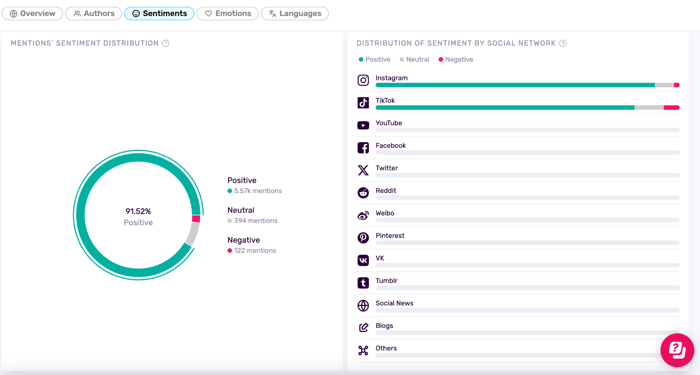
In particular, a sentiment analysis helps you figure out how people are responding to your campaign and messaging. What’s the sentiment behind conversations related to your brand and campaign? Your influencer-generated content may be getting a lot of comments, but are those comments positive or negative?
For example, people in the comments are loving the following influencer campaign from Adobe Acrobat featuring Leenda Dong.
A real-time sentiment analysis would surface this positive sentiment and identify what people actually loved about the campaign. Alternatively, if there were some negative comments, it would also surface ideas to pivot and adjust the messaging or angle so it resonates better with the target audience.
Likes are great. But they only tell half the story. Plus, they’re the easiest engagement metric to fake, making them a go-to tool for influencers who want to manipulate their numbers.
So instead of relying on likes alone, you need to dig deeper into engagement quality. Saves, shares, and sentiment data provide you with more in-depth insights into how people are engaging with the campaign.
Are people saving the content to their collections? Are they sharing it with friends? This indicates that they’re valuing the content enough to do more than just hit like. So you can see what types of content are truly resonating with the audience, helping you figure out how to effectively deliver your message.
Additionally, sentiment data helps you break apart conversations related to your campaign. You’ll be able to see what people are actually saying about your brand or product, which means you can understand how they feel about the messaging. This gives you valuable insights into what resonates and how to optimize your campaign for resonance.
User-generated content is a goldmine for customer insights. What types of content are people creating about your brand?
While brands often use UGC for various forms of marketing material, its value can extend far beyond that. You can also analyze the content to identify any emerging keywords or phrases that could help you learn more about your audience. What are people saying about the product or the brand experience? Are there any common threads or patterns?
For instance, if people are regularly talking about the high price point in spite of an overall positive experience, you could adjust your messaging to address this. Think: copy that highlights all the reasons people will get their money’s worth. Alternatively, you could come up with a promotion strategy involving limited-time deals, so consumers get an opportunity to try your product at a cheaper price point.
Alternatively, if there’s a growing trend of customers expressing a certain benefit of your product, you could adapt your messaging to better highlight this. Say more and more customers are talking about how they use the Rhode Pocket Blush as a lipstick, the brand could creatively position the multi-use benefit of the product.
Getting influencer content in front of a huge audience is great. But it doesn’t always translate to real business outcomes.
Sometimes, people may simply be sharing the content because they enjoy it and not because they’re interested in the product being promoted. And sometimes, brands can go viral for all the wrong reasons, so the impressions may stem from negative attention.
This is why you need to dig deeper with additional performance metrics that measure bottom-of-the-funnel actions like clicks and conversions. Are people actually going to your website after seeing influencer content? Are they using the discount codes to make their purchases?
It also helps to combine your insights with sentiment analysis, so you can figure out if all the attention you’re getting is positive or negative.
The audience data you’ve collected should give you a pretty good idea of the different types of people you want to reach. Whether they have different pain points, lifestyles, and motivations, these different buyer segments will also look to different types of creators.
Some may seek out educational content from creators who do deep dives and tutorials. Others may be more interested in entertaining content, while some may also look for honest reviews before they go through with a purchase. Use these insights to group your creators into different categories based on how they resonate with these different audience segments.
So beyond niche, you can also segment creators by performance style. This may include educators, reviewers, entertainers, and so on.
Data doesn’t just tell you how a campaign is performing or has performed. It can also be used to predict the outcome of a future campaign.
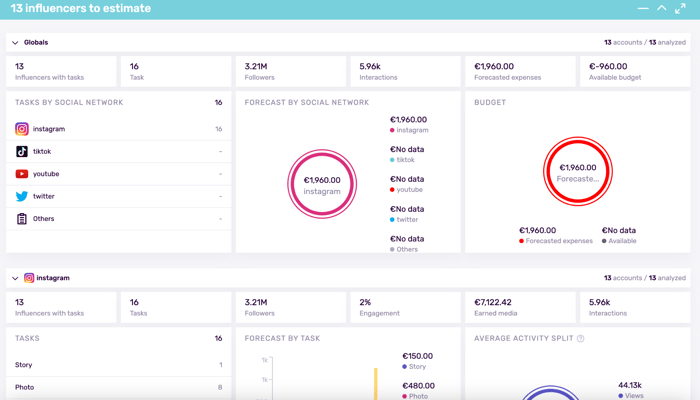
Some tools come with predictive modeling capabilities to forecast how your campaign will perform. These insights can help you adjust your strategy even before the campaign actually launches. Influencity, for instance, lets you run estimates on the performance and spending of specific influencer and platform combinations. This makes it easy to adjust deliverables, influencer selections, and budget for better influencer marketing ROI.
Data-driven marketing is all about letting data do the talking, allowing it to complement your experience and instincts. It ensures that you’re not just going in blindly with assumptions in the hopes that your strategy will work. Instead, you’re using data to understand what resonates with your audience and building campaigns to connect with them.







%20and%20How%20Can%20They%20Benefit%20Your%20Brand%20article.jpg?length=628&name=What%20Are%20Key%20Opinion%20Leaders%20(KOL)%20and%20How%20Can%20They%20Benefit%20Your%20Brand%20article.jpg)





.png?length=628&name=Pop-up%20image%201200%C3%97800@1x%20(1).png)