

If you want to understand the absolute hardest job in the creator economy, look past the front rows of Milan Fashion Week. Look past the luxury travel vloggers sipping champagne in first-class cabins. Look, instead, at the creator filming a toddler’s epic, world-ending meltdown in the middle of the cereal aisle at Target.

Welcome to the world of parenting influencers.
This specific vertical of digital marketing is built on a very fragile, highly coveted foundation, permission. It is the permission to share, the permission to relate, and most importantly, the permission to trust. Audiences do not turn to parenting creators because they project an illusion of perfection or because they have all the answers. They turn to them because they are surviving the exact same beautiful, exhausting, relentless chaos.
When a mother with 50,000 followers looks into her camera and recommends a specific brand of diaper rash cream or a meal-prep delivery service, she is acting as a lifeline to another exhausted mother scrolling through TikTok at 3:00 AM.
That is precisely why negotiating with parenting influencers in 2026 is fundamentally different from any other vertical in our industry. Their influence does not rely on transient virality, a catchy trending audio, or a perfectly curated aesthetic. It is powered entirely by hard-earned, peer-to-peer credibility. When a brand steps into this space, they are borrowing trust capital.
Unfortunately, I still see major brands and agencies approaching these creators with the exact same tired playbooks they use for standard lifestyle campaigns: rigid corporate scripts, completely unrealistic turnaround times, and a glaring disregard for the family's actual daily reality.
Let me break down the new rules of engagement. We will explore how famous US parenting influencers show up consistently, how brand collaborations actually sustain and benefit their family scenarios, and why shared values are the only metrics that drive true revenue.
We will also dive into a definitive playbook for agencies, highlight some of the most brilliant family campaigns of the last year, and finally, rank the Top 5 US parenting influencers who are dominating the space right now.
In the beauty or fashion sector, a consumer might buy a product on impulse simply because a jacket looks chic or a lip gloss catches the light perfectly. In the parenting sector, impulse takes a backseat to intense research. A consumer buys a product because the stakes are infinitely higher, they are buying it for their child's safety, their cognitive development, or their own sanity.
.png?width=500&height=293&name=Graphs%20(8).png)
According to 2026 data, 78% of millennial and Gen Z parents research reviews extensively before purchasing family products (believe me! I’m definitely one…), and 64% admit they have purchased a product specifically because a trusted influencer recommended it.
.png?width=250&height=223&name=Graphs%20(9).png)
But how is that trust forged? Through unrelenting consistency.
The most successful US parenting influencers treat their platforms less like a highlight reel and more like a serialised documentary. They show up every single day. They document the sleep regressions, the picky eating phases, the chaotic school drop-offs, and the messy living rooms.
This consistency builds a parasocial relationship that is incredibly durable. The audience becomes invested in the growth of the children and the wellbeing of the parents.
When a creator shows up authentically day after day, year after year, they build an impenetrable moat of trust. If that influencer suddenly endorses a stroller, the audience inherently believes that the stroller has survived the rigors of actual, daily family life.
There is a frequent, cynical misconception that family creators are simply exploiting their daily lives for a quick paycheck. While bad actors certainly exist, the reality for top-tier professional parenting influencers is that brand collaborations are carefully calibrated business decisions designed to fundamentally benefit their family's household.
Top family creators use brand money to fund experiences that enrich their children's lives. Take The Bucket List Family (Garrett and Jessica Gee). For a decade, they have documented their adventures with their three children across nearly 100 countries. Their brand partnerships, whether with Disney, GoPro, or eco-friendly travel gear, directly fund their ability to expose their children to diverse cultures, languages, and global perspectives.
In 2025 and 2026, they leveraged their business success to launch The Bucket List Collection, opening eco-driven, immersive hospitality properties in places like Canada and Tonga.
In the US, where parental leave policies are notoriously challenging, the creator economy offers a unique alternative. Successful brand collaborations allow parents to reclaim their time.
Thanks to being able to monetise their digital communities, many creators are able to leave demanding 9-to-5 corporate jobs, allowing them to be physically present for their children's milestones while running a lucrative media business from their kitchen island.
We cannot talk about the family benefits of brand deals without talking about the legal landscape of 2026. The industry has matured rapidly. Following the enactment of California's Senate Bill 764 (The Child Content Creator Rights Act), which mandates that influencers featuring children in at least 30% of their content must set aside a percentage of gross earnings in a trust, the financial benefits to the children are now legally codified in many states.
This sparked massive online discussions, such as the viral conversations surrounding creator Brittany Xavier’s relocation from California to Tennessee in early 2025, but the ultimate outcome is positive. Ethical parenting influencers now structure their brand deals to ensure that the children participating in the content are directly building their own financial futures, creating college funds and nest eggs through their digital footprint.
Because trust is the currency of this vertical, a breach of that trust is catastrophic. For brand managers and agencies, vetting parenting influencers now requires a level of scrutiny that goes far beyond checking engagement rates.
If you want to understand the dark side of this industry, we must address the chilling cautionary tale of Ruby Franke. Franke ran the massively popular "8 Passengers" YouTube family vlog, monetizing the milestones and private moments of her six children.
What started as a profitable mom fluencer enterprise spiraled into a horrific nightmare. In 2024, she was sentenced to up to 30 years in prison for aggravated child abuse, a tragedy comprehensively documented in the 2025 Hulu docuseries Devil in the Family: The Fall of Ruby Franke.
For brands, this is the ultimate wake-up call regarding brand safety. You cannot blindly throw money at a family channel simply because they get millions of views.
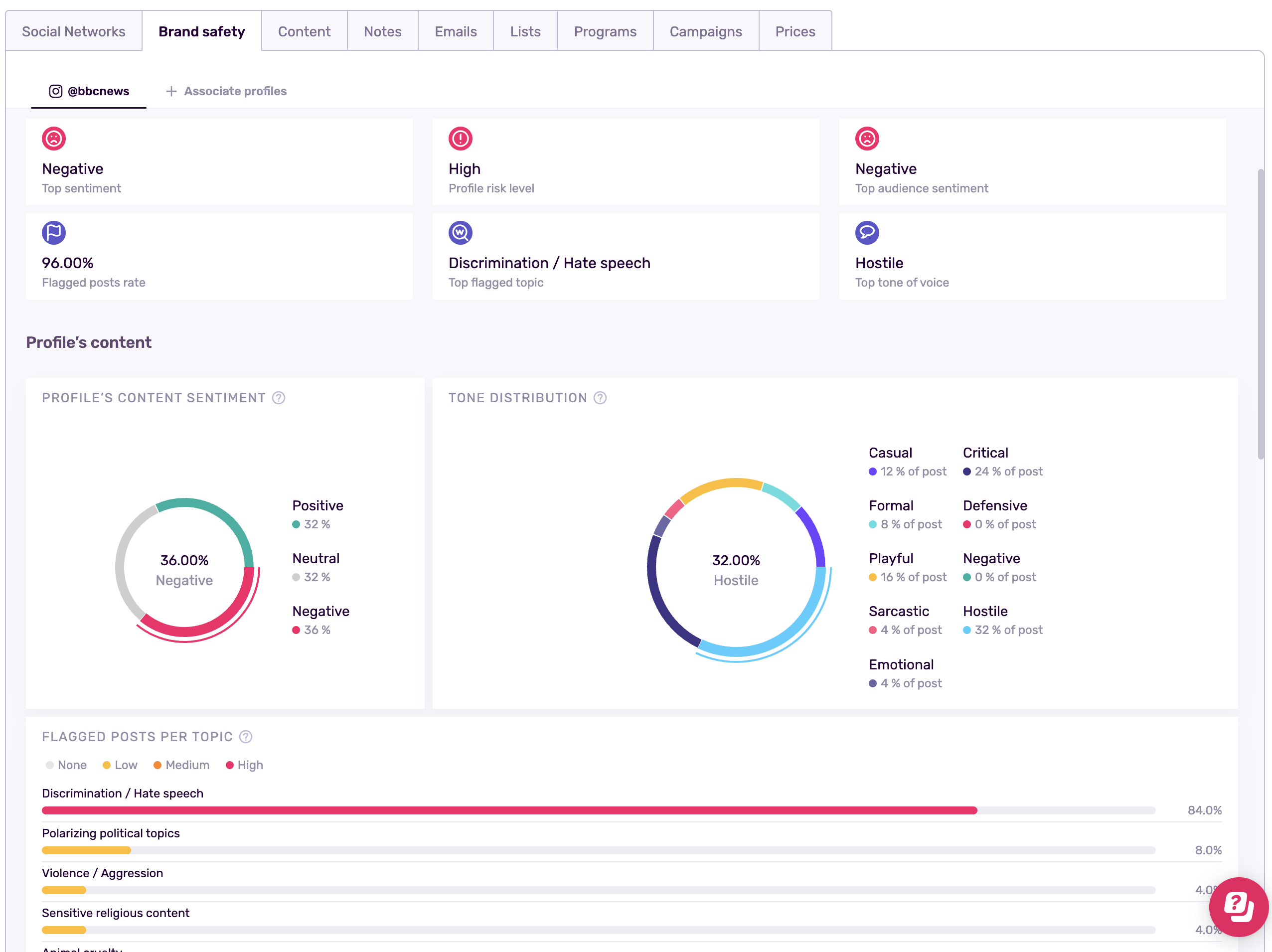
You must use rigorous data infrastructure. With Influencity's Influencer Relationship Management (IRM) platform, brands can run deep audits on a creator's profile.
You need to look at sentiment analysis: Is the audience expressing concern for the children in the comments? Are the engagement metrics driven by genuine community support, or are they driven by controversy and "hate-watching"? If a creator’s content relies on exploiting their children's distress, tantrums, or privacy for views, do not fund them. Your brand's reputation cannot survive that association.
When brands get it right, when they respect the creator and understand the audience, the results are staggering. Let's look at four defining campaigns from 2025 and 2026 that set the standard.
Pampers understands that modern parents are highly skeptical of clinical, corporate messaging. In late 2025, they launched the "Behind Every Baby" campaign, stepping away from purely product-led diaper marketing to invest heavily in emotional storytelling.
They partnered with a diverse roster of influencers, ranging from macro-voices like Rachel Hollis and Cat & Nat to hundreds of micro-creators, to drive campaigns centered around sleep deprivation, postpartum care, and the unfiltered reality of parenthood.
Creators were explicitly briefed not to over-polish their content. The messy living rooms and tired eyes were kept in.
.png?width=250&height=237&name=Graphs%20(10).png)
The campaign drove 22% higher engagement than Pampers' paid ad equivalents. Positive brand sentiment shot up 34% in the highly competitive "new parent" demographic, generating an Earned Media Value (EMV) of $5.2M.
If there is one universal coping mechanism for parents, it is humor. Target tapped The Holderness Family, veterans of the internet famous for their highly relatable, comedic parenting skits and musical parodies, for their back-to-school push.
Target gave the family total creative freedom to highlight the absolute chaos of school supply shopping and morning routines, seamlessly integrating Target as the hero solution.
The musical sketches generated 5.6M organic views in just 10 days, delivering a 2.5x lift in positive brand sentiment and a 27% increase in click-through rates from family-targeted audiences.
Humor humanizes retail. Allowing creators to poke fun at the realities of parenting makes the brand feel like an insider.
Recognizing a global deficit in childhood play (studies showed 32% of children spend less than three hours a week playing), LEGO launched their "Play Is Your Superpower" campaign.
Instead of standard toy commercials, they partnered with family creators like The LaBrant Fam and The McFarlands to model behavior. They launched "Play Together" challenges on TikTok and Instagram Reels, focusing entirely on the process of parents and kids co-building sets.
.png?width=250&height=252&name=Graphs%20(11).png)
40M+ organic impressions and an 18% lift in brand favorability among millennial parents, with triple the average engagement rate.
Remember that creativity is contagious. LEGO didn't just sell plastic bricks; they sold a documented moment of family connection.
While big names drive awareness, Fisher-Price proved that the conversion engine lies in the micro-tier. They activated an army of real parents with 10K–50K followers.
Unscripted at-home product demos, capturing unprompted "playtime moments," and utilizing interactive Instagram Story polls to gather real-time parent feedback.
A staggering 3.8x ROI compared to paid ads, with engagement rates hovering between 7–10% (massively outperforming celebrity benchmarks).
You don’t need the biggest reach; you just need the most believable voice.
If you are an agency or brand manager preparing to negotiate with parenting influencers, you need a new operational framework. Here is the definitive playbook for securing high-ROI, ethical partnerships.
Parents know their audience, and the unpredictable nature of their children, better than any creative director sitting in a boardroom. If you hand a parenting creator a rigid, word-for-word script, the content will flop. Give them your core messaging pillars, but give them the absolute freedom to adapt that message into their daily routine. Let them speak in their own voice.
Negotiation shouldn’t push for overexposure. Protecting family privacy builds long-term trust. Allow creators to maintain boundaries regarding their children's names, faces, and locations. Never demand sensitive details like school uniforms or real-time location tagging in your briefs.
Empathy takes an immense toll. When a creator shares their struggles with postpartum depression or the stress of budgeting for a family of five while seamlessly integrating your product, they are performing intense emotional labor. Do not treat heartfelt storytelling like a cheap, add-on deliverable. Recognize it as high-level strategic value and compensate for the narrative depth.
In family life, chaos is the only guarantee. Kids get sick. Naps get dropped. Tantrums happen exactly when the lighting is perfect for filming. If you demand a rigid 24-hour turnaround for a draft, you are going to get stressed, sloppy content. Build buffer time into your contract deadlines.
Do not rely on gut feelings. Use a platform like Influencity to measure audience overlap (ensuring you aren't hiring five moms who share the exact same followers), track sentiment trends, and forecast conversion. Remember: parenting influencers often have slower conversion cycles because parents research heavily before buying. Prioritize loyalty and "Save" metrics over instant clicks.
To understand what excellence looks like in this space, you have to watch the masters at work. Based on audience trust, engagement quality, and brand integration success, here are the top 5 US parenting influencers dominating the market in 2026.
As a child therapist and a parent coach duo, Kristin and Deena have built an absolute empire by normalizing toddler tantrums and parental burnout. They are the ultimate lifeline for millennial and Gen Z parents.
They operate with immense authority. When they partner with a brand, it is viewed as an expert endorsement. They excel at integrating products that solve psychological or developmental pain points, making them a goldmine for educational toys, wellness brands, and practical household solutions.
Known as the "Millennial Parenting Whisperer," Dr. Becky provides actionable, script-based advice for handling difficult childhood behaviors. Her platform, Good Inside, has transcended social media to become a comprehensive parenting philosophy.
Her audience’s trust is absolute. She rarely does traditional spon-con, meaning when she does align with a brand (usually rooted in child safety, mental health, or parental wellbeing), the conversion rates are astronomical because the scarcity of her endorsements protects her credibility.
Susie is the queen of "making it work with what you have." A former teacher, she provides incredibly simple, low-cost, play-based activities to keep toddlers entertained. Her aesthetic is unapologetically real—think plastic bins, washable paint, and messy kitchen floors.
She is the patron saint of practical CPG (Consumer Packaged Goods) marketing. Brands that sell cleaning supplies, basic craft materials, or accessible snacks thrive with her because she integrates them into daily survival tactics rather than aspirational aesthetics.
Penn and Kim Holderness pioneered the family parody video over a decade ago ("Christmas Jammies") and have managed the impossible: staying brilliantly relevant as their kids grew into teenagers. They focus on the humor of marriage, ADHD, and the absurdities of middle-age parenting.
They are a full-fledged production studio. As seen in their Target campaign, they don't just post an ad; they write, produce, and edit viral musical sketches that make advertising inherently entertaining.
Garrett and Jessica Gee offer the ultimate aspirational, yet grounded, family travel content. They have documented raising three kids while continuously traveling the globe, blending breathtaking cinematography with honest parenting moments.
They are the premier choice for high-ticket family lifestyle brands. From partnerships with airlines and luxury resorts to durable travel gear and tech (GoPro), their integrations perform because they offer a window into an adventurous lifestyle that their audience deeply desires to emulate.
For parenting influencers, the negotiation table always comes back to one singular, non-negotiable metric, trust.
When a creator like The Bucket List Family, Dr. Becky, or a micro-influencer in Ohio looks into their camera and recommends your brand, it is not just a sponsored post. It is an endorsement rooted in lived experience. It is a creator looking at their highly protective community and saying, "I tried this. It kept my kid safe. It made my exhausting day 10% easier. I trust them, and you can too."
If your brand approaches these partnerships looking only to extract views, hijack algorithms, and push aggressive sales copy, you will fail.
But the brands and agencies that listen to these creators, co-create narratives that respect the messy reality of modern family life, and use data to measure the quality of the connection rather than just the quantity of the reach? Win communities.







%20and%20How%20Can%20They%20Benefit%20Your%20Brand%20article.jpg?length=628&name=What%20Are%20Key%20Opinion%20Leaders%20(KOL)%20and%20How%20Can%20They%20Benefit%20Your%20Brand%20article.jpg)


.png?length=628&name=Pop-up%20image%201200%C3%97800@1x%20(1).png)