

I’ve worked with a client who keeps recommending me to every company he works with when they need a new writer. Eight years, four companies.
It saves them the trouble of posting a new job ad, scouring through resumes, vetting writers, and reviewing their test articles. The whole process that might have taken weeks (or even months) gets reduced to a simple email asking if I’m available.
The same goes for influencer partnerships. Most agencies treat influencer partnerships like one-time campaigns. The best treat them like compounding investments.
And they build long-term partnerships with them to get more value out of their relationship.
When you find a creator who performs, you don’t just want another post — you want to build momentum.
That’s why influencer lifecycle management is so important for long-term influencer marketing success. It’s all about keeping your top-performing creators engaged (retention), streamlining repeat collaborations (rebooking), and ensuring compensation evolves with performance – not emotion (repricing).
Finding and recruiting new influencers for your campaign costs time and money. Not to mention the creative energy that goes into the search and vetting process.
Here’s a sample timeline:
That’s two weeks out of your entire campaign timeline. And in some cases (particularly larger campaigns), the whole process might even take much longer.
Meanwhile, keeping your best influencers only costs you your attention and takes much less time to find and onboard them. It involves nurturing them and keeping them engaged, so they’re ready to start whenever you need them.
For instance, although Sephora Squad partnerships last for 12 months, the brand continues to engage the program’s alumni even after the year-long collaboration. They have a whole page dedicated to highlighting former Squad members. And alumni continue to have access to brand events, free products, training, and campaign opportunities.
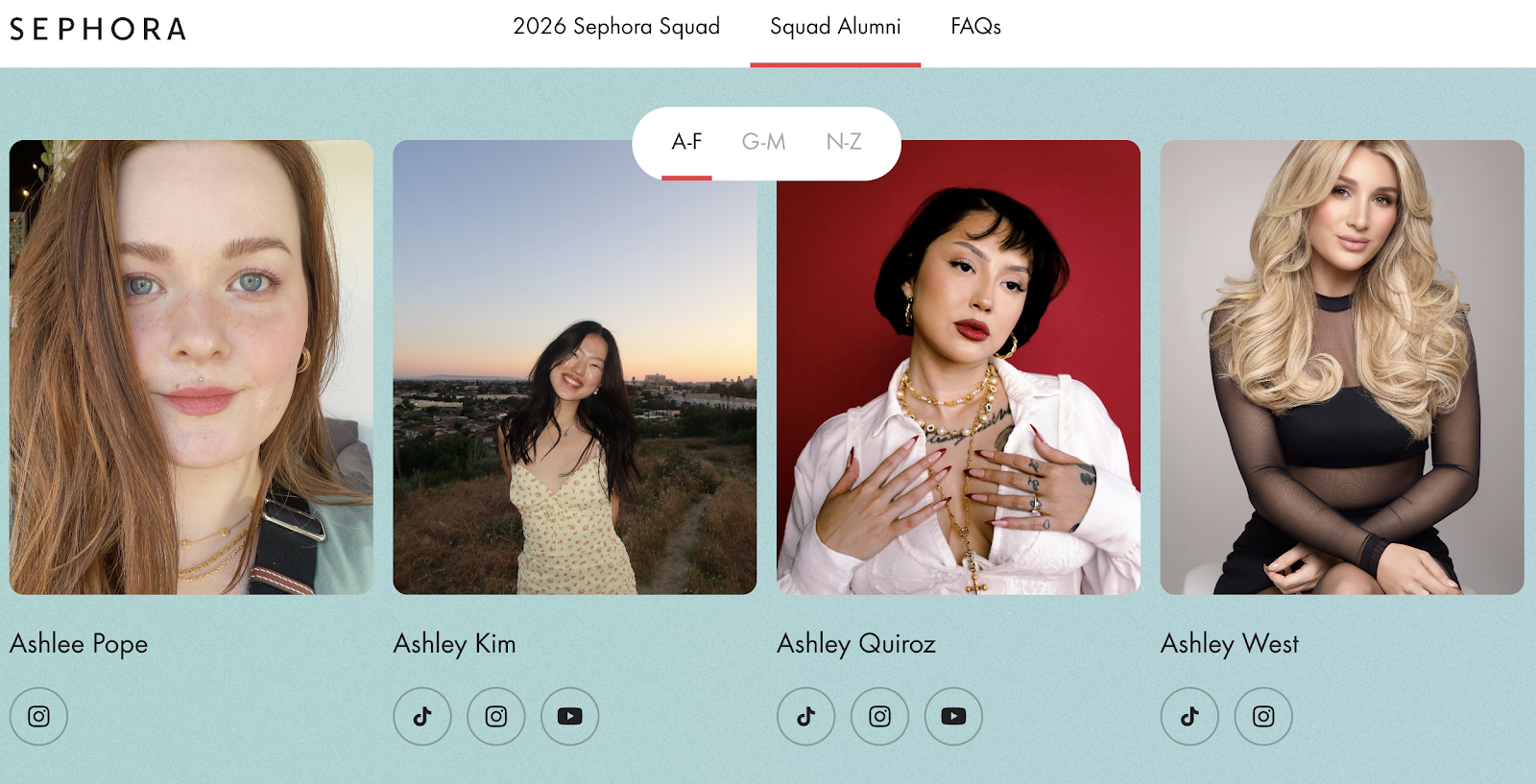
With the brand continuing to nurture their creator relationships long after their official partnership, they leave the door open for future collaborations. And creators are on standby if Sephora ever needs them for another campaign, saving the brand plenty of time in finding, vetting, and onboarding influencers.
The lesson here is to treat creators as collaborators, not contractors.
In another shining example of long-term influencer retention, Gymshark keeps renewing its partnership with top-performing fitness creators and maximizing their value over time. Its athlete program is a masterclass in influencer lifecycle management, with major fitness creators like Whitney Simmons and David Laid staying with the brand for 5+ years.
For instance, David Laid has been with the brand since 2016 and has since become more than an athlete but a creative partner with actual control over design and product development. In 2023, Gymshark officially signed David as Creative Director of Lifting, taking their partnership to the next level.
Similarly, Whitney Simmon’s partnership with Gymshark began in 2017 and ultimately evolved into something bigger over the years. The long-term collaboration led to the influencer being signed on as Creative Director of the brand’s Women’s Adapt Line in 2025.
So how does Gymshark do it? Here’s the recipe for the brand’s influencer lifecycle management strategy:
Takeaway: When creators feel invested in the brand, they stop being “hired” — they become aligned.
Replicating Gymshark’s success isn’t as simple as copying their strategy. Influencer lifecycle management requires a lot more strategic planning. Here are the best practices to get you started:
Not every influencer is a good long-term partner. And even your best performers can run out of steam at some point.
That’s why you need to closely monitor how a creator’s performance, audience, and content style evolve over time. This will give you the insights needed to understand how your partnership can adapt to support this evolution.
Someone who once created mostly fitness-related content may now be sharing their pregnancy journey and making family-related content. So they’re also attracting more audiences related to this new type of content. This doesn’t necessarily mean a partnership with a fitness brand is out of the question.
In Whitney Simmons’s case, for example, the influencer continues to create fitness-related content, except it now specifically resonates with expecting moms. She gets a ton of engagement from followers sharing their own experiences or asking relevant questions.
In this case, the brand doesn’t need to stop working with the influencer just because her content niche has slightly changed. Instead, it creates a huge opportunity to engage a very specific audience group of women who want to keep working out while pregnant.
This is why it helps to closely track influencer evolution, as it allows you to pivot and evolve your partnership accordingly.
And with a platform like Influencity, you can easily track profile growth, sentiment, and engagement shifts across multiple campaigns. The monitoring tool shows you how the ages, languages, and genders of authors change over time. This allows you to track how the audience mentioning a certain influencer has evolved throughout your partnership.
You can even track the sentiment patterns and emotions history. So you can identify sentiment shifts associated with specific influencers and the kind of emotions they evoke over time.
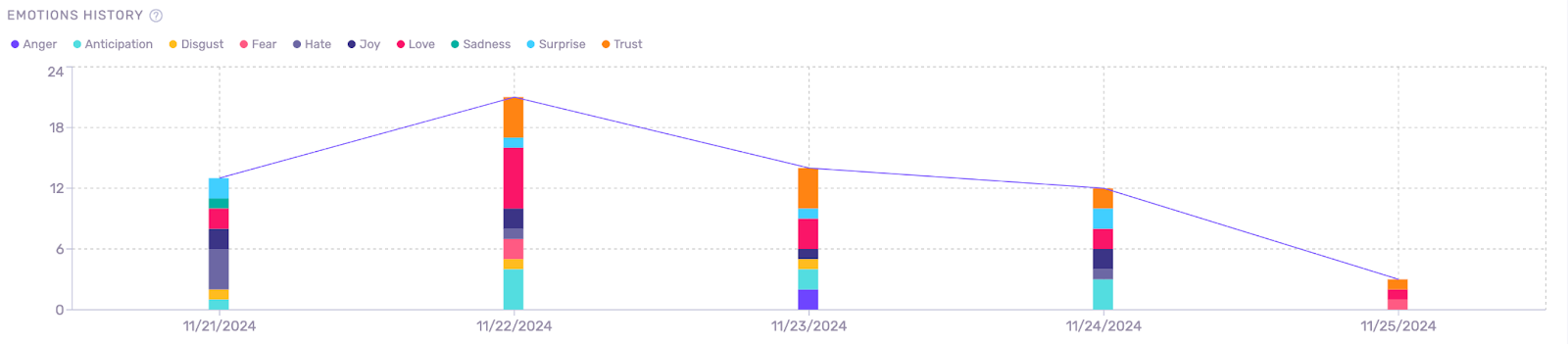
Having clear visibility of an influencer’s performance history gives you the confidence to identify which ones to rebook for your next campaign.
But with messy spreadsheets and manual content tracking, it’s easy to miss out on the best performers. Influencity shows you campaign history insights so you can quickly identify proven performers and re-engage them for campaigns.
The platform automatically tracks influencer content, measures their performance, and organizes the data in a user-friendly dashboard. So you can better visualize which influencers (and which posts) drove the most value for your campaign. And with that info, you can easily identify which top-performing influencers to add to your next campaign.
%20(2025)/influencer-marketing-slider-tabs-platform-image-composition-4.webp?width=2305&height=1440&name=influencer-marketing-slider-tabs-platform-image-composition-4.webp)
This significantly cuts down acquisition costs since you don’t have to restart the whole search process all over again. It also shortens ramp-up time since creators are already familiar with your brand. That means you won’t have to restart the onboarding process from scratch since they thoroughly know the brand voice and guidelines.
Think it’s about time you bump up an influencer’s rates because you’ve worked with them for so long? Or having second thoughts about another creator’s high fees?
Don’t rush to renegotiate rates just yet. When it comes to influencer pricing, “what feels right” isn’t the most reliable way to decide how much you should pay an influencer. Instead, you need to be objective with your approach. And what could be more objective than data?
Use influencer-specific performance benchmarks such as EMV, reach efficiency, and cost per engagement to negotiate fair, scalable rates.
For instance, someone who gets paid $75 per post may be asking to raise their rate to $100. But you might consider negotiating an $85 adjustment after seeing their EMV and engagements, with the opportunity to increase the rate after three months if their performance improves in the next campaign.
That way, you’re not immediately agreeing to a rate that’s difficult to scale further down the line. And you’re still honoring the influencer’s request by adjusting their rate and leaving the door open for a further rate increase.
/campaign-reports-slider-tabs-estimates-image-composition.webp?width=2304&height=1440&name=campaign-reports-slider-tabs-estimates-image-composition.webp)
According to the Creator Perspectives report, 72% of influencers prefer long-term partnerships with brands. But just because a creator prefers long-term collaborations doesn’t mean they’ll say yes to every brand that makes them an offer.
Creators rebook with teams who treat them like partners. So you need to do a lot more than simply pay influencers if you want to keep working with them. This means displaying a high level of professionalism to strengthen your relationship with them.
Keep contracts clear, payments punctual, and feedback constructive. This will make or break the experience creators have with your brand. No one wants to keep working with a brand that always pays them late. And those misleading agreement terms don’t do anything to help.
The above report also found that 67% of influencers pick brands to work with based on their personal experience with the brand, product, and customer service.
So you want to avoid recurring late payments, unclear communication, and other bad experiences that could ruin whatever loyalty creators have for your brand.
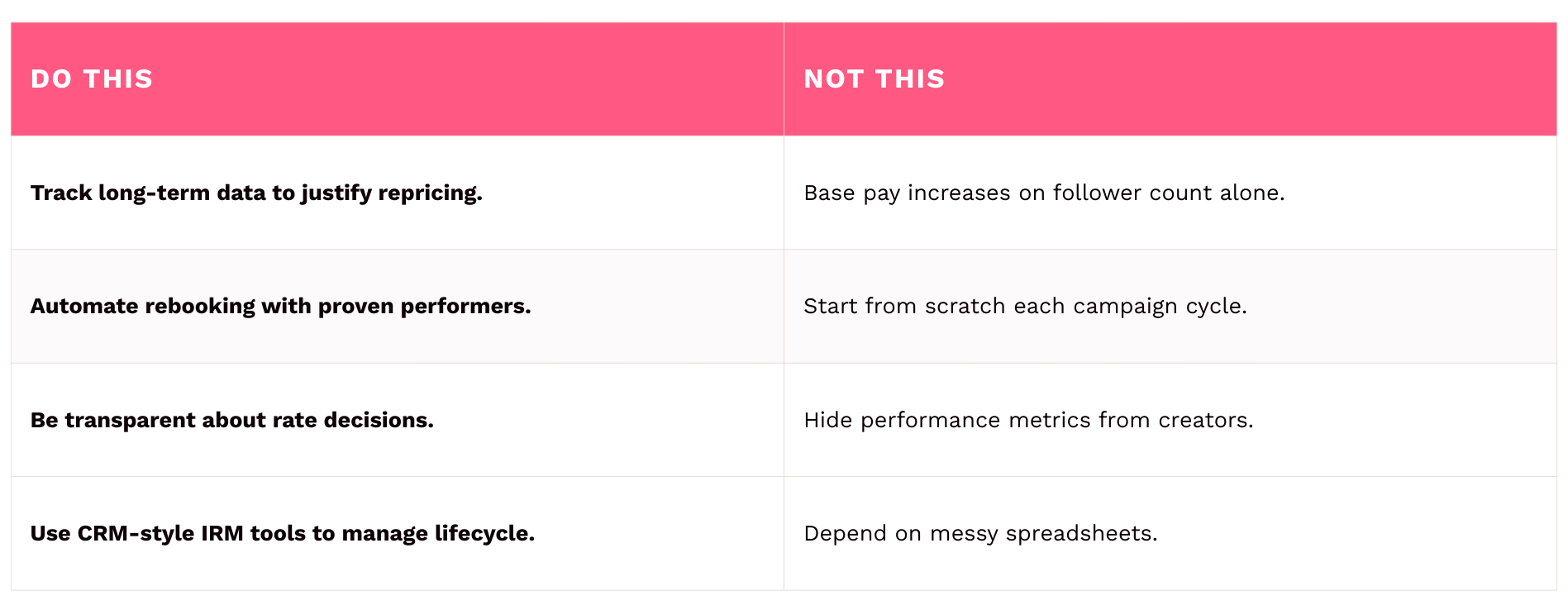
In addition to the above best practices, agencies and brands also need more guidance to get started with influencer lifecycle management. Here are the most important tips to kickstart the process:
A thorough audit of your existing influencer roster will show you who your top performers are, so you can identify who’s worth rebooking. For agencies, in particular, this helps you easily identify top-performing influencers who can deliver value across similar client accounts. See which ones can be rebooked for different brands.
For instance, if a certain influencer is driving high engagements for a fitness brand, you may consider rebooking them for a campaign with a nutrition brand. So you don’t have to go through the whole influencer discovery process from scratch and instead rebook someone who’s proven to be effective.
You can take your lifecycle management efforts to the next level with predictive dashboards that let you forecast the impact of influencer retention and repricing. With platforms like Influencity, you can add influencers to an estimate and predict how your campaign will perform or how much it’ll cost.
The platform makes it easy to customize the influencer lineup, pricing, and tasks. So you can experiment with different combinations and deliverables to maximize your campaign impact while still keeping within budget.
.webp?width=1728&height=1080&name=campaign-manager-slider-tabs-influencer-tasks-image-composition%20(1).webp)
Not every recurring partnership delivers the same value, so you need to classify influencers accordingly. Group creators into different segments:
You can then allocate budgets more smartly across these segments.
Don’t just look for influencers to rebook when you’re planning a new campaign. Instead, make performance reviews a regular part of your influencer relationship management. Set up quarterly check-ins with performance data to keep expectations fair and clear.
This will also speed up the process of identifying your best performers when you do need to rebook them for a campaign.
The most successful brands no longer aim for virality. They’re more invested in nurturing existing influencer relationships to build sustainable partnerships that last through the years. And this helps them save time and money because they can always tap into a roster of loyal, high-performing influencers who want to keep working with the brand.
Influencer lifecycle management is the end-to-end process of finding, vetting, onboarding, and partnering with influencers. It also involves nurturing your relationship with them and rebooking them for additional campaigns to build a long-term partnership.
You can improve influencer loyalty by treating them as partners, not as contractors. Timely payments, transparent communication, fair compensation, and ongoing engagement are all essential for nurturing loyalty in influencers.
You can look at influencer-specific performance data to identify which influencers to rebook based on the value they generate for your campaigns.
The best way to re-negotiate influencer rates for recurring partnerships is by letting data do the talking. Look at influencer performance data to negotiate a fair rate for your next campaign.







%20and%20How%20Can%20They%20Benefit%20Your%20Brand%20article.jpg?length=628&name=What%20Are%20Key%20Opinion%20Leaders%20(KOL)%20and%20How%20Can%20They%20Benefit%20Your%20Brand%20article.jpg)




.png?length=628&name=Pop-up%20image%201200%C3%97800@1x%20(1).png)