

For years, we’ve often priced influencers based on follower count. It was simple, but it rarely matched the impact the creator actually delivered.
In 2026, brands and agencies are moving beyond follower-based pricing. Algorithms have changed, AI is reshaping content production, creators operate like small media businesses, and clients expect every marketing investment to be tied to measurable outcomes.
So how does influencer pricing work in 2026? Most influencer rates are now determined by a combination of audience quality, content production requirements, platform performance, usage rights, and expected business impact. Rather than relying on static rate cards, agencies are increasingly using flexible pricing models that align compensation with campaign goals.
This guide explains how influencer pricing models have evolved, what factors influence influencer rates, how creators calculate their fees, and how platforms like Influencity can build fair, scalable pricing frameworks for modern influencer marketing campaigns.
Static rate cards made negotiation easy, but they treated all posts as equal. A short TikTok filmed on a phone and a fully produced multi-platform campaign don’t deserve equal payments.
Most agencies are moving toward fluid pricing frameworks that mix:
The shift matters because budgets are tighter and expectations are higher. You’re no longer just buying impressions. You’re buying useful assets, measurable outcomes, and reuse potential across social, paid, and owned channels.
A modern pricing framework starts with one question: What job are we hiring this creator to do? Awareness spike, steady mid-funnel explanation, or conversion? If you need help defining that up front, a simple campaign goals checklist can keep your team aligned before you talk about price.
Follower count still matters, but mostly as context. What really shapes price is the job you’re hiring each creator to do and how their audience behaves.
Use creator tiers as a planning tool, not a shortcut to “value.”
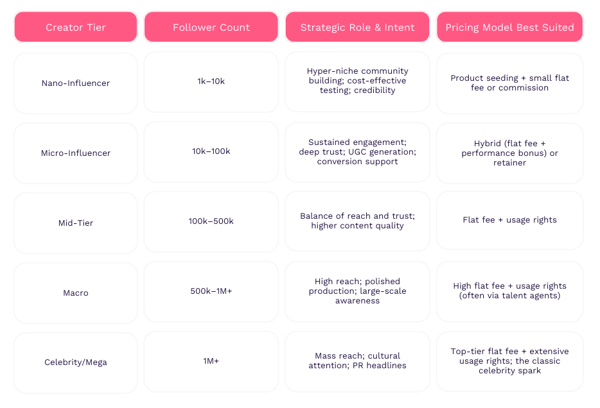
Most effective creator marketing plans mix tiers:
Pricing only makes sense when you match the tier to a clear role in your funnel and then choose a model that fits that role. If you’re formalizing this process, it helps to support your team with an influencer checklist they can use during planning and approvals.
If you want to negotiate well, you need to understand why a quote looks the way it does. In 2026, several factors consistently move price up or down.
The clearest reason to pay a premium is when a creator is a strong fit across multiple dimensions: audience match, content quality, reliability, and brand-safe behavior.
Many agencies use influencer scorecards to grade creators on:
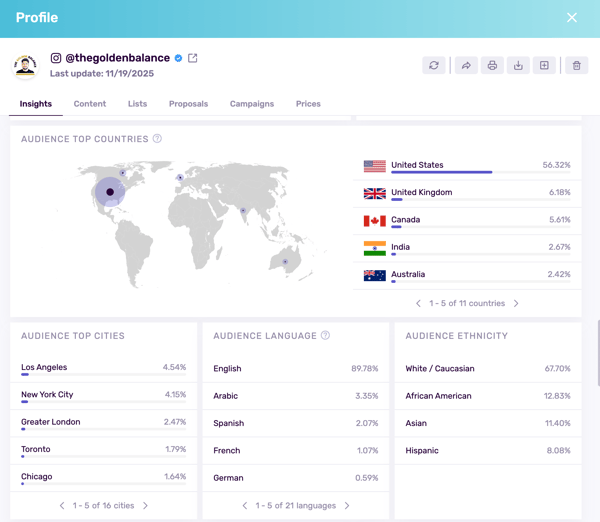
A high score gives you a concrete story for clients: we’re not paying for vanity metrics; we’re paying for proven reliability and fit. Running structured influencer casting calls around these scorecards also helps you standardize “creator fit” and set clearer expectations before you reach the pricing step.
A raw, talking-to-camera TikTok is not the same as a highly produced Instagram Reel with custom music, locations, and motion graphics.
Rates increase when:
Always ask yourself: Are we paying for talent only, or for a full production team in one person?
When you work with macro or celebrity creators, you’re often negotiating with a talent manager or agency.
That usually means:
The “agency factor” increases costs but can reduce operational risk, especially on large campaigns with tight timelines.
Not all impressions are equal. Modern pricing leans more on:

A creator whose content gets fewer views but a much higher save rate can be worth more than a creator with viral, forgettable content. The SKIMS Instagram analytics case study is a good example of reading “signals of intent” beyond surface-level views and likes.
Agencies increasingly use AI tools to:
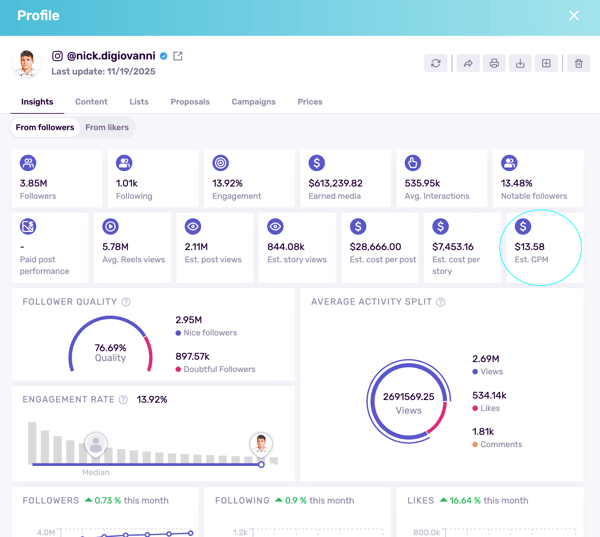
Metrics like audience quality score and net unique reach / CP1K-U help you see whether you’re paying for real people in the right locations, or inflated numbers that won’t convert.
If a creator’s audience looks inflated or inauthentic, this is a strong reason to push rates down or walk away.
Prices also respond to supply and demand:
A modern pricing model treats category demand as one more input in your scorecard, not a side note.
To negotiate fairly, you need to see pricing through the creator’s eyes. Most serious creators are thinking in terms of a business, not a hobby.
Their rate usually reflects:
On top of that sits an experience premium. Influencers who consistently produce content that people save, share, and act on can justify higher rates. You’re not just paying for one video; you’re paying for pattern-level skill.
A useful framing for clients: “We’re paying more because this creator has a proven track record of producing reference-worthy content in this niche for this audience.”
If you need more structure for this part of the conversation, it also pairs well with an internal influencer scorecard guide so your team can show exactly what “experience premium” means in practice.
Instead of asking, “What does this influencer charge?” flip it to:
“What job are we hiring them to do, and which pricing model fits that job?”
The same creator might be priced differently depending on whether you want a one-off launch spike, steady always-on content, or pure performance.
Use this table as a quick reference when choosing a model.
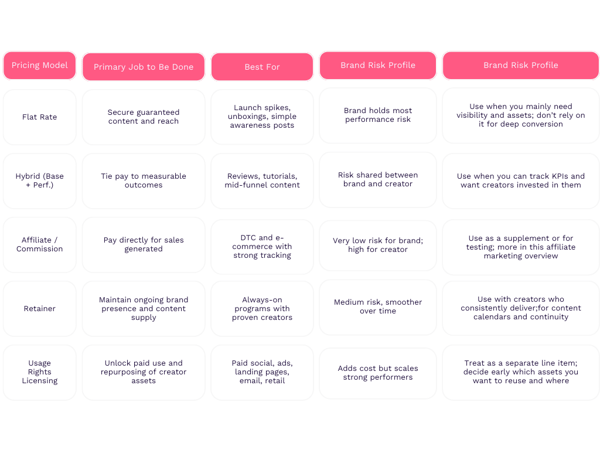
To avoid reinventing your logic for every campaign, create a simple internal matrix like this:
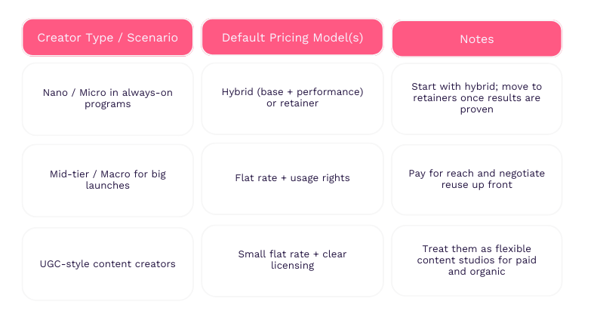
You can adapt this matrix to your own verticals, but the idea is simple: define defaults so pricing decisions feel consistent rather than ad hoc.
A platform like Influencity helps you turn this framework into a repeatable process, rather than a spreadsheet exercise.
Here’s how agencies use it in practice:
The goal isn’t to replace human judgment. It’s to give your team data that supports consistent, explainable decisions when you sit down with clients and creators.
To make this actionable, keep these principles in your internal playbook:
The most successful agencies in 2026 don’t treat influencer pricing as a mystery or a flat “cost per post.” They treat it as a structured system that connects:
Shifting from static rate cards to flexible frameworks that account for usage rights, audience intent, and strategic tier mixes, makes it easier to defend every line item in your budget and still build strong, long-term creator relationships.
If your team wants a single starting point, bookmark the influencer marketing ROI hub and the influencer checklist. Together, they support the pricing framework in this blog without adding more busywork.












%20and%20How%20Can%20They%20Benefit%20Your%20Brand%20article.jpg?length=628&name=What%20Are%20Key%20Opinion%20Leaders%20(KOL)%20and%20How%20Can%20They%20Benefit%20Your%20Brand%20article.jpg)