

What comes to your mind when you think of the word ‘beauty’?
As someone who grew up around marketing campaigns that featured models who’d been airbrushed to perfection, there’s always a certain image that pops up in my head – a picture-perfect woman who looks nothing like me. Beauty felt like this unattainable pursuit, something I’d never have access to, no matter how hard I tried.
So what’s the point in trying, right?
A study conducted by Dove in 2004 showed that I wasn’t alone in feeling this way. The Real Truth About Beauty: A Global Report revealed that only 2% of women considered themselves beautiful. It was the shocking findings from this study that influenced Dove to work with Ogilvy, launching the revolutionary “Real Beauty” campaign. This revolutionary campaign remains one of the beauty industry’s most enduring and impactful campaigns to date. Rooted in a deep understanding of social responsibility in marketing, the “Real Beauty” campaign was a game-changer in beauty marketing.
So what made this campaign work so well? How did a soap company shift the paradigm with one of the most effective marketing moves in history? This article is a deep dive into the history and influence of Ogilvy/Dove’s “Real Beauty”, so you can get the full picture
For the past couple of decades, Dove and Ogilvy have redefined beauty through a series of powerful campaigns and, by extension, have shifted public sentiment around the beauty industry. Breaking away from the age-old approach, they started to ask what ‘beauty’ actually meant.
In today’s world, this growing social consciousness significantly informs how we engage with a product. We’re no longer interested in products marketed as magic elixirs that’ll transform us into the flawless models we see on screens. Instead, we’re more likely to purchase products that we feel were designed for us.
By challenging beauty norms through an emotional marketing approach, ‘Real Beauty’ has redefined what we expect out of brands. Are you making a statement, or are you simply selling me a product?
Let’s review the first video from the Real Beauty Campaign, for example. This video takes us on a journey through a model’s evolution – from bare-faced and unfiltered to glammed-up and retouched. For those of us who don’t work in the beauty industry, this was likely our first glimpse into the work that goes on behind the scenes.
It goes without saying that this campaign gave us something we’d never seen before.
But are fresh perspectives all it takes to create a successful campaign?
Sure, the novelty factor is impressive. But it’s worth noting that the emotions this campaign evoked reveal its true impact. Just think about it, how often do you see such positive and deeply personal reactions to a beauty campaign?
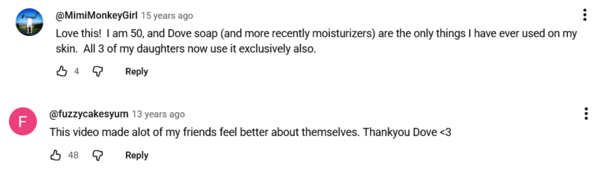
The campaign made a lasting impression because it delivered a story that spoke to us on an emotional level. The video wasn’t just another advertisement selling a product; it kick-started a movement.

Following the success of their 2006 video, Dove made headlines again with Real Beauty Sketches. In this unforgettable social experiment, Dove and Ogilvy brought in 7 women and a forensic artist. For every participant, the artist drew two different portraits each. While one sketch was drawn based on the participant’s description of themselves, the other was produced from a description provided by a stranger whom the woman had just met. It was nothing short of moving to watch their emotional reactions to these two contrasting sketches.
If you read the comments under this video, you’ll see a ton of heartfelt reactions.
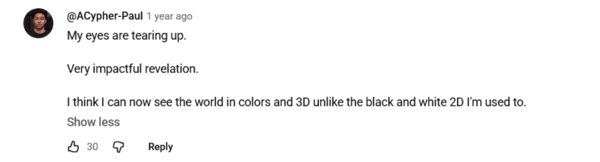


The message resonated with the audience on an emotional level. It wasn’t just another ad simply showcasing a product; it encouraged its audience to reflect. So, it’s no surprise that this ad once held the World Record for the most viewed video advertisement, generating over 50 million views within 12 days of its release.
Two decades have passed since the initial launch of the Real Beauty Campaign, and the message has stayed the same. Dove has continued to challenge beauty norms through inclusive representation and initiatives such as the Dove Self-Esteem Project. Instead of professionally retouched photos in ads and magazines, the focus has shifted toward something more relevant to the social-media landscape: beauty filters and AI enhancement.
Citing a study that revealed that over 80% of girls have used a digital filter by age 13, Dove continues to launch a series of bold movements against digital distortions.
In 2023, a TikTok filter that retouches your image in real time broke the internet. Several users raised their concerns about this new ‘Bold Glamour’ filter, with some even going as far as to call it “psychological warfare”. People all over the internet pointed out the negative impact this filter could have on its users’ self-confidence. Responding to this growing concern, Dove and Ogilvy launched their #Turnyourback campaign, urging people to turn their backs against the Bold Glamour filter and other forms of digital distortion.
Today, digital distortions in social media have gone a step further with the popularity of AI enhancements. Dove continues to take a stand through initiatives like their #KeepBeautyReal campaign, encouraging creators to share vulnerable stories about the negative effects of seeing their own AI-enhanced faces.
Throughout all this, from 2004 till today, the brand’s marketing strategy has consistently been rooted in the same philosophy. The tune doesn’t change as time changes; it simply adapts.
Now that we’ve learned the history, let’s look into the reasons behind this campaign’s success.
The first thing Dove and Ogilvy did right with this campaign was to challenge the beauty industry. They could’ve easily continued to follow the norm and done what everyone else in the industry was doing. But instead, they chose to dismantle and redefine our very idea of ‘beauty’. This was one of the first instances in history where a brand has addressed our concerns around the beauty industry. It wasn’t just refreshing; it was impactful and revolutionary.
Another leaf you can take out of Ogilvy/Dove’s book is their understanding of, and commitment to, social responsibility.

Ethical business practices and emphasis on social responsibility, i.e., our responsibility towards the greater good of society, are essential for building a positive brand image. If you want to maintain consistent growth and longevity, knowing if your product sells isn’t always enough; you also need to discern how people feel about purchasing from you. Dove understood this and conducted a study to identify what society needed from the beauty industry – authentic and inclusive representation. They had the nerve to reflect on the negative societal ramifications of rigid beauty norms and say “not anymore”.
Instead of just focusing on their own brand and their growth metrics, Dove looked at the bigger picture. They didn’t just market their products; they brought about a positive societal change. Consumers can engage more positively with your brand and feel good about their purchases when they understand your commitment to social responsibility. So when you’re marketing your product or brand, always ask yourself:
“How does this impact the world at large?”
Figure out your answer to this question and communicate it through your marketing. Make sure the message is heard loud and clear.
Aside from the many videos and campaigns I’ve highlighted earlier, the Real Beauty Campaign also spearheaded the inclusive beauty movement by featuring a diverse range of faces and bodies in its campaigns. Today, everyone and anyone has a place in the beauty industry. Diversity in representation is no longer unconventional; it is expected. All this wouldn’t have happened without a campaign like this.
Staying true to this philosophy, Dove uses social media to spotlight real and diverse representations of beauty through hashtags like #SizeFreedom, #KeepBeautyReal. Instead of keeping the beauty industry under lock and key, they invite you to join the movement. These campaigns translate the message behind “Real Beauty” for the social media audience, inspiring others to participate and share their own stories.
These initiatives drive home the message that participants aren’t just posting for engagement or personal gain; they’re a part of something bigger.
We’ve talked about the intense emotional reactions to this campaign earlier in this piece. What if I told you that you can achieve similar results through digital marketing?

Let’s look at why these campaigns elicit such positive reactions. The shortest answer is that the audience saw themselves in them. The key is in the relatability. Sure, the digital landscape today is filled to the brim with aesthetically pleasing pictures and videos. But how many of the audience can actually relate to the things and people they see on their screens?
This is where influencer marketing comes in. Most influencers don’t generate engagement and build a follower base simply by posting pictures that are pretty to look at. They gain followers by building a connection with them. They have an audience because people want to hear what they have to say.
This relationship allows them to inspire and connect with the audience on an emotional level. Which means that they can effectively communicate your brand’s message for you in a way no traditional ad can.
The success of the ‘Real Beauty’ campaign revealed how much the world needed vulnerability and authenticity in beauty marketing. The campaign worked because it stripped down the image of ‘beauty’ to reveal the human being underneath. Following the same recipe, influencers can utilise authentic and thought-provoking storytelling to engage with their audience. Instead of putting out highly-produced ad campaigns, simply open up a line of communication with the audience that says: “I see you, and you see me”.
Another thing I find impressive about the campaign in question is its endurance. It wasn’t just one or two ads gaining their 15 minutes of virality, only to disappear when the mom passed. The show has been going strong for over two decades.

While we’ve witnessed many other ads making headlines with their clever tactics and hooks in the past, not all of them had the staying power that “Real Beauty” does. The main difference is in the reactions it garnered. As far as the latter is concerned, people weren’t just engaging with it; the sentiment around it was overwhelmingly positive. These initial reactions emboldened Dove to continue on the same trajectory as they took their next step.
The age-old saying of “any publicity is good publicity” doesn’t exactly hold true, when it comes to marketing. Instead of relying solely on the numbers in your performance metrics, you need to know what people are actually saying. Luckily, we’ve come a long way since 2006 when Dove Evolution came out. You don’t necessarily have to achieve global virality to identify how the audience feels about your marketing efforts. These days, studying audience reactions has become easier than ever. We have sentiment analysis tools to thank for that.
These tools translate the numbers on your engagement metrics into applicable data that informs you about how people feel. With the right sentiment analysis tools, you can monitor reactions, identify issues, course correct when necessary, etc.

If there’s one thing we can learn from Ogilvy/Dove’s iconic campaign and footprint it left on the beauty marketing industry, it’s this: Social responsibility in marketing delivers measurable ROI.
Our audience want authenticity, they want to feel moved and inspired. So, what can you do to mobilise something bigger with your brand? I’m not saying that you need to start some revolutionary societal shift like Ogilvy/Dove did. But you can always utilise social listening to figure out what your audience needs from you.
Dove had to conduct a global study to kick-start this powerful campaign. Now, you have the convenience of sentiment analysis tools to conduct your own study. Why let it go to waste?
To challenge unrealistic beauty standards and promote authentic, inclusive representations of beauty.
Because it focused on emotional storytelling and relatability, allowing people to see themselves reflected in the message.
Brands that address real societal issues build stronger trust and loyalty, which can translate into long-term growth.
Through metrics like sentiment analysis, engagement quality, brand perception, and Earned Media Value—not just clicks or sales.
By sharing authentic stories and experiences that resonate with their audience, making the brand message feel more human and credible.








%20and%20How%20Can%20They%20Benefit%20Your%20Brand%20article.jpg?length=628&name=What%20Are%20Key%20Opinion%20Leaders%20(KOL)%20and%20How%20Can%20They%20Benefit%20Your%20Brand%20article.jpg)