

I remember a few years ago when influencer rates were pretty straightforward. Someone having X number of followers would get paid $Y per post, with rates rising according to follower count. And that was pretty much it.
Once reach alone stopped paying off, brands shifted their focus on engagement metrics to base their influencer fees. Yet this, too, had its limitations because it was easy for influencers to buy likes and ramp up their numbers. Plus, they don’t tell you who was influenced, what moved the needle, or why some creators outperform others at the same price point.
When negotiating influencer fees, the smartest agencies aren’t buying reach; they’re buying performance predictability.
Let’s unpack what that looks like (and what you should bring to your next negotiation table).
When modern influencer marketing was still in the early stages of evolution, negotiations started (and ended) with reach. Today? The focus is on efficiency.
This means going beyond superficial and overrated metrics like follower count and likes to figure out the real value an influencer brings to the table. And then using those insights to determine a realistic rate to base their influencer negotiations.
In fact, the Influencer Marketing Hub found that brands are increasingly moving away from flat fee payments to performance-based compensation models. While 53% of marketers were still using flat rate payments in 2023, the number dropped to 24.1% in 2024.
Meanwhile, 49.6% of marketers started paying influencers based on a percentage of sales as opposed to the previous year’s 21%.
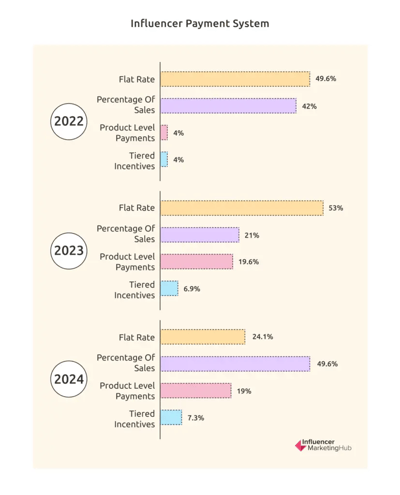
Source: Influencer Marketing Hub
This shows a pattern of brands embracing a performance-based negotiation model that focuses on generating real business value. Influencer pricing is now based on measurable campaign outcomes instead of vanity metrics.
Flat rates, often determined by an influencer’s follower count, are slowly becoming outdated because they’re not a good predictor of ROI. An influencer may have 1 million followers and charge $5,000 for a post. But there’s no knowing if that $5,000 investment will help you reach all 1 million followers, or if those followers will even engage with the influencer’s content.
For all you know, you could be paying $5,000 just to get a couple of sales.
Now, agencies have shifted their focus to metrics that can help better predict campaign outcomes. This gives them the insight needed to negotiate realistic rates based on the value an influencer brings to the campaign. They’re looking at metrics like CPE (Cost per Engagement), EMV (Earned Media Value), and Engagement Quality Score (EQS) as negotiation anchors.
The goal: stop paying for popularity, start investing in influence that converts.
So what are the metrics that you can use to guide your negotiations? And what makes them a good indicator of success? Let’s look at the metrics that hold real negotiation power and how you can use them.
Likes are great…if they come from genuine accounts, that is. They can boost visibility and bring your content in front of even more people. So the more likes you get, the better your chances of expanding reach.
But likes are easy to fake with bots and fake accounts that are paid to bump up engagement for an influencer’s post. They’re a superficial metric that doesn’t tell you if the content truly resonates with the audience or if real people are enjoying the content. That’s why agencies are digging deeper to figure out the engagement quality score (EQS) of an influencer’s content to guide their negotiations.
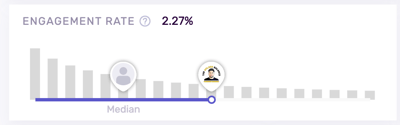
This measures authenticity, sentiment, and interaction depth to understand the quality of engagements an influencer is getting. It involves taking a closer look at the quality of comments and the sentiment behind them, which is then used to prove audience relevance and emotional connection.
An influencer may be getting hundreds of comments, but if most of those comments are just emojis or generic statements like “awesome” or “nice shot,” they lack depth. Chances are that those comments came from bots or engagement pods. In other words, the content fails to stir up genuine interest from real people.
That’s why agencies have started to look deeper into the quality of comments in influencer posts. Are people engaging in conversations related to the content? Are they asking questions or showing purchase intent?
Beyond this, agencies are also analyzing the sentiment behind conversations that an influencer is generating. This is essential because some influencers drum up engagement by stirring up controversy, which means that they get a high negative sentiment score.
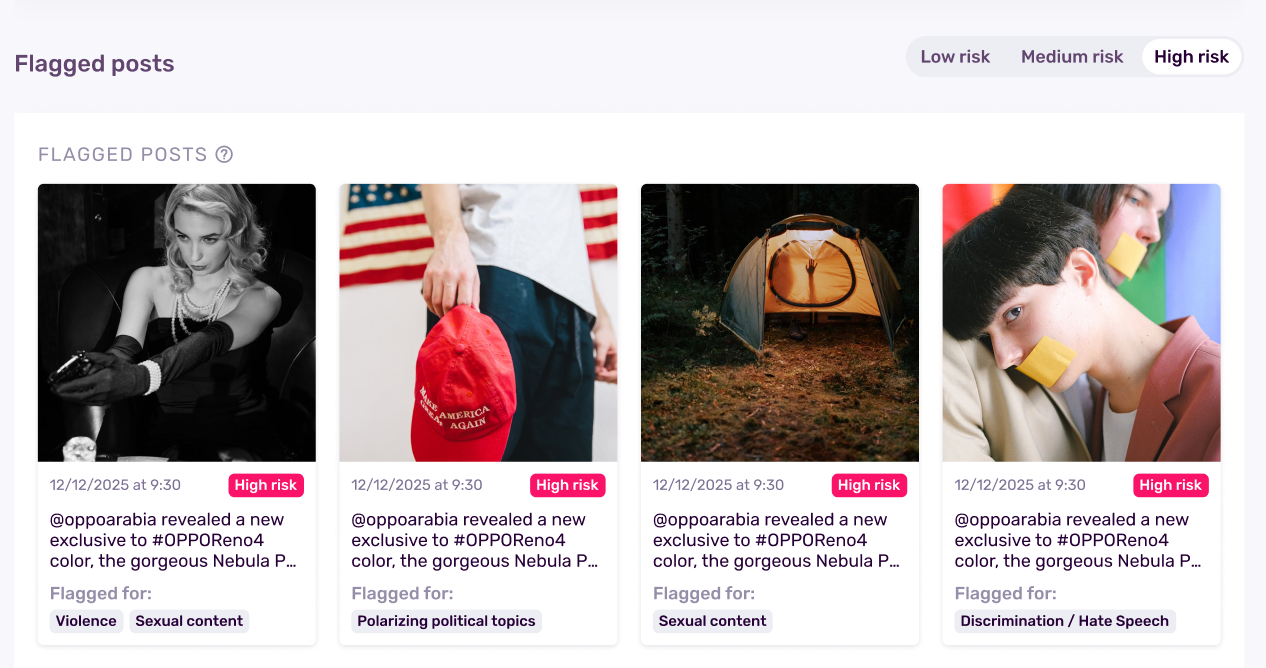
So associating with them could prove to be harmful to your brand reputation. An influencer who generates a dozen positive comments will be much better for a brand than one who generates hundreds of negative ones. You can use sentiment analysis to see what kind of sentiment an influencer elicits and what emotions are at play.
You want your campaigns to reach as many people as possible. But if those people aren’t taking further action beyond watching the influencer’s content, it doesn’t do much for your campaign.
That’s why agencies now use KPIs like conversion rate and click-through rate (CTR) to show how creator content drives measurable actions. Whether it’s visiting your website, signing up for something, or making a purchase, these metrics indicate that people are taking action after seeing the creator’s content.
They show you that the content has an impact beyond simply generating views. Ideal for mid-campaign adjustments and contract renewals, these metrics help you understand if an influencer is driving enough action to justify their rates.

They’re especially important for ecommerce campaigns, as these tend to focus on generating sales. Agencies will use conversion rate and sales data to understand if an influencer is driving revenue for ecommerce brands. So they can renew contracts or negotiate lower rates based on the value generated by each influencer.
Sometimes, people aren’t engaging or converting because they’re just not the right audience fit. That’s why you need to factor in audience match in your influencer search and negotiations, with a higher audience match justifying a higher fee.
Conduct a thorough influencer audience analysis to identify the types of people a creator can reach. This involves looking at the demographics data of an influencer’s followers. Where do they live? How old are they? What languages do they speak?

Then compare this data against your brand’s ideal customer profile (ICP) to figure out if they’re a good match.
You can further strengthen the data with an audience quality score. This analyzes the influencer’s followers for quality, helping you distinguish between followers that seem authentic vs. followers that seem fake. It factors in engagement rates, profile information, and follower activities to figure out what percentage of an influencer’s followers are real people.
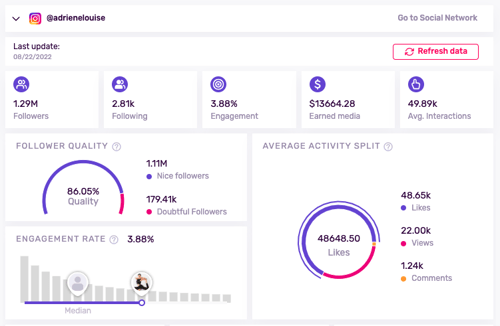
The audience match rate is perfect for defending (or rejecting) creator pricing. For instance, you can justify an influencer’s higher fees if they have an exceptionally high audience match with the brand. On the flip side, you could negotiate lower fees if a creator has a low audience match.
High one-time fees sometimes make sense if the influencer’s content continues to drive results even long after the campaign has ended.
When a local influencer created an Instagram Reel reviewing donuts from our family’s donut shop, the video continued to drive new followers and customers even months later. So in this case, a higher fee would’ve made sense even if the influencer had a smaller following.
That’s why measuring content longevity is essential for guiding your negotiations. This is a measure of how long a post continues to drive engagement post campaign launch.
It can be used to justify higher fees for creators whose content keeps performing weeks later.
You’ll need a content tracking tool that automatically pulls performance data from influencer posts. This tool will track the interactions generated by each post as soon as it goes live. And you can keep monitoring the content performance even long after the campaign has ended.
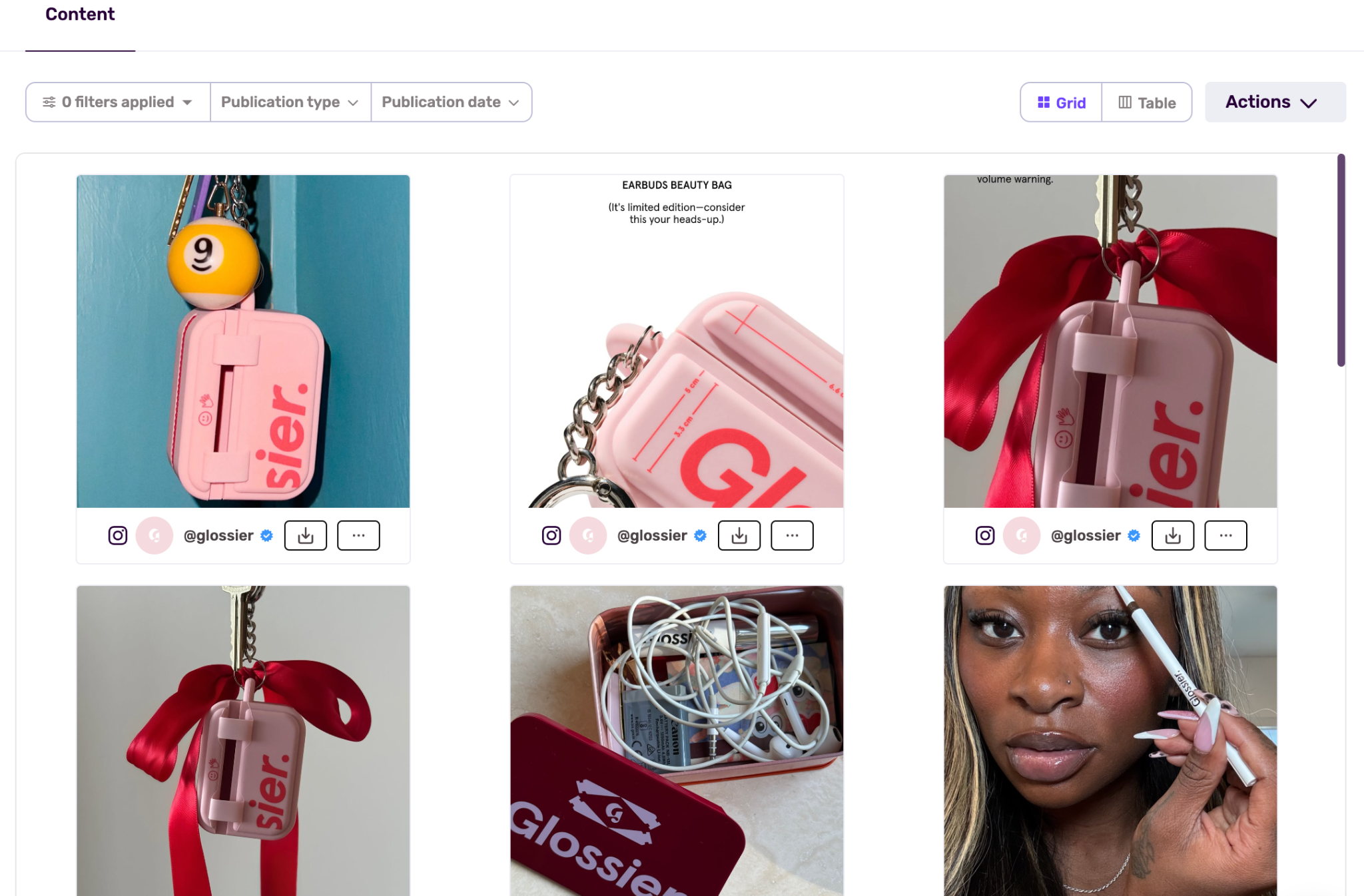
Content longevity insights are great for informing contract renewals and long-term influencer partnerships. For instance, you can choose to renew your contract with influencers who keep delivering results. Or you can negotiate lower fees with influencers if their posts stop engaging users shortly after the campaign’s launch.
Finally, earned media value or EMV is another useful metric to use in your negotiations. This metric translates organic engagement into paid media equivalence. It shows you the monetary value of an influencer’s promotions by estimating how much it would cost to buy the same level of exposure through traditional paid advertising.

So it can help you compare ROI across influencers and justify rate tiers.
You can even use predictive analytics to forecast the EMV generated by an influencer to guide your negotiations. This helps you negotiate lower rates or justify higher fees based on the earned media an influencer is expected to generate.
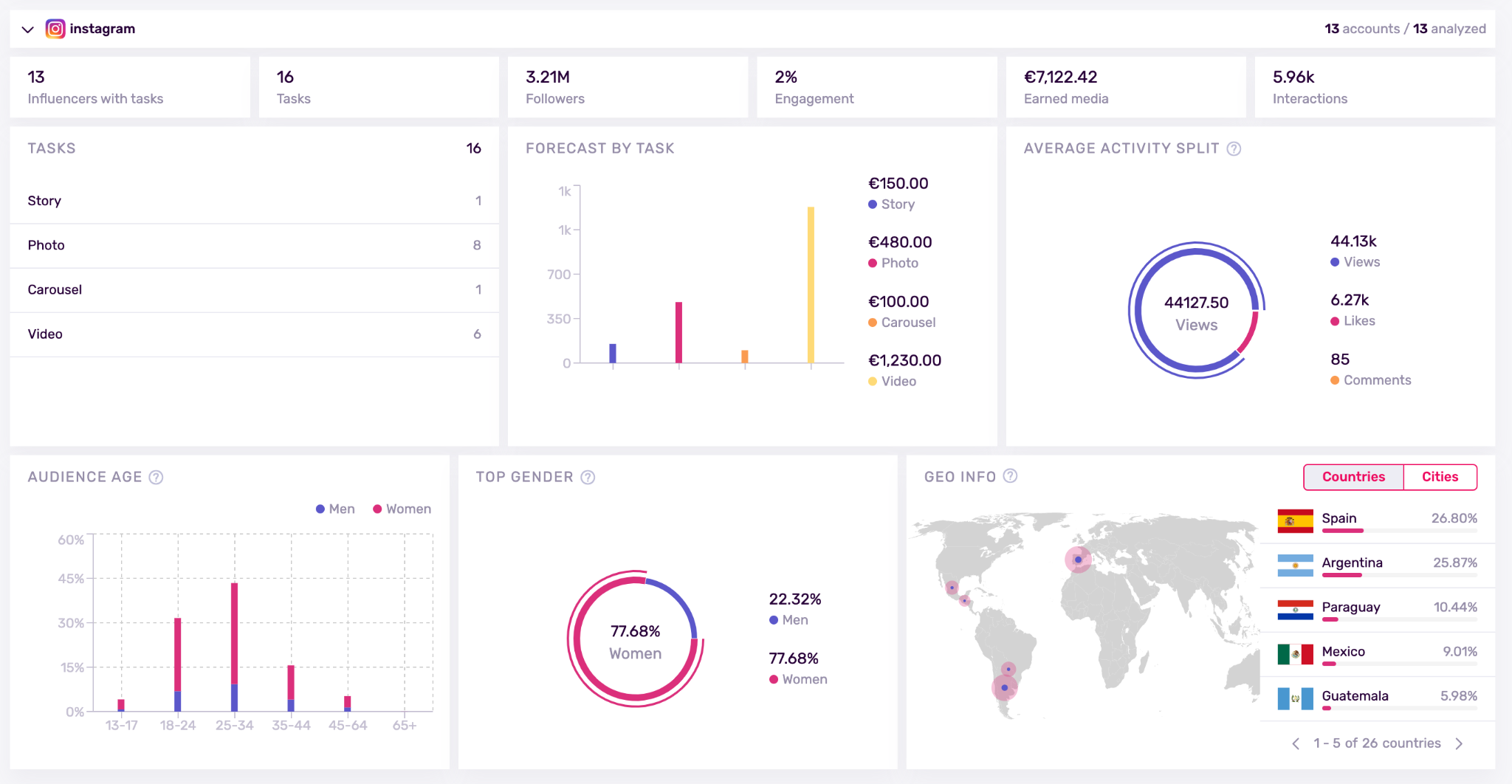
Platforms like Influencity give you comprehensive insights into influencer and content performance. This ensures the kind of visibility you need to make informed negotiations.
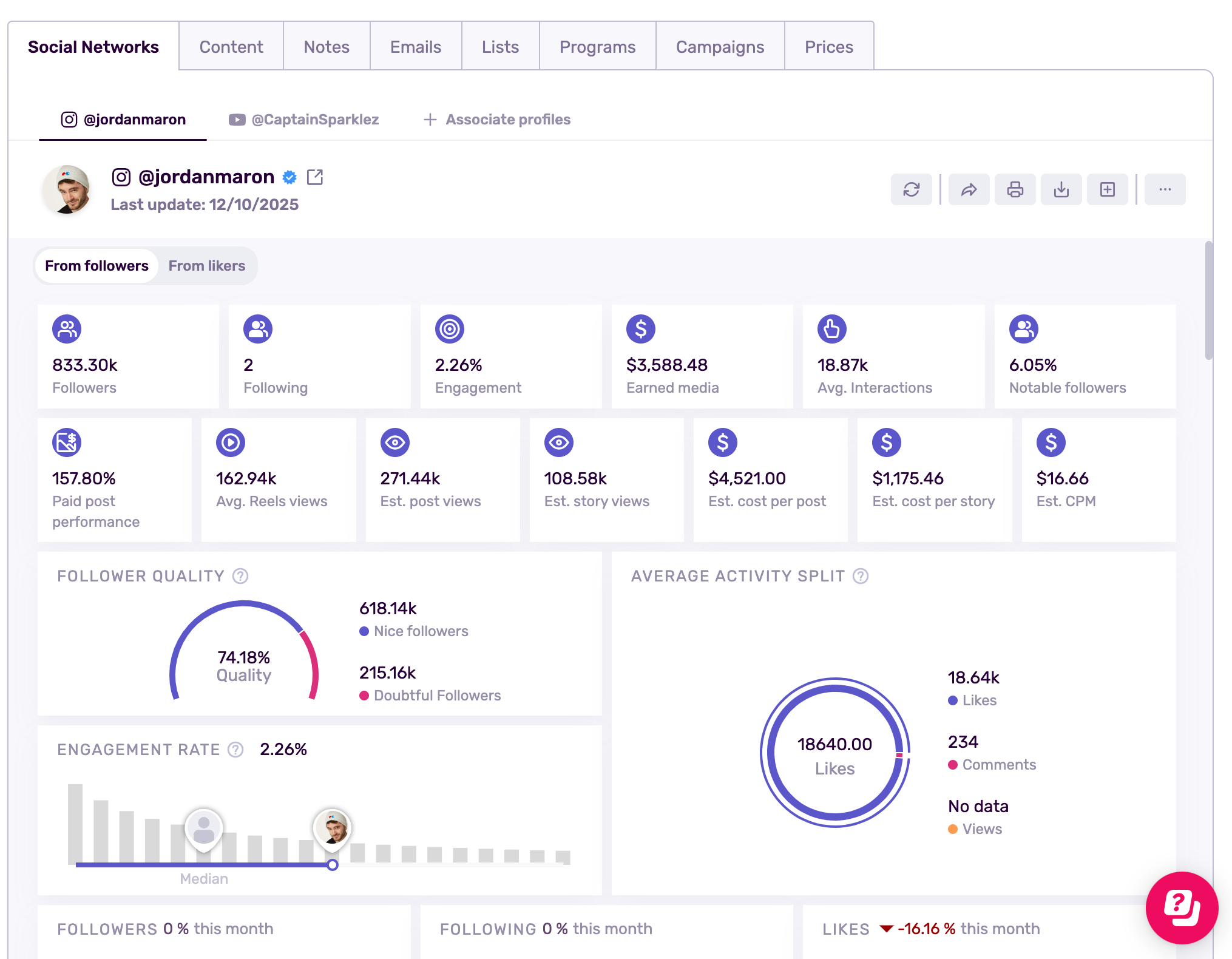
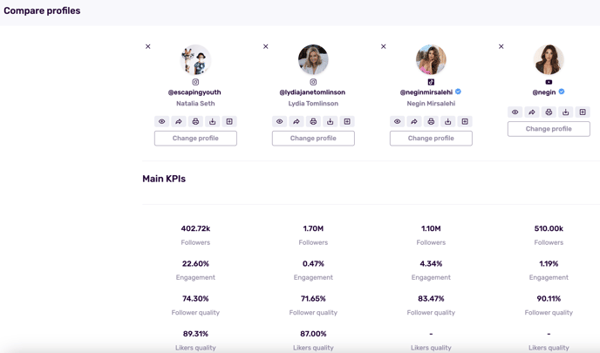
Influencity analyzes creator performance and shows you detailed metrics to understand where they stand. You can even compare profiles to see how creators measure up to their peers across engagement quality, EMV, CPE, and more. So it’s easy to identify which influencers are the right fit for you and how to negotiate fees accordingly.
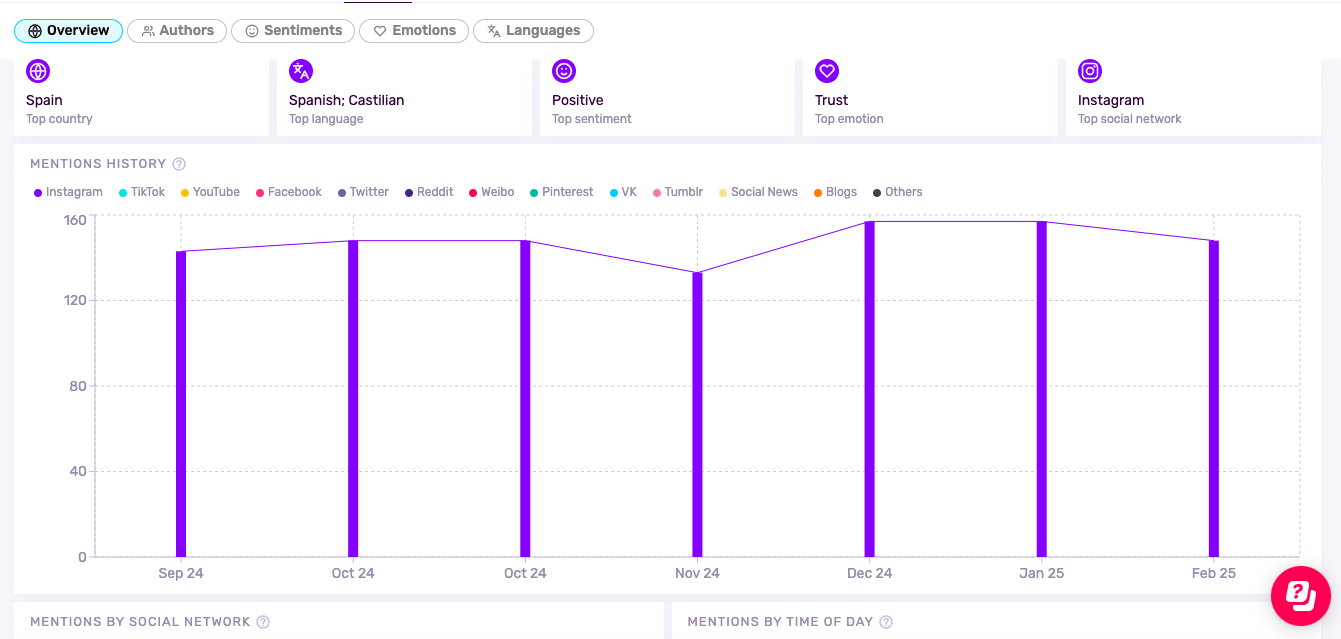
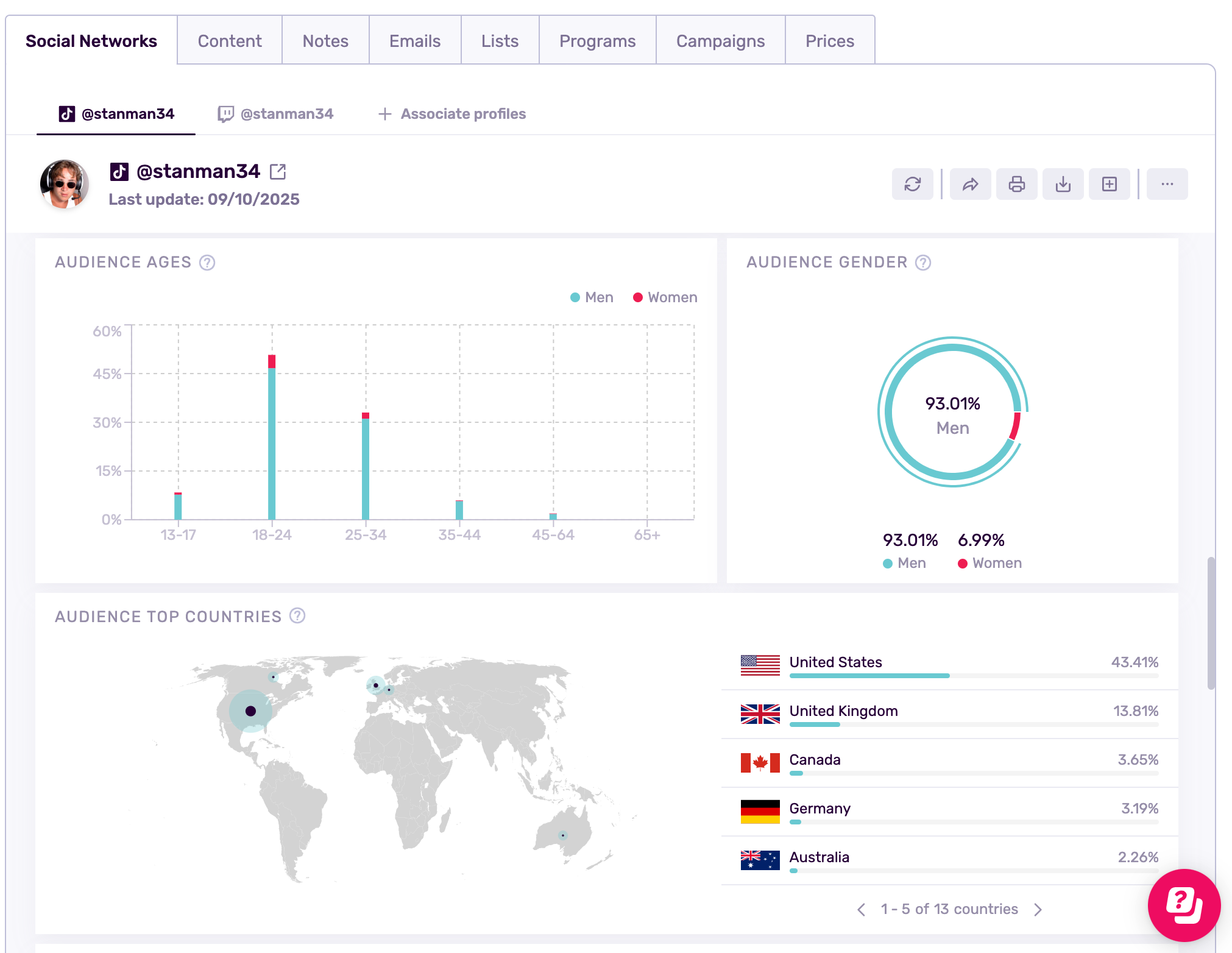
The platform’s detailed profile analytics include an influencer audience analysis to help you see what types of people an influencer is engaging. It shows you where their audiences are located, what languages they speak, and which ethnicities they are. So you can use these insights as leverage in your negotiations.
It even digs deeper to show you the influencer’s notable followers, which are accounts with higher follower counts that follow the influencer. Having a number of relevant and notable followers would further boost their account's credibility.
And you can see which brands their audience has an affinity for. So it gives you a better idea of the niches that they’re interested in and whether they’re relevant to your brand. A high affinity for niches that are related to you would justify a higher rate, and vice versa.
One key feature that sets Influencity apart is the predictive analytics tool that lets you estimate campaign outcomes before they go live. This predicts the performance of each influencer added to your estimate based on their profile metrics and assigned tasks. So you can predict campaign results and adjust budget allocations in advance.
You’ll be able to use these estimated results to negotiate influencer fees or even adjust your spending before the campaign goes live.
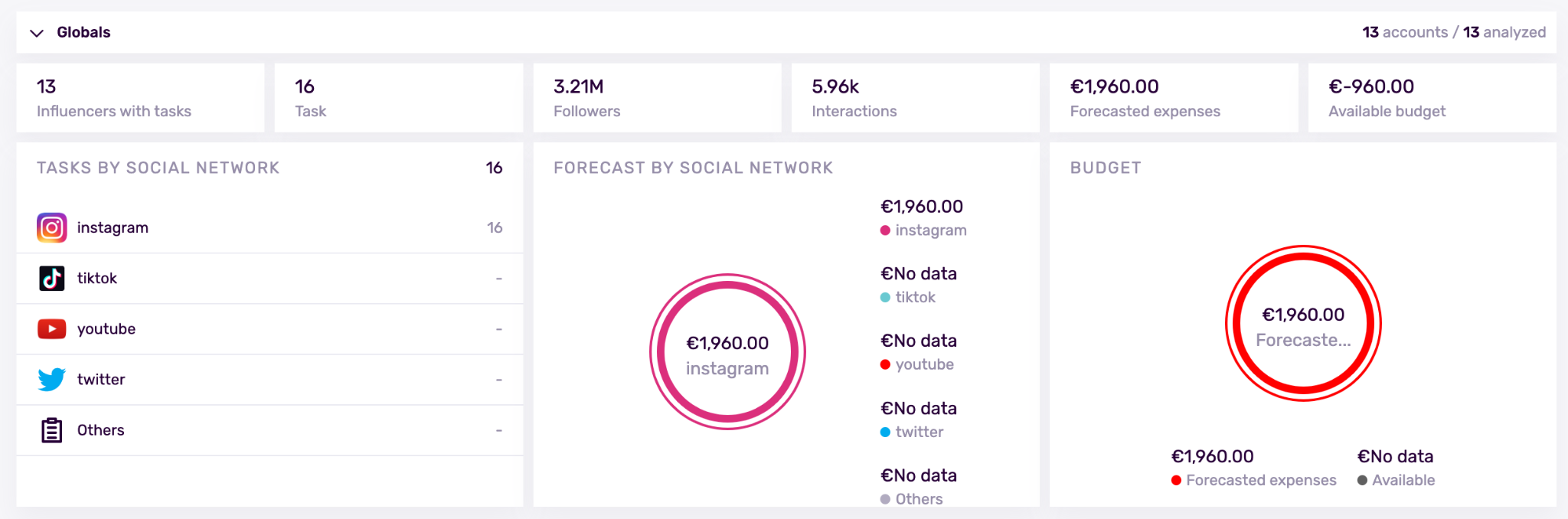
Influencity also comes with robust content tracking features that automatically pull every post (including expired Stories) and analyze their metrics in real time. This means you can see how influencer posts are performing and use those insights to inform mid-campaign adjustments and contract renewals.
You’ll be able to see which influencer content delivers the most value and continues to do so long after campaign launch. This could justify higher rates or continued partnerships, while low-performing content could be a reason to avoid renewing contracts with certain influencers.
The takeaway: When you have real-time data, you don’t argue over cost, you discuss proven value.
You know what to track and which tools to use. Now let’s check out these pro tips to guide your influencer negotiations.
An influencer may feel like they’re qualified to charge a $X fee because they have a certain number of followers. And you could counter with an offer that you feel is justified. But this is just guesswork. Let metrics do the talking instead.
Start your negotiations with metrics like audience match rates and EQS, not follower counts.
Performance-based compensation models allow you to get more out of your influencer marketing spend. It also gives influencers a reason to do more than just the bare minimum. So offer bonuses for hitting EMV or CTR benchmarks. This keeps fees performance-based and motivates creators to keep delivering great results.
Your IRM should log every conversation, deliverable, and result. Data builds negotiating power over time. Has an influencer shown inconsistent results in the past? Do they tend to perform better with specific deliverables? Use these insights to guide your negotiations.
Sustained engagement is better than one-off spikes. Track how influencer content drives performance over time and identify whether they contribute to long-term outcomes. Then reward influencers for delivering consistent results.
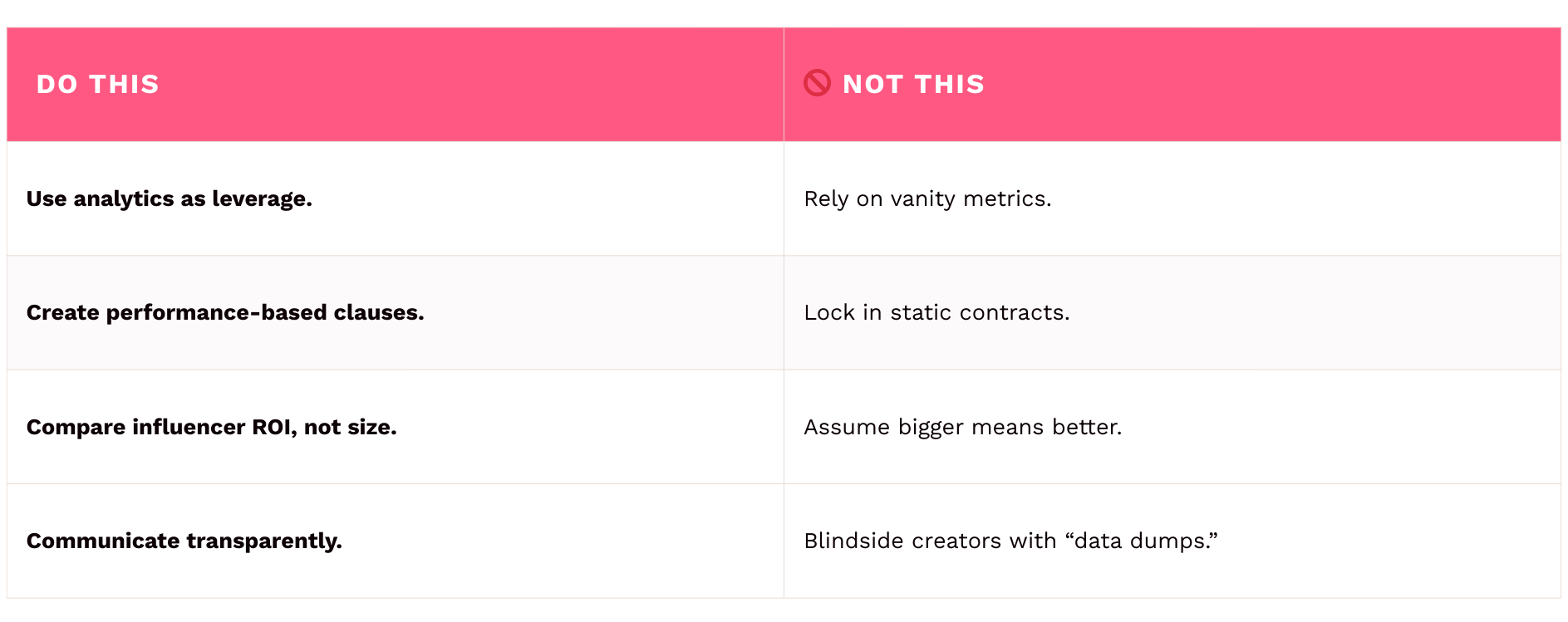
Performance-based pricing helps brands and agencies get more out of their influencer marketing spend. It means you get exactly what you pay for, with higher budgets leading to bigger outcomes. Keep track of the right performance metrics to inform your negotiations and build profitable partnerships.













%20and%20How%20Can%20They%20Benefit%20Your%20Brand%20article.jpg?length=628&name=What%20Are%20Key%20Opinion%20Leaders%20(KOL)%20and%20How%20Can%20They%20Benefit%20Your%20Brand%20article.jpg)










.png?length=628&name=Pop-up%20image%201200%C3%97800@1x%20(1).png)