

Every negotiation starts the same way: creators want more, brands want results. If you don’t navigate this strategically, it could be the start of many conflicts further down the line.
I know of influencers who do the bare minimum because they feel like brands aren’t paying them enough. They then end up not getting rebooked because of poor performance. I also know of brands that try to make low-ball offers and then get shocked when they receive subpar content.
You know the one thing that could end (or even prevent) all of this argument? Data.
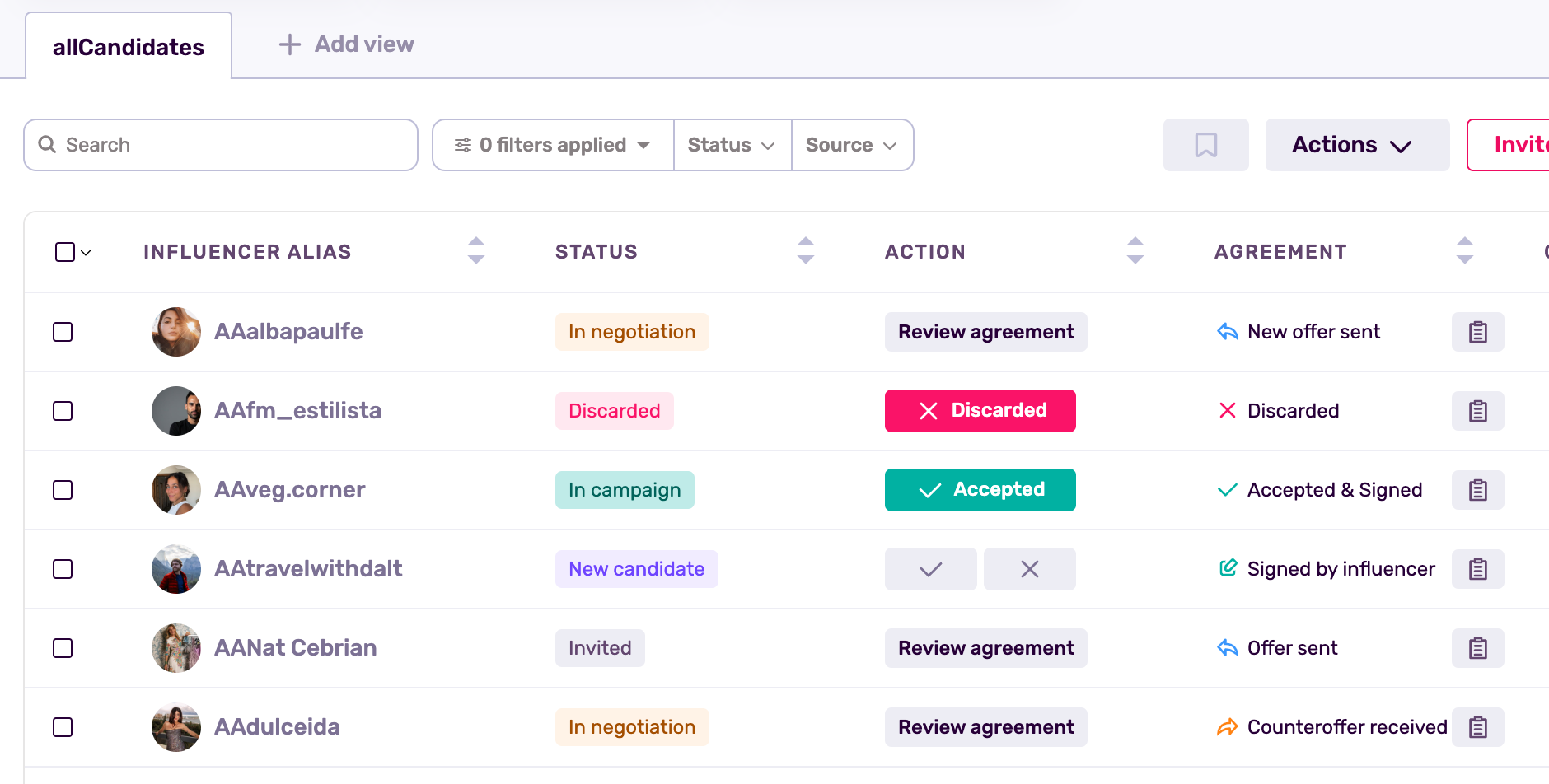
Smart agencies already know this. That’s why they use influencer reporting as leverage, not just as an end-of-campaign checklist item. It’s how you show which creators truly deliver ROI, who deserves a rebook, and where your budget actually moves the needle.
Agencies that win negotiations aren’t the ones with the biggest budgets; they’re the ones with the best data stories.
Traditionally, campaign reporting has been treated like a final exam. You collect the posts, calculate impressions, compile them into a report, and move on.
It’s the “final phase” of the campaign, and nothing more. So it doesn’t serve any other purpose once the campaign ends…or so you thought. What if your report could do much more than simply showcase your results at the end of the campaign? What if it could negotiate for you?
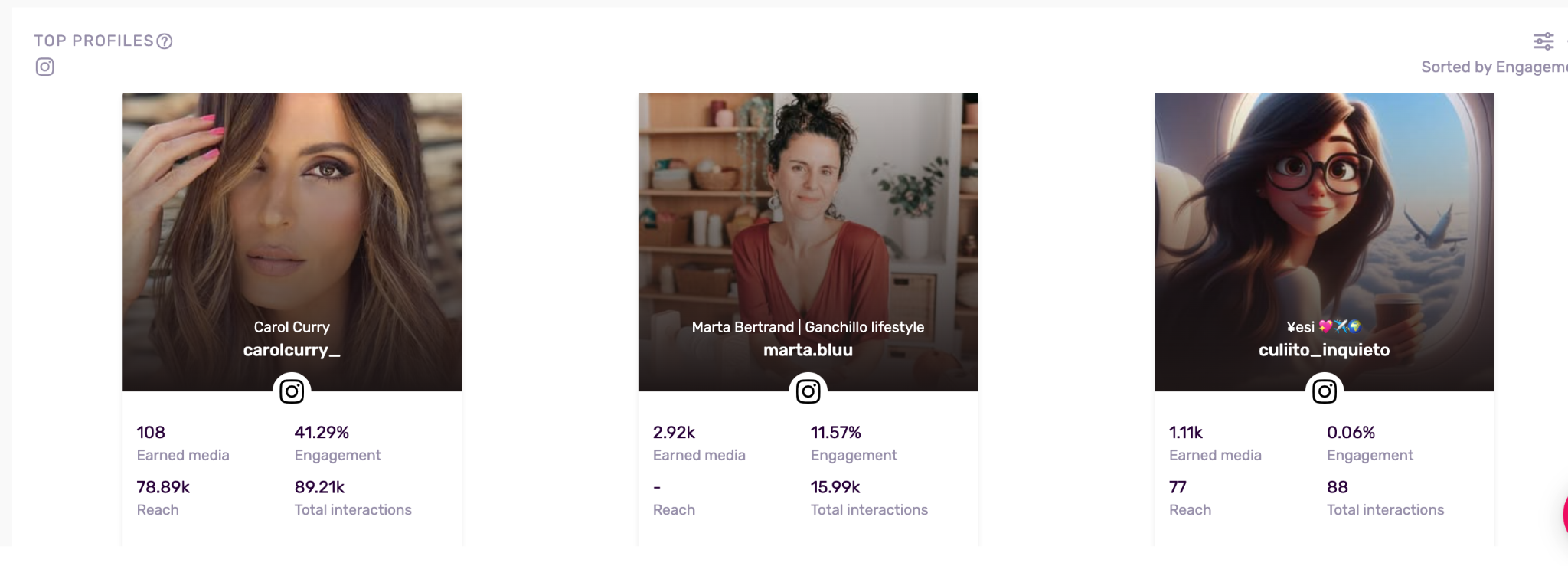
The performance insights from your reports can serve as a powerful negotiation tool to inform which influencers you work with and how much you pay them for your next campaign. You can look into content performance, engagement quality, audience alignment, and cost efficiency to prove which influencers drive true value.
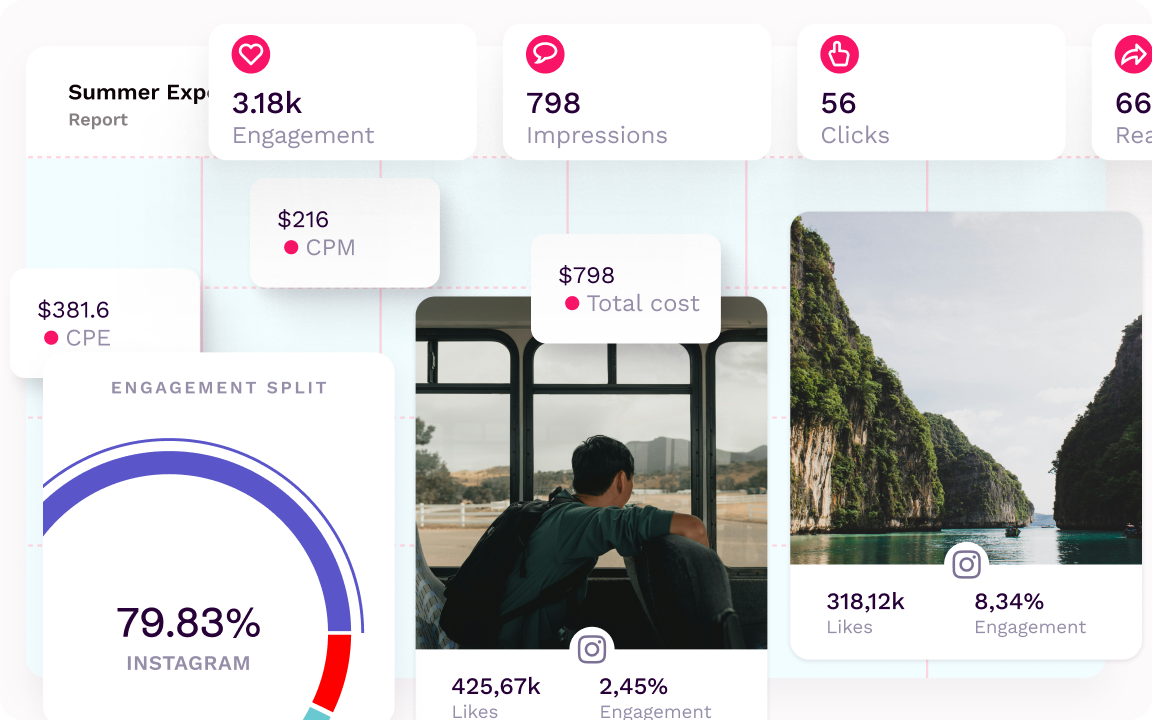
Based on this, you should be able to revise rates and renew contracts to build campaigns that yield higher returns. For instance, you may be able to negotiate lower fees or extra deliverables with certain influencers. Or you could handpick your top-performing influencers to rebook them for your next campaign.
The goal is to get more out of your influencer marketing spend. It’s not necessarily about spending less, but about ensuring that whatever you spend delivers real value.
Here’s an example of how this might work:
After running a global campaign for a beauty brand, the brand’s agency partner used post-campaign data to show that a mid-tier creator delivered 3x higher engagement than a macro influencer with a higher fee.
For their next negotiation, the micro got a rebook, and the macro got a rate revision.
Lesson: Reports don’t just show results. They shape future deals.
When used strategically, influencer reporting goes far beyond vanity metrics. It gives agencies the proof and precision to negotiate like pros, powering campaigns that drive a higher impact. Here’s a detailed breakdown showing how top agencies use data in their negotiations.
The biggest use of influencer reporting is for benchmarking performance. Your reports serve as a record for influencer-specific performance in terms of metrics like engagement, views, clicks, costs, and conversions. So it shows you which influencers are delivering value and which ones are falling short.
This data can then help you justify new rates because you can show influencers, “this is how much we can pay because your content got this many engagements the last time.” If an influencer is consistently outperforming, you can reward them appropriately. Or if you’re not renewing a contract, you’ve got the data to say why.
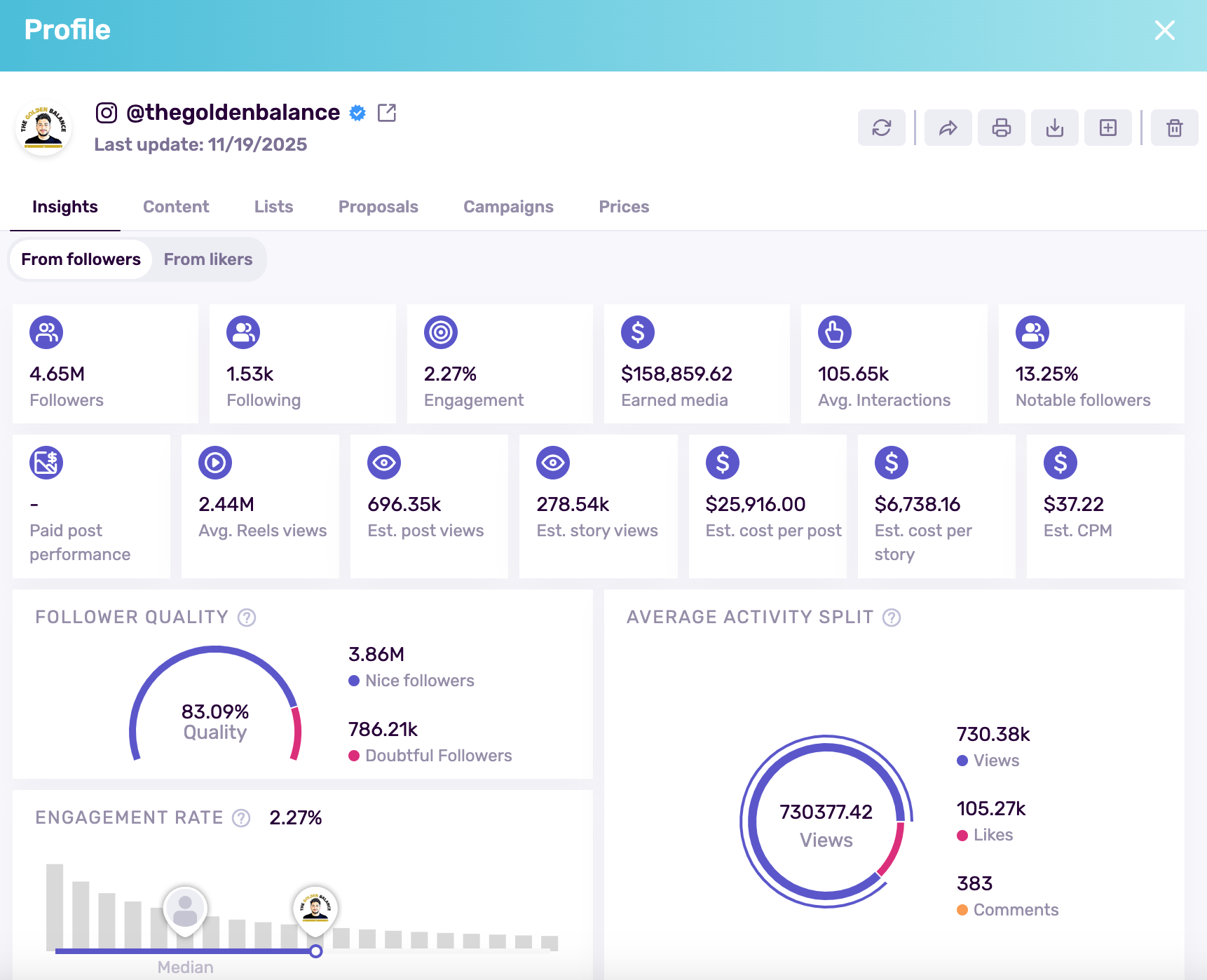
Influencer reporting also serves as a predictive tool to forecast how specific influencers might perform in the future. You can look at their past metrics, like estimated views and engagement rates to predict how their content could engage your audience. Meanwhile, cost-per-engagement data can be used to forecast how much an influencer might cost in comparison to the engagement they drive.
This is highly effective for planning future campaigns, especially to align with your budget. For instance, you might forecast that an influencer has a high CPE based on previous campaign data. So you could exclude them from the campaign to bring down your CPE and improve your ROI.
Of course, there’s the fact that accurate influencer reporting contributes to better campaign transparency. It allows you to present clean, visual data to your clients. So it helps you reinforce trust, making negotiations less emotional and more objective.
You can use your reports to prove to clients how specific decisions make sense, allowing you to justify influencer rate adjustments, contract renewals, and terminations. You’ll be able to show clients “this is how this influencer performed, and this is how we’re working with them the next time.”
On that note, your data also helps you identify your “ROI heroes”, creators who consistently overdeliver across multiple campaigns. This gives you the insights you need on which influencers add the most value and therefore, contribute to a higher return on your investment.
Meanwhile, you can also identify your “nice-but-not-necessary” creators. These creators might perform decently, but not well enough to justify the continued cost of hiring them.
These insights can then help you continuously optimize your influencer roster to deliver high value over time instead of just for a one-off campaign.
Pro Tip: Combine Influencity’s Campaign Reports with your IRM to track long-term performance per creator, not just per campaign.
Influencity’s powerful influencer reporting dashboard gives you comprehensive insights into various aspects of your influencer performance. These insights then tell you a larger story that can inform how you negotiate with influencers. Let’s look at some of the ways you can leverage Influencity for data-driven negotiations.
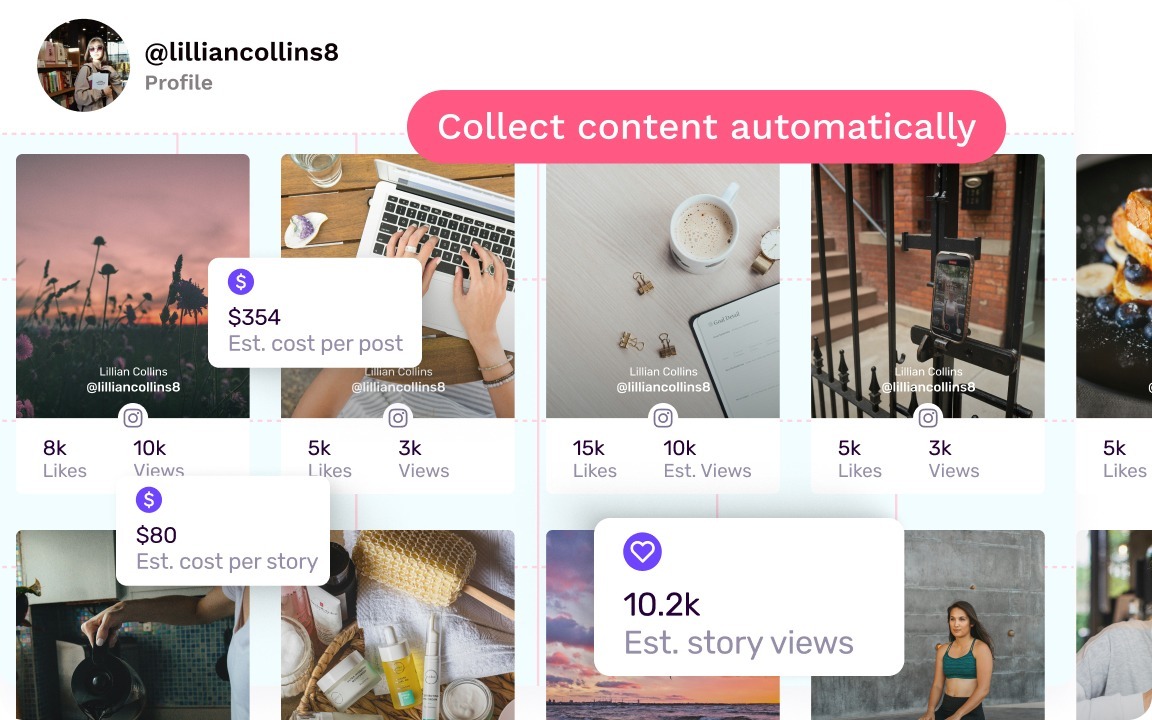
Influencity streamlines influencer content tracking with automatic retrieval. The platform automatically collects every post and Story from influencers, so you can track them all in one place. You don’t need to put together links in messy spreadsheets and manually check content performance multiple times.
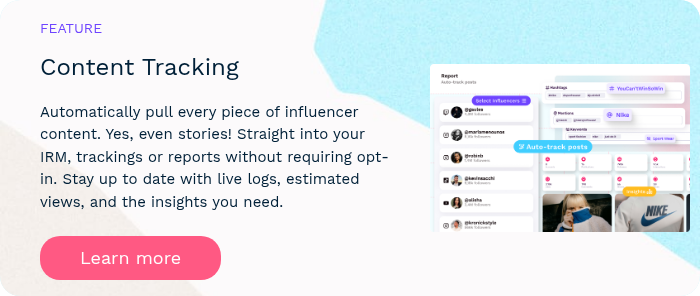
Instead, the platform will automatically update post performance metrics in real time. It even keeps track of expired Stories, so you won’t need to keep screenshots or notes to record their performance. This makes it easier to stay on top of influencer deliverables and monitor their content performance across platforms.
And the best part is that you don’t need to go back and forth with influencers to get them to opt in. The platform automatically tracks every piece of content from an influencer once you’ve added them to your list.
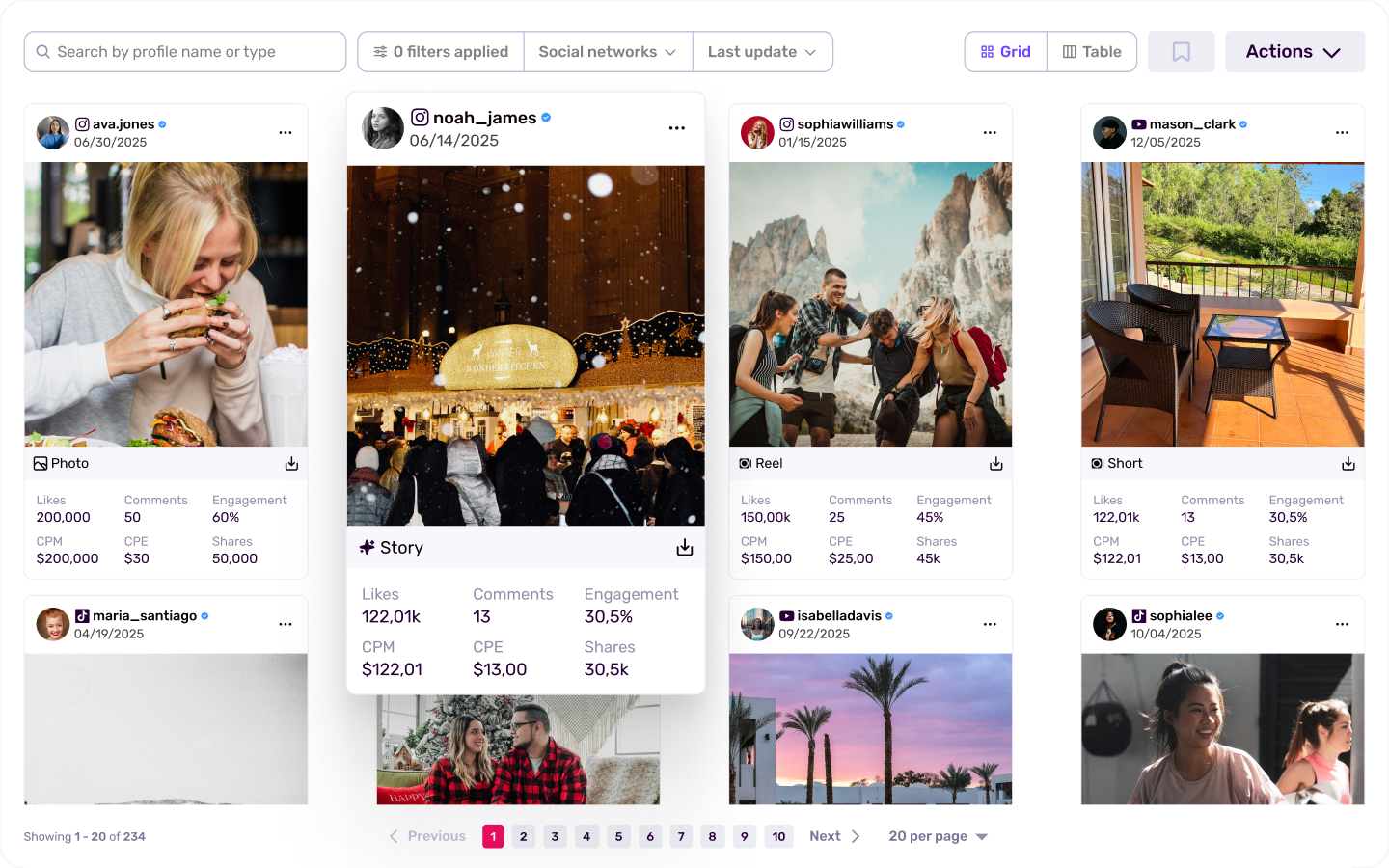
What makes Influencity’s reporting tool unique is its ability to forecast metrics. The platform keeps track of an influencer’s content performance and follower engagement across platforms. It then uses predictive analytics to forecast your ROI according to specific influencer combinations.
So you can use this to predict impressions, engagement, CPE, and ROI for your campaign. This helps you figure out how much value you’re getting for your influencer marketing investment.
You can compare these estimates against your budget and strategically adjust your influencer mix to deliver higher value. This could mean removing influencers with a higher CPE, negotiating lower fees, or asking for extra deliverables to help you get more out of your influencer marketing spend.
Additionally, these forecasts also serve as a negotiation tool by giving you a realistic price estimate for basing your offers and counteroffers. That way, you can avoid getting overcharged while at the same time making offers that don’t lowball influencers.
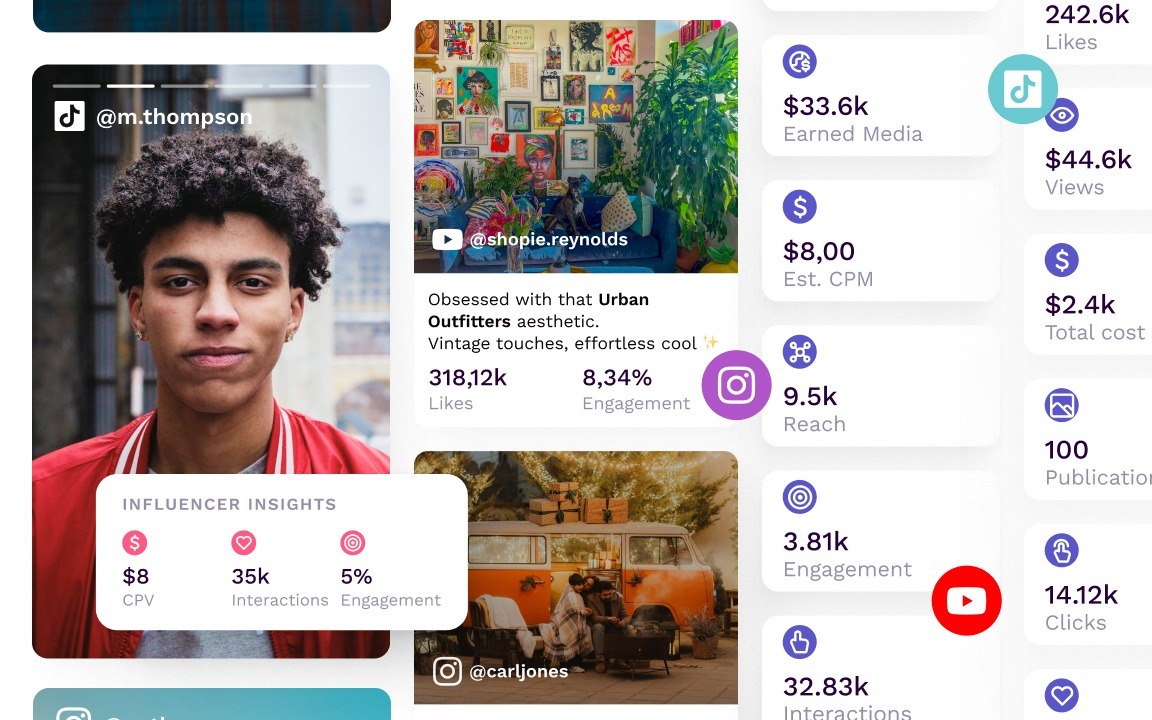
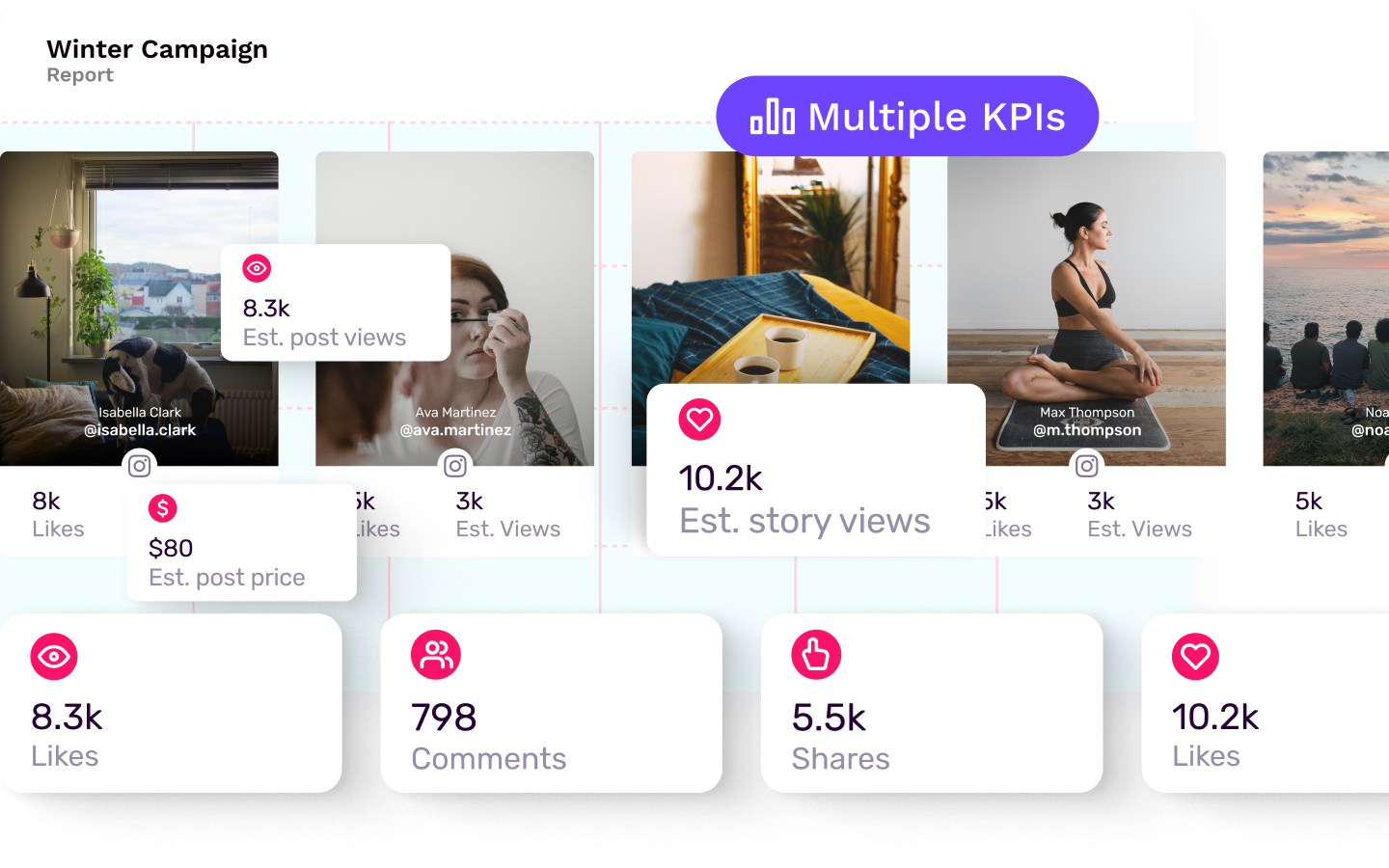
Influencer reporting is all about impactful data storytelling. Influencity helps you tell stories that make sense to your clients with a wide range of KPIs that you can add to your report. Hand-pick the KPIs that matter and build custom reports that tell the story your clients want to hear.
For instance, while some clients may be focused on the earned media value generated by influencers, others might be interested in tracking the views generated by the campaign video because they heavily invested in it. Influencity’s dashboard can be customized to highlight the exact metrics you need, minus the noise.
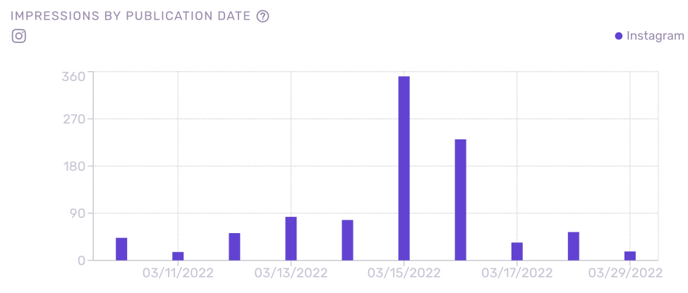
Influencity also comes with data visualizations that let you turn numbers into narratives your stakeholders can understand. So instead of just telling them that this one post received X number of impressions, you can show them charts and graphs to visualize what that means.
For instance, you’ll be able to help them visualize how a certain post got significantly higher impressions than other posts from your campaign. Or how certain days of the week play into the changing patterns of engagement.
This makes it easy to identify patterns, pinpoint what works, and make adjustments that add to your bottom line.
Pro Tip: Use Influencity’s reporting dashboard to export data visualizations for client decks and negotiation docs. It’s how you show value, not just claim it.
Everyone who’s familiar with influencer marketing knows about Gymshark. The brand’s influencer campaigns are famous for being relevant and impactful. And it’s not just because they work with major influencers. The brand also works with smaller creators who have a small but engaged following made up of the right people.
Larger creators were typically provided with personalized discount codes to share with their audience. And they’d be paid commissions based on the sales they help to generate using those codes.
Additionally, Gymshark found other ways to get more value out of their influencer partnerships. Using consistent post-campaign reports, their internal team built a transparent pricing model based on engagement value rather than follower size.
Result: Gymshark reduced campaign costs by 22% while maintaining consistent reach and engagement.
That’s what happens when data becomes the foundation of your negotiations.
Once you’re ready to start leveraging influencer reporting for your negotiations, make the most of these tips and best practices to get started.
Standardizing your reports makes it easy to compare performance across multiple campaigns. This involves the use of consistent KPIs across different reports, so you can compare apples to apples.
While it’s true that you should customize your reports based on each client’s goal, you still need a few KPIs to tie one report to another. Metrics like engagement rate, CPE, CPM, and EMV should be a part of every report, so you can effectively compare how one campaign compares to another.
If you’re only calculating views for one campaign vs. EMV for another, it’s difficult to see how your investment is delivering value across these campaigns.
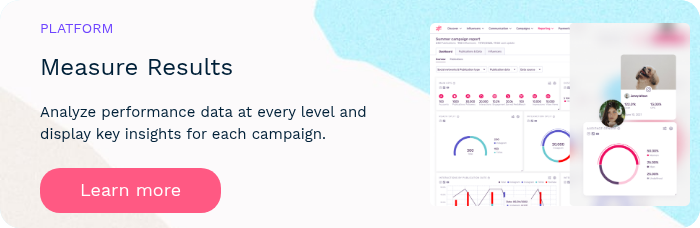
When certain influencers are consistently overdelivering, it only makes sense to keep reinvesting in them so they can continue to generate value. Use data to highlight your top-performing influencers and showcase their real impact. This can help you secure better rates and ramp up your investment in the right influencers, which will ultimately lead to better ROI over the long term.
Raw numbers are great, but they’re not for everyone. Seeing that an influencer generated a 3% engagement rate might not seem so impressive unless you also see that even the larger influencers could only get a 1% engagement rate.
Turn raw numbers into stories that align with your client’s KPIs – whether it’s conversions, awareness, or sentiment shifts.
For instance, help them visualize how sentiment changed over time since the start of your campaign. Or show them how brand mentions increased in a span of one month since your first post.
Influencer value compounds over time. One-off campaigns may generate impressive spikes in impressions and engagements. But the real measure of an influencer’s impact is in how they continue to drive value several weeks or months down the line.
Use long-term reporting trends to prove growth or justify renegotiations. Make the most of charts and graphs to visualize the long-term value generated by influencer content.
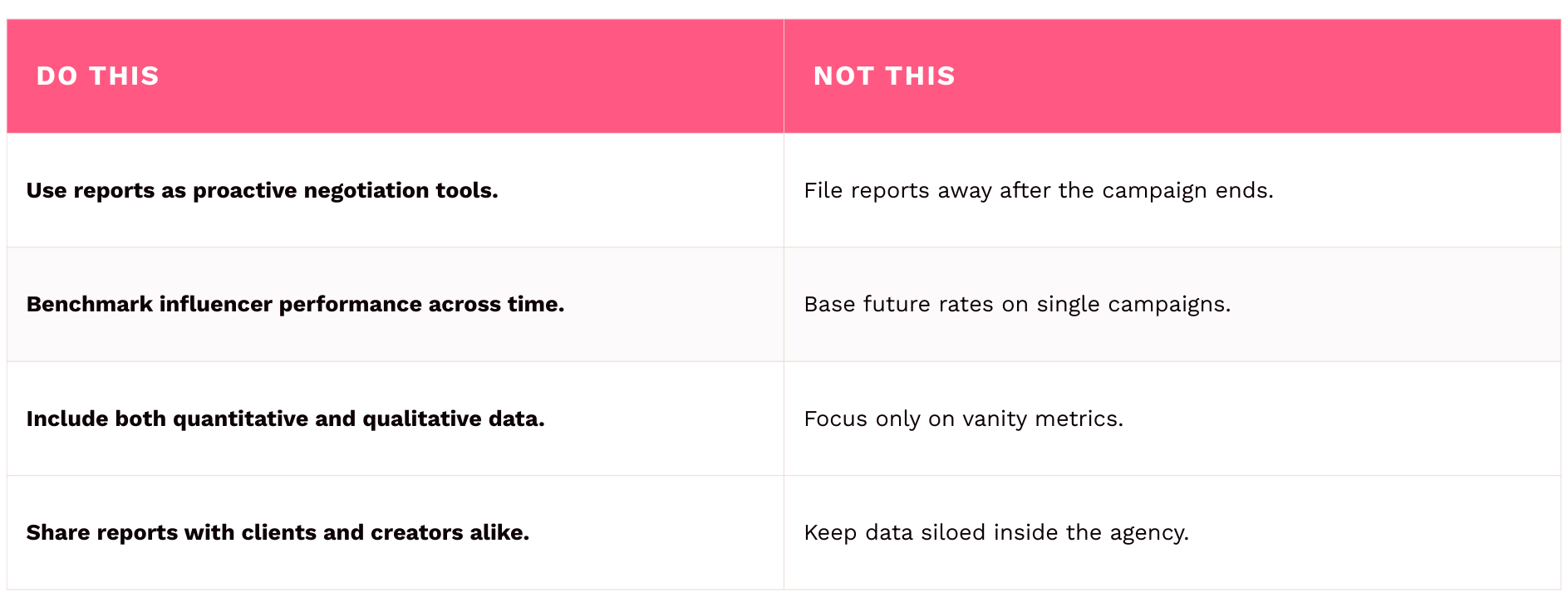
Your influencer reporting isn’t just for showing clients how your strategy has paid off. It also gives you valuable data to inform your influencer negotiations. From deciding which influencers to work with to figuring out reasonable pay structures, use data as leverage to build more profitable campaigns.











%20and%20How%20Can%20They%20Benefit%20Your%20Brand%20article.jpg?length=628&name=What%20Are%20Key%20Opinion%20Leaders%20(KOL)%20and%20How%20Can%20They%20Benefit%20Your%20Brand%20article.jpg)








.png?length=628&name=Pop-up%20image%201200%C3%97800@1x%20(1).png)