

If you’re like me, you’ve often wondered, How much do influencers make? Seeing influencers living lavish lifestyles, going on international trips, and buying expensive stuff, it’s obvious that they’re making bank from creating content. Yet for smaller creators, that couldn’t be farther from the truth.
I recently learned from my micro-influencer friend that she’s making about $50 to create an Instagram Reel for brands. Even if she gets an opportunity to create 10 sponsored Reels a month, that’s still just $500, which means she’s barely making enough for rent.
So why is there such a massive gap in influencer pay? What influences influencer rates?
In this article, I dive into the real dynamics behind influencer pricing, unpacking why rates can swing from $500 to $50,000 for what seems like the same deliverable. I also and how agencies can negotiate smarter, not cheaper. The goal isn’t to undercut creators but to create fair value that drives ROI and keeps relationships healthy.
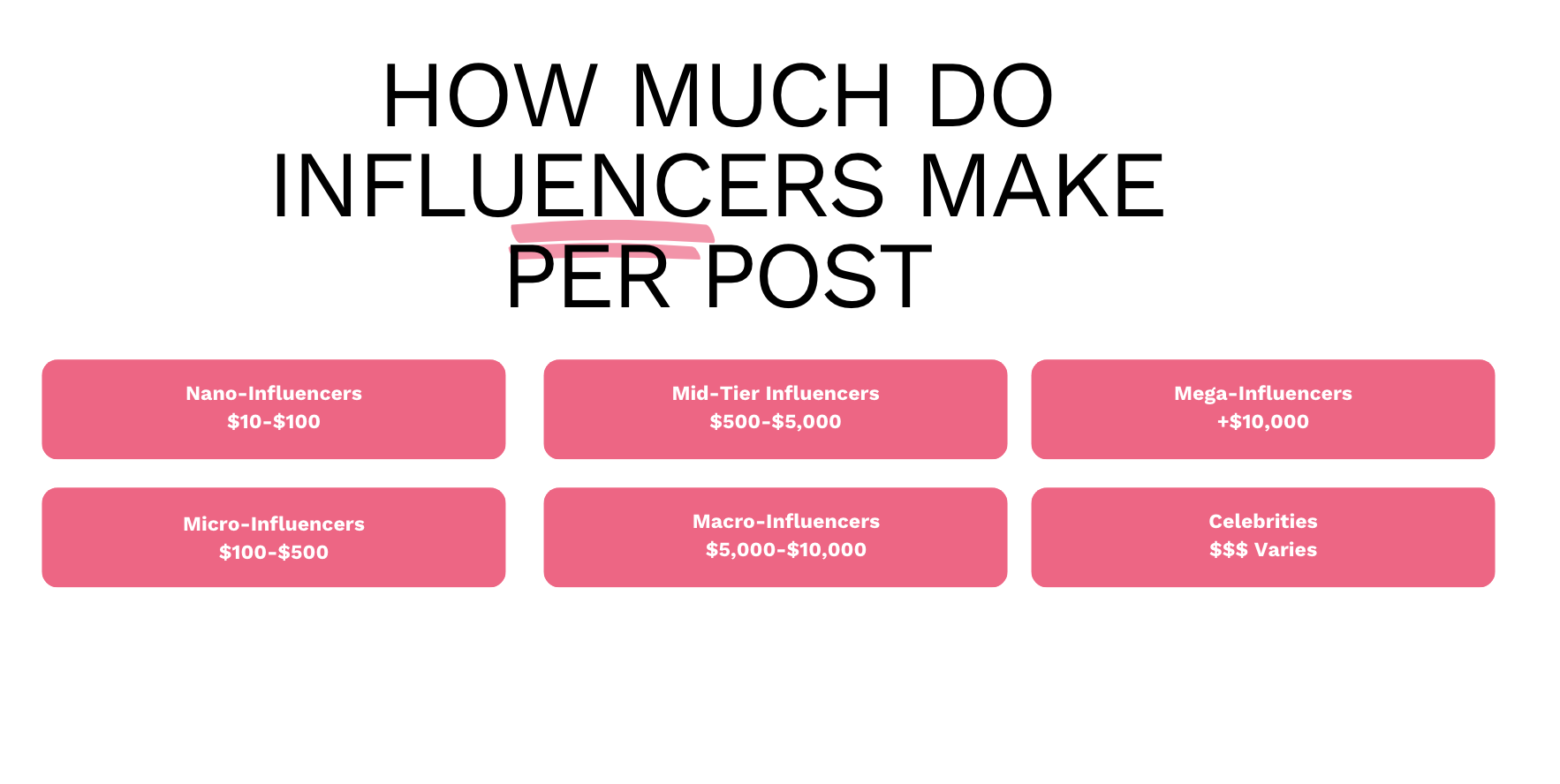
Influencer pay in 2025 is a broad spectrum. And when we say broad, it’s no exaggeration. Influencers could be making anywhere between $5 per post and millions of dollars, depending on factors like who they are and how many followers they have.
Influencer Marketing Hub reports that nano-influencers typically make between $5 and $250 per post. But mega-influencers could earn about $2,000 and $20,000 per post, depending on the platform. In the case of A-list partners like celebrity influencers, the pay could even be in the millions.
At the same time, brands are no longer just focusing on vanity metrics like follower count, views, and likes to determine how much to pay influencers. While influencers may set their own rates based on these numbers, there’s a growing shift toward data-driven pricing. This involves paying influencers based on the actual value they generate for your business – whether that’s in terms of traffic, conversions, or sales.
So someone with 5,000 followers could earn a much higher pay than someone with 50,000 followers if they manage to drive more sales for the campaign.
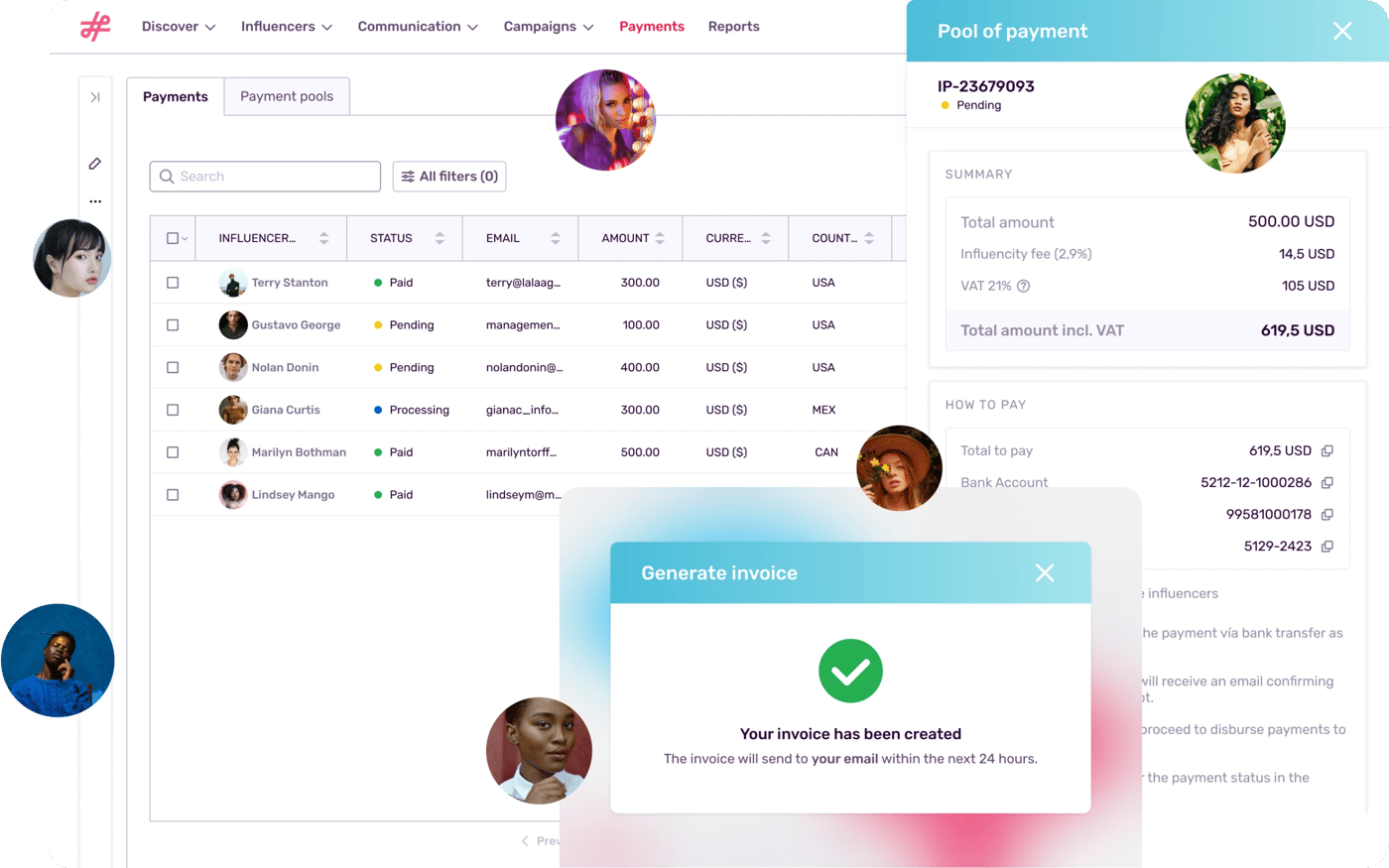
Platforms like Influencity make it easy to track and manage influencer payments in one place. The platform automatically tracks how much an influencer should earn based on various KPIs (CPE, CPM, etc), link clicks and discount code use. This allows you to seamlessly calculate pricing according to the actual value each influencer generates.
From what you’ve read so far, you can already see that the spectrum for influencer rates is extensive. And there’s no single answer to “How much do influencers make?”
That’s good news for brands and influencers alike. For brands and agencies, there’s more leeway for negotiation. And with data-driven pricing, whatever you spend on influencers is likely to deliver a high return.
For influencers, it means there’s a good potential to grow your earnings based on your performance. So even with a smaller following, you could earn as much as (if not more than) larger creators if your audience is engaged and likely to convert.
Now that you have a better understanding of the state of influencer pay in 2025, it’s time to figure out what influences the actual payout. Here’s a detailed breakdown of the biggest factors shaping influencer rates.
Influencer payouts aren’t the same across platforms. Rates vary because of how valuable the platform is and how complex it is to create content. For instance, influencers will typically charge more for YouTube content because the platform requires more long-form content and offers expansive reach.
Meanwhile, rates on TikTok and Instagram are almost similar, although influencers on Instagram may charge more because of a variety of reasons. Instagram not only has a bigger user base than TikTok, but it also offers reach in certain countries where the latter is banned. This plays a key role in how influencer fees for each platform are determined.
According to the IMH report cited above, micro-influencers earn around $25-$125 per TikTok video. On Instagram, the rates increase slightly to $100-$500 per post. YouTube videos cost much more, with micro-influencers charging between $200 and $1,000 for each video.
So if you’re focusing on YouTube vs. TikTok, you’re likely to pay more for your influencer collaboration. And you’re also likely to see a higher ROI for your influencer marketing efforts. That’s because YouTube focuses on long-form, evergreen content that can continue to yield returns even long after the campaign has ended.
On the flip side, platforms like TikTok and Instagram are fast-paced. Trends move quickly, as do people’s feeds. This makes the content less likely to continue delivering results in the long run.
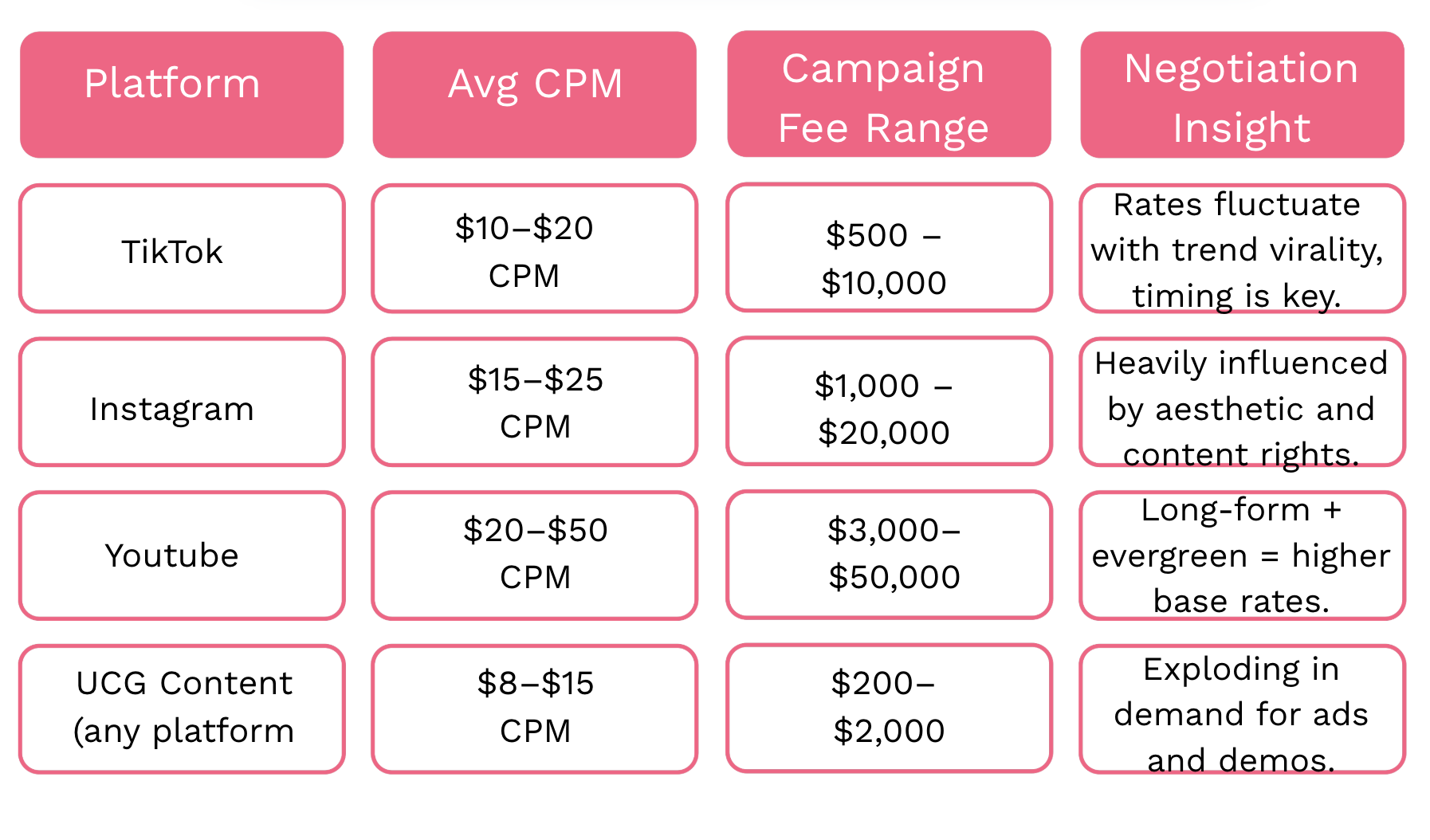
Note: Agencies using data-driven negotiation tools (like Influencity’s rate benchmarking) report saving up to 25% in overpayment while maintaining creator satisfaction.
While follower count used to be the biggest factor determining an influencer’s earnings, that’s no longer the case. With the rise of influencer fraud, brands and agencies have learned to take a closer look at engagement quality.
So even while vetting influencers, they’re looking beyond the number of likes and comments. Instead, they’re figuring out if the audience is authentically engaged. They’re seeing if people are making relevant comments and asking genuine questions instead of simply posting a bunch of emojis or one-word remarks.
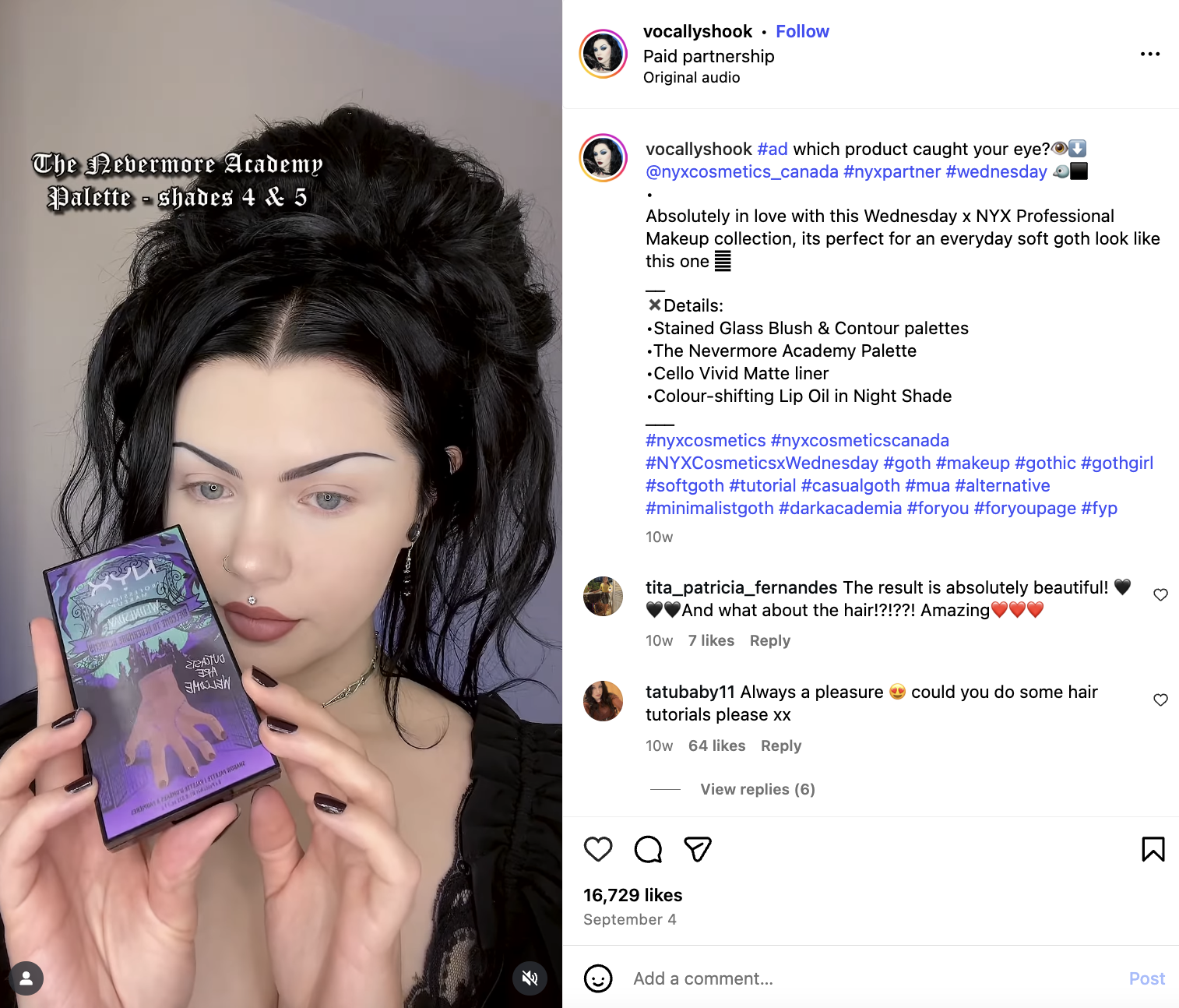
This also means they’re calculating payouts based on authentic engagement. Instead of simply paying influencers based on vanity metrics, they’ve adopted performance-based payments where earnings are calculated based on actions such as conversions, traffic, and purchases.
Influencer earnings are also influenced by how much work goes into the partnership and how exclusive it is. Complex deliverables tend to require more time and effort, which will result in higher fees. For instance, a detailed, 15-minute review video on YouTube will cost more to produce than an Instagram carousel featuring photos of the product.
Additionally, influencers may charge more if the contract includes an exclusivity clause preventing them from posting sponsored content from other brands. Since this would cause them to miss out on potential earnings, brands will need to compensate influencers reasonably to ensure a fair partnership.
This one’s the silent budget killer. Brands will partner with influencers under the assumption that they automatically have the rights to reuse the content however they want. So they may reuse it for marketing materials (think: ads, posters, and more) only to find out that they don’t have the necessary usage rights, resulting in huge fines and legal fees.
That’s why you should clearly define how you can reuse the content and for how long while you’re finalizing the terms of your partnership. Make sure to get necessary permissions and pay any associated fees to avoid legal conflicts and heavy fines further down the line.
Be specific about where and how you’ll reuse the influencer content, whether it’s for your ads, product pages, marketing emails, or other materials. Some brands have also started running partnership ads on Instagram, where ads are displayed to users from the influencer’s handle. Influencers may charge differently for this type of collaboration vs. the brand reusing their content as creative for ads published by the brand.

Influencer earnings aren’t the same across industries. You can expect to see higher fees in industries that generate a high influencer marketing ROI, such as beauty and travel. Additionally, industries that require deep technical knowledge (think: fintech or coding) could also involve higher influencer fees.
For agencies, influencer negotiation is one of the trickiest parts of building a campaign. It involves prioritizing your client’s best interests, which means saving them money. While this could translate to negotiating lower influencer fees, you have to do so without undercutting creators.
It’s important to strike the right balance between the two so influencers are still fairly compensated for their work, even if your client is saving money. Here’s how to negotiate so you can create fair value and build lasting relationships.
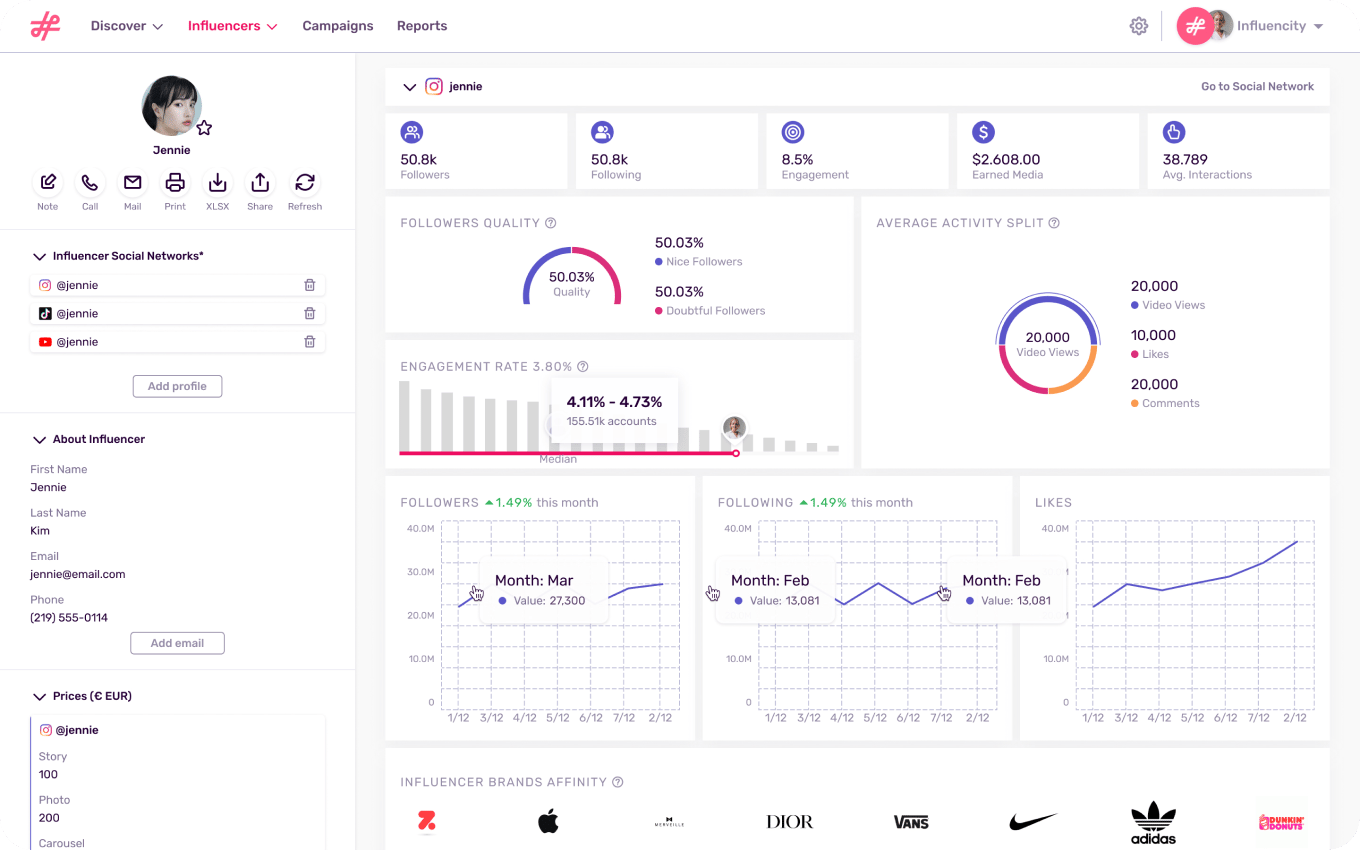
As I mentioned earlier, data should lead the way when it comes to influencer payments. Too many times, ego gets in the way of fair negotiations, with influencers basing their fees on superficial numbers like follower count. Use influencer analytics to get insights into an influencer’s performance and negotiate fees accordingly.
Look at follower quality, engagement quality, and other metrics to inform your negotiations.
There are times when influencers will charge much more than what you’re willing to pay. This can be tricky because you already have your mind set on the influencer. Many agencies will stretch their budget if it means working with them.
At the same time, it’s not always viable to go beyond your budget every time and for every influencer. Or you’ll end up spending more than you can afford, which will destroy your bottom line.
Have a clear idea of how much you’re willing to move the baseline pay. If influencers ask for anything higher than this, it’s a good time to walk away.
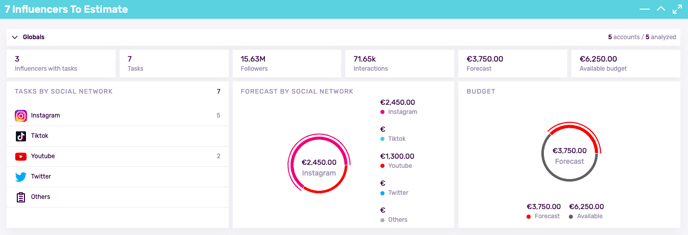
Another way you can inform your negotiations is by using predictive analytics. By estimating how much value an influencer is likely to generate for your business, you can strategically negotiate payments.
Platforms like Influencity let you run estimates for your campaign and forecast your results and budget based on a specific influencer combination. Use this insight to figure out the estimated value of an influencer and negotiate their fees accordingly.
Beyond these, you should also consider what creators are factoring into their rates. This usually involves the time and effort that go into producing content for the campaign.
Influencers generally consider how much time and effort they invest to determine a fair rate.
If they have to spend a huge chunk of their time creating content for the campaign, they’ll naturally want to charge more. That’s why the cost to produce long-form content is typically higher than still images. Similarly, they’ll also factor in how much of their creativity goes into the process and whether they’re heavily involved in creative direction.
The cost to produce the content is another major factor that affects influencer pricing. How much are they investing in props and styling, for instance? How much are they investing in editing the content? All of these costs will add up to influence the final fees.
Influencers will also consider whether they’ll have a relationship with the brand in the long term. One-off partnerships will typically cost more when compared to long-term brand collaborations.
In addition to the above considerations, let’s take a look at some additional tips to help with successful negotiation.
If your opening line is “What’s your rate?” you’re already doing it wrong. While you need to respect the rates influencers set for themselves, you need to lead the negotiation process with your own baseline pay. This will give them a realistic idea of how much you’re willing to pay.
So instead of asking them their rate only to counter with a lowball offer, start off by sharing your initial offer, then negotiate your way up from there.
Influencers put in time and effort into developing content. They invest their creativity to deliver content that awes and engages. Show them that you respect their creative process even during negotiations. This will often lead to better content and long-term partnerships.
If your budget is tight, don’t automatically ask for a discount. In line with the above, you’ll want to negotiate to show them that you value their work. So reduce deliverables instead of forcing a lower rate. This is essential to mutual respect and quality.
Data benchmarks can guide your negotiation process. If influencers set a much higher rate than the value they can deliver, these benchmarks can give you leverage.
Platforms like Influencity now use predictive models to assess “rate realism” based on content type and region. You can estimate how much influencers should realistically make and then negotiate your way accordingly.
Flat fee payments once dominated influencer marketing. Influencers would charge a flat rate and create content without ever having to worry about how it performs. This sometimes resulted in content that failed to deliver results.
With a greater focus on data-driven payments, brands are now switching to hybrid payment models where influencers charge a base fee and get performance-based bonuses. For instance, they may earn a commission for every sale that comes from their link or for every discount code used. This model incentivizes influencers for creating great content, giving them an even better reason to be invested in the process.
Influencity makes it easy to keep track of influencer-specific performance. You can create codes and UTM links unique to each influencer. Then use the platform to track how those links and codes are performing. This streamlines the process of calculating how much each influencer should earn.

At the sake of sounding redundant, there’s no single answer to the question. A variety of factors will influence how much a specific influencer should earn. Platforms like Influencity take the guesswork out of determining influencer fees with predictive analytics tools to suggest realistic rates for each influencer.













%20and%20How%20Can%20They%20Benefit%20Your%20Brand%20article.jpg?length=628&name=What%20Are%20Key%20Opinion%20Leaders%20(KOL)%20and%20How%20Can%20They%20Benefit%20Your%20Brand%20article.jpg)










.png?length=628&name=Pop-up%20image%201200%C3%97800@1x%20(1).png)