

Influencer marketing has evolved from one-off collaborations to ongoing creator programs. What matters now is who you can bring back, and whether each collaboration makes the next one easier.
But most teams still run creator relationships like transactions. Brief goes out, content comes back, invoice gets paid, and the relationship resets. The outcome is predictable: messaging drifts, strong creators disappear, and the learnings never get reused.
I’ve watched teams activate 100 creators, clear 1M+ impressions, and still have nothing to build on the next month.
That’s where social media talent management comes in. It’s the practice of treating creators like long-term partners, with relationship history, performance patterns, and next steps captured in the workflow. So retention becomes intentional.
In this piece, we’ll look at what Sephora and Gymshark do well, what agencies like Gleam Futures and Digital Voices borrow from talent management, and how Influencity’s IRM (Influencer Relationship Management) helps teams support social media talent management at scale.
For a broader view of this shift and where marketing teams are heading, this pairs well with Influencity’s guide on how to craft a digital marketing strategy in 2026.
Influencer marketing used to be about reach. Now it’s about creator retention.
When you bring the same creators back, you stop resetting the relationship every campaign. Briefs get shorter because creators already understand your voice. Approvals speed up because expectations are familiar. Messaging stays tighter because the brand story carries forward. And performance becomes easier to improve because you’re building on stable inputs, not guessing from scratch.
Scale is working with more creators without needing to double your team. An IRM helps you do that by keeping outreach personal and saving the details that make partnerships improve over time.
Social media talent management is treating creators like long-term partners, not one-time vendors. Instead of asking, “Who can post for us this month?” you ask, “Who are we building with this year, and how do we help them do their best work?” And, “Where do their strengths fit with our creator program goals?”
A simple way to think about it is a loop you run every quarter: Recruit, Onboard, Create, Measure, Grow, Renew.
This is the difference between running influencer campaigns and running a creator program. A campaign ends. Social media talent management keeps the work moving forward by capturing what you learned and using it the next time.
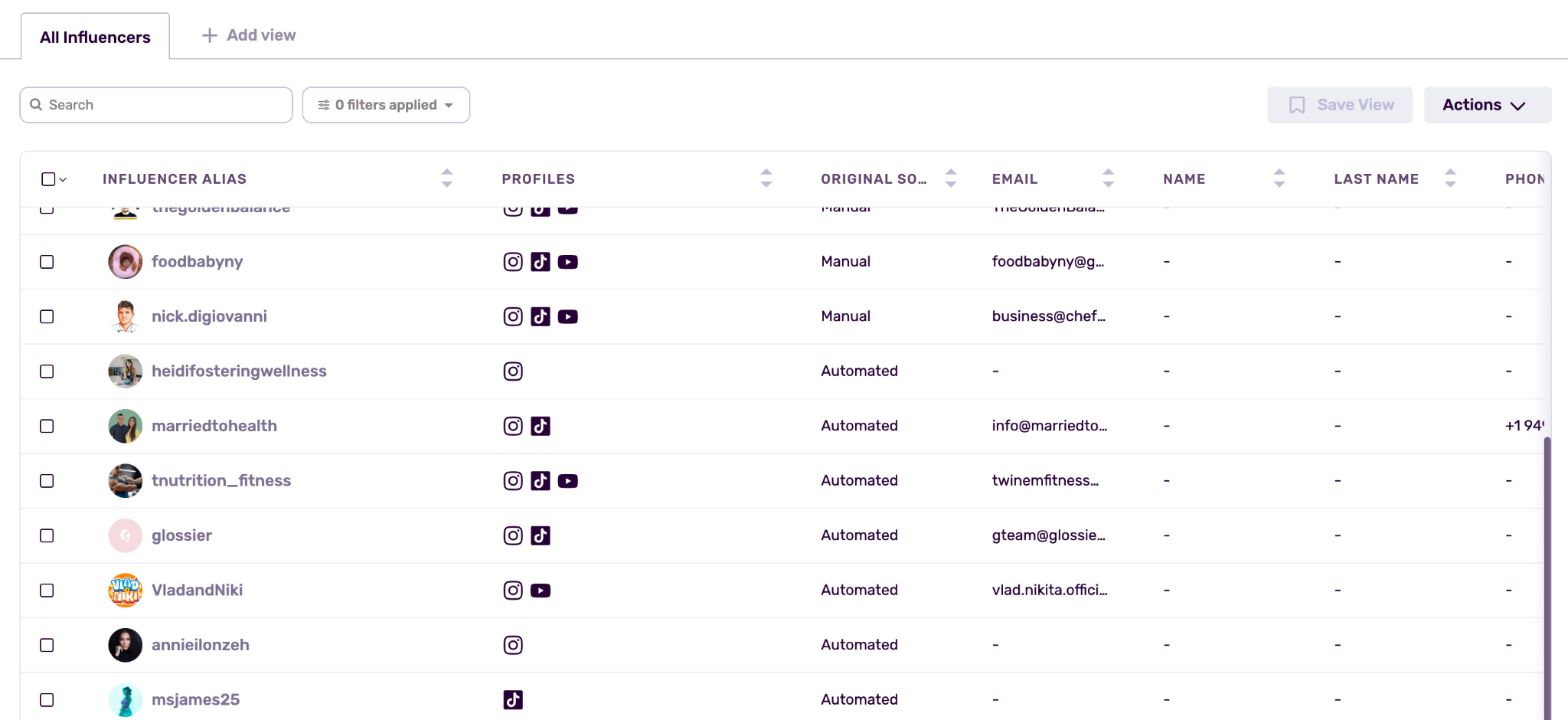
This is the kind of structure Influencity’s IRM is designed to support, so teams can reuse context and improve each collaboration over time.
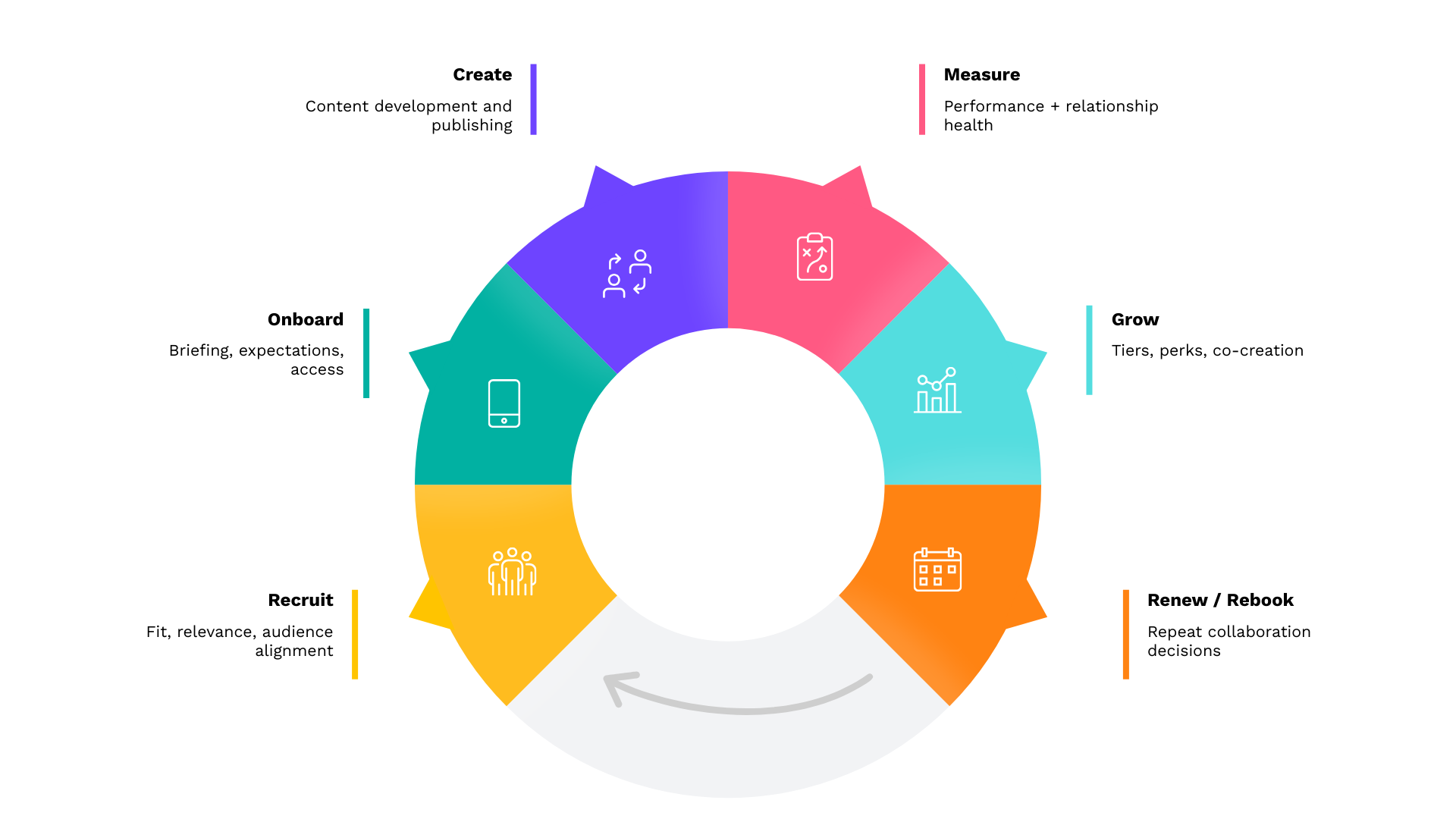
Social media talent management becomes scalable when creator relationships are managed as a continuous, data-informed loop.
This loop also sets up the next question most teams ask: where do we keep the relationship history so it does not disappear after each campaign?
In this article, influencer CRM (Customer Relationship Management) refers to the category of tools used to manage creator relationships, while Influencity’s IRM (Influencer Relationship Management) is Influencity’s platform built for that purpose.
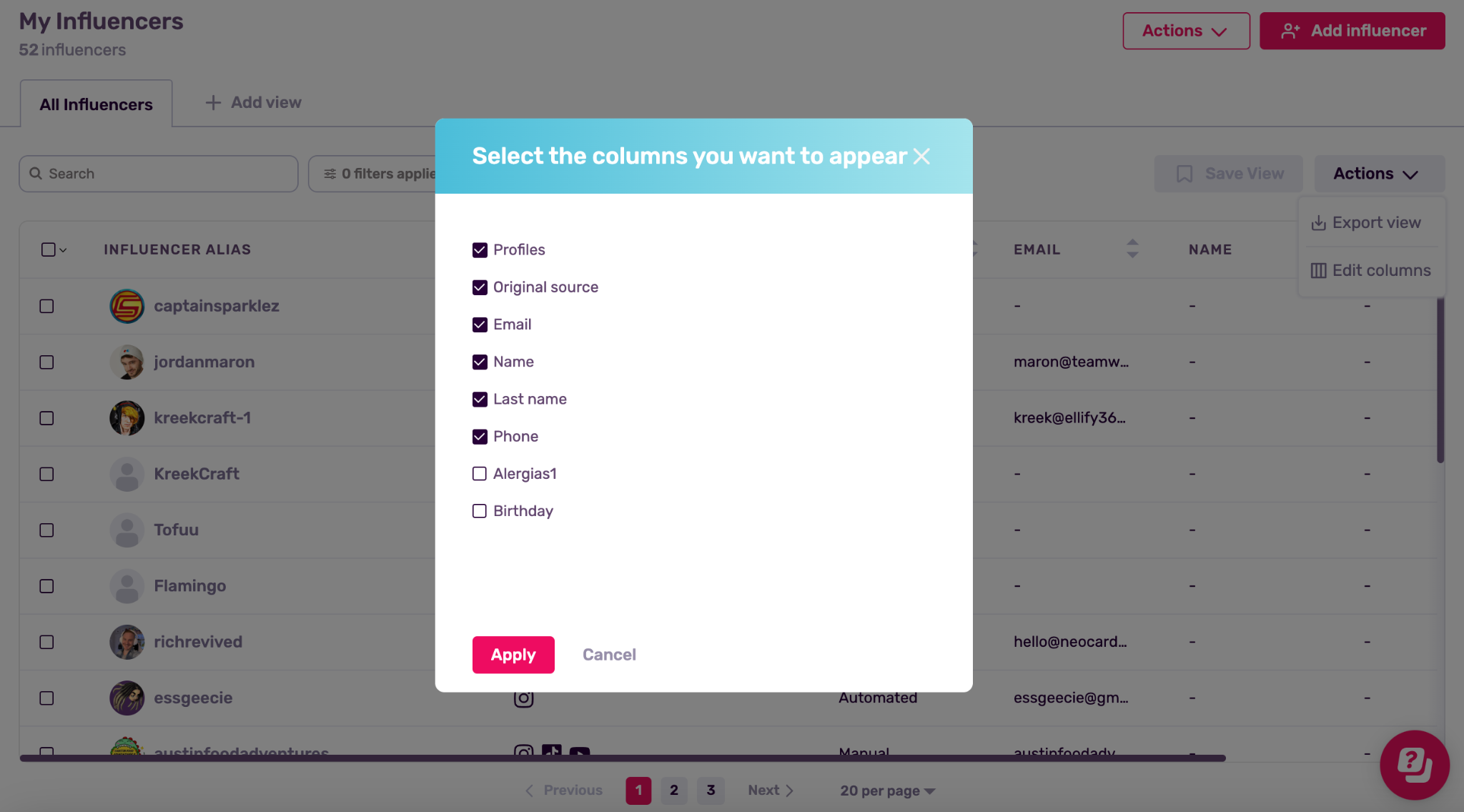
An influencer CRM is where you store and use the information that makes repeat collaborations easier: relationship history, past performance, collaboration notes, contracts, timelines, and what to do next.
Most brands think they already have this because they have a spreadsheet, an inbox, and a shared drive. But those tools don’t preserve context in a way the whole team can use. So every campaign starts from scratch. The same creators get briefed like strangers. The same questions get asked again. And the best learnings stay trapped in someone’s head.
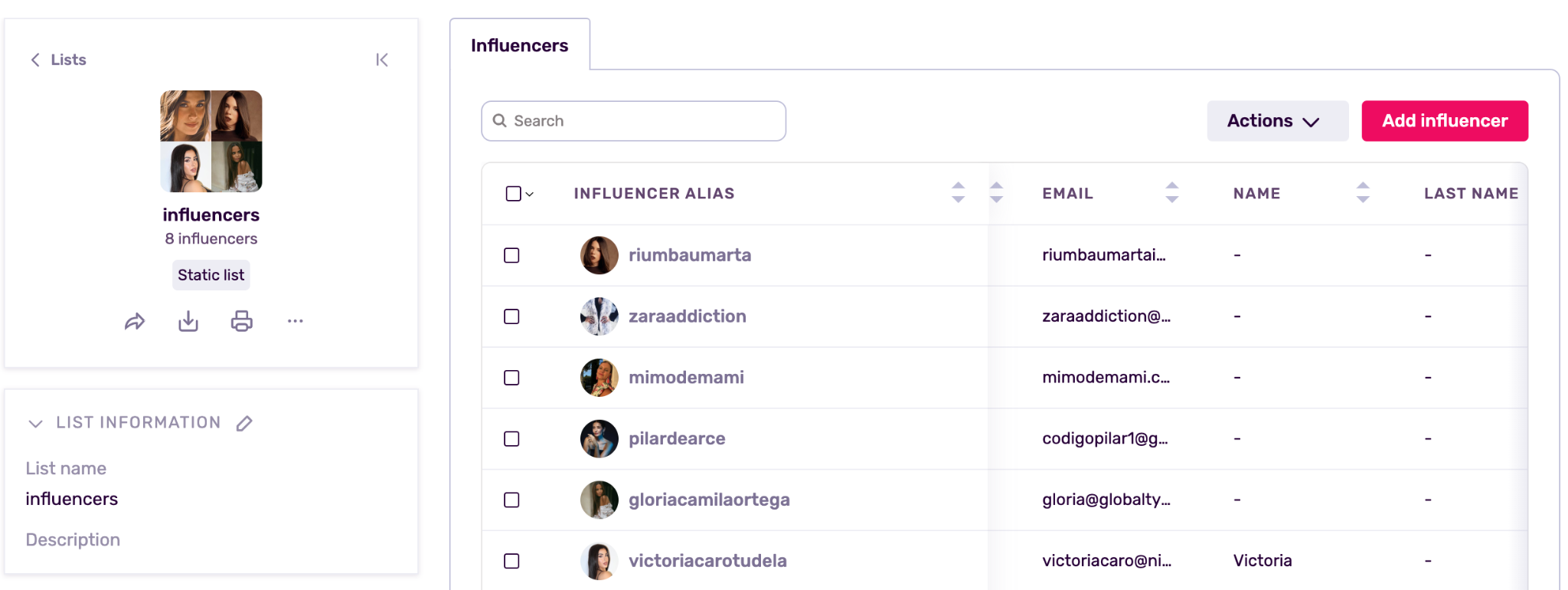
A better system fixes that by letting you save reusable creator groups, like a “female Instagram creators” segment, as a saved view you can return to anytime.
The most valuable notes are usually small: what hook worked, what the creator pushed back on, any detail on personal data (birthdays, show size, births, etc) and one idea to make the next post stronger, and those are exactly the details a CRM should store.
Here is what an influencer CRM looks like when it is used the wrong way:
Here is what it looks like when it is used well:
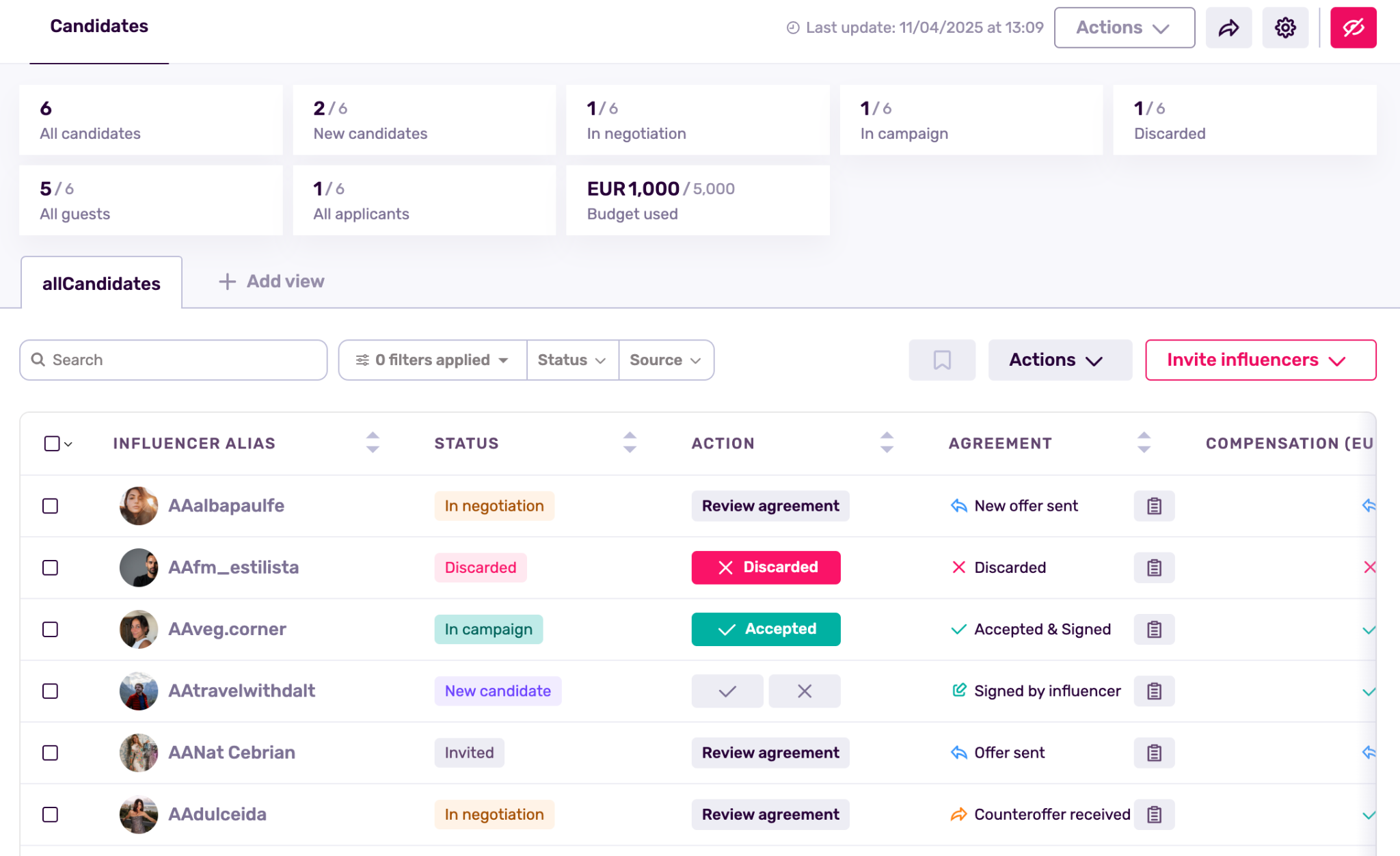
Pro tip: Tag creators by where they perform best: top of funnel (awareness), mid-funnel (consideration), or bottom of funnel (conversion). Then pull lists based on the goal of each campaign. In Influencity’s IRM, you can do this with custom properties (your own fields), so your team tags creators the same way every time, without messy labels.
A simple workflow showing how creator inputs become clearer decisions and better outcomes over time.
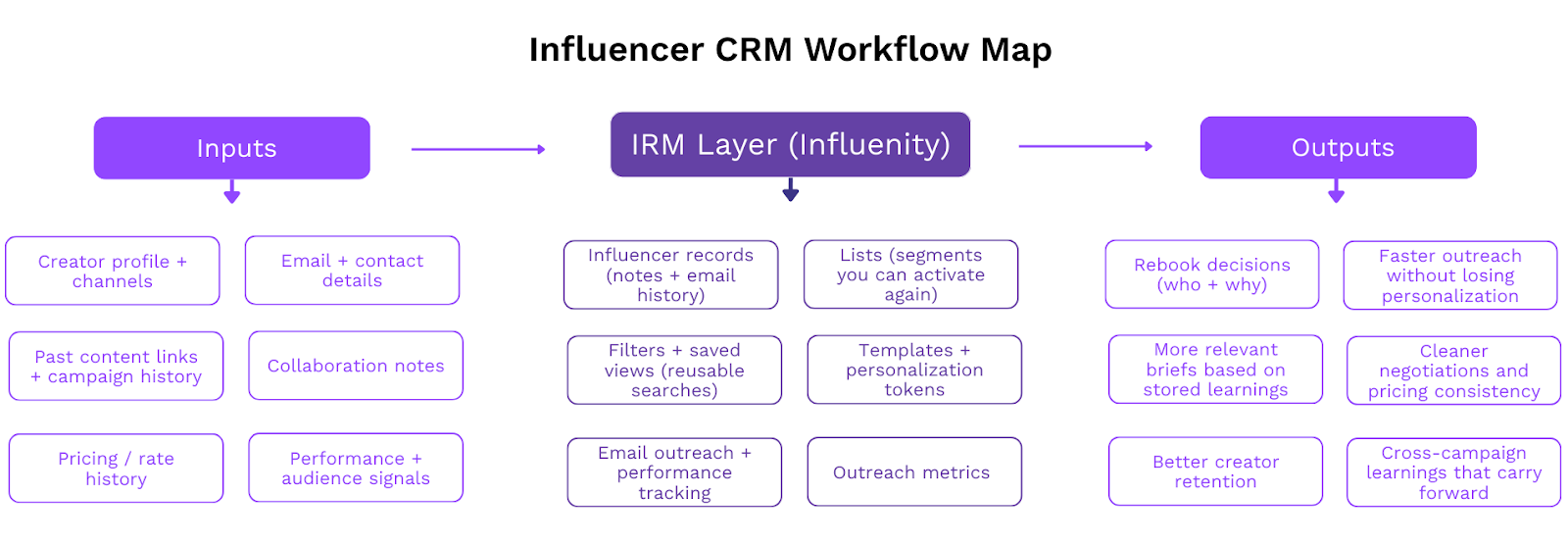
Influencity’s IRM helps teams organize creator data, personalize outreach, and carry learnings forward, so each campaign starts smarter than the last.
Once you see how inputs turn into outputs, the difference between transactional campaigns and talent management becomes clear.
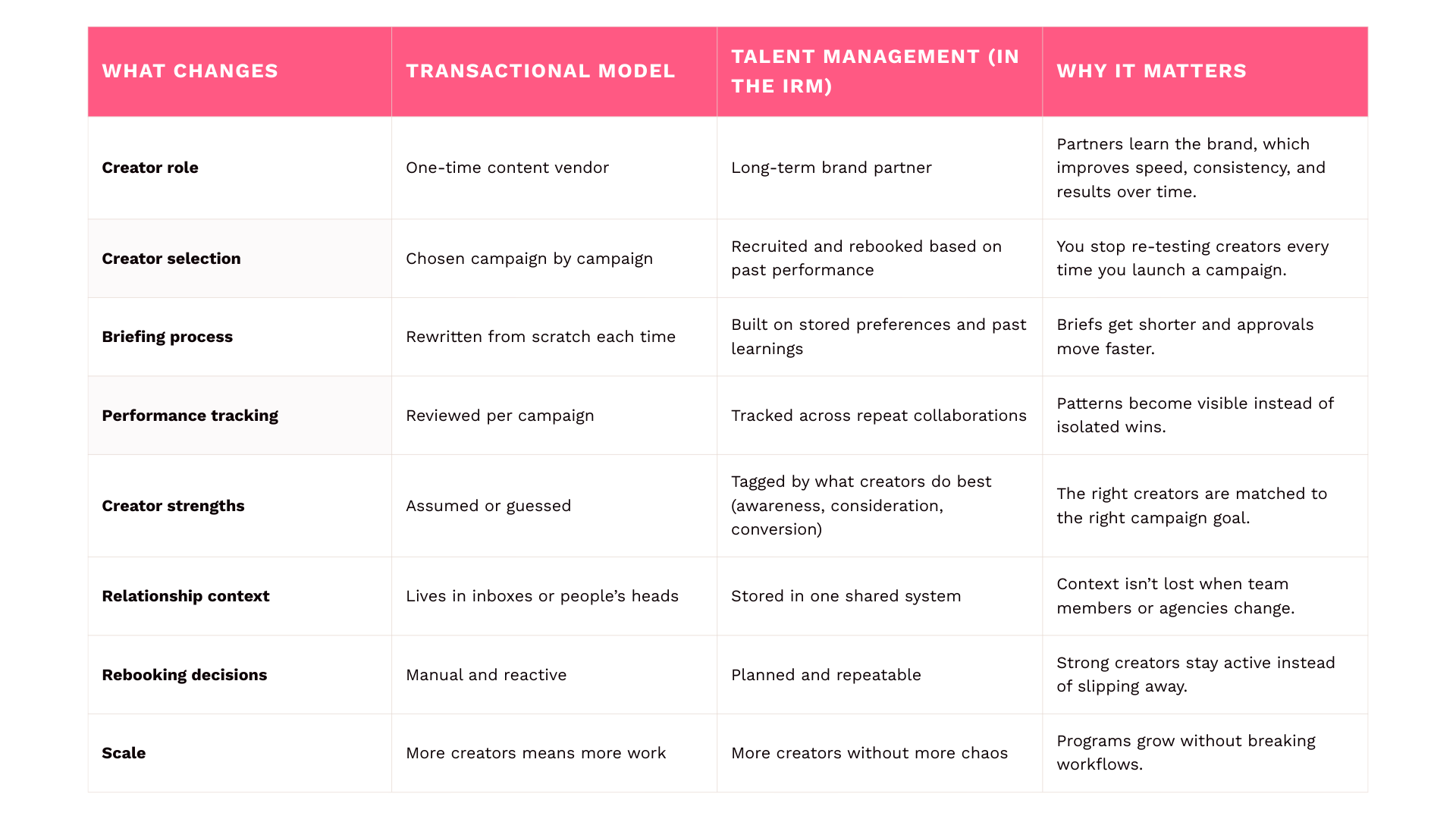
One-off collaborations can create a spike. They rarely create momentum. Here is why.
If every campaign uses a new set of creators, you never build a stable baseline. You cannot tell whether results changed because your creative improved, the platform shifted, the product fit changed, or you simply picked different people. The inputs keep moving, so your conclusions are weak.
Without that continuity, creator retention becomes accidental instead of planned. With one-offs, teams repeat the same work: re-briefing, re-negotiating, re-onboarding, re-explaining brand voice, re-answering the same questions. Social media talent management reduces this repetition by carrying forward context.
When there is no relationship plan, there is usually no reuse plan either. Great content is not systematically repurposed into paid. Strong hooks are not tested again. And the audience never sees the brand show up with the same creators often enough for trust to build. Learn how top brands reuse content across channels.
When collaboration history is thin, the easiest metric to defend is exposure. Impressions become the headline because they are often the only thing you can compare across disconnected creator choices. If you want a simple way to make performance more defensible, Influencity’s guide on how to use ROI calculators to assess influencer performance fits here because it helps teams move from “reach happened” to “value was created.”
Now let’s look at programs that already operate with a social media talent management mindset.
Sephora did not build loyalty by locking creators into rigid contracts. They built it by designing a program with structure and belonging.
Sephora Squad uses an application process, which signals that creators are chosen for fit and community connection, not just follower count. Once selected, creators get access, education, and opportunities to collaborate in ways that feel ongoing, not transactional. Even though the cohort evolves, the program creates a clear “home base” for repeat work.
The lesson is not “run an ambassador program.” It is this: creators stay when the relationship feels real, organized, and worth investing in.
Gymshark’s creator program works because creators are treated like collaborators, not just paid placement. They help shape product stories and campaign direction, which gives the content a stronger point of view and makes it feel more lived-in.
What makes this scalable is the relationship structure behind it. There’s clear ownership, steady communication, and a real feedback loop. That means less re-briefing, fewer revisions, and faster creative because creators already understand the brand and what “good” looks like.
The takeaway: when creators have context that carries forward, you spend less time managing the work and more time improving it.
Agencies often see the retention advantage early because they live with churn.
Gleam Futures is a good example of a career-first approach. The focus is not just campaign volume, but creator growth and long-term partnership potential. Digital Voices applies a data-driven lens, using audience and performance signals to build creator portfolios that can last beyond a single campaign cycle.
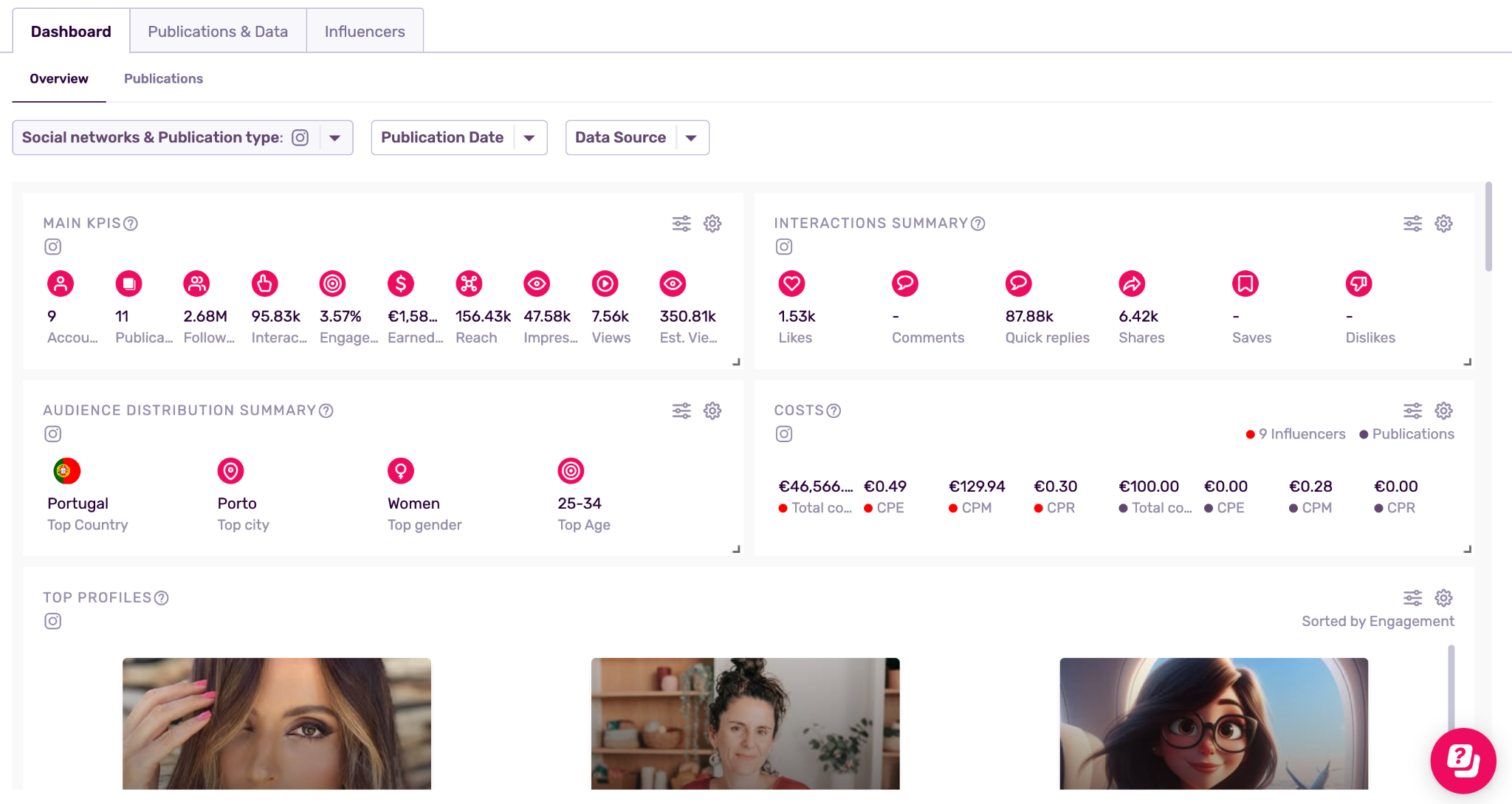
Both approaches reinforce the same point: creator retention leads to more predictable performance. Predictability makes marketing easier to plan, easier to measure, and easier to defend internally.
For additional examples of brands building long-term creator systems, Influencity breaks down what marketers can learn from Dunkin’s influencer strategies, Lego’s creator retention, and how the Fenty formula turned creator alignment into a durable growth engine.
You do not need a perfect system to start improving retention. You need a repeatable habit that stops your program from resetting to zero.
Choose 15 creators you would want to work with again, based on fit. Not just follower count or reach.
For each creator, capture:
This is the minimum version of social media talent management. It is also the core value of a CRM: it turns memory into action.
Set one clear rule for renewals, such as: “We rebook creators who hit our goal and were reliable to work with.”
One sentence is enough: “Last time your audience responded best to X, so we want to lean into that again.”
Once you have the basics above, you can add smarter benchmarking and forecasting. The goal is not to micromanage creators. The goal is to make better decisions earlier: who to prioritize, what to test, and which partnerships are worth building deeper.
Influencity’s overview of AI-powered influencer analytics and predictive ROI modeling fits here because it focuses on using data to guide choices, not to control creators.
One-off collaborations can still deliver reach. They can still scale to 1M+ impressions. But without continuity, they leave little behind.
Social media talent management is what turns creator marketing into something you can build on. It also makes creator retention measurable, so you can improve it campaign to campaign. An influencer CRM supports that shift by keeping relationship history, collaboration notes, and performance patterns in one place, so each partnership improves instead of resets.
If your team is activating creators at scale but still rebuilding context every campaign, start small: make rebooking intentional, track relationship health alongside performance, and store learnings so the next launch starts ahead.
Social media talent management is managing creators as long-term partners, not one-off posts. It focuses on retention by tracking relationship history, performance patterns, creator preferences, and next steps so each collaboration improves the next.
Influencer campaigns are one-time projects with a clear start and end. Social media talent management is an ongoing program that captures learnings and uses them again through recruiting, onboarding, creating, measuring, and rebooking.
Creator retention reduces rework and improves consistency. Repeat creators need shorter briefs, fewer revisions, and faster approvals. Results are also easier to compare over time because fewer variables change between campaigns.
An influencer CRM stores and activates creator context. It keeps notes, past results, strengths, contracts, and rebooking decisions in one place so teams can rebook faster, personalize briefs, and run programs without starting over.






%20and%20How%20Can%20They%20Benefit%20Your%20Brand%20article.jpg?length=628&name=What%20Are%20Key%20Opinion%20Leaders%20(KOL)%20and%20How%20Can%20They%20Benefit%20Your%20Brand%20article.jpg)






.png?length=628&name=Pop-up%20image%201200%C3%97800@1x%20(1).png)