

A post can hit a sky-high engagement rate and still be a bad bet if the comments are damaging.
I’ve reviewed influencer campaigns where the metrics looked strong, but the audience reaction was a warning sign. People weren’t celebrating. They were questioning the creator’s credibility, mocking the product, or calling the partnership forced.
That’s why agencies are using sentiment analysis to judge influencer value in 2026. Engagement tells you how much activity a post created. Sentiment analysis tells you what the comments meant.
And meaning is what drives outcomes you can defend to a client: trust, brand preference, and purchase intent.

Sentiment analysis uses software to review written reactions like comments, replies, captions, mentions, reviews, and posts, and label the tone as positive, negative, or neutral. In marketing, sentiment analysis helps you understand how people feel, not just how many people interacted.
In influencer marketing, sentiment analysis answers one practical question:
Did this creator improve how people feel about the brand, or did they create resistance?
Here’s what you can do with that information:
If you only track engagement, you can end up rewarding the loudest moment. Sentiment analysis helps you reward the healthiest outcome.

Engagement is a volume metric, not a quality metric.
A comment can mean:
All four count the same in an engagement report.
This is why “performance” can look great on paper while the brand team feels uneasy. The report says the post succeeded. The audience reaction shows skepticism, annoyance, or loss of trust.
I treat engagement as the starting signal, not the verdict. The verdict comes from tone and themes.
When agencies talk about an influencer’s value, they usually mean a mix of:
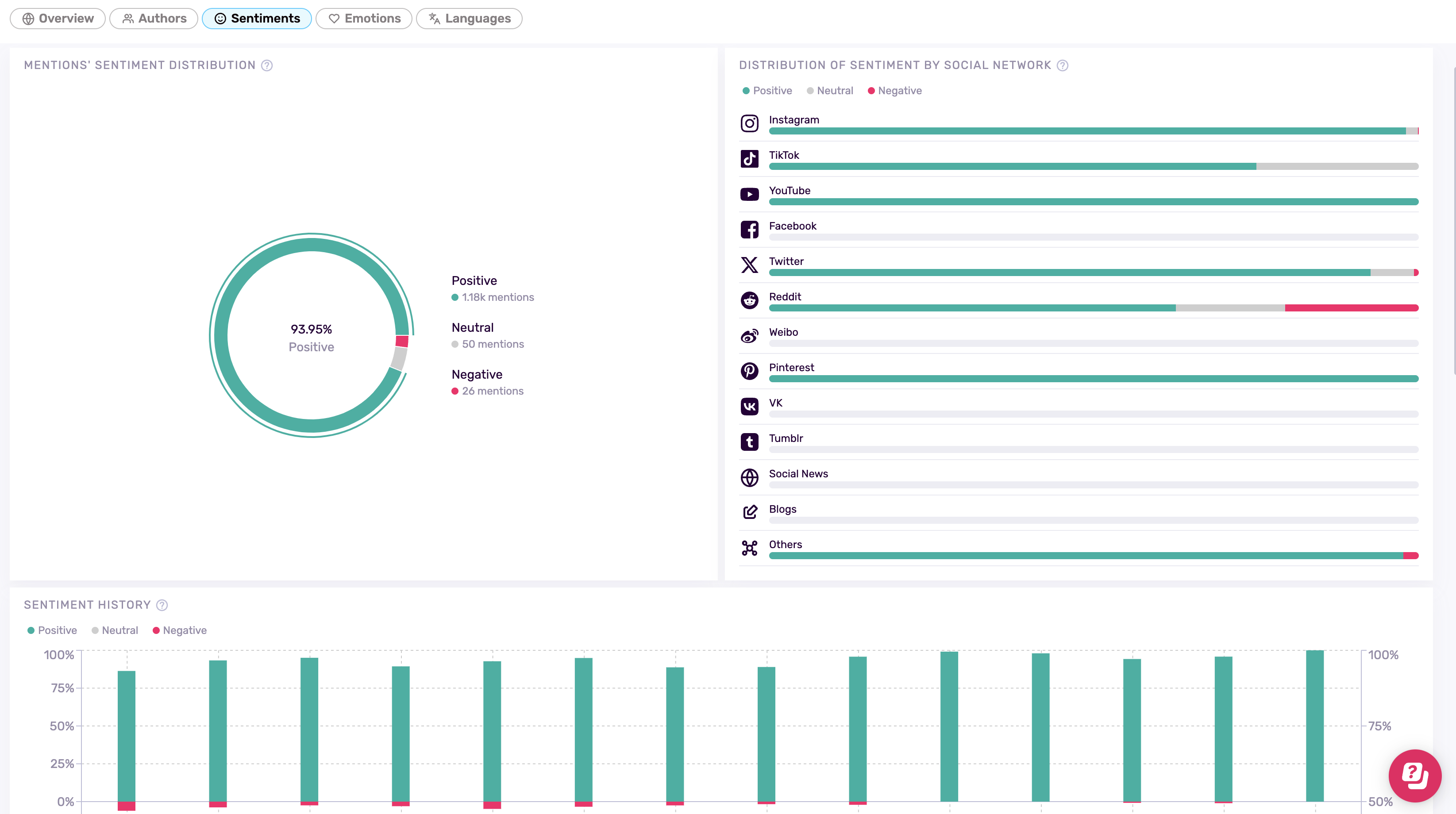
Sentiment analysis is most useful for the last two: credibility and brand fit. It shows whether the creator can deliver a message without triggering pushback.
When I review sentiment reporting, I focus on three things:
Are reactions mostly positive, negative, or neutral?
Is the criticism mild, or are people strongly pushing back?
What are people reacting to: price, authenticity, claims, product performance, creator behavior, disclosure?
Polarity tells you direction. Themes tell you what to fix.
How Agencies Use Sentiment Analysis to Value Influencers
Before signing a creator, look at prior partnerships and ask:
Brand fit is not about how the creator looks. It’s about how the audience reacts when money enters the conversation.
Agencies often negotiate based on follower count and engagement averages. Those numbers are easy to challenge.
Sentiment analysis gives you a stronger position:
That framing connects directly to client risk and long-term value.
If sentiment dips mid-campaign, you can usually see why:
Then you can act:
Waiting until the wrap report is too late. Sentiment analysis matters because it gives you time to intervene while the outcome is still changeable.
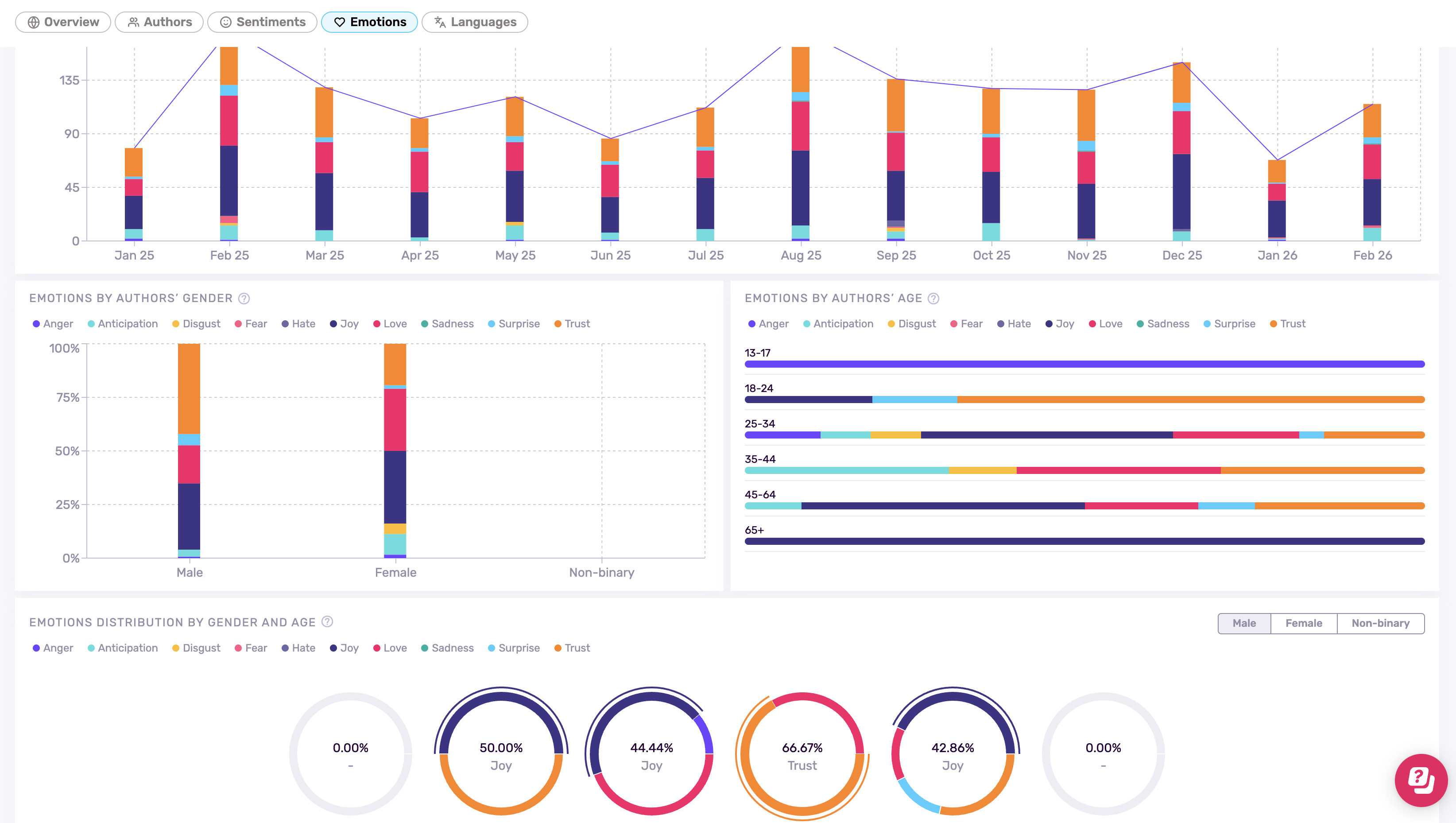
Clients do not only want to know what happened. They want to know what changed.
Sentiment analysis helps you report:
That’s how an agency looks like a strategic partner, not a content broker.

Sentiment analysis is powerful, but only if teams use it correctly.
This is why I never recommend treating sentiment as a single final score. The score is a doorway. The value is in the themes and examples behind it.

If you want sentiment analysis to drive decisions, these are the numbers worth tracking:
A simple way to summarize tone over time:
Net sentiment = (% positive) − (% negative)
It’s not perfect, but it’s useful for comparing weeks, creators, or creative concepts.
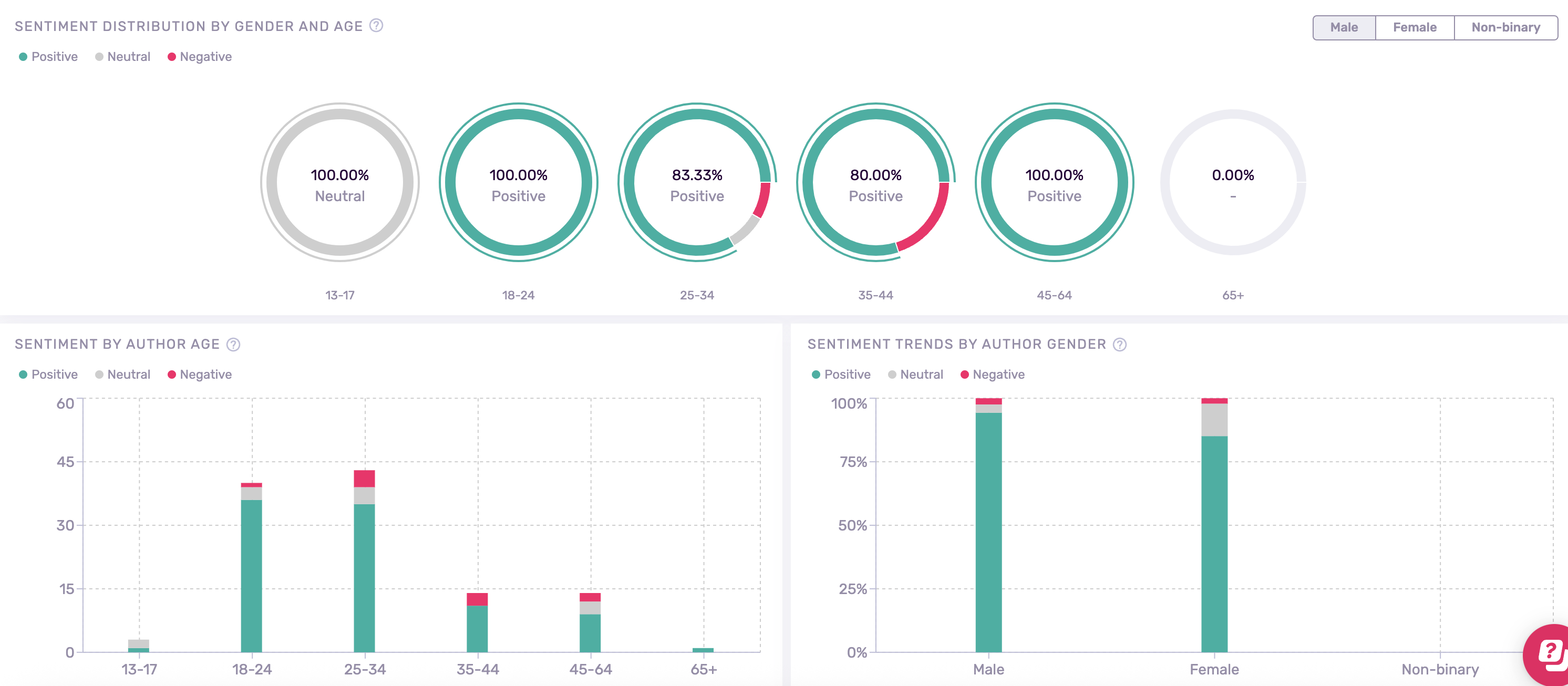
Brand-level sentiment can hide the truth. Agencies buy creators, not averages.
Tag reactions into themes such as:
Themes translate into action faster than polarity alone.
How fast tone changes after posting. A fast negative swing often signals:

Nike’s Colin Kaepernick campaign is a useful example because it shows why sentiment cannot be reduced to “good” and “bad.”
Morning Consult tracking showed Nike’s net favorability dropped sharply in the days right after the campaign launch.
At the same time, multiple outlets reported a major spike in Nike’s online sales right after the campaign debuted, often cited as a 31% increase over a two day period based on Edison Trends data.
The lesson for agencies is not that controversy sells.
The lesson is: negative sentiment tells you there is disagreement, not whether you are losing your buyer.
This is where context matters:
If your sentiment analysis cannot break down reaction by audience and platform, you can make the wrong call. You might pull back from a creator who is strengthening loyalty with your best customers.
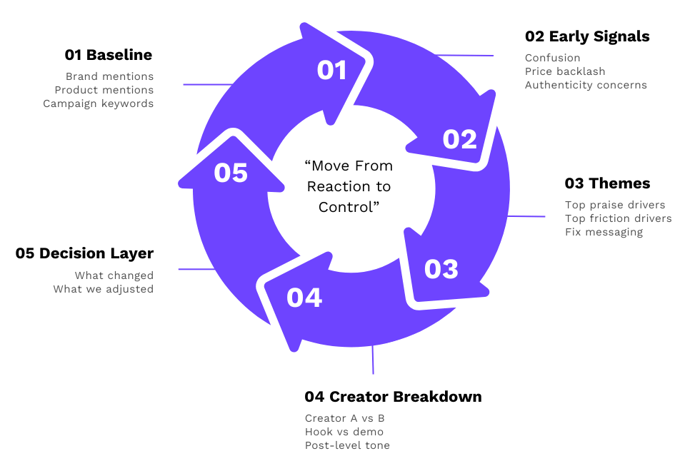
If you want sentiment analysis to change outcomes, not just reporting, use this five-step workflow.
Track sentiment for:
You need a “before” to make the “after” meaningful.
This is where you often catch:
Early signals matter because you still have time to adjust.
Polarity answers “how is it going?”
Themes answer “why is it going that way?”
Themes also translate directly into action:
Do not rely on brand-level averages.
Look at:
This is how you stop guessing and start learning what repeats.
A slide that says “72% positive” is not enough.
Make it useful:
That’s what earns trust.

No. Negative sentiment can mean:
The key is to separate:
You need enough volume to see a pattern, not a one-off.
As a rule of thumb:
Use tools that:
Your goal is speed to insight, not academic perfection.
Both, but start with campaign and creator level if you’re an agency.
Brand-level sentiment is influenced by many things outside your campaign. Creator-level sentiment is closer to what you control.
Sentiment analysis only delivers value if it’s usable day to day.
Agencies need to:
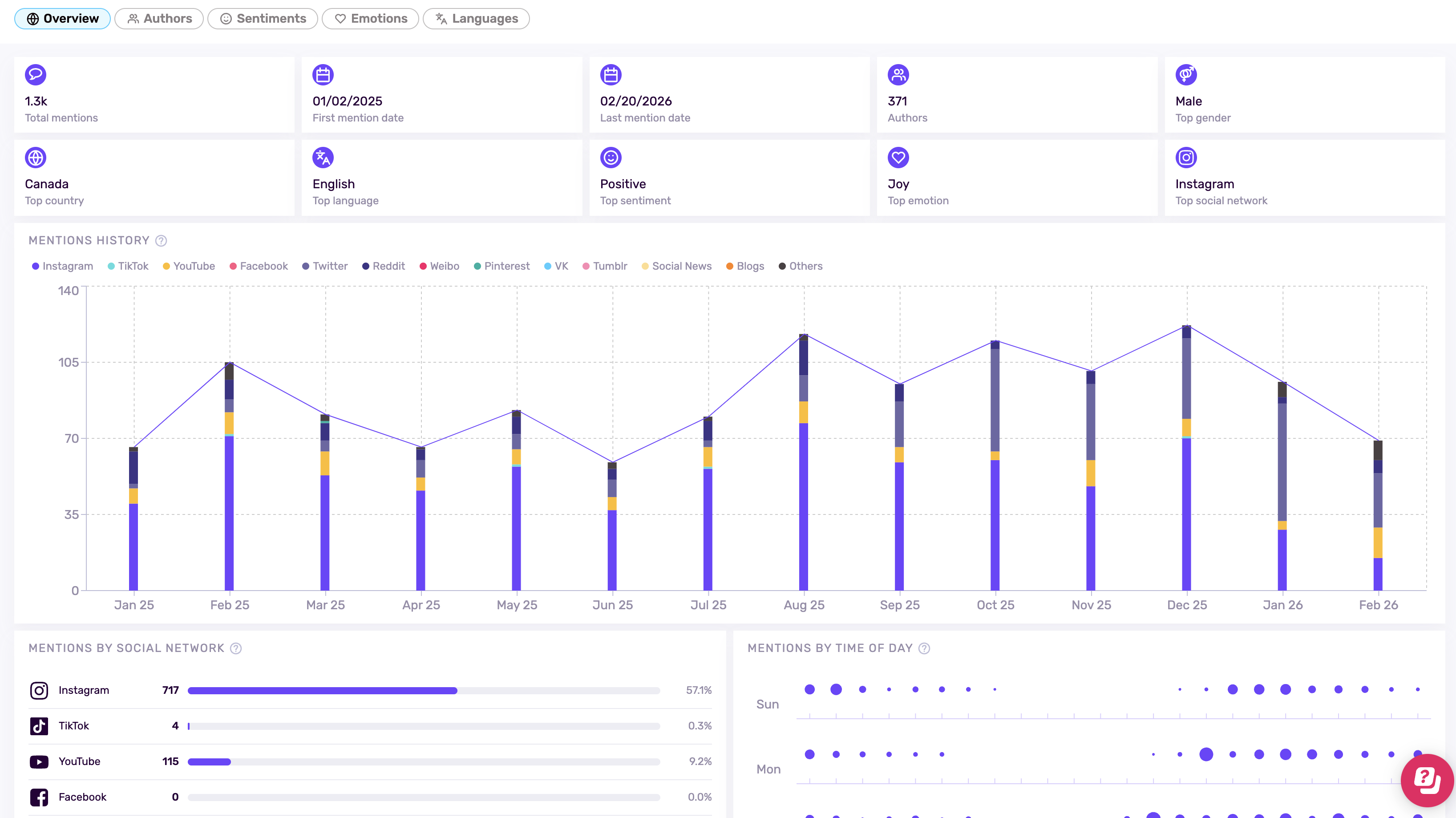
With Influencity’s Monitoring capabilities, you can set up tracking around:
Then you can use that to support decisions like:
I like sentiment analysis most when it is paired with audience quality signals (like audience authenticity and engagement quality). That combination prevents a common mistake: trusting “positive buzz” that is inflated by low-quality engagement.
Sentiment analysis doesn’t replace engagement metrics. It makes them safer to use.
Numbers tell you how loud an influencer is.
Sentiment analysis tells you what people are actually saying, and whether the message built trust or created resistance.
If you manage multiple creators and multiple campaigns, sentiment analysis is the layer that turns audience reaction into a decision you can stand behind.











%20and%20How%20Can%20They%20Benefit%20Your%20Brand%20article.jpg?length=628&name=What%20Are%20Key%20Opinion%20Leaders%20(KOL)%20and%20How%20Can%20They%20Benefit%20Your%20Brand%20article.jpg)









.png?length=628&name=Pop-up%20image%201200%C3%97800@1x%20(1).png)