

When I see travel content on social media, I don’t immediately jump to book a vacation. For places and experiences I just can’t forget – like exploring the colorful mosaic art in Park Güell or taking walks in the quaint alleys of sunny Greece – I add them to my travel bucket list and make plans to visit later on. So the conversion journey happens over time, triggered by a feeling of wanderlust.
That’s why when it comes to travel influencers, likes don’t tell you the full story of how their content performed. When a creator is soaring over the Maldives in a seaplane or walking through a newly opened resort in Bali, the real value isn’t just a photo; it’s the emotion they evoke.
As such, negotiating with travel influencers is all about striking the right balance. You need to weigh content volume and visibility against the value influencers bring through immersion, storytelling, and aspirational reach.
Remember that you’re not just buying posts but co-creating experiences that live in memory, not just feeds.
While influencers in other verticals promote – whether it’s a product or a service – travel influencers transport. They immerse audiences in a virtual experience that elicits wanderlust.
So whether it’s lounging in the sandy beaches of Indonesia or exploring top-rated cafes in Paris, these influencers let their audience follow along on their journey. This ultimately entices them to indulge in those same experiences when they do get the opportunity to travel.
Take the iconic Bali Swing, for example. People wouldn’t be lining up to get on one of these swings if it weren’t for the aesthetic photos of travel influencers posing mid-swing in elegant dresses. As photos and videos of the swing went viral on social media, it quickly became people’s favorite Bali bucket list item.
Now the challenge for brands is quantifying something as intangible as wanderlust.
Someone who was inspired to try the Bali Swing after seeing an influencer’s video in March 2025 might only get the chance to actually visit Bali in February 2026. So even if the user liked the video and saved it to their collections when they initially saw it, the content ultimately delivers monetary return one year later.
Similarly, The Blonde Abroad (Kiersten Rich) is a travel influencer with over 512k Instagram followers. She’s worked with brands like Marriott Bonvoy, Air New Zealand, Expedia, and Visit Greece, among many others.
Her deliverables include long-form travel guides and Instagram content, but the brand’s return goes beyond metrics — her content drives repeat bookings and brand affinity.
That’s why brands can’t really price travel partnerships like static campaigns. The value compounds over time through evergreen discovery with content that inspires wanderlust and guides travelers months or even years down the line.
Four Seasons Resorts maintains relevance in the travel industry by building long-term relationships with various travel influencers. They engaged in influencer campaigns early on, partnering with influencers like Lauren Bullen (Gypsea Lust) back in 2016. The influencer helped Four Seasons on a global storytelling campaign promoting resorts across the Maldives, Bora Bora, and Seychelles.
Rather than demanding a fixed number of posts, Four Seasons structured the deal around:
So the influencer featured multiple inviting photos of the resort in her long-form blog post and her Instagram posts.
Four Seasons has also been involved in similar campaigns with influencers like Sarah (Salty Luxe), who creates content about luxury travel. The influencer has featured Four Seasons Bora Bora multiple times in her content, including a 2020 long-form blog post and several recent Instagram Reels.
Her content has also been reused by the resort’s page, allowing them to get more value out of their partnership.
Over the years, these partnerships have translated to millions of impressions. Although there were fewer deliverables, the content focused on deeper immersion. Since the travel influencers were immersed in the resort experience, they could create content that’s authentic and truly inviting for audiences.
Marriott Bonvoy has been a shining example of travel influencer marketing done right, with a range of successful campaigns over the years. The program’s always-on collaboration with niche influencers highlights how niche creators can showcase distinctive experiences and deliver value across multiple hotel brands.
With Marriott Bonvoy having over 30 hotel brand partners, it didn’t make sense to just stick to one type of travel influencer. Instead, they’ve been partnering with a wide range of niche influencers, some of whom specialize in travel while others focus on topics like outdoor adventures or family content.
This allowed them to showcase the unique experiences that would appeal to different types of travelers across the program’s hotel brands.
For instance, Jacob Moon (@moonmountainman) created a Reel sharing his family’s experience at Postcard Cabins – a stay that aligned with his usual outdoor adventure-type content.
Latroy and Nicole Tillery (@lovethetillerys), who create family and couple content, went on a trip highlighting experiences that helped them “slow down” together as a couple.
But professional soccer player, Brittany Wilson, shared a fun sketch highlighting a hotel brand that’s perfect for an entire soccer team.
Marriott Bonvoy negotiated a separate deal with varying deliverables for each influencer. While most of the influencers got a free stay experience, other collaborations (such as the one with Brittany Wilson) involved a fixed payment for guaranteed posts. And creators like Jacob Moon posted at least two times while the Tillerys posted only one Reel.
And with major travel influencers like Auriele (@aurielestory), the brand first negotiated a deal involving a free trip to Morocco in April 2025. Since they found so much value in this collaboration, it resulted in a recurring partnership where the influencer was hosted at several resorts in Santorini.
Some negotiations also involved a post-campaign bonus tied to engagement and reach. The big takeaway here is that brands should consider combining deliverables with performance-based metrics, so influencers are compensated based on the value they deliver. That way, the experience pays off on both sides.
Marriott Bonvoy’s campaigns have found plenty of success, with one campaign having a cumulative reach of 11 million across 489 pieces of content. The campaign also generated over 2.68 million engagements with a CPE of $0.30 – 10x less than the industry average.
Collaborations with travel influencers often involve free stays and experiences. But some travel brands may also offer monetary compensation depending on the deliverables. So during negotiations, the conversation often comes down to one question:
“Are we paying for the stay, or the story?”
In reality, you’re paying for both — but the weight of each depends on your goals.
Here’s how leading travel brands balance deliverables with experience value:
Brands typically cover accommodation, meals, and amenities, so influencers get to immerse in the full experience of traveling to a certain destination or staying at a certain hotel. The cost of this is typically offset against content creation, with influencers organically sharing content about their experience.
Alternatively, or on top of the stay, brands may also choose to pay influencers a fixed fee in exchange for content deliverables and usage rights. This content may then be reused or even amplified using paid media to further maximize reach, so brands get amplification value out of the initial cost.
Beyond the base value and amplification value, you can also look at the brand value generated from your partnership. This involves measuring the tone and storytelling quality, and how authentically the creator integrates your brand.
For example, a brand may measure campaign success not by posts alone, but by an increase in “intent to visit” searches after influencer trips.
With the above factors considered, you can tell how challenging it is to quantify value from your travel influencer deals. That’s where Influencity bridges the gap, with powerful features that let you measure campaign success from all angles.
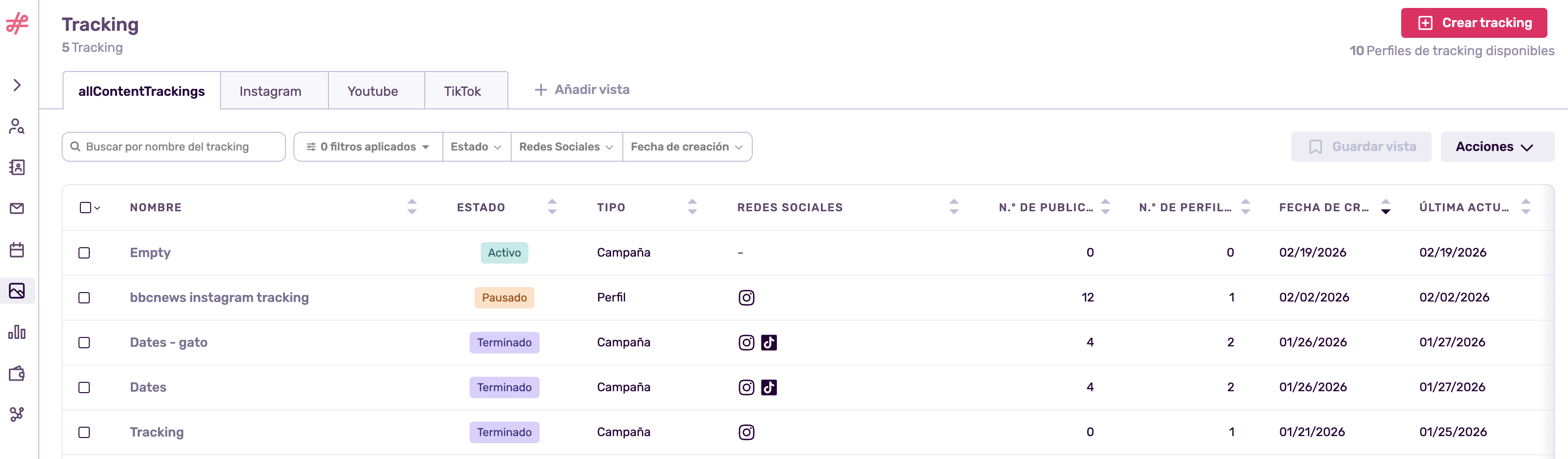
Tired of having to manually hunt down travel influencer posts to track their performance? Influencity’s content tracking tool automates the process, so you don’t have to waste time doing it manually. You can add influencers to track and automatically retrieve their posts (including expired Stories).
This makes it easy to stay on top of deliverables and measure engagement across platforms. And you’ll be able to quickly identify top-performing influencer content and quantify influencer-specific value.
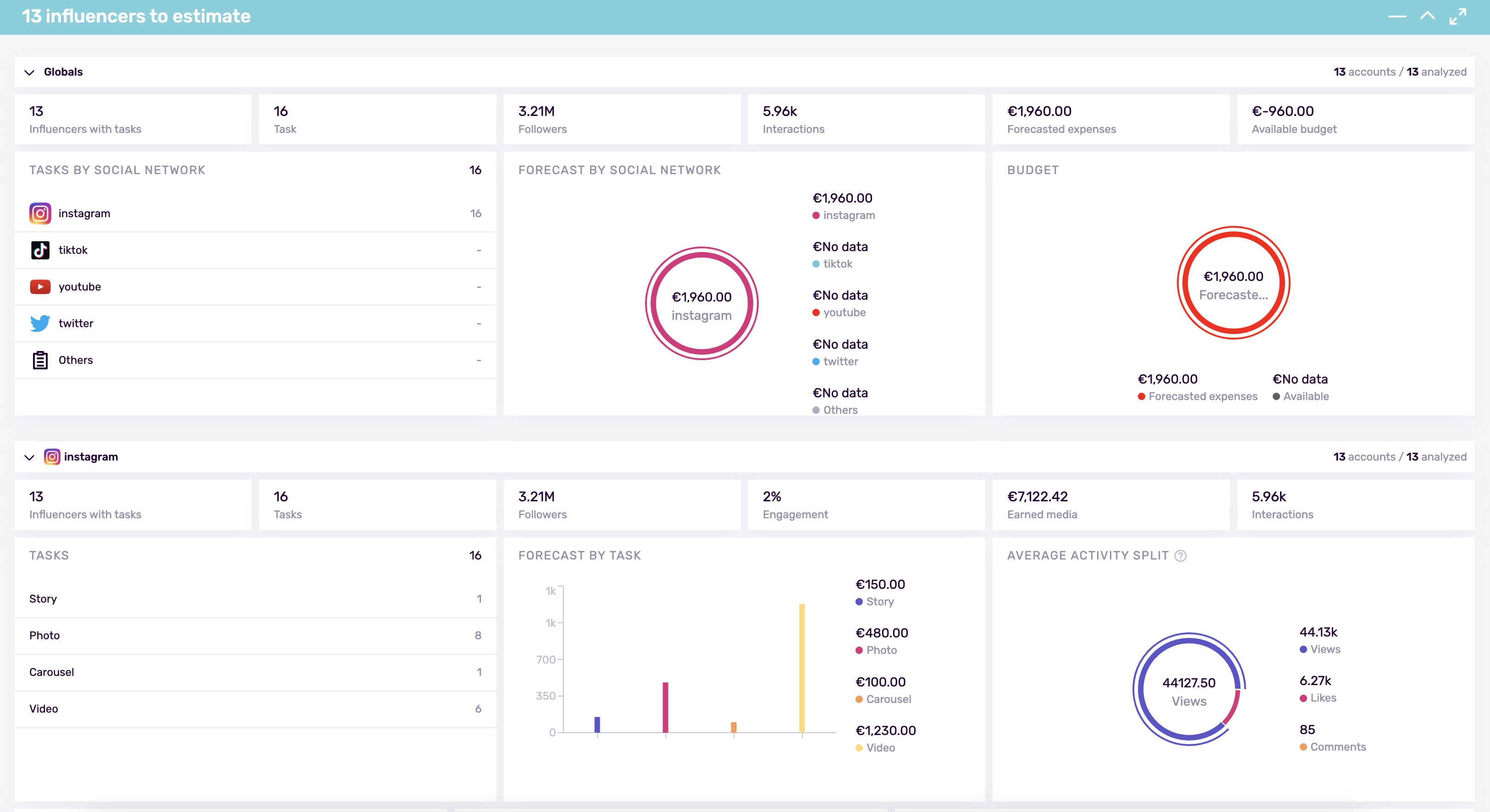
The best way to avoid wasted spend and maximize impact is by predicting visibility before you pay for it. With Influencity, you can use predictive analytics to forecast an influencer’s impact in terms of reach, engagement, and earned media value.
This feature compares a creator’s historical averages to forecast performance, so you can pre-qualify influencers based on their estimated value.
Besides the automated performance estimates, you can also dig even deeper to understand an influencer’s audience and assess whether they’re the right fit for your brand.
Influencity lets you verify audience demographics and interests. This means you can see where their followers are located, what their travel intent is, whether they’re interested in luxury vs. budget travel, and more. So you can pinpoint influencers that are perfectly aligned with the type of audience you want to reach.
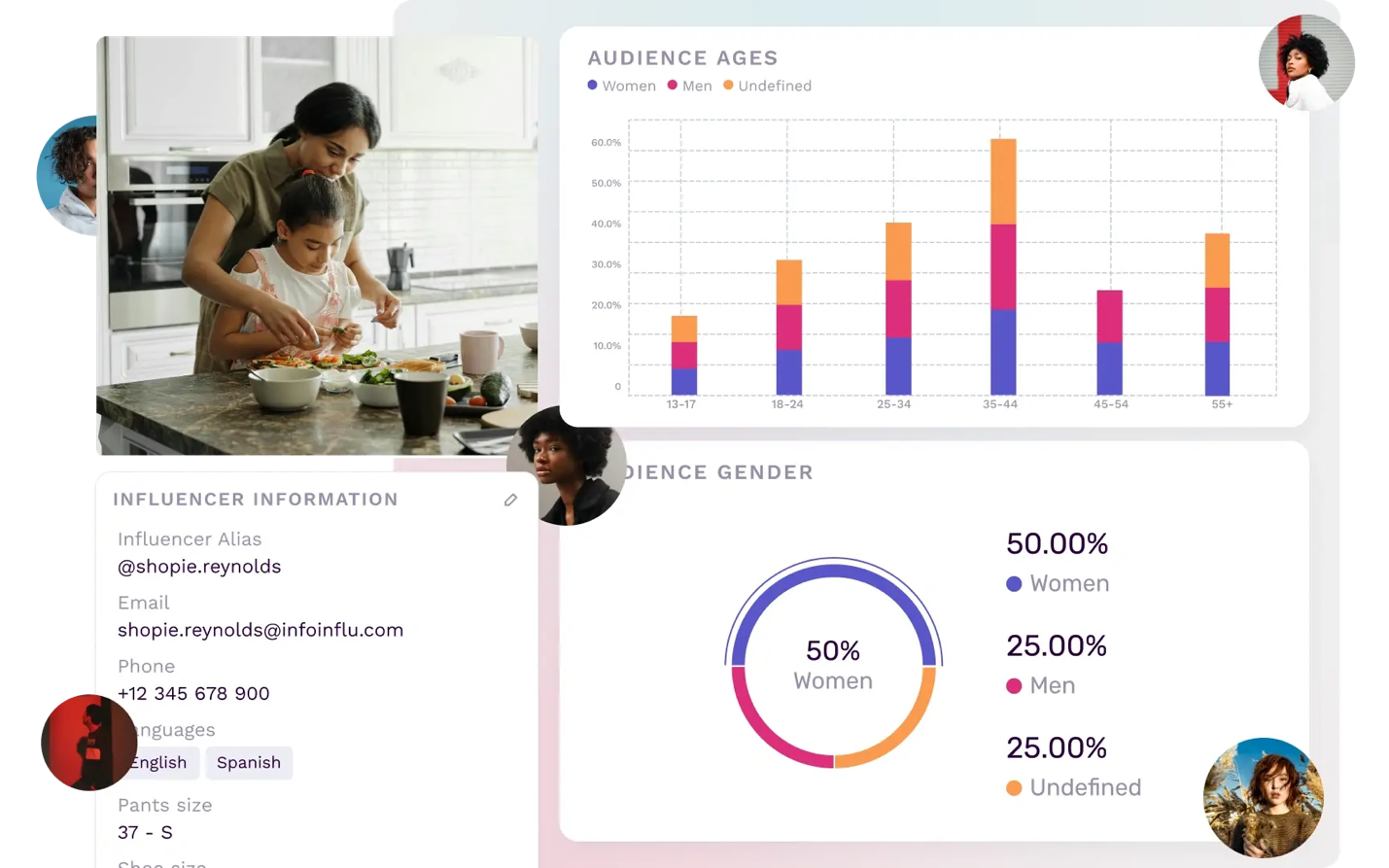
Influencity comes with robust performance tracking tools to help you measure campaign performance. In addition, you can use the monitoring tool to track audience sentiment around your brand, which comes in handy when measuring brand value.
For instance, you’ll be able to see if there’s an increase in positive sentiment after launching your campaign. Or what emotions are expressed when people mention your brand, and how the patterns change over time. Do you see an increase in mentions that express anticipation after a certain influencer’s post goes live?
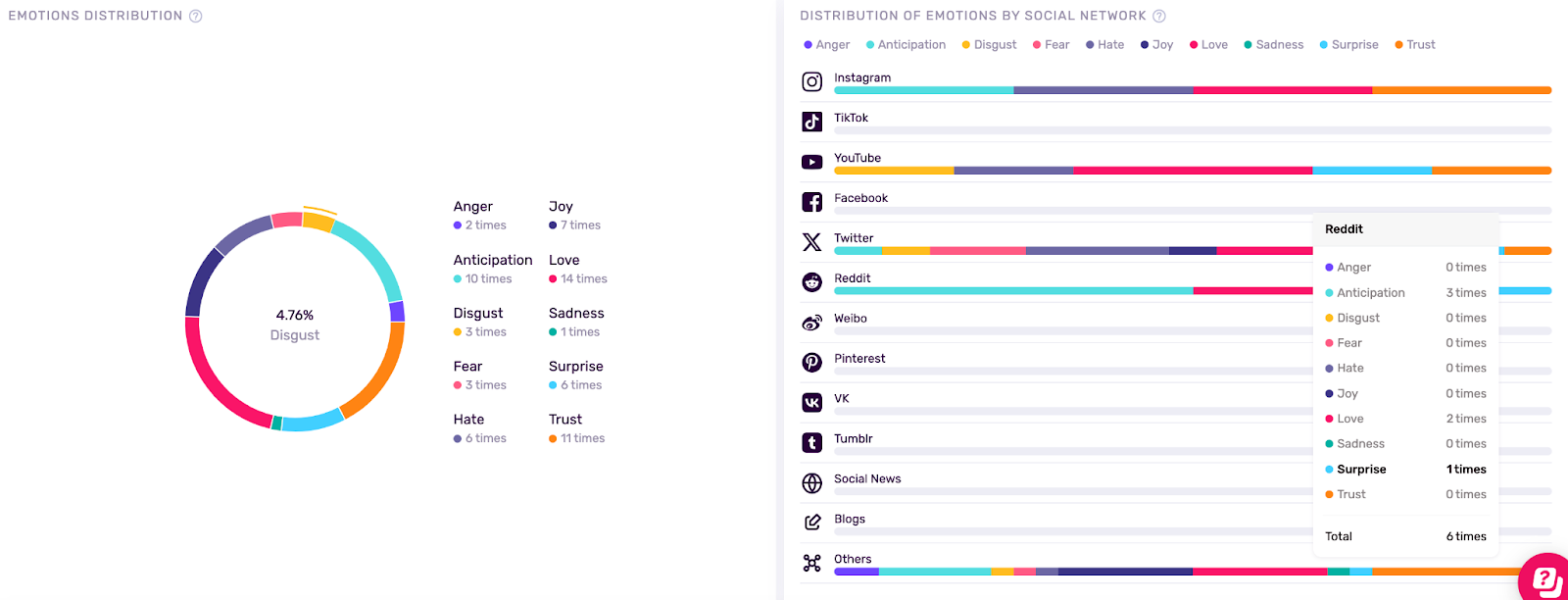
Pro Tip: Use Influencity’s Campaign Reports to showcase “experience ROI” — engagement, visibility, and brand sentiment from every trip.
Successful influencer partnerships with travel creators require a strategic approach. Here are some tips to guide you.
Content-specific KPIs help you understand how deliverables performed in terms of views and engagements. But you also need to set KPIs to measure sentiment and storytelling quality. Are influencers driving a lift in sentiment? Are they eliciting the desired emotion in audiences?
Avoid giving creators a script to repeat verbatim or directing the way they create content. Give them a basic structure (talking points, amenity highlights, etc.) but let creators live your experience naturally. Audiences crave authenticity, not sponsored checklists.
Say you want to promote your resort’s state-of-the-art spa facilities. Give creators the talking points, but make sure they have the freedom to deliver the messaging in a way that resonates with their specific audiences. For instance, a weekend trip to unwind for busy parents, a honeymoon getaway for newlyweds, a spa retreat for athletes, and so on.
If you have plans to reuse the creator’s content on your social media, website, or ads, make sure you negotiate those usage rights early on. Be transparent about where and how the content will be used and get explicit permission from creators to repurpose their content.

Finding influencers for a travel brand is more than just selecting a bunch of travel-related filters. You also need to ensure the influencer creates the type of travel content that resonates specifically with your target audience – whether you want to reach outdoor adventurers, budget travelers, or luxury lovers.
Tools like Influencity’s AI Assistant can identify influencers who fit your brand’s travel tone and target market.
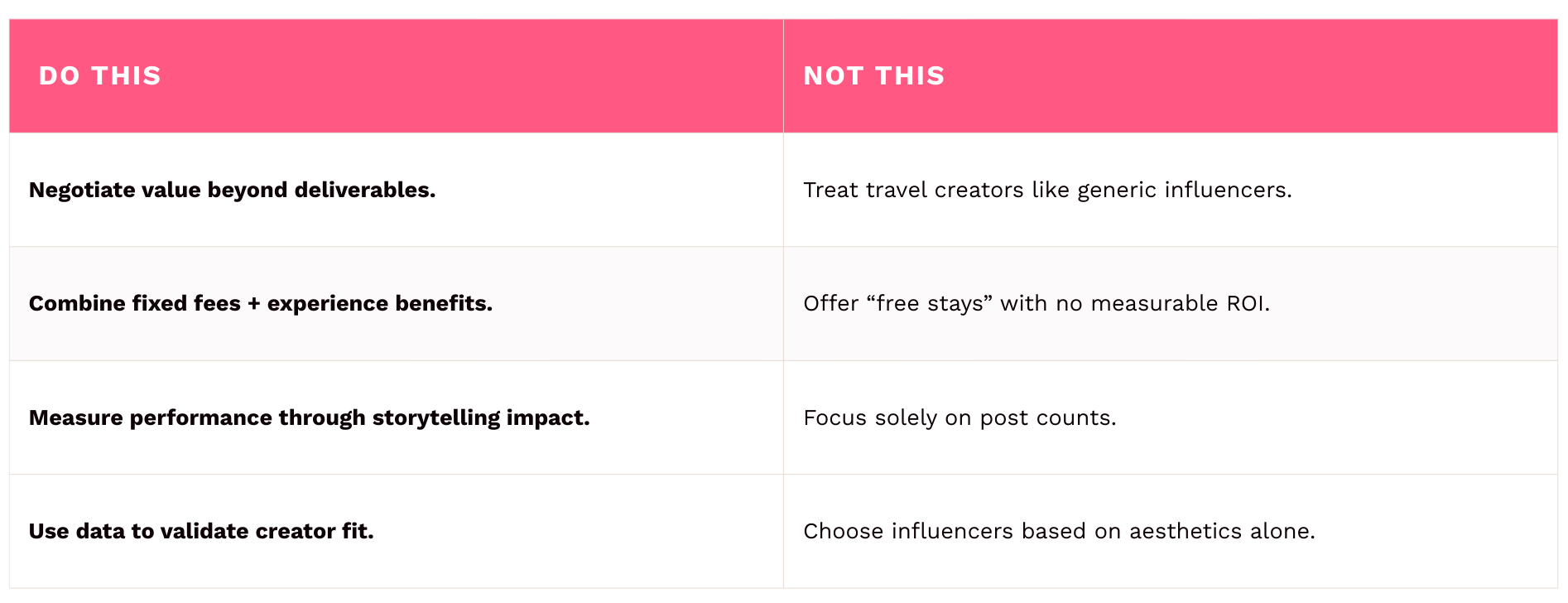
Brands typically pay travel influencers with free stay experiences, although you can also find partnerships that involve fixed fee payments in exchange for specific deliverables and content usage rights. Some may also pay additional bonuses based on performance.
Travel influencers typically charge $195 per post, although the exact cost may vary depending on factors like deliverables, content usage rights, exclusivity, and so on. Most travel brands also reward influencers with free experiences instead of monetary compensation.
Travel influencers are a great match for hotels and resorts, transportation companies, travel gear brands, tourism boards, tourist destinations, travel services, experience companies, and lifestyle brands.
In addition to the content-specific performance metrics like views, impressions, and engagements, travel influencer performance can also be tracked using metrics like clicks, saves, conversions, and brand lift.










%20and%20How%20Can%20They%20Benefit%20Your%20Brand%20article.jpg?length=628&name=What%20Are%20Key%20Opinion%20Leaders%20(KOL)%20and%20How%20Can%20They%20Benefit%20Your%20Brand%20article.jpg)






.png?length=628&name=Pop-up%20image%201200%C3%97800@1x%20(1).png)