

Your next top-performing creator might not be a beauty or food creator. It might be a gamer who already reaches the customers you want.
Like an F1 sim racer streaming their practice laps live on Twitch. Or a YouTube influencers walking viewers through a new game. Gamers now shape how people discover entertainment, products, and even sports.
They also hold attention for much longer than a typical feed scroll, which is why many brands are seeing stronger results from gaming creators than from more familiar niches.
For brands that do not sell games or consoles, that raises a simple question.
Why are gamers suddenly some of the most valuable creators you can partner with?
In this guide, I’ll share how gaming creators drive reach, trust, and measurable business impact across Twitch, YouTube, TikTok, and beyond. Plus, how non-endemic brands (not gaming-related) can start working with gamers in a way that feels natural to players and valuable for your marketing team.
A non-endemic brand in gaming is any company that does not sell games, consoles, or core gaming hardware as its main business.
If you’re reading this, you probably:
Good news: non-endemic brands are already using gaming creators to reach new audiences, lower customer acquisition cost (CAC), and build brand trust in a channel people actually enjoy.
Your job is not to “break into gaming” as a new vertical. It is to recognize that gaming is where your target audience already hangs out, and to show up there in a way that feels native.
From the outside, gaming used to look niche. A few hardcore communities. A handful of big titles. An esports event now and then.
Bain’s 2025 Gaming Report shows a different picture. Gamers ‘punch above their weight’ because a relatively small group of highly engaged players ends up shaping a huge share of what people watch, share, and ultimately spend money on.
Their habits are always online and very social, so what they love in games spills into streaming, social feeds, and shopping.
A few patterns matter for brands:
Bain also highlights that the biggest games now behave more like platforms than one-off releases. Worlds like Fortnite, Roblox, and Minecraft keep people coming back to hang out, create, and join events, not just to “finish the story.” That gives creators more chances to show up in front of the same highly engaged communities over time.
For you, as a non-endemic brand, here’s the key takeaway. When you work with the right gaming creators inside these worlds, you are not only buying a single post. You are tapping into a system where players pull their friends in, share creator content across channels, and follow that universe into shows and social moments. Your product can ride that wave of attention rather than trying to generate it all on its own.
Bain’s research on how people discover games today shows a simple shift: more players now discover new titles from streamers and social feeds than from digital storefronts like Steam, the PlayStation Store, the Xbox Store, or mobile app stores.
For gaming, that means:
For you, as a non-endemic brand, it means this:
Players are used to:
That is exactly the kind of behavior you want if you care about real people, not just raw impressions. To capture that value, you need a reach model that can show where gaming adds net-new audience on top of your existing channels.
If your goal is to grow incremental reach with real people, pair your gaming work with a cleaner reach model. Use the reach framework from this influencer reach playbook to:
• Count Net Unique Reach instead of double-counted impressions
• Track CP1K-U (cost per 1,000 unique people)
• Use tiered creator mixes to keep reaching new audience pockets
That is the kind of model that makes gaming creators defensible in front of a CFO.
Gaming creators are not limited to “gaming brands.” Some of the strongest examples are non-endemic brands that treated gaming as both a cultural channel and a performance channel.
Many of these campaigns show both strong cultural response and measurable lifts in sign-ups, viewing time, or sales, even if not all brands publish exact numbers.
F1’s growth with younger fans has been fueled not just by the races, but by:
These creators do not pause to give long, scripted speeches. They integrate brands into setups, routines, and stories their viewers already watch each week.
When Adidas partnered with Ninja, the play was not “here is a shoe; please hold it up.” It was:
That mix made the collaboration feel like a natural extension of his identity, not a forced endorsement.
The Voice Australia treated gaming platforms as part of the fan experience:
Together, those touchpoints turned a TV show into something fans could watch, vote on, and talk about across channels. That is the same pattern non-gaming brands can use: one core idea extended across platforms where players and fans already spend time.
You don’t need to be everywhere in gaming. You do need to understand what each platform is good at and pick the ones that fit your brand.
Twitch is still the home base for live gaming:
It’s a strong fit when your goal is:
If reaching younger audiences is part of your plan, this guide to engaging younger audiences with Twitch influencers explains why Gen Z and Millennials spend so much time on Twitch and how brands can meet them there in a way that feels natural.
For a deeper breakdown of which platforms matter for gaming creators, and how Twitch compares to YouTube, TikTok, and others, here’s a deep dive on the best platforms for gaming influencers.
YouTube is where:
This is a strong home for:
TikTok powers short-form discovery:
Short-form gaming content can introduce your brand fast, then hand off to longer content elsewhere.
Discord servers and other community hubs do not look like media channels at first glance. But they matter because:
You likely won’t “advertise” in Discord, but it’s part of the ecosystem your gaming strategy taps into.
If you are not selling games, your biggest risk is forcing your product into streams in a way that feels awkward. The brands that win with gamers avoid that.
They do three things well.
For performance, you want:
For culture, you want:
You do not need to start with the biggest names. In fact, I’d recommend you don’t.
Smaller and mid-tier gaming creators are:
Think of them as your testing lab. Once you see what works, what actually moves people, you can scale those learnings into bigger partnerships.
Some formats that work especially well:
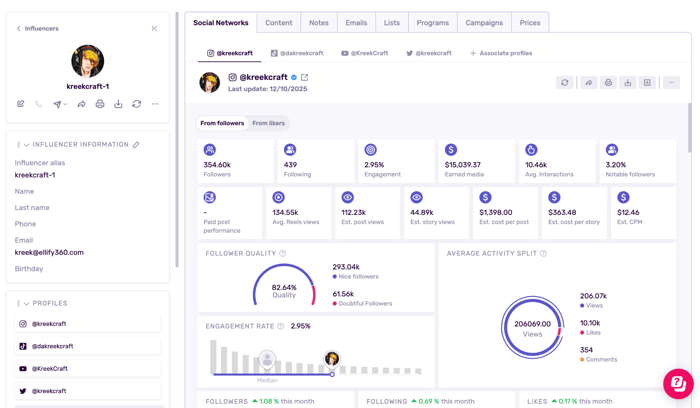
The content still feels like what viewers expect from that creator. Your brand shows up as a natural part of the story, not a logo pasted on top.
If you want more help tying influencer results back to executive-friendly metrics, this guide to reporting content marketing results walks through how to structure reports around reach, engagement, conversions, and ROI in a way that defends channels like gaming.


You can use the same structure you use for other influencer campaigns, but with a few gaming-specific nuances.
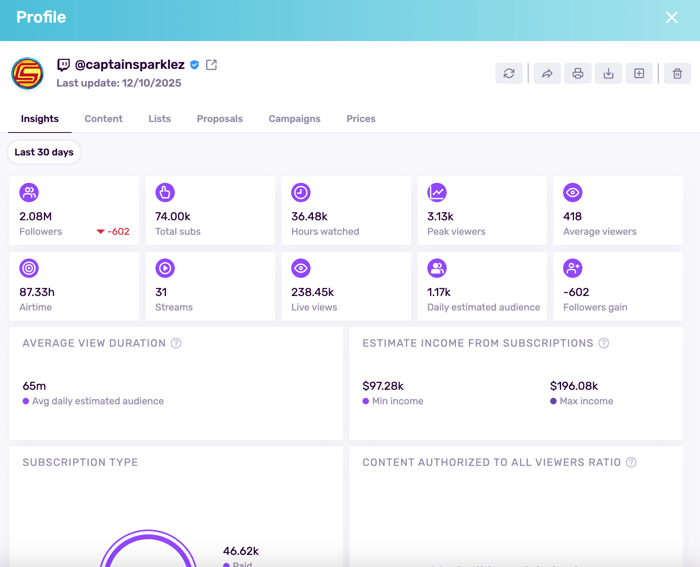
For live streams and VODs, track:
These tell you whether viewers stayed and cared, not just whether they scrolled past. Longer watch time and active chat often signal trust and interest, which can explain why gaming creators sometimes drive higher conversion rates than creators who only show up in quick feed posts.
If you are new to reading creator data, this list of red flags in influencer analytics highlights the suspicious patterns to watch for before you double down on a gaming roster.
Anchor on Incremental Reach and Net New Viewers
This influencer reach guide shows how to:
This is where gaming can shine: you often reach pockets of younger or more engaged audiences that you do not see in traditional social or paid media.
You don’t have to track everything, but you should choose at least one hard outcome:
Pair that with your cultural metrics (saves, shares, sentiment) and follow the report structure from this guide to reporting on content marketing success and securing more budget, which walks through:
That’s how gaming creators go from “experiment” to “line item worth growing.”
To turn those results into numbers your finance team can act on, this guide to using ROI calculators for influencer campaigns shows how to plug campaign data into simple ROI models.
You don’t need an esports league sponsorship to start. Here’s a simple, low-risk 30-day plan that fits most non-endemic brands.
Week 1: Pick Your Game Worlds & Goal
Week 2: Cast 5–10 Creators
Week 3: Run One Clear Format
Week 4: Read the Signals & Decide
Pick one or two games where your audience already spends time. Decide whether this first test is mostly about reach and awareness, conversion and sign-ups, or learning which themes resonate. Then write a one-page brief that covers what you want to achieve, who you’re trying to reach, and what role your product should play on camera.
Using a platform like Influencity, build a small roster of 5–10 creators: 1–2 larger creators for reach and 3–8 smaller or mid-tier creators for testing and community. Look at audience age, location, and interests, engagement quality (real comments vs. spam), and past brand content and how it performed.
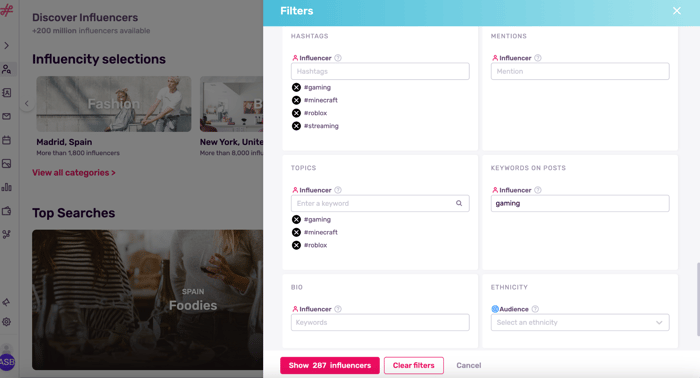
If you want help choosing streamers on Twitch specifically, this Twitch streamer types video is a useful cheat sheet as you decide whether you need pros, variety streamers, Just Chatting hosts, or art/creator types. Once you’ve narrowed down game worlds and streamer types, this practical guide for evaluating creator fit helps you decide whether a creator’s audience, tone, and values really match your brand.
Choose a single, repeatable format across creators, such as a “playthrough + product in the setup,” a “challenge night” loosely tied to a brand idea, or “before / after or routine” content for YouTube or TikTok. Give creators 2–3 must-hit talking points and one clear CTA (code, link, or landing page), then let them integrate everything in their own voice.
At the end of the month, review Net Unique Reach across creators, saves, shares, average watch time, and chat sentiment, plus clicks, sign-ups, or sales linked to the campaign. Rehire the creators with strong performance and audience fit, drop the ones who didn’t move the needle, and test one new format or game based on what you learned. From there, gaming creators become a repeatable part of your 2026 plan, not a one-off experiment.
Gamers are not just a niche group huddled around specific titles. They are some of the most culture-shaping, discovery-driving creators on the internet.
For non-endemic brands, the opportunity is clear:
When you combine the cultural pull of gaming with cleaner reach models and reporting frameworks, you can sit down with any stakeholder and explain not just what you did with gamers, but why it worked and how to scale it next time.






%20and%20How%20Can%20They%20Benefit%20Your%20Brand%20article.jpg?length=628&name=What%20Are%20Key%20Opinion%20Leaders%20(KOL)%20and%20How%20Can%20They%20Benefit%20Your%20Brand%20article.jpg)



.png?length=628&name=Pop-up%20image%201200%C3%97800@1x%20(1).png)