

Food marketing has a saturation problem, and a digestion problem. We’ve perfected the art of making content snackable, but most campaigns are still empty calories, quickly consumed, instantly forgotten. A viral post might spike orders for a weekend, but by Monday, the audience has already moved on to the next craving, scrolling past their feed.
Meanwhile, the brands actually winning are the ones with engineering appetite.
Wendy’s, with its Dunkstakes activation and the enduring Frosty Key Tag program, offers one of the best examples of what comes after the bite. These campaigns build behavioral recipes people come back to. One taps into the cultural frenzy of March Madness and turns it into a participatory game. The other transforms a $3 key tag into a year-long ritual, arguably one of the most efficient loyalty loops in fast food.
The result? Not just attention, but repetition. Not just reach, but return visits. Not just hype, but habit.
For influencer marketing agencies, this marks a fundamental shift in the brief. The question is: How do we make this stick?. Basically, how do you turn a one-off taste into a weekly craving? A post into a pattern? A creator mention into a muscle memory?
Remember that TikTok decides what’s trending before lunch and consumers treat menus like mood boards, so the real competitive advantage is being the one people build into their routine.
I’ll break down how Wendy’s engineered that shift, from campaign to craving, and how agencies can replicate it, ingredient by ingredient.
I’ve lost count of how many influencer campaigns I’ve seen that look spectacular on paper, millions of impressions, strong engagement rates, maybe even a fleeting spike in traffic, only to leave absolutely no residue in the business a week later.
It’s the industry’s dirty secret, we’ve optimized for reach, not retention. For noise, not nourishment.
And the numbers, once you step outside the vanity metrics, are increasingly unforgiving. Customer acquisition costs in food delivery and QSR have been climbing steadily, driven by platform fees, paid media inflation, and brutal competition for attention. At the same time, the economics of the category haven’t changed: repeat customers are the business. In most QSR contexts, they account for roughly 60–70% of revenue.
.png?width=250&height=269&name=Graphs%20(12).png)
So, if your campaign doesn’t create return behavior, it’s not just underperforming, it’s structurally inefficient.
This is where most influencer strategies collapse. They treat creators as amplifiers of a moment rather than anchors of a mechanism. The output is content; the outcome is a spike. And spikes, by definition, come down.
What Wendy’s gets right, and what most briefs still miss, is the shift from campaign thinking to system thinking.
A campaign says: How do we get attention this month?
A mechanism asks: What behavior can we trigger, reward, and repeat?
That distinction changes everything.
Because when you design for habit, you start asking different questions:
In other words, you stop producing content and start engineering routines. The practical implication for agencies is uncomfortable but necessary: your job is not to fill a content calendar. It’s to build behavioral infrastructure.That means:
That is why the smartest brands are shifting their mindset. They are no longer treating influencer campaigns as isolated content bursts. They are treating them as behavioural infrastructure. The goal is to make returning feel easy, familiar, rewarding, and socially reinforced.
Think about the difference. A hype-led campaign might look like this:
A creator posts a dramatic unboxing of a new burger launch, shares a discount code, and drives a weekend rush. The content gets views. The promo gets redeemed. The reporting deck looks great on Monday. But by the following week, the audience has moved on and the brand is back at zero.
A habit-led mechanism looks different:
A creator introduces a midweek reset routine where ordering a specific combo becomes part of a Wednesday ritual. Another frames the brand as their reliable post-gym meal. Another builds content around Friday family sharing, Sunday sofa dinners, or late-night study fuel. Now the brand is not just attached to a product. It is attached to a moment. And moments, when repeated often enough, become habits.
That contrast is essential. Hype creates reaction. Habit creates recurrence. A burst campaign rents attention. A behavioural mechanism earns a place in routine. Reach gets you seen. Repetition gets you remembered.
For agencies, this changes the brief completely. You are not simply asking which creators can make the launch look exciting. You are asking which creators can make the brand feel naturally repeatable in the context of everyday life.
That means the strategic questions become richer:
For example, a student creator might not just promote a delivery app with a coupon code. They might build a recurring content series around deadline dinners during exam periods. A working parent creator might position a QSR bundle as their low-stress backup plan for chaotic weekdays. A fitness creator might frame a specific menu item as their realistic, convenient post-workout choice rather than pretending every meal has to be aspirational. These are not random content ideas. They are repeat-entry points into behaviour.
This is where real life matters more than polished branding. Consumers do not build habits around abstract campaigns. They build habits around lived situations:
The strongest influencer work in food and QSR taps into these familiar micro-contexts. It recognises that consumption is often triggered by timing, mood, convenience, and routine more than by product novelty alone. A creator showing how a meal fits into a recognisable life pattern can often be more commercially valuable than a creator producing a visually perfect but context-free brand moment.

That also helps explain why repeat customers are so commercially important. They are reducing friction. They already know what to expect. They already trust the experience. They already have a preferred order, a preferred time, and a reason to return. Once that loop is formed, the brand does not need to keep reintroducing itself from scratch.
For agencies, you are not planning content in the narrow sense, you are designing systems that incentivise return.
That system can include creator storytelling, yes, but also rhythm, triggers, incentives, and reinforcement. It might mean pairing creator content with app-based reorder reminders. It might mean using sequential messaging: discovery first, then social proof, then a reason to come back. It might mean choosing creators whose audiences share recurring lifestyle patterns, not just demographic alignment. It might mean measuring success not only by views, clicks, or first-use codes, but by signals of repeat purchase and retained engagement over time.
A useful test is to ask yourself if the campaign ended today, would the behaviour continue tomorrow? If the answer is no, you may have built visibility, but not a mechanism.
A few practical principles help here:
If most food campaigns try to create attention, Dunkstakes does something far more efficient: it hijacks attention that already exists.
March Madness isn’t just a sporting event, it’s a collective ritual. Brackets, predictions, upsets, group chats spiraling into chaos. The emotional infrastructure is already there. Wendy’s didn’t build a campaign on top of it; they plugged directly into it.
That’s the first lesson: don’t compete with culture, draft behind it.
But, wait! First things first, you need to know that Dunkstakes is deceptively simple. A campaign tied to a culturally charged moment (March Madness), where users participate through familiar mechanics, predictions, brackets, engagement-driven entries, in exchange for rewards.
But simplicity here is doing a lot of work. Because what looks like a giveaway is actually a participation engine.
Strip away the branding, and you’re left with a clean behavioral loop:
.png?width=500&height=288&name=Dark%20Blue%20and%20Green%20Modern%20Budget%20Pie%20Chart%20Graph%20(22).png)
This is what most campaigns miss, the mechanic is the message.
Now, in terms of pillars, there are three forces at play here, and they’re all behavioral:
1. It leverages existing obsession: You’re not asking users to care, you’re meeting them where they already do. March Madness isn’t content; it’s a habit.
2. It converts spectators into participants: Most brand content is passively consumed. Dunkstakes flips that dynamic. You don’t watch, you play.
And participation changes the value equation entirely. Once I’ve made a prediction, I’m invested. I come back, not because of the brand, but because of my own decision.
3. It stretches engagement over time: Instead of a single spike, you get a sequence: entry → check-in → update → share → repeat.
What most agencies get wrong is that they plug creators in at the distribution layer. However, Wendy’s, whether explicitly or implicitly, treats creators as entry points into the mechanic.
That’s a completely different role. Instead of post about this, the brief becomes:
The formats are native because they’re already part of how creators behave:
And crucially, incentives align. The more their audience participates, the better the content performs. The campaign stops being an imposition and starts being fuel.
If you take one thing from Dunkstakes, let it be this, stop briefing messages, start briefing mechanics.
Here’s the playbook I’d actually use:
1. Attach yourself to a cultural calendar you don’t own: Sports, awards, seasonal rituals, even internet-native moments. Attention is cheaper when it’s already aggregated.
2. Design a mechanic people already understand: Predictions, voting, ranking, unlocking. If you need to explain it twice, it’s too complex.
3. Optimize for return, not entry: Anyone can get a user to click once. The real question is: what brings them back tomorrow?
4. Give creators something to do, not just something to say: A creator with a script is forgettable. A creator inside a system becomes a node in it.
5. Build for iteration: The best campaigns evolve in public. They give people a reason to update, react, and re-engage.
Dunkstakes works because it understands a simple truth most influencer campaigns ignore: people don’t bond with brands through exposure, they bond through participation.
And once someone plays, they tend to come back for another round.
If Dunkstakes is about capturing cultural energy, Frosty Key Tags are about something far less glamorous, and far more valuable: routine.
No hype, no spectacle, no algorithmic theatrics. Just a small plastic tag and a quietly brilliant piece of behavioral design.
And yet, I’d argue this does more for long-term revenue than most six-figure influencer campaigns combined.
On the surface, the mechanic is almost laughably simple, pay a few dollars upfront, and you unlock a free Frosty with every purchase for a year. That’s it.
But beneath that simplicity is one of the cleanest examples of habit engineering in QSR.
What Wendy’s is really selling here isn’t a dessert, it’s a commitment device.
1. A one-time purchase becomes a behavioral contract: The moment I buy the key tag, I’ve shifted from potential customer to invested participant. I now have a reason, however small, to choose Wendy’s over alternatives.
2. It collapses decision friction: The internal dialogue changes:
That might as well is where frequency lives.
3. It builds habit through micro-rewards: The reward isn’t large, but it’s consistent. And consistency beats magnitude when you’re shaping behavior.
This is textbook, but still underused in marketing, small, repeatable incentives outperform big, one-off rewards when the goal is habit formation.
Zoom out, and the numbers reinforce the logic:
Which means the key tag isn’t a discount, it’s a frequency engine.You’re trading a low-margin giveaway for a high-probability increase in visits, basket size, and long-term customer value.
Most brands still think in terms of margin per transaction. This is thinking in terms of lifetime behavior.
This strategy works because there are three levers doing the heavy lifting:
.png?width=500&height=355&name=Dark%20Blue%20and%20Green%20Modern%20Budget%20Pie%20Chart%20Graph%20(18).png)
1. Psychological ownership: I have the tag is a surprisingly powerful sentence. Ownership, even of something trivial, creates attachment and follow-through.
2. Asymmetric value perception: The math is obvious. You pay a few dollars, you can redeem far more over time. The perceived upside dwarfs the cost.
But here’s the twist, most people won’t fully optimize it, and they don’t need to. Even partial usage drives incremental visits.
3. Ritual reinforcement: Over time, redemption becomes routine. It’s not a promotion anymore, it’s part of the visit. And once something becomes routine, it stops being questioned.
Now, keep in mind that you don’t launch something like this with influencers. You normalize it. That distinction matters.
.png?width=1697&height=773&name=Tables%20(11).png)
The content shifts from promotion to ritual documentation.
And that changes the temporal dynamics from short-lived spikes to long-tail reinforcement, from awareness to social proof and from ads to this is what I do. And this is exactly how creators stop being megaphones and start being mirrors of behavior.
Circling back to how you can replicate this all, if Dunkstakes is about participation, this is about repetition. Here’s the playbook for you to follow:
1. Create a low-barrier entry point: Make the initial commitment feel trivial. Price, effort, and friction should all be minimal.
2. Tie the reward to an existing behavior: Don’t invent new actions. Attach yourself to something people already do, ordering lunch, grabbing coffee, snacking.
3. Design for frequency, not redemption maximization: You don’t need perfect usage. You need consistent nudges.
4. Use creators to model the habit: Not go buy this, but this is part of my routine. Subtlety outperforms persuasion here.
5. Let time do the work: This isn’t a campaign you measure in days or weeks. It compounds.
At first glance, Dunkstakes and Frosty Key Tags couldn’t be more different. One is loud, cultural, time-bound. The other is quiet, perpetual, almost invisible. But structurally, they’re doing the exact same thing.
They compress the distance between awareness → action → repetition until it’s almost frictionless.
And that’s the real unlock. Because most influencer campaigns break precisely at that junction. They generate awareness, occasionally trigger action, and then… nothing. No reason to return, no system to sustain the behavior, no loop to close the gap.
What Wendy’s has built, across both campaigns, is a path of least resistance.
When you strip both campaigns down to their essentials, four components keep showing up:
1. Clear value exchange: There’s no ambiguity. I know exactly what I get and what I need to do.
No fine print, no cognitive gymnastics. Clarity is conversion.
2. Minimal cognitive load: Neither campaign asks me to learn anything new.
This is where many campaigns over-engineer themselves into irrelevance. If it requires explanation, it introduces friction. If it introduces friction, it kills participation.
3. A built-in reason to return: This is non-negotiable.
Return isn’t an afterthought, it’s designed into the system.
4. Social proof via creators: Not as amplification, but as validation.
If I had to reduce both campaigns into a single operational framework for agencies, it would be this:
.png?width=400&height=297&name=Dark%20Blue%20and%20Green%20Modern%20Budget%20Pie%20Chart%20Graph%20(20).png)
Not as a metaphor, as a build sequence.
Trigger: Where attention already exists
A cultural moment (March Madness), a product ritual (dessert), or an owned asset (app, loyalty program). If you have to create the trigger from scratch, you’re already paying too much.
Action: Immediate and intuitive
Vote, predict, redeem, order. The action should feel obvious, almost inevitable.
Reward: Tangible and repeatable
Not abstract brand affinity, something I can feel, use, or benefit from again.
And crucially, something that invites repetition, not closure.
Loop: A reason to come back
This is where most campaigns fail. They end where they should begin.A proper loop answers a simple question, Why would I do this again tomorrow, next week, next month?
We tend to think of campaigns as arcs. They start, peak, and end. But the most effective systems don’t behave like arcs, they behave like circuits. They’re closed. Self-reinforcing. Designed to be re-entered.
And once you start thinking this way, everything changes:
Because the goal is to be repeated, effortlessly, almost unconsciously. That’s what frictionless really means.
If there’s one structural mistake I see over and over again, it’s this: influencers are still being treated as distribution.
As if their job were simply to extend reach, to take a prepackaged message and push it further down the funnel. That model is not just outdated. It’s misaligned with how influence actually works today.
Because if reach were the goal, we’d just buy media. It’s cheaper, cleaner, and far more predictable.
What we’re really buying with creators is something else entirely, the ability to shape behavior in context. And that only happens when creators are embedded into the system, not bolted onto the end of it.
Most campaigns still follow a linear logic.It looks neat. It reports well. It fails quietly.
.png?width=450&height=65&name=Dark%20Blue%20and%20Green%20Modern%20Budget%20Pie%20Chart%20Graph%20(23).png)
Because what you get is a spike without a loop:
The audience sees it, maybe interacts, and then defaults back to their existing habits. In food especially, this is fatal. You’re not competing for attention, you’re competing for routine. And routines are stubborn.
So if your influencer strategy doesn’t integrate into behavior, it gets filtered out as noise.
The campaigns that actually go the extra-mile to be effective and resilient operate on a different premise. Creators are not distribution, they become part of the entire infrastructure.
They don’t sit at the end of the funnel, they are part of the loop itself. Concretely, that means:
1. Creators activate the behavior: They don’t just explain what to do, they do it, repeatedly, in public. Not here’s the campaign, but here’s me participating.
2. Content is designed for recurrence: One post is a message. A series is a pattern. High-performing campaigns build formats that creators can return to:
3. Incentives extend beyond the post: If the creator only benefits from publishing, the system dies after publishing.Instead:
That’s when campaigns stop feeling like obligations and start behaving like ecosystems.
Some creators already operate as behavioral engines, whether brands structure for it or not.
Keith Lee is the clearest example of action-driving influence. When he reviews a restaurant, it doesn’t just get attention, it gets foot traffic, often immediately and repeatedly. What’s happening there is trust translating into behavior. His audience doesn’t just watch; they go.
For agencies, the lesson here is sharp, credibility plus specificity ( this is what to order, this is why ) collapses the gap between content and action.
Tabitha Brown operates on the opposite end of the spectrum, habit formation. Her content isn’t built for spikes, it’s built for integration. Recipes, products, routines. She doesn’t interrupt behavior, she reshapes it over time.
This is exactly how something like a Frosty Key Tag should live in influencer content, not as a push, but as a presence.
On another note, Nick DiGiovanni shows the power of format-driven repetition. His content is inherently iterative, recipes, experiments, challenges. When plugged into a campaign with a mechanic, this kind of creator can stretch a single idea across multiple touchpoints without fatigue.
Now, let’s talk about TikTok-native food creators (what I eat in a week , daily food diaries). This is where things get really interesting. These formats are already sequential, habitual and expectation-driven.
When a brand integrates here correctly, it feels like inclusion. And inclusion is where behavior shifts.
When I design campaigns now, I don’t think in terms of deliverables. I think in terms of behavioral roles.Here are the ones that consistently work:
1. The Ritual Builder: Creators who normalize repetition.
This is where brands move from option to default.
2. The Progress Narrator: Creators who turn usage into a story.
Progress creates investment. Investment creates return.
3. The Community Catalyst: Creators who turn individual action into collective behavior.
At this point, the campaign stops belonging to the brand.
Most briefs still sound like this “We need X posts, Y stories, clear CTA, key messages”.
That’s not a strategy. That’s packaging. The shift I push is uncomfortable but necessary: Here’s the behavior we want to create. Here’s the loop. How do you make this part of your content over time?
This does three things:
The bottom line? Influencer marketing doesn’t fail because creators don’t perform. It fails because we ask them to do the wrong job.
We ask them to generate attention… when what we actually need is to sustain behavior.
And those are two entirely different systems. The moment you treat creators not as media, but as part of the mechanism, everything sharpens:
Because at that point, you’re no longer renting influence.
At this point, the theory is clear, campaigns that drive habits outperform those that chase hype. The real question I get from teams is always the same:
Fine, but how do we actually build this?
The answer is less glamorous than most people expect. There’s no big creative leap. No aha moment. It’s a sequence of disciplined decisions, made in the right order.
Most briefs begin with an idea:
Let’s do something around March Madness. Let’s launch a summer campaign.
That’s already backwards. I always start here: What is the repeatable action we want to create? Is it…
Because if the behavior isn’t clear, the campaign will default to awareness. And awareness, on its own, doesn’t compound.
A useful test I apply: Can this action reasonably happen more than once per user?
If the answer is no, you’re designing a spike.
Once the behavior is defined, you need to answer a harder question: Why would anyone do this again?
This is where most campaigns collapse, they reward the first action and ignore the second.
There are two dominant models I see working in food:
1. Ownership-based loops (Key Tag logic)
Best for: frequency, loyalty, long-term value
2. Chance-based loops (Stakes logic)
Best for: participation, cultural moments, bursts of activity
The mistake is treating these as interchangeable. They solve different problems. If you want habit, lean into ownership. If you want engagement at scale, lean into chance.
And occasionally, this is where things get interesting, you can combine both.
This is the step most teams underestimate, and where most performance is lost. Every additional click, every extra second of thinking, every unclear instruction is leakage. So I push aggressively on two fronts:
1. Entry should feel effortless
If it doesn’t feel intuitive within 3 seconds, it’s broken.
Redemption should be immediate
Because the longer the gap between action and reward, the weaker the habit formation. This is basic behavioral psychology, but it’s astonishing how often we ignore it in campaign design.
This is where strategy either comes alive, or dies in execution. If creators enter after the system is built, they’ll default to promotion. If they enter during design, they can shape behavior.
So I involve them early, and I ask better questions:
Because creators understand friction, audience psychology, and format dynamics better than most brand teams.
The goal is to ensure three things:
If it only works once, it doesn’t work.
This is where the industry still lags behind its own ambitions. We say we care about business outcomes, but we still report like media agencies.
So I force a shift in measurement from impressions, engagement rate and views to redemption rates (who actually acted), repeat actions (who came back), frequency uplift (did behavior change?) and LTV impact (did value compound over time?)
Because a campaign that reaches a million people once is far less valuable than one that changes the behavior of ten thousand people repeatedly.
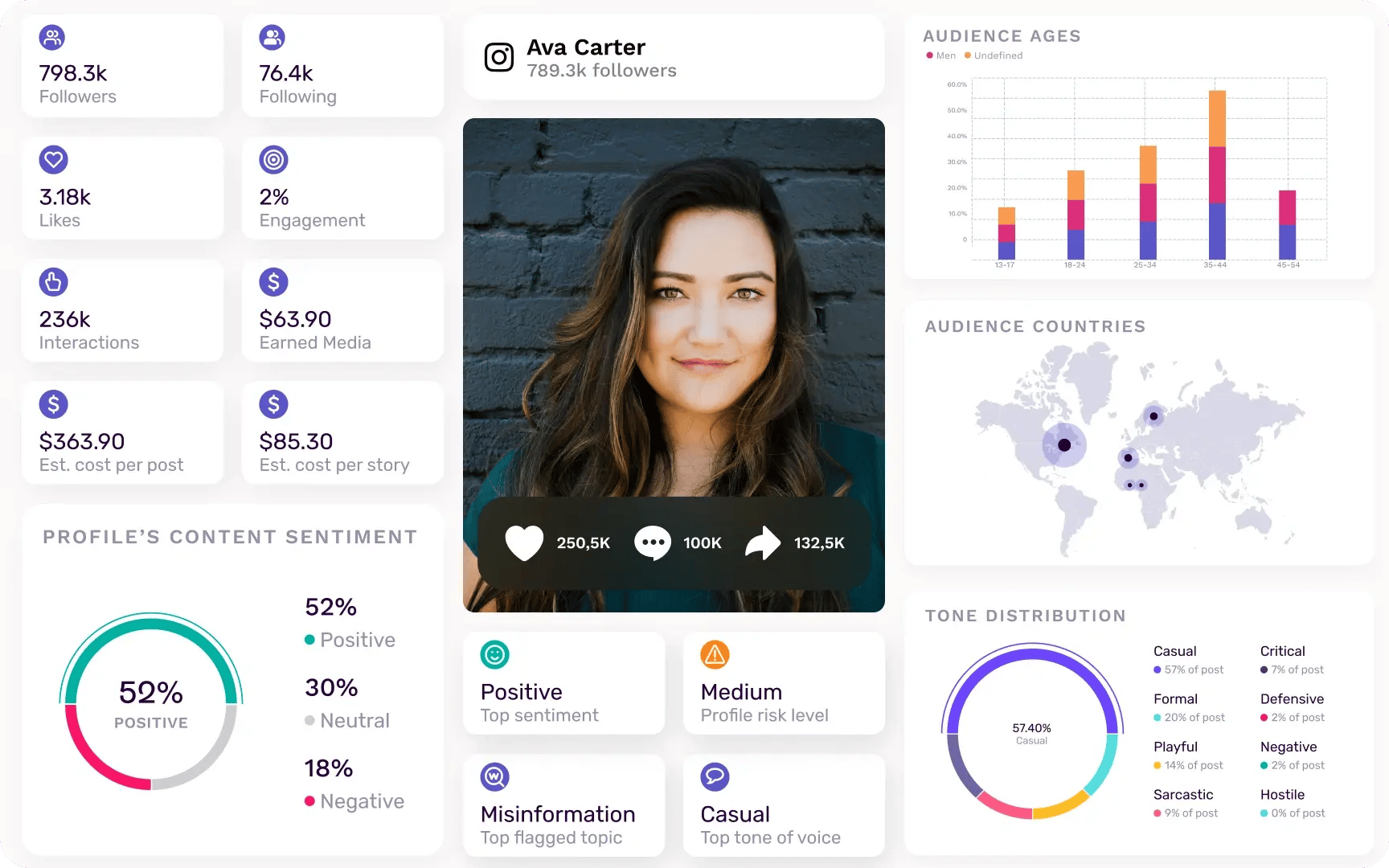
If I had to reduce this entire framework to one principle, it would be this:
You’re not designing a campaign. You’re designing a system people can re-enter.
Every step, behavior, incentive, friction, creators, measurement, either strengthens or weakens that system.
And once you start thinking this way, the work changes. It becomes less about ideas… and much more about outcomes that stick.
If you’ve built the right system, but you’re still measuring the wrong things, you’ll kill it before it has time to work.
This is where I see the biggest disconnect in the industry today. We talk about performance, revenue, and ROI… and then default to impressions and engagement when it’s time to report.
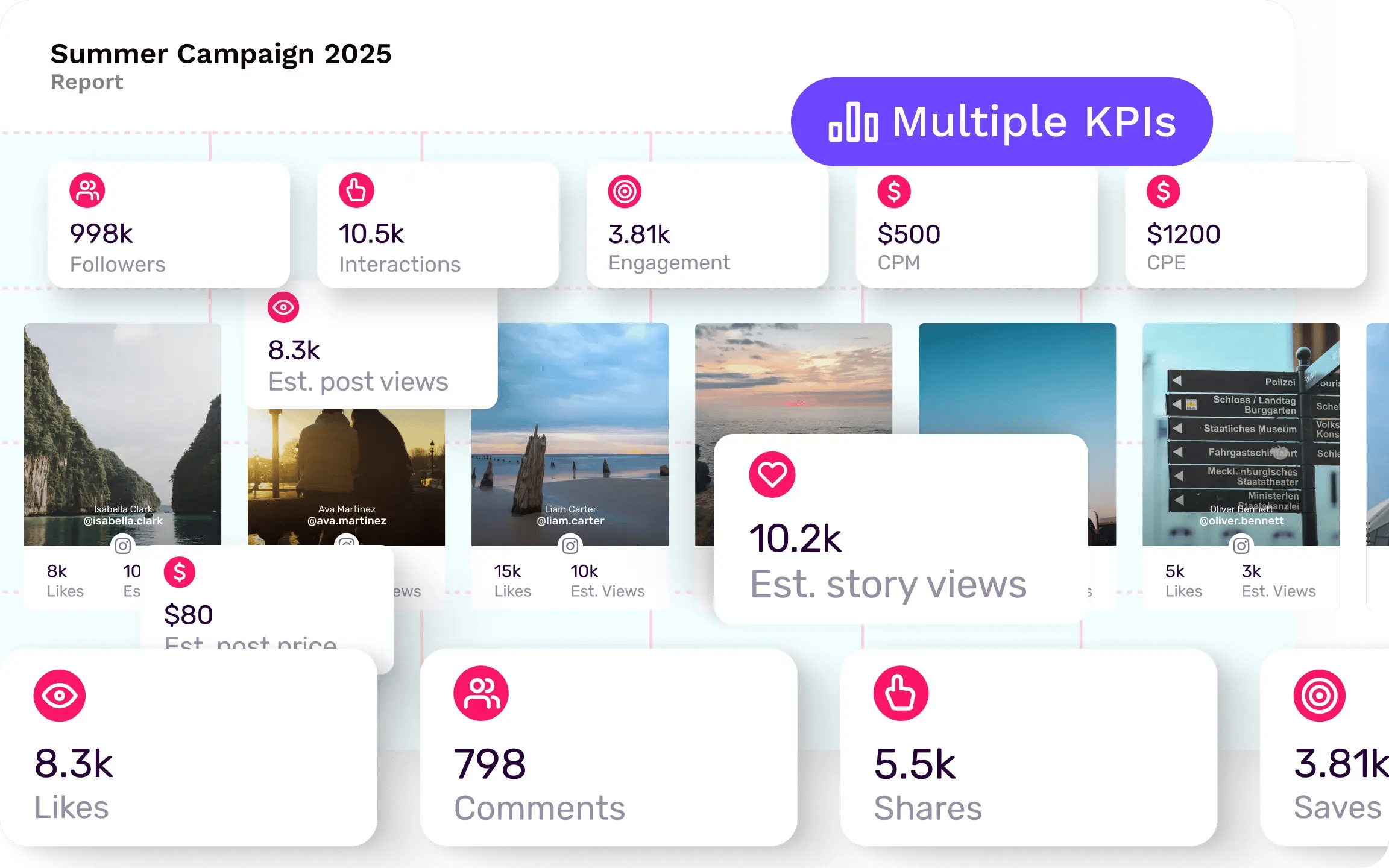
That’s not just lazy, it’s misleading. Because if the goal is to build habit, then the only metrics that matter are the ones that capture behavior over time.
This is the closest thing we have to a truth serum. Not who saw the content or who liked it, but who actually did something because of it.
Redemption rate tells you:
And when you break it down per creator, things get very clear, very quickly.
You’ll often find that:
If I had to pick one metric to prioritize, it would be this.
This is where campaigns graduate from performance to impact. It’s one thing to get someone to try your product once. It’s another to change how often they come back.
So I always ask:
Because frequency is where profitability lives. A small increase here, say +1 visit per month, can have a disproportionate effect on revenue over time.
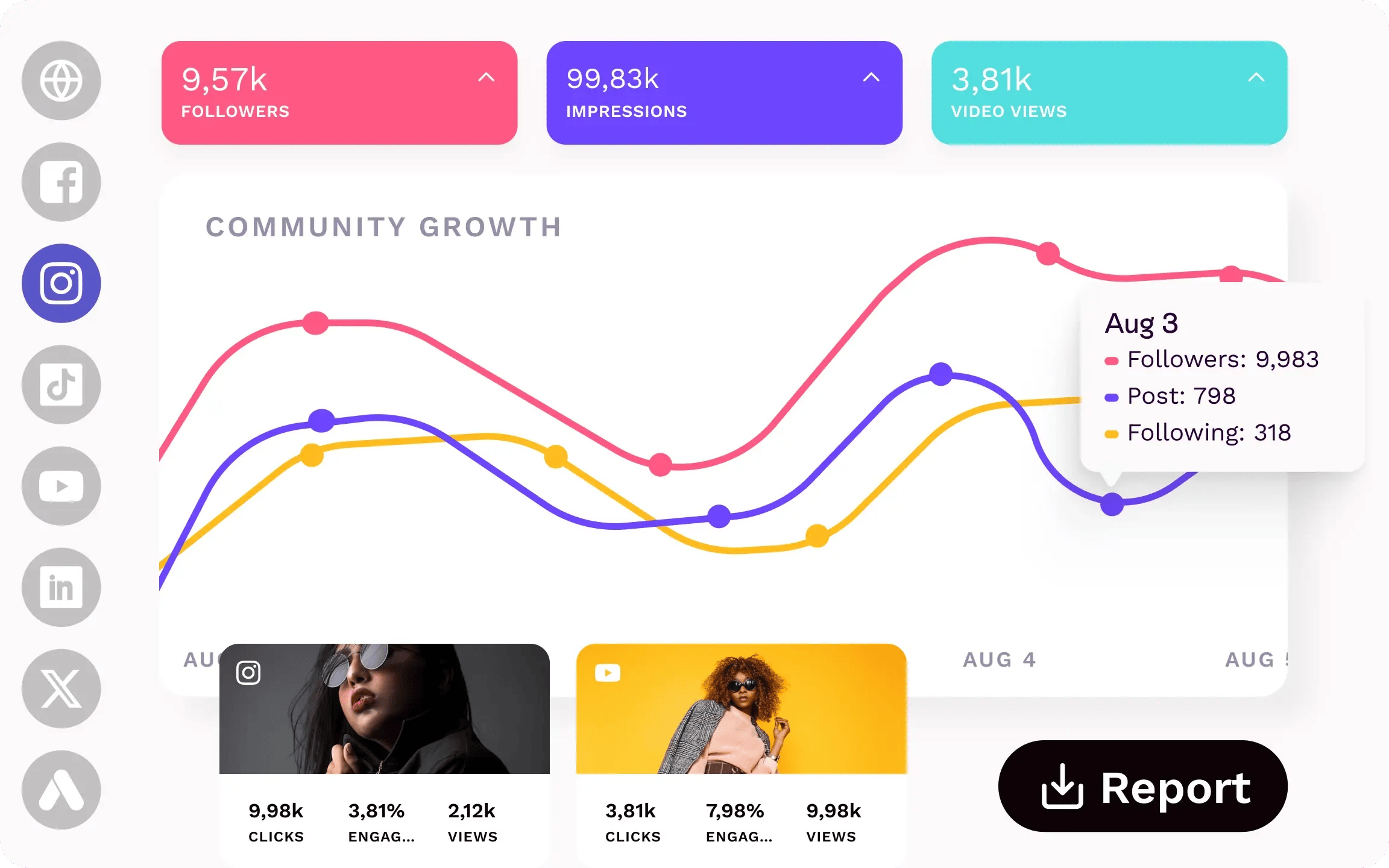
And yet, most influencer reports don’t even attempt to measure it.
We’ve spent years optimizing CAC.The problem is a cheap customer who never returns is expensive.
So I push teams to go one step further. Not What did it cost to acquire this user? But, What did it cost to acquire a user who came back?
This single shift changes decision-making dramatically. Suddenly:
Because you’re no longer paying for attention, you’re paying for sustained behavior.
At some point, this all has to connect to money. Not in a vague, modeled way, but as directly as possible:
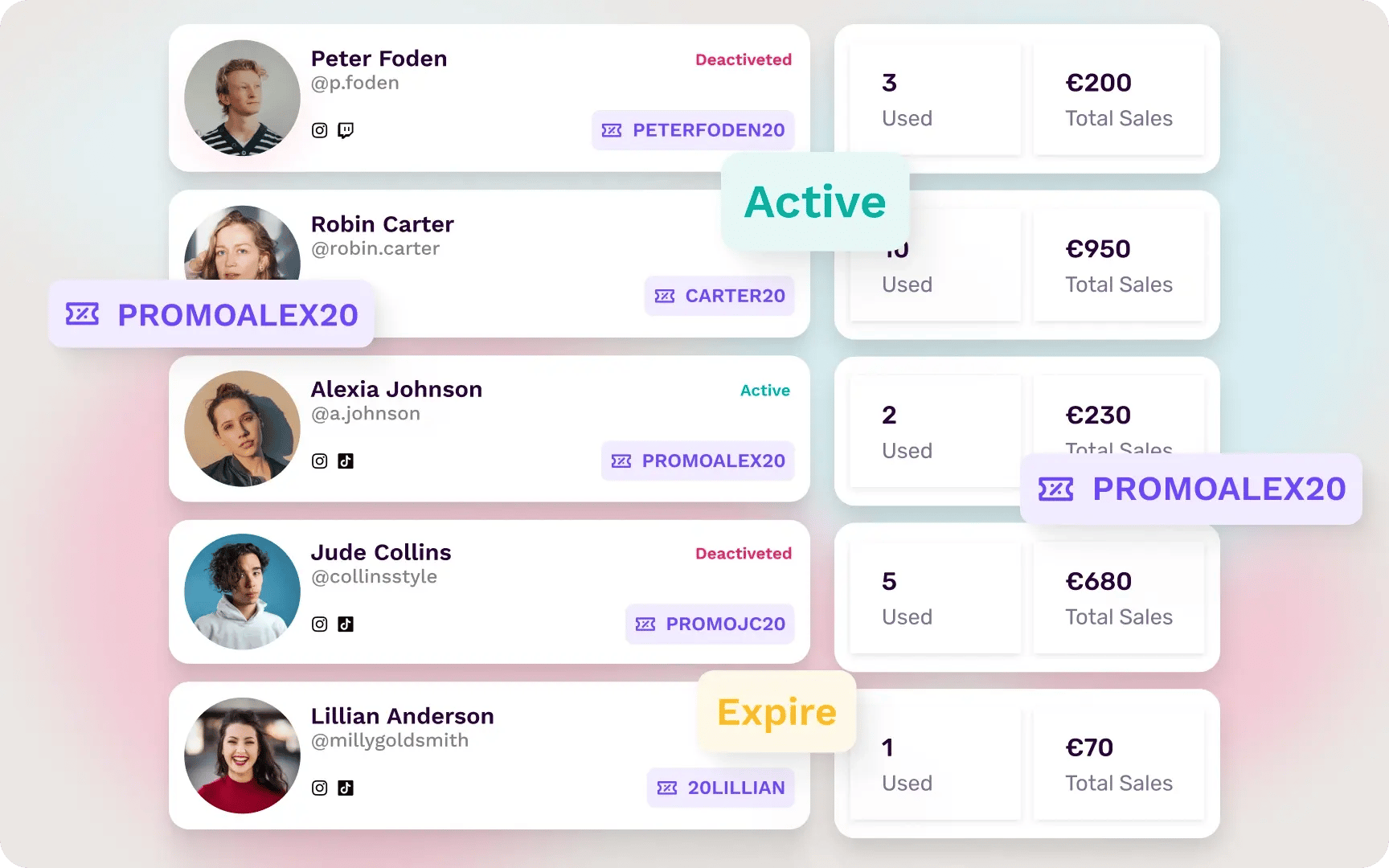
The goal is to answer a simple question: Which creators are actually driving revenue? And more importantly: Which behaviors are generating that revenue repeatedly?
Because a creator who drives one spike is useful. A creator who drives ongoing transactions is an asset.

All of this boils down to a mindset change that sounds simple, but is surprisingly hard to operationalize.
.png?width=400&height=69&name=Dark%20Blue%20and%20Green%20Modern%20Budget%20Pie%20Chart%20Graph%20(21).png)
Most campaigns stop at the first. Some make it to the second. Very few are designed, and measured, for the third.
If your reporting still makes a campaign look successful even when no one comes back, you’re measuring the wrong thing.
Because the real value of influencer marketing in food isn’t in driving a visit.
It’s in driving the next one… and the one after that… until the choice stops being a decision altogether.
If there’s a throughline across everything we’ve covered, it’s that the future of food marketing belongs to campaigns that stick.
We’ve spent the better part of a decade perfecting how to capture attention. Snackable formats, trend hijacking, creator amplification, we know how to make people look.
What we haven’t mastered, at least not consistently, is how to make them come back. Wendy’s, in its own way, has. Not through bigger budgets or flashier creative, but through something far more fundamental: participation and routine.
Dunkstakes pulls people into a moment and gives them a reason to stay in it. Frosty Key Tags slip into everyday behavior and quietly reshape it over time. Different executions. Same principle.
They’re not campaigns you watch.
They’re systems you enter.
And that’s the shift I believe influencer marketing agencies need to fully embrace. Stop thinking in terms of posts, flights or bursts and start thinking in terms of loops, behaviors and systems.
Because once you do, everything else aligns:
The bar is no longer: Did people see this? It’s: Did this become part of what they do?
The most effective campaign isn’t the one people remember. It’s the one they don’t have to think about anymore. The one that slips into their routine, earns its place, and repeats, quietly, consistently, almost invisibly.
The one they live inside.








%20and%20How%20Can%20They%20Benefit%20Your%20Brand%20article.jpg?length=628&name=What%20Are%20Key%20Opinion%20Leaders%20(KOL)%20and%20How%20Can%20They%20Benefit%20Your%20Brand%20article.jpg)