

As the holiday gifting season draws near, brands are ramping up their marketing efforts to maximize sales. I’ve been seeing a bunch of Christmas-themed Instagram ads pushing gift ideas as early as November.
And it’s not just ads that brands are investing in, they’re also partnering with influencers to inspire gifting decisions. From tech reviewers breaking down which gadgets make the best Christmas gifts to beauty creators promoting holiday gift boxes from their favorite brands, there’s a lot of seasonal influencer content out there.
But not all of this content will result in actual sales, and that’s where brands end up losing money. They keep investing in content that doesn’t perform, which eats away at their bottom line. The brands that win are the ones using content tracking to see what’s working and what’s not, and making real-time changes so their holiday messaging hits the mark.
In this post, I dig deeper into the challenges of data transparency in influencer marketing and show you how the right tools can bridge the gap. I also share how top brands like Samsung are winning the Christmas gifting season with real-time content tracking for their creator-led campaigns. Let’s take a look.
Every influencer marketer has lived this nightmare: You’re chasing creators for post links, waiting for screenshots of expired Stories, and manually compiling metrics before a client call.
It’s slow, it’s messy, and in 2026, we should be past this.
For years, influencer partnerships have operated on a partial view. Brands only see what creators choose to send, if they send it at all. That’s created a transparency gap that hurts every party:
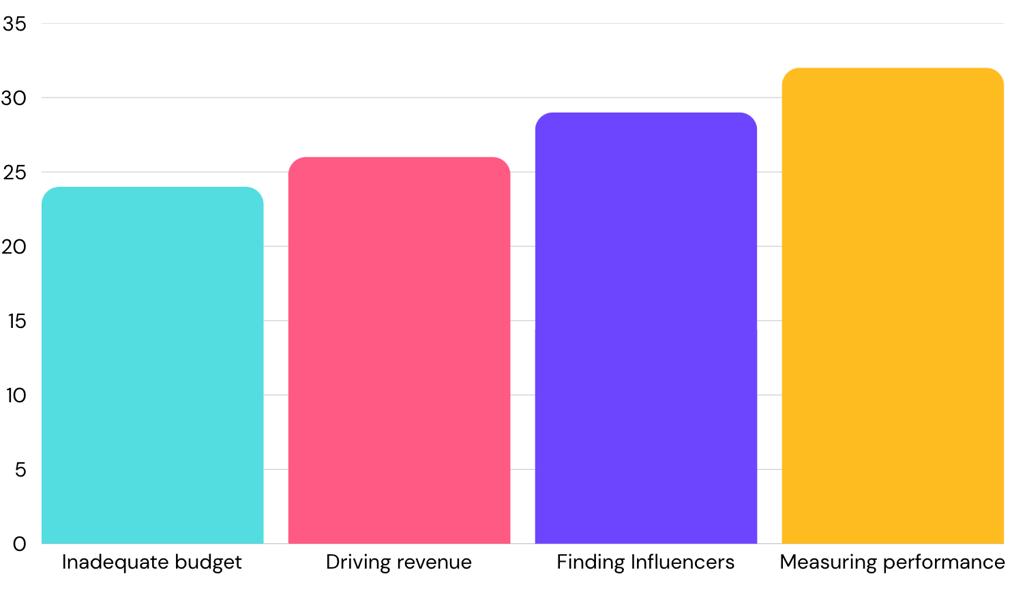
It’s no wonder measuring creator performance continues to be the number one challenge getting in the way of influencer marketing success, with 32% of marketers facing this roadblock.
Today, data transparency has become currency in influencer negotiations. When both sides (brands and creators) can clearly see content output and performance in real time, trust grows, deals move faster, and renewals come easier.
That’s where automated content tracking comes in, helping to bridge the transparency gap and improve data reliability. With tools that automatically collect performance data, it’s easy to see how your message is landing and how influencers are driving holiday sales. And you can always trust the data to be updated and accurate because it’s all collected in real time across different platforms.
For influencers, this also means less time spent digging through their analytics so they can share performance data with brands and agencies because everyone can see the same metrics in real time.
Sometimes, influencers aren’t sharing data not because of malicious intent but because they just don’t have the time. And this makes sense, between creating content, engaging with their communities, and managing other responsibilities, there’s often not enough time left to manually gather data from various analytics dashboards.
Automated content tracking makes it easy to prove the value they bring to the campaign without the need to manually capture screenshots. And there’s a greater sense of trust because the performance data that’s shared with brands and agencies is pulled in real time across different channels.
There’s a lot of thought that goes into Christmas gifts for your loved ones. You want something that’s just as useful as it is meaningful. So knick-knacks that will sit around collecting dust are out of the question. And while tickets to events sound great, you might be adding to the mental load as your loved ones are left having to plan around the event, arranging for a day off, figuring out transportation, and so on.
That’s why people often turn to gadgets. Phones, laptops, tablets, and smart watches may be slightly expensive, but they tend to make the best gifts because people actually put them to good use. Samsung leaned into this messaging for their 2025 holiday gifting campaign, where influencers highlighted Samsung gadgets that make sense to gift your loved ones.
There’s a reason Samsung has been able to craft such a winning influencer campaign for the Christmas gifting season. The brand uses real-time content tracking to gauge how people are responding to influencer-generated content and adapts campaign messaging accordingly.
So when they realized that people were responding to content where gadgets were framed as thoughtful and practical holiday gifts, they adapted the messaging to focus on this.
And it’s not just specific to this campaign. Samsung values real-time data insights across all its marketing campaigns and channels. For instance, members of their UK Affiliate Program are equipped with a real-time dashboard where they can track clicks, sales, and earnings. This bridges the transparency gap as it provides affiliate partners with clear visibility into their individual performance.
That leaves less room for data manipulation and mistrust, allowing creators to see exactly how much value they bring to the brand and how much they’re getting paid.
Meanwhile, Samsung can use this data for tracking content and affiliate performance. This means they’ll be able to see which affiliates are driving the most sales and which content is hitting the mark. These insights can even inform future campaigns, allowing brands to craft a winning formula and build better influencer briefs.
Here’s what this means for Samsung:
Lesson: When creators and brands both see the same data, trust replaces tension.
Influencity’s automated content tracking is exactly what you need to close the transparency gap. Every metric is collected automatically across multiple platforms. So there’s no need to manually collect screenshots or chase after influencers to opt in, which means no delays.
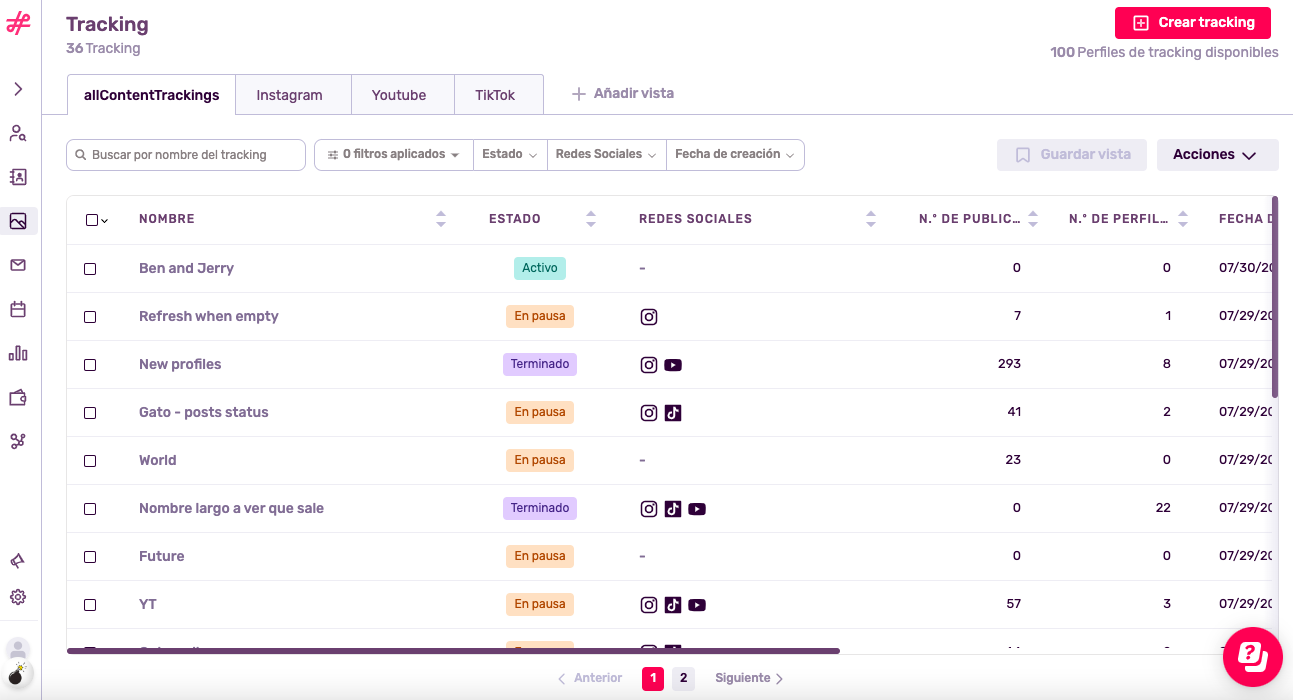
Influencity’s content tracking tool automatically logs every post and Story as soon as it goes live, even after it expires or gets deleted. So it’s easy to keep track of content from influencers and see how they’re performing. No more digging through profiles to collect content and screenshots, and manually tracking them in spreadsheets or folders.
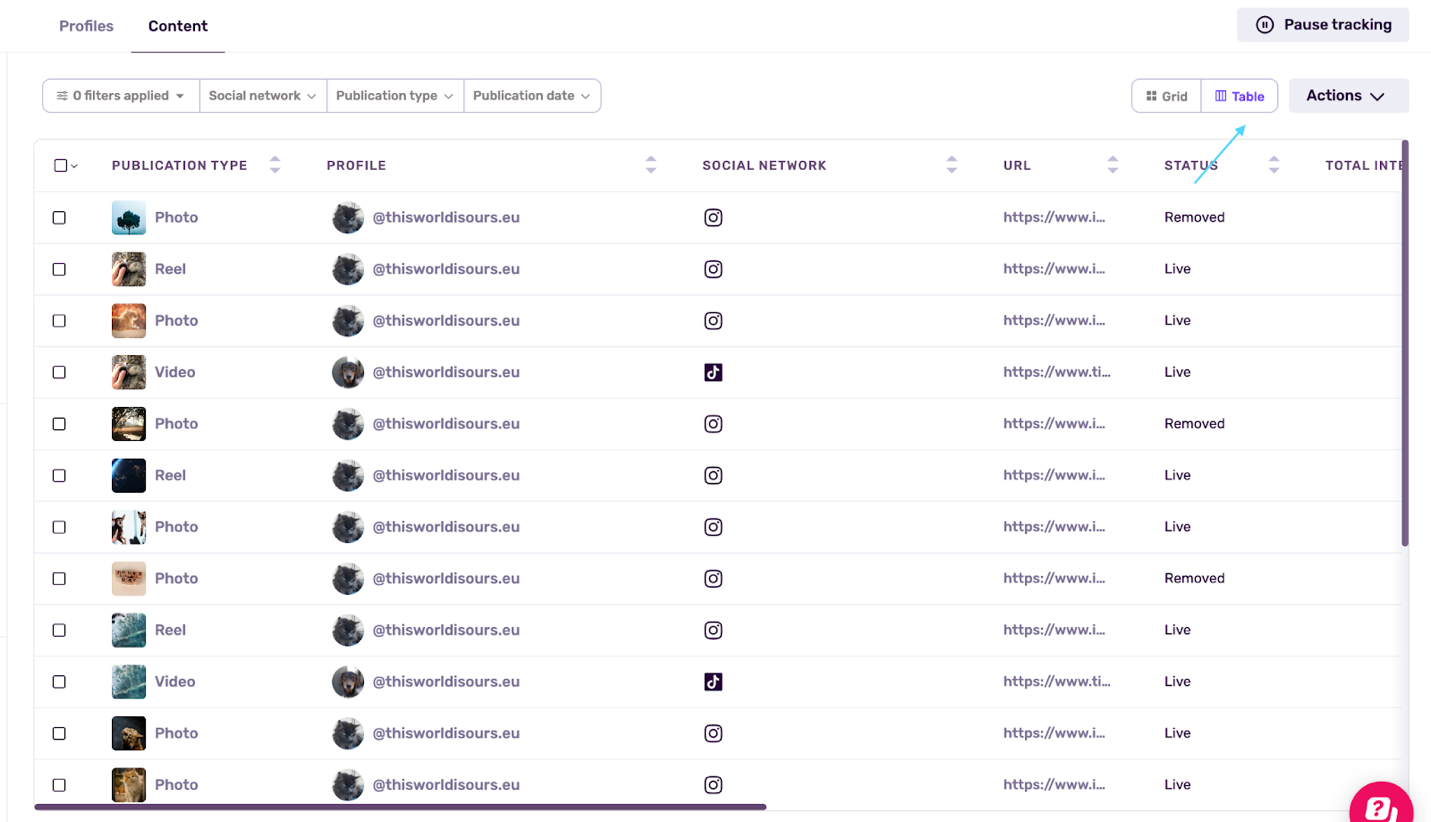
You don’t need to have influencers opt in to have their posts tracked. You can simply add their profiles to the tracking tool, and the platform will automatically pull data from every new piece of content they publish. This saves you the trouble of going back and forth with influencers, which means more time saved.
With the content tracking tool, you get to see how influencer content is performing across multiple platforms, including Instagram, TikTok, and YouTube. Instead of having to switch between platforms and manually tracking down campaign content, you can simply keep track of everything in one place.
This type of cross-platform visibility is essential if you’re running a campaign across different social media platforms.
Influencity also uses predictive analytics to forecast an influencer’s content performance. You can see estimated Story views, reach, and engagement rates even before the final data is shared. This helps you manage expectations and even figure out whether to pivot mid-campaign and improve outcomes.
The data from your content tracking isn’t siloed but instead feeds directly into your campaign analytics. So instead of having to manually export post-specific performance data, everything’s integrated into your report. That means you get to build client-ready reports in just a few clicks. You can even select which posts to include in your report, making it easy to customize reports based on specific campaigns, influencers, or post types.
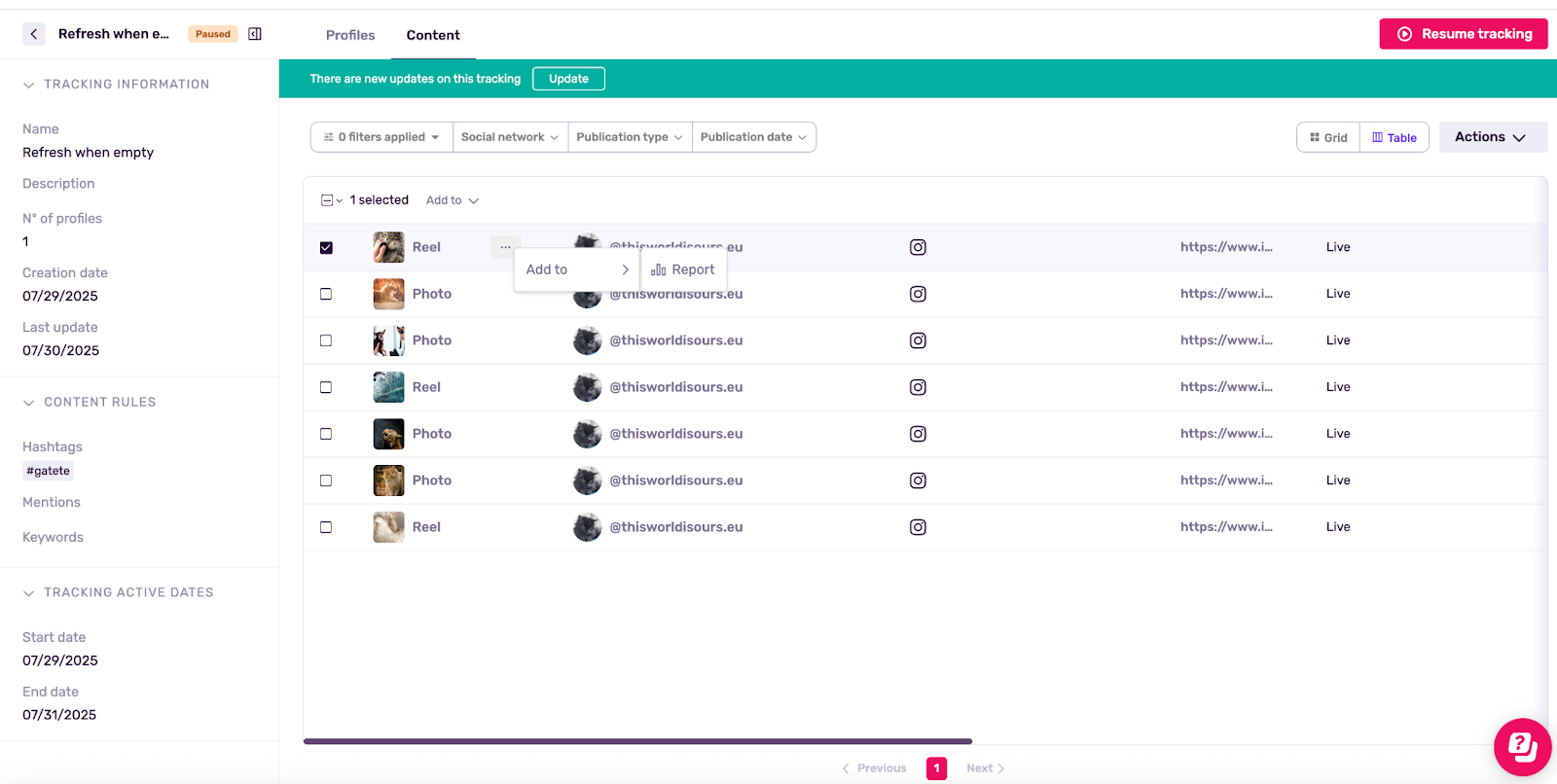
Pro Tip: Use these live insights to evaluate which creators are exceeding benchmarks and renegotiate future deals from a position of power.
Reporting may be the biggest use of data, but it’s not the only reason why you need it. In fact, it gives you leverage so you can navigate influencer negotiations more strategically. Here’s a quick look at how you can benefit from having automated, verified performance data.
Influencers may set high fees because they have a massive following. But those influencer rates are based on vanity metrics and perceived influence. Your content tracking efforts can show you real engagement data that reveals just how much influence a creator really has. So you can renegotiate fees with confidence when you know the real value they can bring to your campaign.
Tracking influencer content performance helps you identify which creators are generating real business impact. You can then use these insights to reward your top influencers with bonuses or extended contracts, helping you foster a strong relationship with them.
On the flip side, real-time content tracking is essential if you want to see which posts are underperforming. This means you get to surface underperforming posts early and take necessary action, whether it’s pulling the plug or adapting your message to better resonate. And you don’t keep spending money on content that doesn’t generate results.
Automated content tracking ensures better transparency. It leaves no room for data misrepresentation on both sides. That means brands get to see exactly how an influencer is performing while creators get to weigh the true value of their performance. These transparent, trust-based metrics help you foster long-term influencer partnerships.
Data transparency for influencer campaigns is more than just using the right tools. Here are some effective tips to make transparency work for you.
It’s easy to assume that reporting is a post-campaign event. But you need to build automated tracking into your campaign framework. That means setting up your campaigns so that content performance is automatically tracked from the get-go.
This gives you a comprehensive view of how influencer content is performing over time. It means you can detect underperforming content early on and pivot before it bleeds you dry. Alternatively, you can identify which posts are hitting the mark and how you can replicate them to improve your performance.
Transparency isn’t just for brands; it’s a two-way street. You need to extend campaign visibility across the board and loop in influencers on their content performance.
When they can see what’s working (and what’s not), influencers will be able to see how to optimize future content. From angles that work to tones that resonate, they’ll be able to get valuable insights on how to create content that appeals to their audience. So even if their comedy sketches are getting tons of engagement, they might see that their informative pieces are driving more clicks and purchases, for example.
Tracking content in real time means you get to pivot early and get more value out of your influencer marketing investment. Similarly, estimating your results early will help you refine your content plans even in the middle of a campaign, helping you maximize ROI.
For example, if you’re estimating fewer engagements for a carousel post vs. a Reel, you could switch things up to improve your campaign performance.
Every tracked post is an asset. It gives you all the insights you need to understand the true value an influencer brings to the table. So use your campaign reports as a negotiation tool for contract renewals.
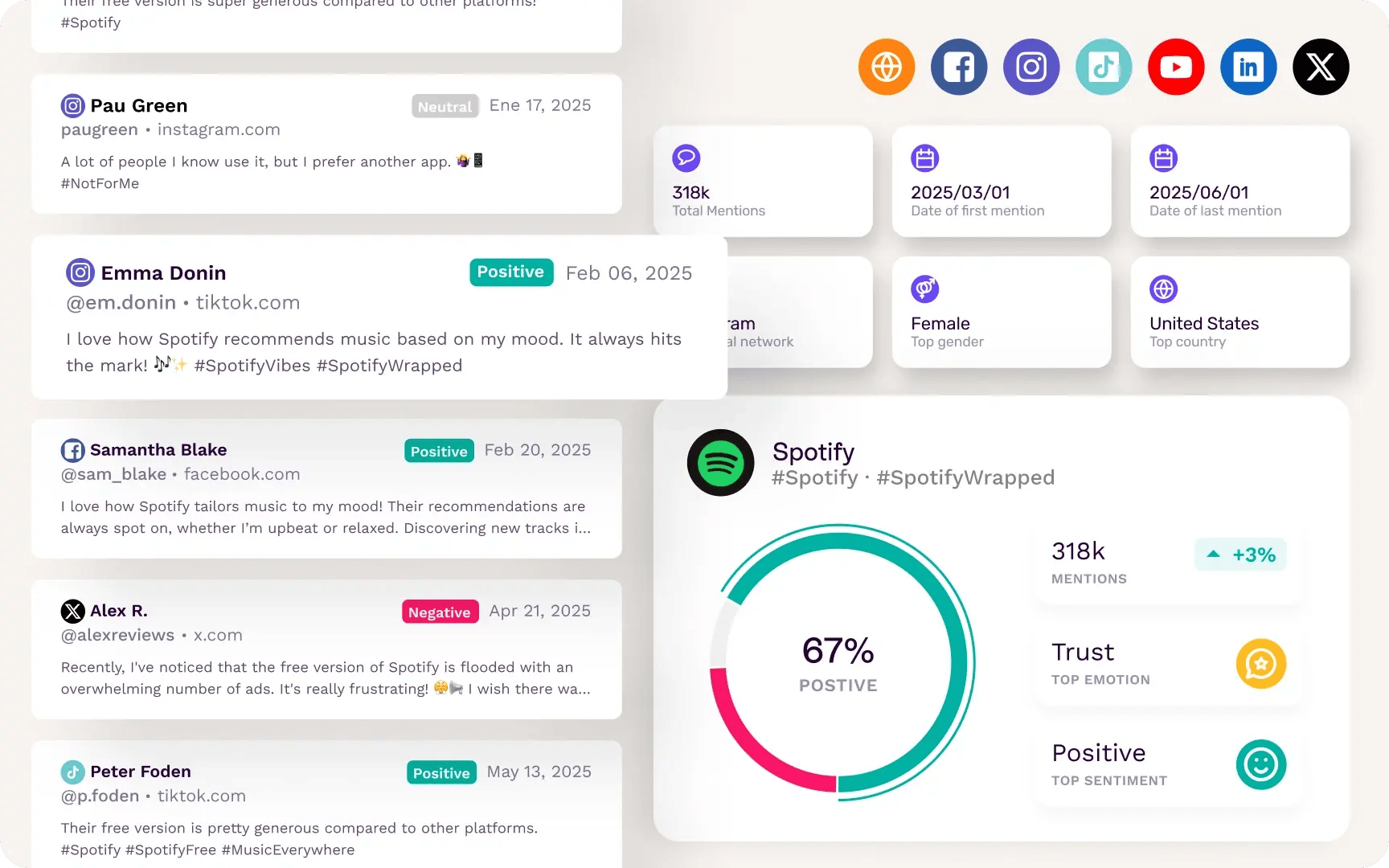
This isn’t necessarily about penalizing influencers who generate low value but about figuring out how to allocate your resources more strategically. See which influencers generate the most value and prioritize them in your negotiations. Alternatively, you may renegotiate rates based on the value an influencer generates.
Dos and Don’ts for Influencer Content Tracking
.png?width=1920&height=1080&name=Tables%20(12).png)
To help you visualize how automated content tracking adds value to your campaign, here’s a quick breakdown of how it compares to manual tracking.
.png?width=1920&height=1080&name=Tables%20(13).png)
Brands using automated tracking tools see up to 50% higher negotiation efficiency and 25% better ROI visibility. Whether it’s just for the holidays or for a year-round campaign, it’s clear that content tracking pays off. Make the most of the ideas and tips shared above to improve data transparency and take your campaigns to the next level.
















%20and%20How%20Can%20They%20Benefit%20Your%20Brand%20article.jpg?length=628&name=What%20Are%20Key%20Opinion%20Leaders%20(KOL)%20and%20How%20Can%20They%20Benefit%20Your%20Brand%20article.jpg)