


The influencer marketing landscape today has grown increasingly operationally complex. With brands running multiple campaigns and managing collaborations with hundreds of creators across various platforms, influencer marketing isn’t as simple as it used to be. This fast-paced, ever-evolving industry calls for equally fast track systems that can help you keep up with the latest demands. While human creativity remains irreplaceable, so is the need to learn trends and patterns to determine optimal approaches. This is where the need for AI-backed influencer marketing optimization comes in. With the speed and dynamism of today’s content marketing environment, machine learning and influencer marketing automation is no longer optional; it’s a sine qua non for peak performance.

The most successful AI influencer marketing campaigns don’t use AI to replace human creativity; they use it to get the best out of human-made content. Instead of using these tools to create, they use them as data-backed assistive tools for:
In this article, we will explore how leading influencer campaigns integrate AI into the influencer marketing workflow. These examples will provide insights into AI content-scoring strategies and show us which types of content benefit most from AI optimization.
As the world undergoes a massive shift driven by AI advancements, the role of artificial intelligence in the creative industry has become a growing bone of contention. While this AI boom has brought several positive changes, when it comes to content creation, the general consensus remains the same: human creativity trumps machine-generated content. If you were to analyze audience sentiment across different platforms, for instance, you’d see a strong preference for human-made content.
However, this isn’t to suggest that AI doesn’t have a place in content marketing. As much as we stress the value of human creativity, we cannot overlook the merit of AI in the content marketing process either. According to a Slack study, small business owners lose an average of 96 minutes of productivity per day. The study also revealed that efficient integration of technology to speed up productivity can solve this issue. Needless to say, AI has become an indispensable tool for influencer campaign optimization, especially in today’s fast-paced marketing landscape. Which is why, for brands looking to integrate AI into their influencer marketing campaigns, it is crucial to first understand where and how to use it.
Let’s look at Maybelline’s content strategy, for example. This leading beauty brand has mastered the art of effective AI content optimization. Rather than using AI to generate content or write scripts for them, they’ve utilized it to analyze past influencer content to identify best-performing visual patterns and hooks.
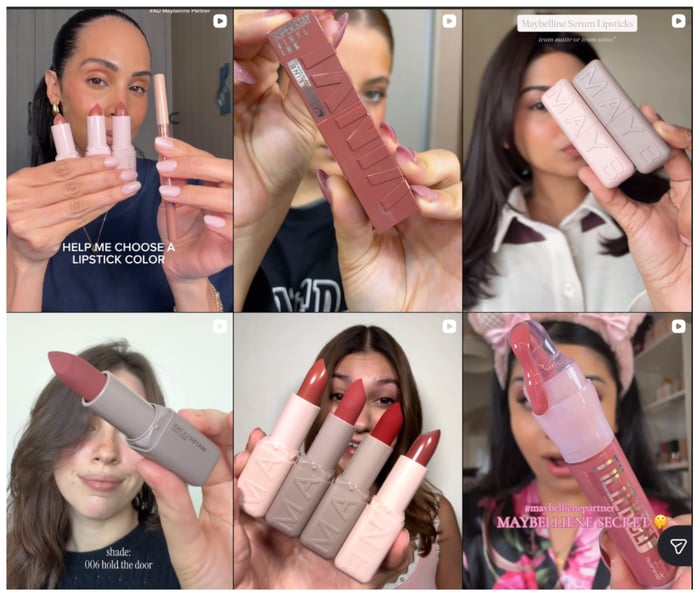
What Maybelline gets right with their AI-driven campaign is maintaining the balance between AI input and human creativity. While influencers still lead the content creation process, the outcome is powered by data-backed creator performance predictions. Rather than dictating what creators should do, analytical data equips them with effective suggestions for alternate captions, hooks, thumbnail frames, etc, enabling them to create content that isn’t only creative but also performs.
To effectively integrate AI into your marketing campaigns, you need tools specifically made for marketing. Unlike generalized AI tools that require expert prompt engineering to get the results you want, these tools are designed specifically for addressing your influencer marketing needs.
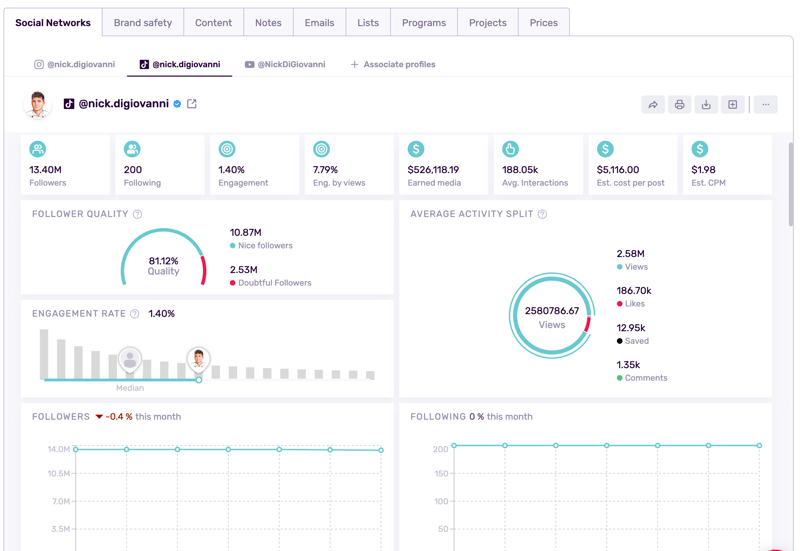
Influencity, for example, is an AI-powered platform especially designed for influencer marketing. With tools like content tracking, campaign insights, performance history, etc., this platform gives you access to all the data you need for influencer content optimization with maximum impact. These insights enable you to promptly learn every actionable piece of information that suits your campaign interests and efficiently automate your influencer campaigns. By taking away the risk of error and time/resource waste that manual learning often presents, these AI tools help you boost efficiency at scale.
Additionally, for alternate hook and caption suggestions, we have platforms like Jasper AI. This influencer marketing automation tool is trained to help businesses and marketers scale content efficiently. While any generative AI tool can produce generic captions and visual directions, Jasper refines human-generated content using data-backed suggestions that align with your brand’s tone.
Since AI serves a specific purpose in the content marketing workflow, certain formats are especially ideal for AI-driven content optimization. Here are the most popular examples:
Short-form videos have been dominating today’s digital landscape, and with good reason. These 5-90-second videos strike that sweet spot between too much and too little information – just enough to pique your audience's interests without running the risk of boring them. If you’re still wondering why this format is favored by the content marketing world, look no further than the many studies attesting to its efficacy. The high entertainment value of short-form content has been shown to have a positive correlation with consumer purchase behaviors.
However, there’s an art to creating short-form videos that actually perform. Creating content that’s equally engaging and informative while keeping it under 2 minutes is no easy feat.
Short-form content performs best with effective hooks, captions, visuals, thumbnail frames, etc. AI tools help by analyzing past content for patterns and spotting content elements that drive performance.
Ever wonder how you can get the most out of a single content shoot? Let me introduce you to a little influencer marketing trick called modular content. These are single content shoots that can be broken down and repurposed into shorter bite-sized clips to maximize assets.This is another ideal format for AI-optimization. Here’s why: Instead of expending time and resources on the grueling task of cutting and editing lengthy videos, you can just outsource it to AI.
AI speeds up content repurposing by automatically detecting multiple content blocks and segmenting them from a single shoot. Zara, for example, uses AI to repurpose longer raw videos into:
Next, we have tutorials and educational content. With this format, you need replicable compositions that heavily rely on measurable performance signals. AI can help you identify signals beyond superficial performance indicators like reach, likes, and engagement rates. To get a clear reading on whether a video structure works, you have to address a few additional factors, such as audience sentiment and impact delivered on purchase intent and conversion rates.
In addition to surface-level quantitative data, AI tools enable in-depth analysis of audience reactions. Sephora is a brand that’s stood out on this front. Since the educational tutorial style content is one of the beauty industry’s time-tested formats, Sephora uses AI to find influencers who make tutorial videos that drive impact. Rather than evaluating creators based on reach alone, they use AI tools to analyze audience sentiment.
For brands looking to convert via educational content, using an effective propensity model like this is crucial. While built-in platform insights can give you quantitative figures such as follower count, reach, likes, etc., AI can measure the true impact to generate repeatable structures that work.
If you were asked to name some of the most popular video formats in influencer marketing, product unboxing videos will surely come to mind. It’s safe to say that for every consumer product in the market, there’s an unboxing video or two out there.
In theory, creating unboxing videos sounds simple: you film a video while opening a package, pick an audio to match, and add a little caption or voiceover to describe the product. Sounds quite straightforward, right? Here’s the tricky part: In a sea of unboxing videos, what makes yours stand out? Simply filming an unboxing video is one thing; creating one that actually grabs users’ attention is another. AI addresses this issue with data-backed predictions for:
This highly predictable format is the perfect candidate for AI-driven A/B testing. AI facilitates these experiments by quickly generating and analyzing different test variations at scale.
Nike, for example, uses AI to conduct A/B testing at scale, putting multiple content variations on trial to identify opening lines and visual framings that show the highest data-backed potential.
Especially popular in the fashion and lifestyle world, live shopping videos and streams let users explore a physical store through their screens. As engaging as this format is, it often presents one problem: lengthy footage that can eat up hours in editing time.
AI solves this issue by picking out the best, most engaging segments based on audience interactions. By tracking audience engagement during a live stream, AI can generate multiple highlight clips that can be repurposed into TikTok videos, Instagram reels, and YouTube shorts.
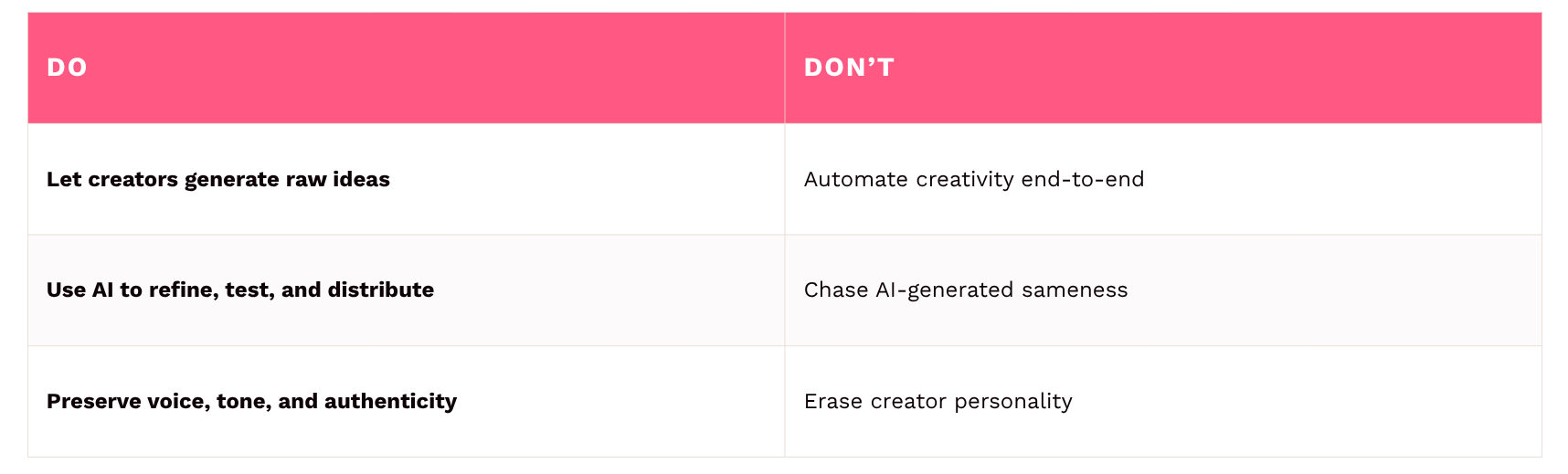
As previously stated, AI’s role in the influencer marketing workflow is to assist, not create. When you maintain this balance, you get the best of both worlds: accelerated productivity and original concepts.
Before the introduction of AI, content scoring relied heavily on guesswork based on superficial data; AI added valuable analytical insights, enabling a more in-depth and efficient scoring strategy.
Before AI:
After AI:
To illustrate, let's look at how H&M uses AI-content scoring for their campaign benchmarking. This leading fashion brand lets AI analyze and compare its past campaign performance to detect high-performing content formats and structures. As a result, they gained data-informed performance patterns that can be replicated for future campaigns.
The introduction of AI has added measurable benefits to the workflow. According to the Adobe 2026 AI and Digital Trends Report, which surveyed 3,000 executives and practitioners in CX roles, 76% of respondents reported significant improvements in volume and speed of content production post-AI integration. As for employee efficiency and productivity, 69% reported measurable progress.
The trick to effective AI integration lies in understanding its value and limitations. As opposed to including AI in every step of the production process, you can use it to optimize:
Hooks – The 1-5 second opening segment of a video is the key ingredient that determines how your content performs. A powerful hook that instantly grabs viewers’ attention is a must-have in today’s digital landscape. AI can analyze audience behavior to spot patterns and suggest scroll-stopping hooks.
Thumbnails – Similarly, thumbnails are another determining factor that encourages viewers to click on your content. You can take a leaf out of Maybelline’s book and use AI to help you select eye-catching thumbnail frames.
With AI handling all the predictable components, influencers will have more time to focus on:
AI has become an indispensable marketing resource, but effective AI optimization relies on understanding where and how to use it. Rather than replacing creators by generating content from scratch, winning AI influencer campaigns use it for precise predictions to achieve optimal performance with human-made content.
Content scoring is a data-informed grading process that assigns a quantitative score to a piece of marketing content. Assessing content against key factors aligned with specific business goals, this score tells you the quality and effectiveness of every piece of content.
AI is an invaluable scoring tool thanks to its ability to analyze content using larger datasets and at a much faster pace than manual scoring.
A/B testing, also called split testing, is an experiment in which two variants of a digital content are compared to determine which version performs better.
Understanding the balance between human creativity and AI integration is the key to launching successful campaigns.
Rather than general-use AI tools, tools built specifically for marketing – such as Influencity and Jasper – will provide a more precise and effective assistance for your marketing needs.







%20and%20How%20Can%20They%20Benefit%20Your%20Brand%20article.jpg?length=628&name=What%20Are%20Key%20Opinion%20Leaders%20(KOL)%20and%20How%20Can%20They%20Benefit%20Your%20Brand%20article.jpg)





.png?length=628&name=Pop-up%20image%201200%C3%97800@1x%20(1).png)