

Digital strategy used to be what you did before an influencer campaign. Today, it continues after launch, as teams track performance, adjust content, and shift budget while the campaign is still running.
Some creators outperform within days. Some posts stall. Teams that wait until the end of the campaign to react lose time, budget, and results.
This article explains when to adjust creators, content, and spend during an influencer campaign.
In influencer marketing, digital strategy shows up in the choices teams make after a campaign goes live.
Once content is published, teams need to decide:
Those choices depend on results, not the original plan.
.png?width=700&height=82&name=Resources%20(5).png)
For example, one creator may generate strong engagement within the first few days, while another gets little response. One video format may be shared widely, while another gets little attention. Treating both the same leads to missed opportunities.
Digital strategy helps teams respond to those differences. It helps them use campaign results to make changes after launch.
Instead of sticking to the original plan, teams can put more support behind what is connecting and change what is not.
Ogilvy has made this point in its own 2026 influencer trends report. In the section on AI-driven predictive analytics, it says AI tools now analyze behavioral and historical data to predict creator performance, enabling real-time campaign adjustments. That is much closer to how strong agencies now approach campaign management. They are not just choosing creators upfront. They are using performance signals to make better decisions after launch.
That thinking also shows up elsewhere in the report. Ogilvy says influencer data now needs to support stronger ROI measurement, more advanced cross-channel insight, and better infrastructure for success.
A recent Ogilvy case study helps make that concrete. In the same report, Ogilvy says VinFast partnered with influencers across TikTok, Shopee, and Facebook for the VF3 EV and generated more than 62 million views in 66 hours of livestreaming, resulting in 27,649 pre-orders and $5 million in revenue.
Campaigns like that do not succeed on creator selection alone. They depend on how well the team manages platforms, formats, timing, and content once the campaign is underway. When multiple creators and channels are involved, teams need a clear view of what is getting attention, what is driving action, and where to put more support.
That is what makes this a useful example of digital strategy in practice. The work is not finished when the campaign launches. The real value comes from how teams respond as results start coming in.
Most campaign improvement happens after the first posts go live. The first few days give you enough information to see what is working and where to act. The goal is simple: back the content that is performing and fix or reduce what is not.
This workflow shows how teams manage influencer campaigns after launch.
.png?width=600&height=427&name=Dark%20Blue%20and%20Green%20Modern%20Budget%20Pie%20Chart%20Graph%20(11).png)
Teams review performance, identify what is working, adjust content and budget, and repeat this process throughout the campaign.
Key takeaway: Campaign performance improves when teams treat campaigns as a cycle.
This kind of ongoing decision-making depends on having a clear view of campaign data as posts go live. Influencity’s reporting and content tracking tools are built to help teams monitor content and performance as the campaign unfolds.
Start reviewing results as soon as content is published. You do not need to wait for full campaign data.
Look for early signals:
Early results often point to what is most likely to keep performing. Waiting too long makes it harder to recover time and budget.
The first few days of a campaign often show where to invest and where to adjust.
.png?width=400&height=307&name=Dark%20Blue%20and%20Green%20Modern%20Budget%20Pie%20Chart%20Graph%20(10).png)
This framework shows how teams decide whether to scale high-performing content or adjust weaker posts early in the campaign.
Key takeaway: The first few days often show where to invest and where to adjust.
Early decisions depend on having performance data quickly. Influencity’s campaign reporting and content tracking tools help teams review results as content comes in.
Compare creators side by side. Do not rely on averages.
Focus on:
You will usually see a clear group of creators doing better than the rest. These are the people worth prioritizing for additional content or longer partnerships.
Not all weak results come down to the creator. Often, the performance issue is the content format or the message.
Look at:
Small changes can help:
Once patterns start to appear, teams need to decide when to act and what to change.
.png?width=1885&height=724&name=Tables%20(3).png)
This visual shows the most common signals during a campaign and the actions teams take in response.
Key takeaway: Small content changes can make a measurable difference.
Give creators guidance based on what is already performing elsewhere in the campaign.
To make these adjustments effectively, teams need to see how content is performing across creators. Influencity’s content tracking helps teams monitor posts in one place instead of piecing that view together manually.
Do not keep spending evenly across all creators once campaign data is available.
Instead:
Once performance differences are clear, the budget should not stay evenly distributed.
.png?width=500&height=203&name=Dark%20Blue%20and%20Green%20Modern%20Budget%20Pie%20Chart%20Graph%20(12).png)
This visual shows how teams shift budget from underperforming creators to those driving stronger results.
Key takeaway: Better results often come from reallocating the budget, not increasing it.
To move budget with confidence, teams need a clear view of engagement, views, and efficiency. Influencity’s reporting tools help teams compare performance and make these decisions in real time.
When a creator is doing well, continue working with them.
This can include:
Creators who are already getting strong results are usually a safer place to invest more.
This keeps the campaign flexible. Instead of treating all content equally, teams can focus on the posts and creators that are proving their value.
Once results start coming in, teams need to decide whether to stay the course or make a change. Small differences do not always matter. Clear patterns do.
If a creator is driving strong engagement, views, or conversions early, it is worth building on that performance.
Options include:
Strong early results are a sign to invest more where the campaign is already working.
If posts are not getting much response, look at the content before replacing the creator.
Check:
In many cases, small changes can help. That might mean adjusting the format, refining the message, or testing a different approach.
Audience response can shift as the campaign moves forward.
For example:
When that happens, adjust:
Do not keep spending evenly once the results start to separate.
Put more budget behind the creators and posts that are performing well. Cut back on the ones that are not. This helps improve results without raising the total campaign budget.
Adjustments should be handled as part of collaboration, not criticism.
Use campaign results to explain:
This keeps communication clear and helps maintain strong relationships with creators.
Making these changes early gives teams a better chance to improve outcomes before the campaign is over.
To improve an influencer campaign, you need to know what to measure. Not every metric carries the same weight, especially in the first few days.
Focus on the numbers that show how content is performing and where to take action.
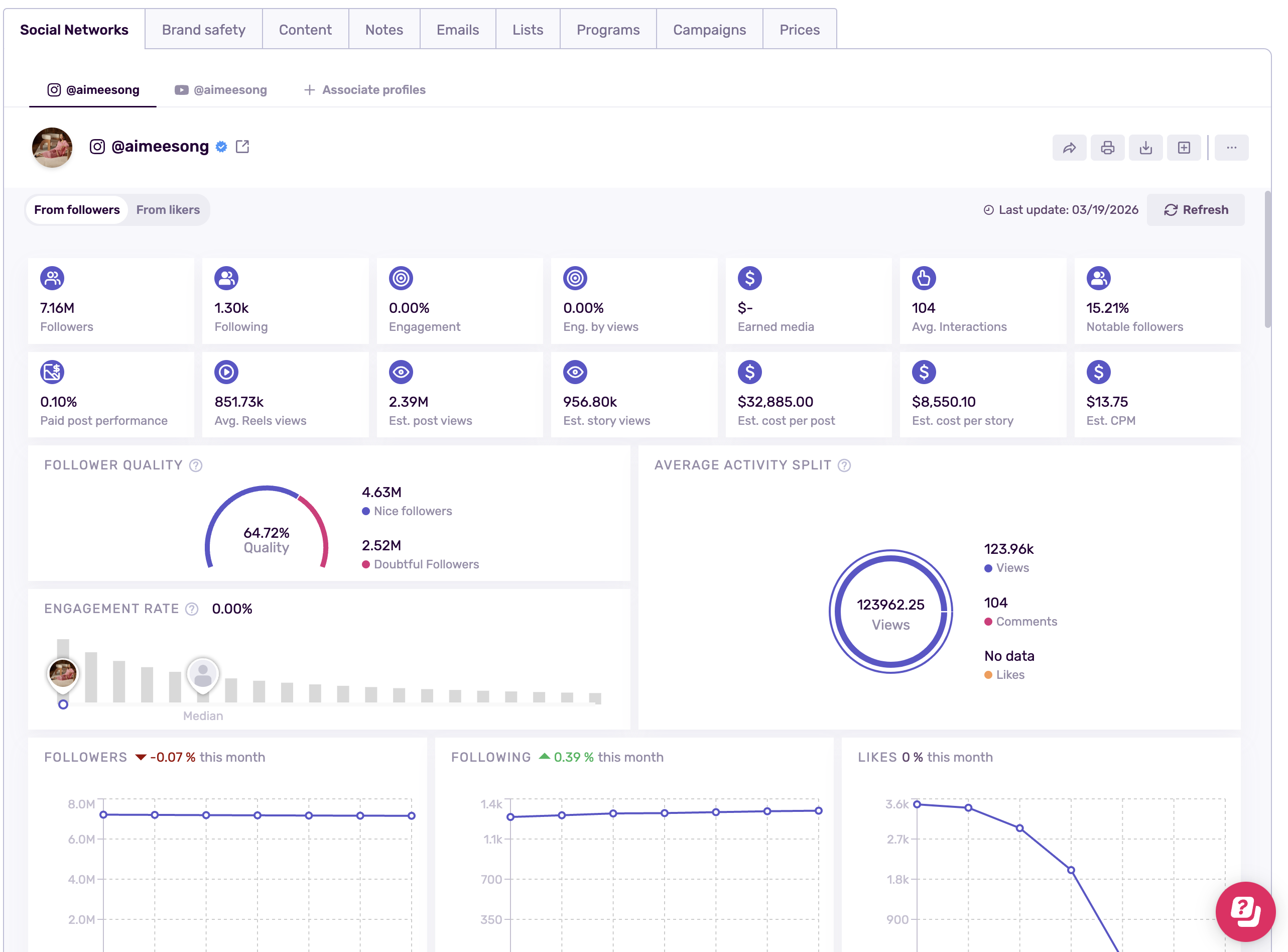
Engagement rate shows how people interact with the content. This includes likes, comments, shares, and saves.
High engagement usually means the content is connecting with the audience. It is one of the fastest ways to spot strong posts early.
Views tell you how many people watched the content. Reach shows how many unique users saw it.
If a post has high engagement but low reach, it may be worth promoting. If reach is high but engagement is low, the content may not be connecting.
Not all creators share full performance data, especially for Stories or short-form content.
Estimated views help fill that gap. They give you a fuller picture of how content is performing across creators.
CPE shows how much you are paying for each interaction.
This helps compare creators more fairly. A creator with lower reach but stronger engagement may deliver better value than one with higher reach and weaker interaction.
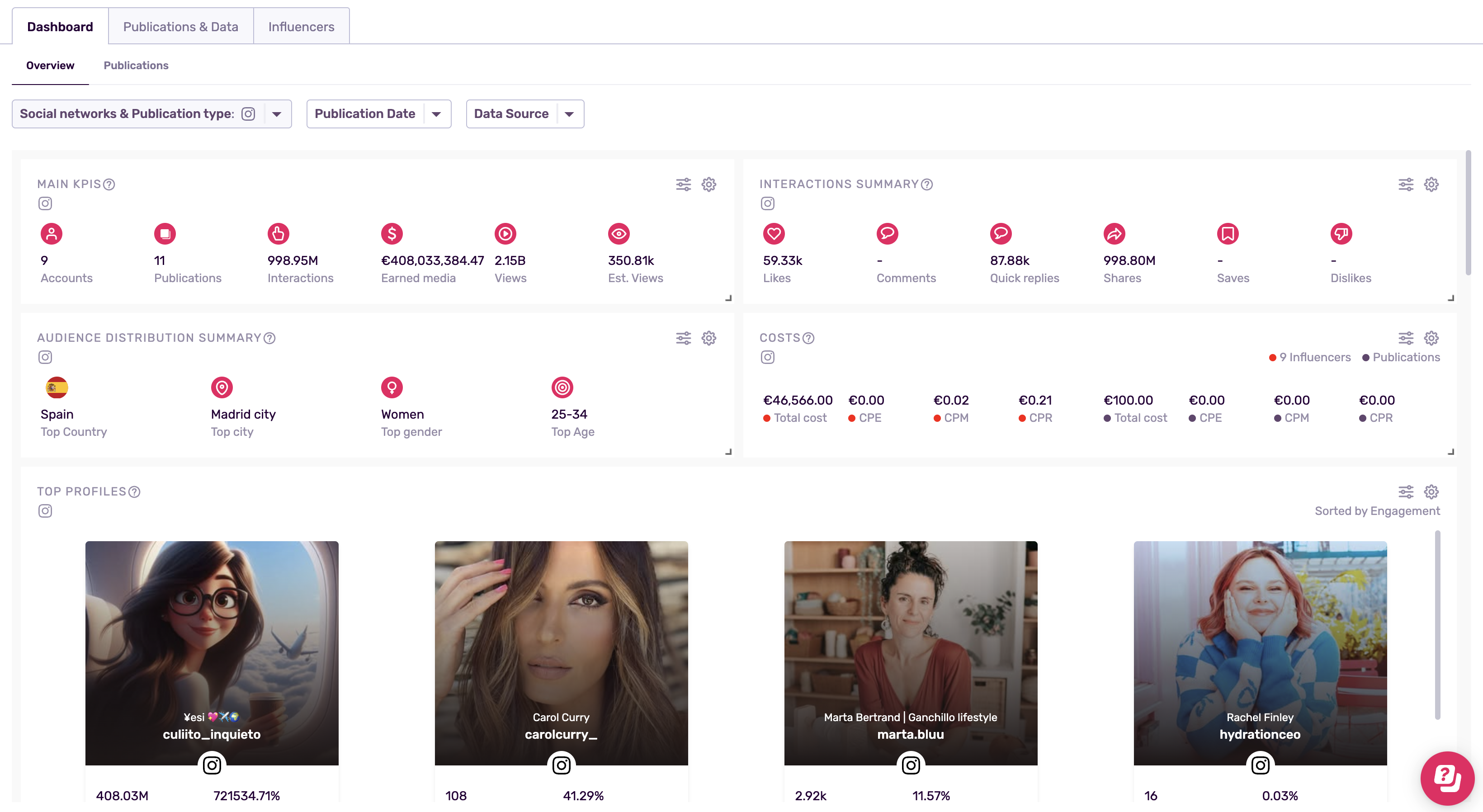
CPM helps you understand how efficiently your budget is driving visibility.
This is especially useful when comparing paid amplification or larger creators.
Do not evaluate creators based on a single post.
Look at:
Sometimes one post does poorly, but the creator still performs well overall.
These metrics help teams decide where to put more budget, which content to repeat, and which creators are worth extending. Without that view, campaign changes are based more on instinct than evidence.
Tracking performance across multiple creators and platforms is one of the biggest challenges in influencer campaign management. Data is often spread across screenshots, creator reports, and different tools. That makes it harder to compare results and act quickly.
Influencity pulls that data into one place, so teams can review content and performance without piecing reports together by hand. Its knowledge base says teams can track influencer posts without first creating a report, view and manage tracked content in one place, and monitor public posts and Stories even after they expire.
Instead of relying on creators to send performance updates, Influencity tracks posts and Stories directly.
This means:
Teams do not have to chase down data or stitch reports together manually.
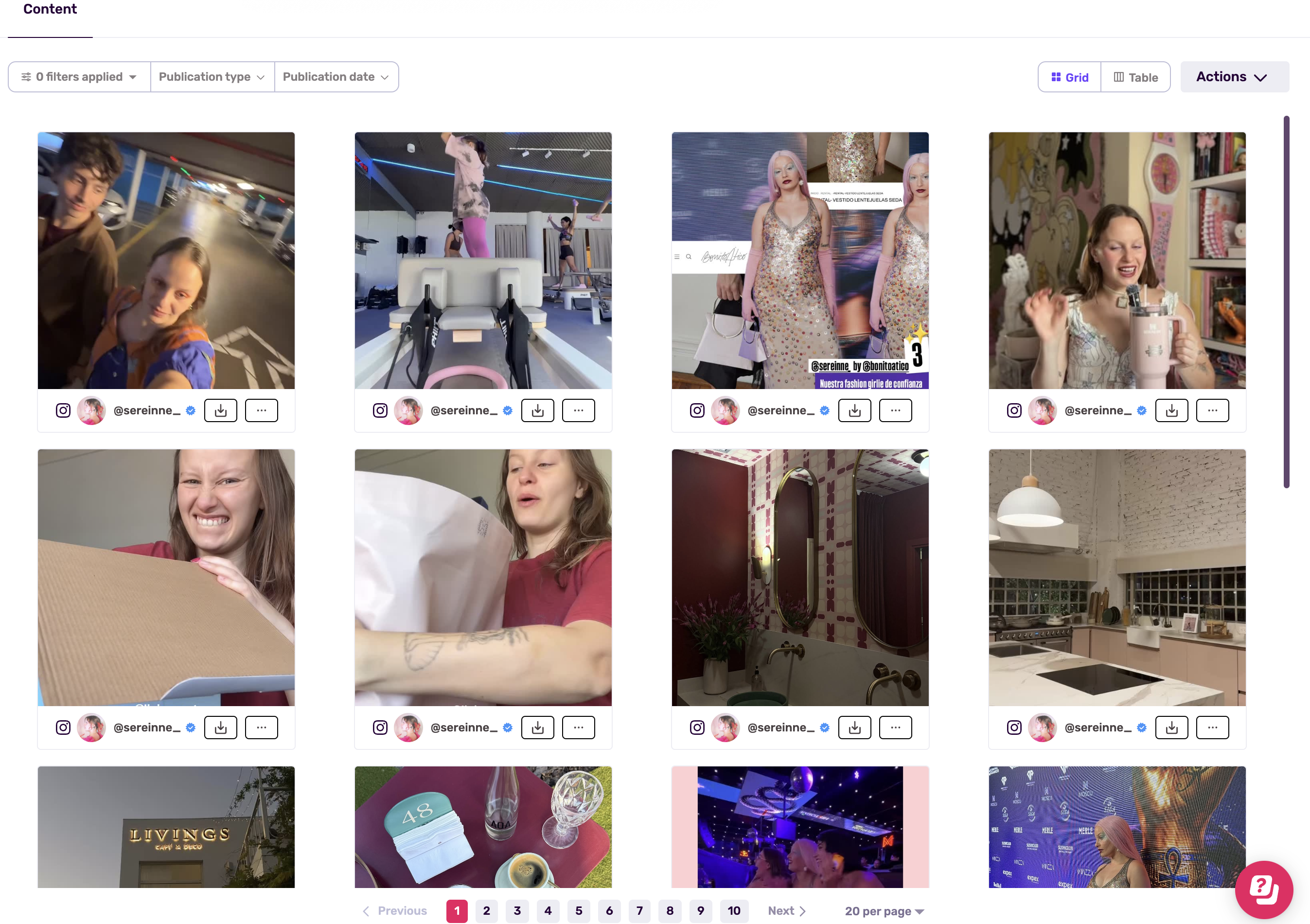
Influencity allows teams to evaluate creators side by side.
You can quickly see:
This makes it easier to identify the strongest creators and decide where to focus.
With access to metrics like engagement, views, CPE, and CPM, teams can make clearer decisions about where to spend.
For example:
Instead of relying on assumptions, decisions are based on actual campaign results.
Not all creators share full insights, especially for Stories or short-form content.
Influencity provides estimated views so teams can:
This helps teams make decisions with a fuller set of numbers. Influencity also describes campaign tasks as a way to estimate performance and control campaign progress and budget.
As campaigns change, teams often make multiple updates. These changes can be hard to track across emails and messages.
Influencity allows teams to:
This keeps everyone aligned, including internal teams, clients, and creators.
Teams make better decisions when they can see results clearly and compare creators quickly. That leads to better use of budget, stronger content choices, and a clearer record of what worked.
The biggest difference is not how campaigns are planned. It is how they are managed once they go live.
.png?width=1693&height=772&name=Tables%20(1).png)
This comparison shows why adaptive campaigns give teams more chances to improve results while the campaign is still running.
In a static campaign, every creator and piece of content is treated the same, no matter how it performs. Teams follow the original plan and review results after everything is complete.
In an adaptive campaign, teams review results as the campaign runs. Strong content gets more support. Weaker posts are adjusted or reduced. Budget moves toward what is performing better.
This gives teams more chances to improve results and a clearer view of which creators and formats are worth using again.
Key takeaway: Adaptive campaigns give teams more chances to improve results before the campaign ends.
A strong influencer campaign depends on how well it is managed after launch. These four practices help teams improve performance without adding more budget or complexity.
Start reviewing results within the first 3 to 5 days.
Early data shows:
Waiting too long limits your ability to adjust.
Before the campaign starts, let creators know that content and deliverables may evolve based on performance.
This helps:
Position changes as part of improving results, not correcting mistakes.
Use a single system to track posts, Stories, and performance metrics.
This makes it easier to:
Centralized tracking supports faster decisions.
When making changes, use clear campaign results to explain decisions.
For example:
This keeps discussions productive and transparent.
.png?width=500&height=354&name=Dark%20Blue%20and%20Green%20Modern%20Budget%20Pie%20Chart%20Graph%20(13).png)
Key Takeaways: Managing this process manually gets harder as campaigns grow. Influencity’s platform is positioned as an end-to-end toolkit for influencer marketing, with campaign management, reporting, and analytics in one place.
Digital strategy in influencer marketing comes down to how teams respond once a campaign is live.
Campaign results show what is working within the first few days. Some creators get attention quickly. Some content formats perform better than others. Teams that act on those signals can improve results before the campaign is over.
What matters most is not the original plan, but how well the team responds once results start coming in.
It is the process of adjusting creators, content, and budget during a live campaign based on real-time performance data.
Within the first 24–72 hours, when early engagement and performance signals become visible.
Analyze and adjust the format, hook, or messaging before deciding to replace the creator.
Reallocate spend toward high-performing creators and content instead of distributing it evenly.
Because they use live data to improve results while the campaign is still running, rather than waiting until the end.











%20and%20How%20Can%20They%20Benefit%20Your%20Brand%20article.jpg?length=628&name=What%20Are%20Key%20Opinion%20Leaders%20(KOL)%20and%20How%20Can%20They%20Benefit%20Your%20Brand%20article.jpg)