

Influencer marketing still works. But the part that feels hardest right now is making it work again next month. A post can spike, a creator can deliver, and the results can still feel fragile once the campaign ends.
That’s because discovery no longer happens in one place. People find brands across feeds, social search, traditional search, and now AI summaries that shortcut the decision process. Meanwhile, new tools are changing how campaigns are planned, run, and measured. If teams use them well, they can offload the repetitive work and spend more time on strategy, testing, and in-campaign improvements.
This article is a practical playbook for 2026. You’ll get five clear predictions, plus exactly what to change in your briefs, how to vet creators beyond “vibe,” and which KPIs help you improve performance while campaigns are still live. If you want influencer programs that are easier to repeat, easier to defend, and easier to scale, this is where to start.
Use the table below to turn each prediction into a practical change in your planning and measurement.
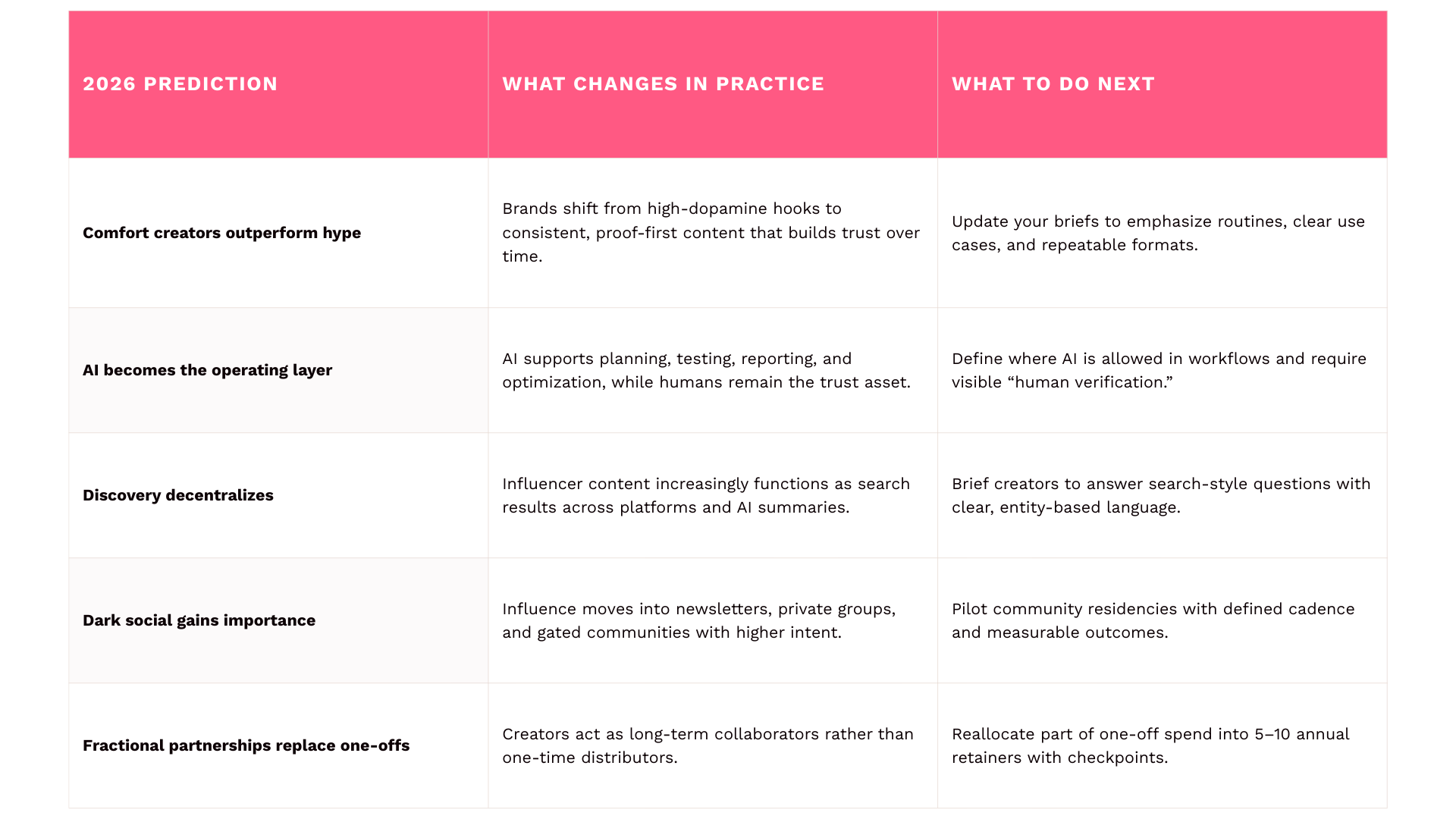
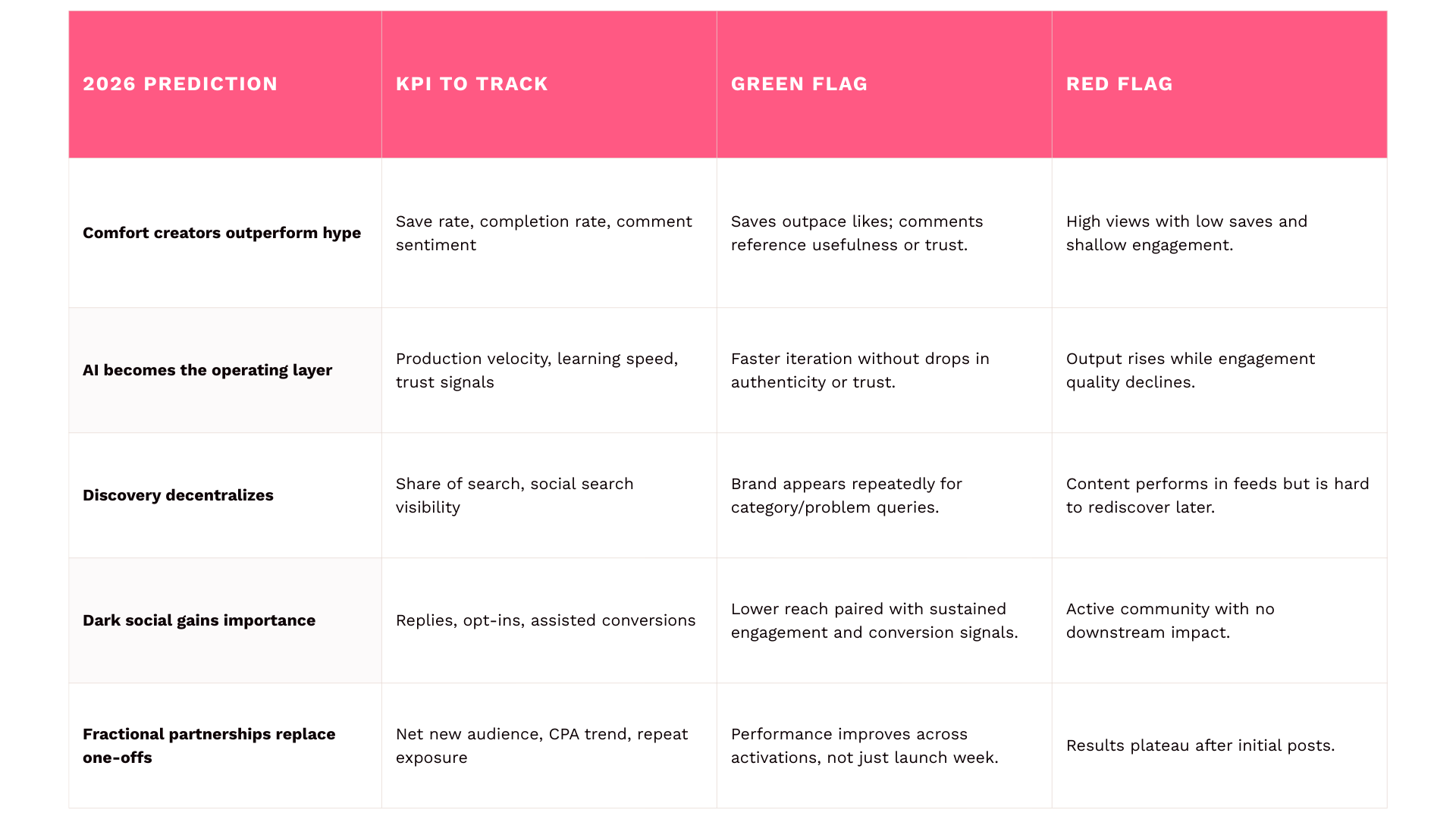
The first big shift in 2026 is emotional, not technical. As feeds become more emotionally intense by design, audiences are increasingly choosing creators who feel like a relief: consistent routines, realistic lives, steady tone, and content that helps them decide without pressuring them.
Researchers Steinert and Dennis argue that platforms are designed to steer emotion, not just show content. Features like rapid feedback, amplification, and endless scroll can heighten emotional intensity and affect digital well-being (Steinert & Dennis, 2022). In that environment, “comfort creators” stand out by lowering the temperature.
That sets the stage for what many teams are seeing in performance: creators who feel familiar and grounded can drive better saves, better sentiment, and more repeat exposure than creators chasing constant novelty.
“Regulation” here is simple: content that helps a person feel calm, confident, and clear enough to choose. It’s not slow for the sake of being slow. It’s steady and readable.
Use this when you’re deciding who to work with:

Here’s a practical example of how “saves” and story behavior can guide creative decisions.
In 2026, the AI conversation gets less dramatic and more useful than year ago predictions. Turns out AI is most valuable in operations and production support, while human creators remain the trust engine.
That’s the shift brands should make too. Don’t treat AI like a creative replacement. Treat it like a system that helps you move faster, learn faster, do repetitive work, and avoid repeating mistakes.
Learn how to automate influencer recruitment.
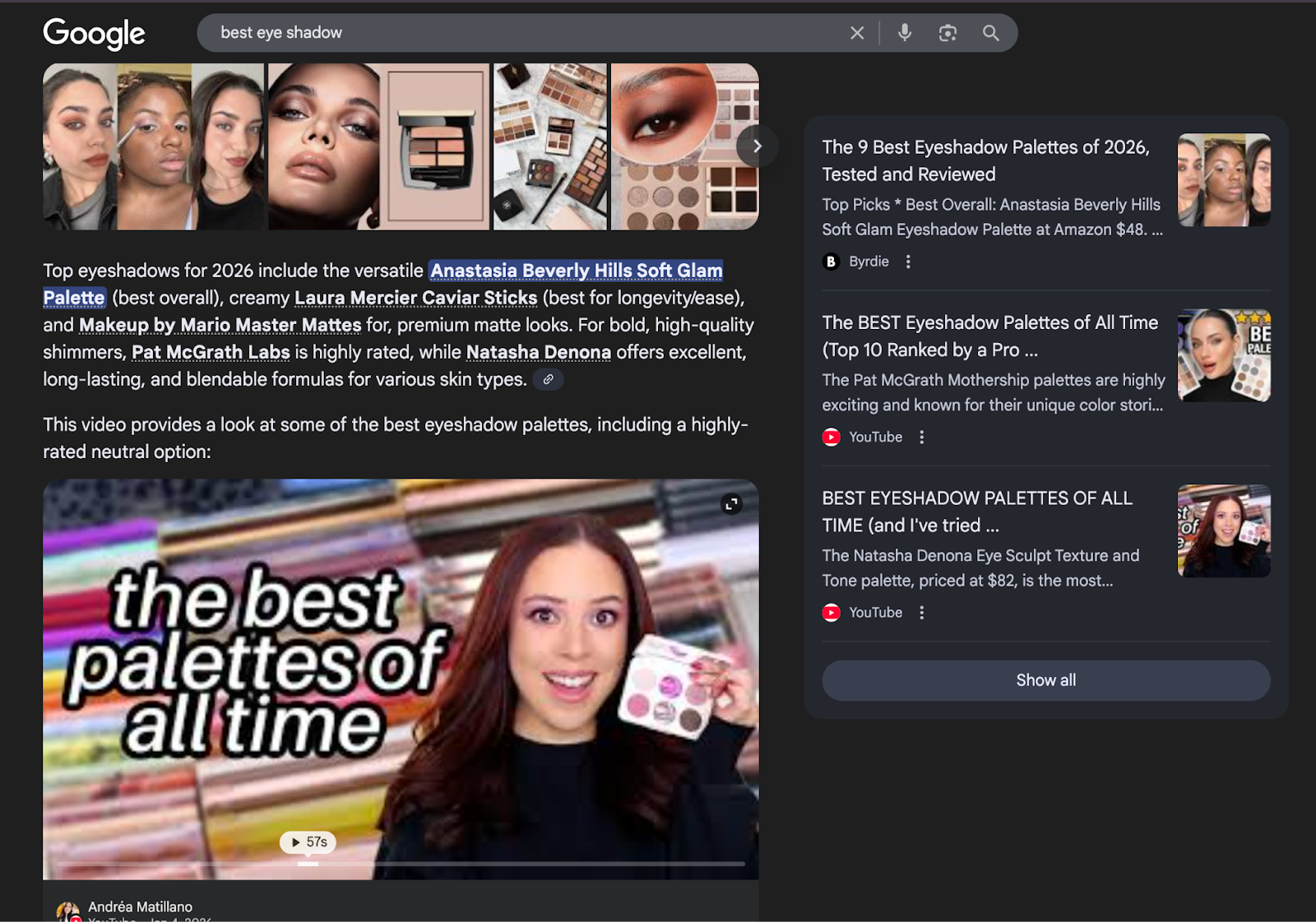
As more content gets automated, people start to wonder: is there a real person behind this? Not “raw” or shaky-camera real, just believable and accountable.
Look for:
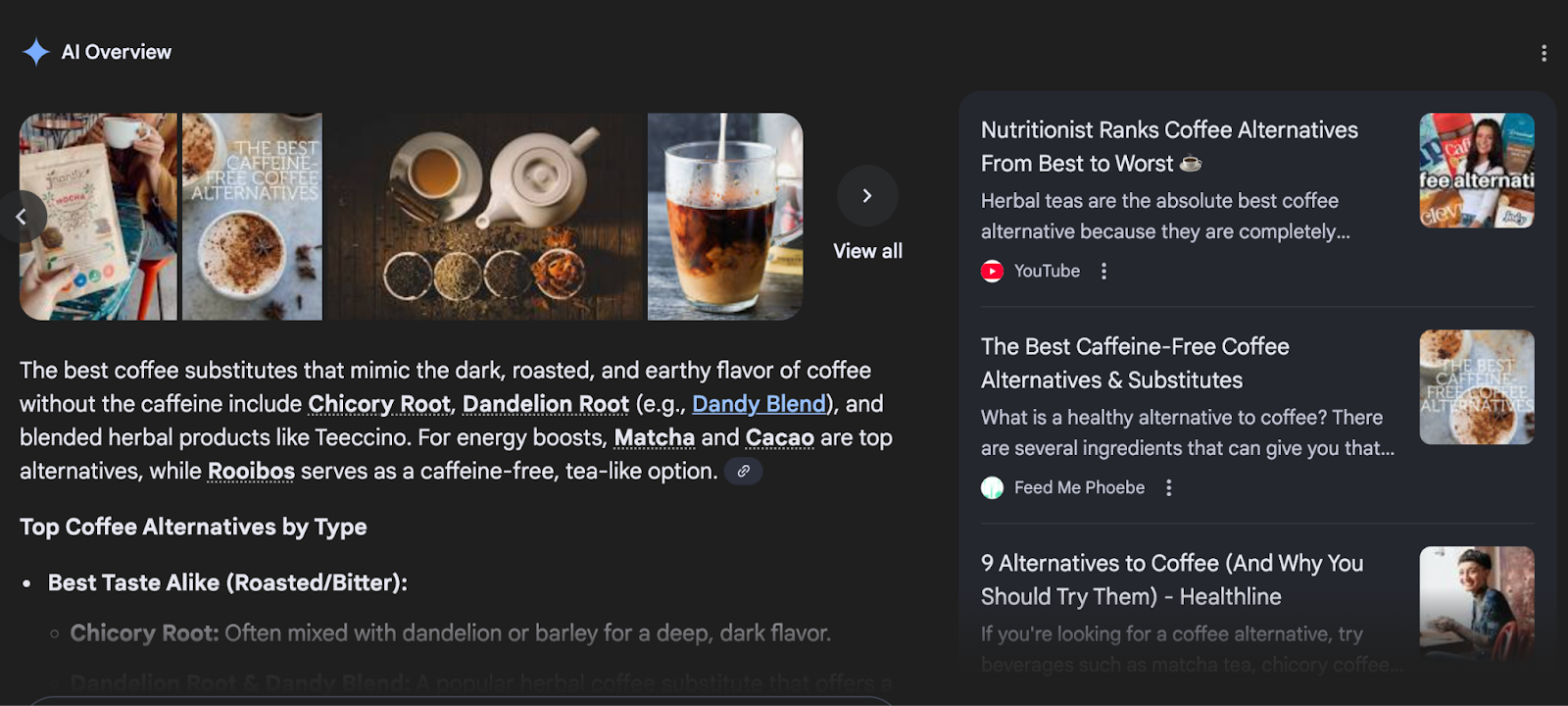
This is the prediction that changes how you brief creators. Gartner has predicted that traditional search volume will decline as more people use AI chatbots and virtual agents for answers. Whether the exact percentage lands perfectly or not, the direction is clear: discovery is happening in more places.
That means influencer content increasingly functions like search results. People use TikTok and Instagram to get a quick read, YouTube to decide, and AI summaries to build a shortlist.
Start briefing creators to answer queries directly:
Here’s a tactical TikTok analytics example that supports this measurement mindset.
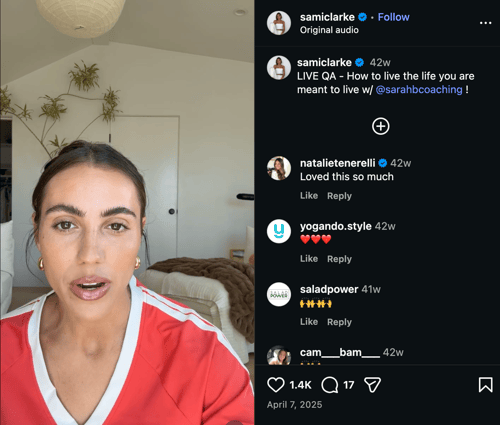
In 2026, influence continues to move off the main feed and into newsletters, private groups, paid communities, and messaging channels. Creators are using these spaces to engage directly with the same audience over time through recurring Q&As, member-only drops, office hours, and private discussion threads. For brands, these formats trade raw reach for intent, context, and repeat exposure.
At the same time, these channels are getting more infrastructure and monetization support. Newsletter platforms, community tools, and messaging apps now offer subscriptions, gated access, analytics, and native sponsorship formats, making it easier for creators to run ongoing programs and for brands to measure participation, retention, and downstream impact.
That shift changes what brands should negotiate for.
A community residency is not a one-off sponsored post. It’s a time-bound collaboration where a creator integrates a brand into a recurring series or community touchpoint over several weeks, with clear cadence and expectations.
Examples include:
Because dark social rarely shows up as last-click, brands need to connect community activity to downstream behavior across channels. This is where an omnichannel measurement approach matters most.
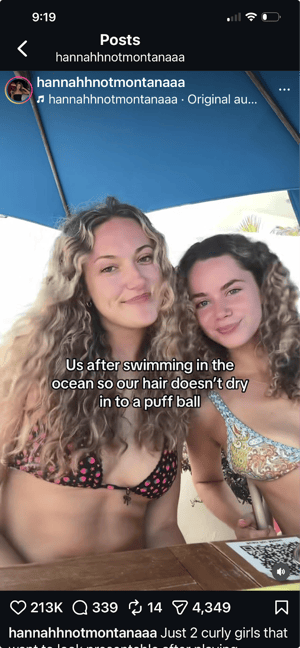
This is where teams usually end up by the end of the year: fewer creators, deeper relationships, and clearer output. Vogue Business describes creators becoming more consultative and strategic collaborators, not just pay-to-post distribution.
When creators are retained for ongoing programs, they understand the product, the audience, and the feedback loop. Therefore, performance tends to improve because the content gets smarter over time.
What performance-driven creator partnerships include
Move beyond “how did this post do?” toward “what did we learn and what did we change?”
What are the biggest influencer marketing predictions for 2026?
The biggest shifts are toward comfort creators, AI-powered operations, decentralized discovery, growth in private communities, and more fractional long-term partnerships.
What is a “comfort creator”?
A comfort creator is someone audiences return to because their content feels steady and useful. They earn trust through repeatable routines, clear opinions, and proof-first storytelling.
How do I find comfort creators in my niche?
Look past follower count. Screen for saves, repeat formats, comment language that signals trust, and content that clearly shows how something works.
Will AI replace influencers in 2026?
AI is far more likely to run operations than replace creators. Brands are using it to speed up planning, testing, and reporting, while audiences still prefer human trust signals.
What does “human verification” mean in influencer marketing?
It means visible signals that a creator is real and accountable: lived experience, specificity, community interaction, and believable context.
How is social search changing influencer briefs?
Creators are increasingly being briefed to answer search-style questions directly and to use clear language that helps content get rediscovered later.
What is GEO and why does it matter?
GEO is shorthand for optimizing content to show up in AI-driven summaries and recommendation engines. It matters because discovery is spreading beyond traditional search.
What metrics matter most for influencer marketing in 2026?
Alongside reach, prioritize saves, sentiment, net new audience, share of search, and repeat exposure. These are better signals of trust and lasting impact.
Are private communities worth investing in?
Often, yes. Especially when your goal is intent, retention, or repeat exposure. The key is to negotiate for a residency with measurable outcomes, not a one-off mention.
Do long-term partnerships really outperform one-off posts?
They can, because content improves when creators understand the audience and the feedback loop. The measurable win is performance that trends upward across activations, not just spikes once.
The headline for 2026 is simple: influencer marketing becomes more intentional. Trust beats novelty. Operations matter. Discovery happens in more places. And the best programs behave like systems, not single moments.
If you plan around the five shifts above, and pair them with a measurement upgrade that values saves, sentiment, net new audience, and repeat exposure you'll be set up to outperform teams still chasing impressions and one-off wins.







%20and%20How%20Can%20They%20Benefit%20Your%20Brand%20article.jpg?length=628&name=What%20Are%20Key%20Opinion%20Leaders%20(KOL)%20and%20How%20Can%20They%20Benefit%20Your%20Brand%20article.jpg)