

Later Influence (formerly Mavrck) is an enterprise system of record for relationship governance. It is primarily designed for teams aiming to turn their existing influencer rosters into structured micro-influencer campaigns. However, for high-velocity brands and performance-driven marketing agencies, Later’s closed, opt-in database of approximately 10 to 15 million creators can quickly feel like a walled garden.
When campaigns require agile scaling, you cannot wait weeks for a creator to accept a portal invitation, connect their accounts, and authorize access just to see if their audience is authentic. To help you bypass these bottlenecks, we analyzed the top 5 alternatives to Later Influence based on search scale, vetting depth, e-commerce workflow integration, and budget flexibility.
While Later restricts campaigns to creators who have joined its marketplace or connected their accounts, Influencity indexes more than 350 million public creator profiles across Instagram, TikTok, YouTube and Twitch. Brands can analyze influencers before ever contacting them, dramatically expanding the talent pool beyond opt-in marketplaces.
/find-influencers-hero-image-composition.webp?width=1440&height=900&name=find-influencers-hero-image-composition.webp)
Unlike marketplace-first platforms, Influencity gives brands access to an indexed global database of more than 350 million creator profiles rather than limiting discovery to a closed, opt-in network. This open-database approach removes the dependency on creators signing up or connecting their accounts before they can be evaluated, allowing marketers to identify and analyze relevant talent from the entire social media scene.
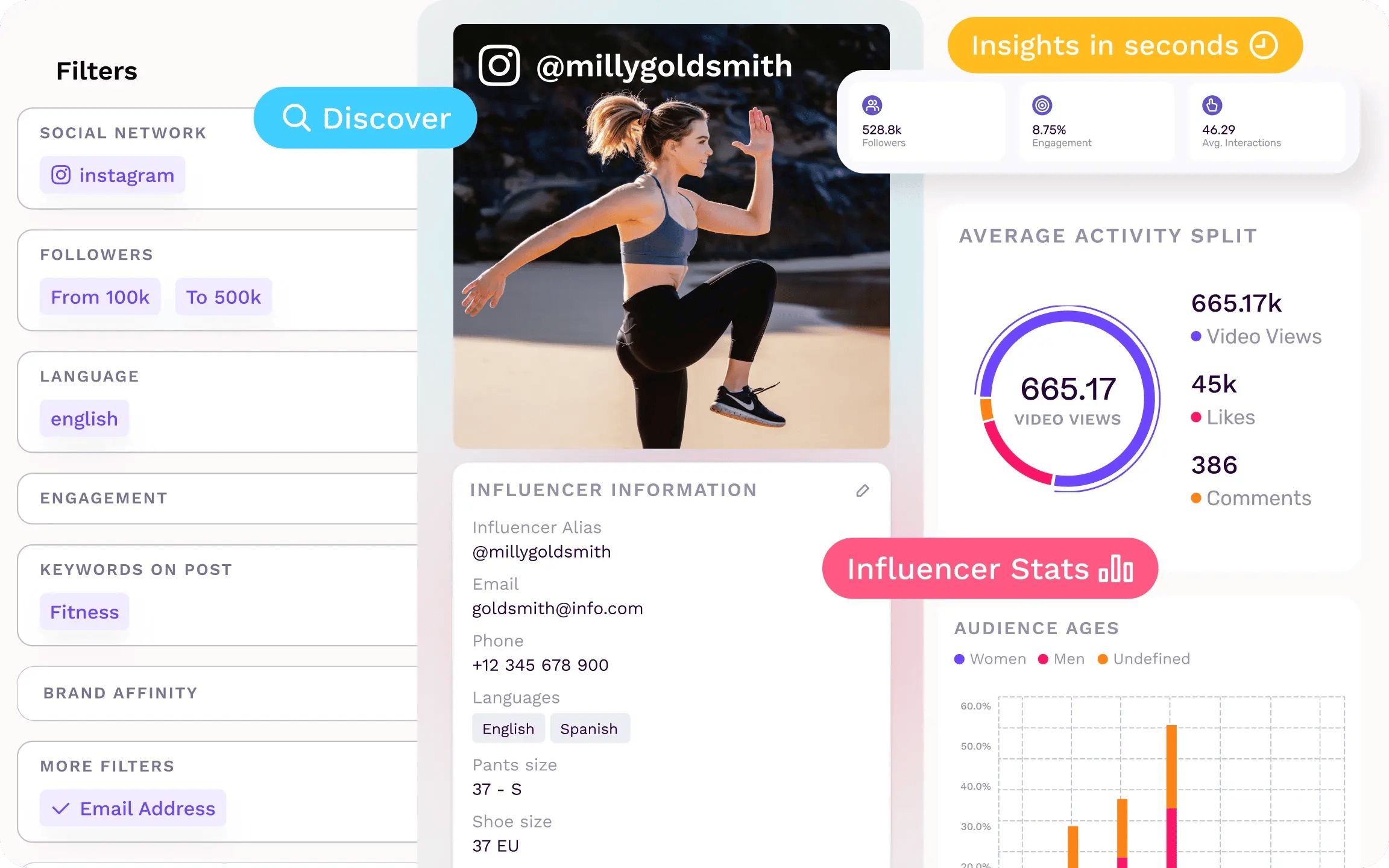
The result is a much broader and more diverse creator pool, making it easier to uncover niche experts, emerging voices, international influencers, and high-performing micro and nano creators that competitors relying on closed marketplaces may never see. For brands, this translates into better creator selection, less competition for talent, and campaigns built around the best-fit influencers, not just the ones available in a marketplace.

Influencity enables brands to analyze influencer using verified public data without requiring them to connect their social accounts or grant access beforehand. This means marketers can immediately assess key performance indicators such as audience demographics, engagement quality, follower authenticity, historical account growth, audience interests, and previous brand collaborations from the very start of the discovery process.
/youtube-influencer-alternating-content-one-image-composition_1_1_1%20OPT.webp?width=1728&height=1080&name=youtube-influencer-alternating-content-one-image-composition_1_1_1%20OPT.webp)
Through eliminating the need for creator approval, Influencity removes one of the biggest bottlenecks in influencer marketing, allowing teams to evaluate a far larger pool of potential partners, make faster data-driven decisions, and identify the most relevant creators before initiating outreach.
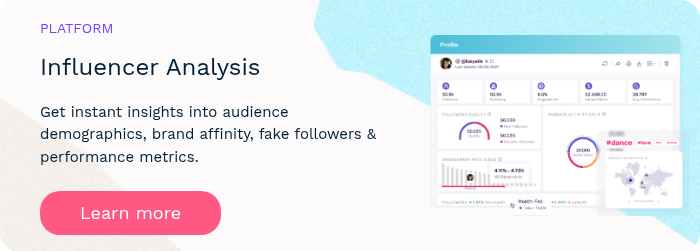
Influencity goes far beyond surface-level metrics such as engagement rate by providing a comprehensive assessment of audience quality and account authenticity. Its analytics detect suspicious follower patterns, identify abnormal follower growth, evaluate the authenticity of engagement, flag potential bot activity, and generate audience quality scores that help distinguish genuine influence from artificially inflated performance.
/irm-alternating-content-two-image-composition.webp?width=2304&height=1440&name=irm-alternating-content-two-image-composition.webp)
These insights enable brands to vet creators with greater confidence, reducing the risk of investing in influencers with manipulated audiences and ensuring campaign budgets are allocated to partners who can deliver real, measurable impact.
One of Influencity's most distinctive analytical capabilities is its Audience Overlap Analysis, which measures how much of two or more creators' audiences are shared before a campaign goes live. This helps marketers identify situations where multiple influencers reach many of the same followers, a common issue in niche markets that can significantly reduce the effectiveness of a campaign.
Through revealing audience duplication in advance, brands can refine their creator mix to maximize unique reach, avoid paying multiple times to reach the same users, and distribute their budgets more efficiently. The result is broader campaign exposure, less wasted spend, and a more accurate understanding of the true reach generated by an influencer portfolio.
Influencity provides historical brand collaboration insights by tracking creators' previous sponsored partnerships, brand mentions, and collaboration history across social platforms. This gives marketers valuable context beyond performance metrics, allowing them to evaluate whether a creator has recently promoted competing brands, is overly saturated with sponsored content, or has relevant experience within a particular industry or product category.
Thanks to understanding influencers' partnerships histories before reaching out, brands can make more informed selection decisions, identify authentic brand fits, avoid potential conflicts of interest, and build campaigns that feel more credible to audiences.
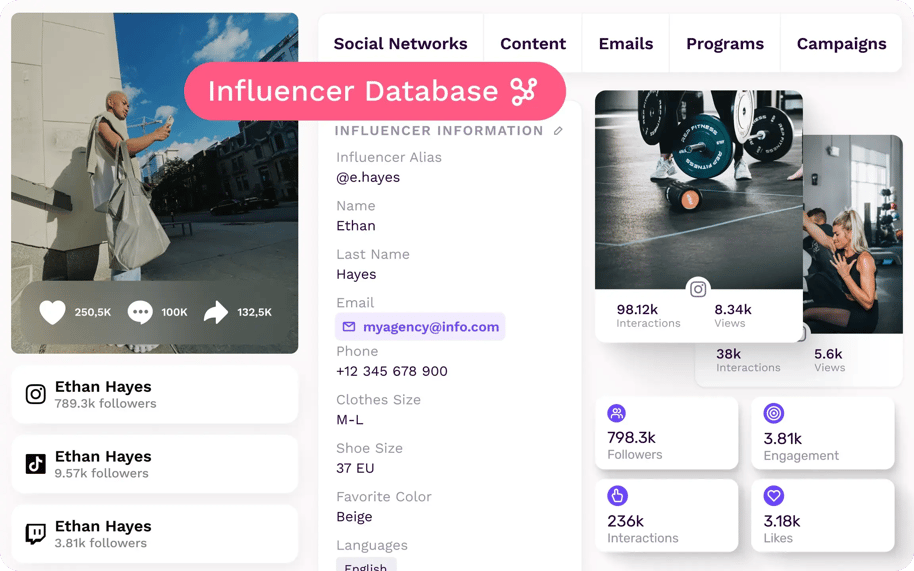
Influencity extends far beyond influencer discovery by incorporating a dedicated Influencer Relationship Management (IRM) system designed to help brands manage the entire creator lifecycle. Teams can organize influencers into custom lists, store internal notes, track negotiations, monitor communications, and maintain a complete history of past collaborations and campaign performance from a single platform.
/irm-alternating-content-one-image-composition.webp?width=2312&height=1448&name=irm-alternating-content-one-image-composition.webp)
By centralizing relationship management, Influencity enables brands to build long-term partnerships instead of treating every campaign as a one-off collaboration, reducing administrative overhead while creating a more strategic and scalable approach to influencer marketing.
Influencity allows searches using more than 30 advanced filters, including audience country, audience city, audience language, age, gender, interests, engagement rate, follower size, account growth, hashtags, mentions, and profile keywords.
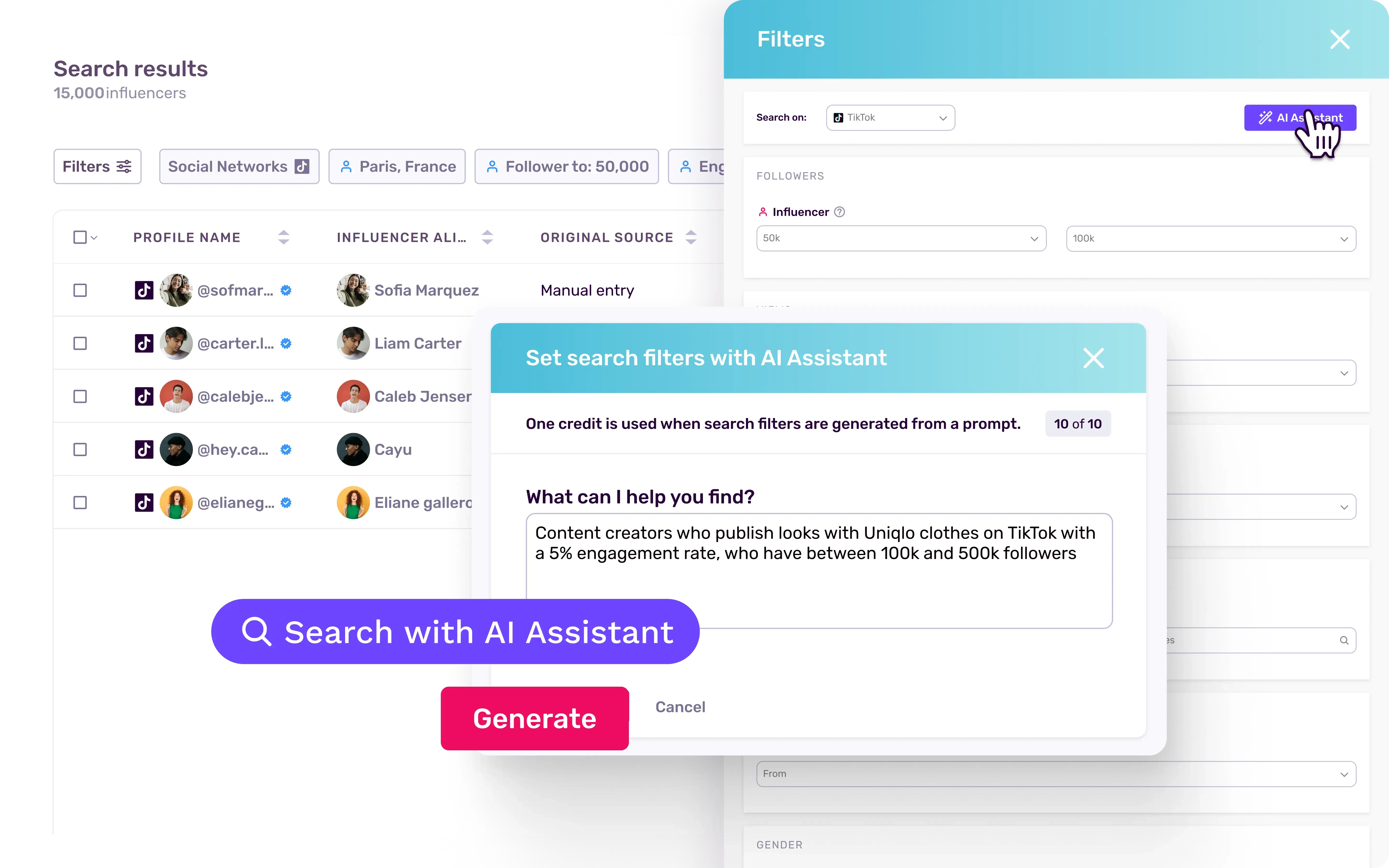
Rather than simply searching by niche, brands can identify creators whose audiences precisely match their campaign objectives.
Even better, with the AI Assistant, there's no need to manually select these filters. Simply describe the type of creator you're looking for in natural language, and the AI Assistant will interpret your request, automatically apply the relevant filters, and generate the search for you.
Before investing any budget, Influencity estimates a campaign's expected performance using creator data and historical benchmarks. This allows marketers to compare creators, forecast potential reach and impact, and optimize budget allocation before launch.
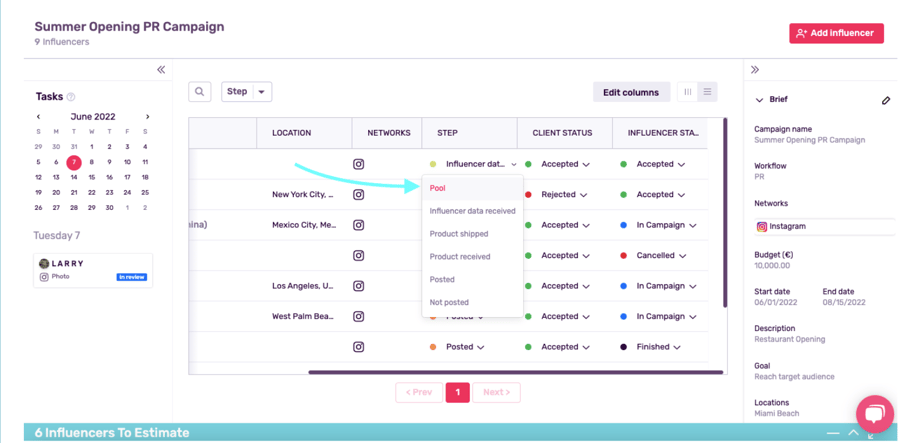
Instead of relying on intuition alone, brands can make creator selection decisions backed by predictive insights.
Influencity centralizes the entire influencer marketing workflow, from creator recruitment and outreach to negotiations, briefing, content approvals, deliverable management, campaign tracking, payments, and reporting.
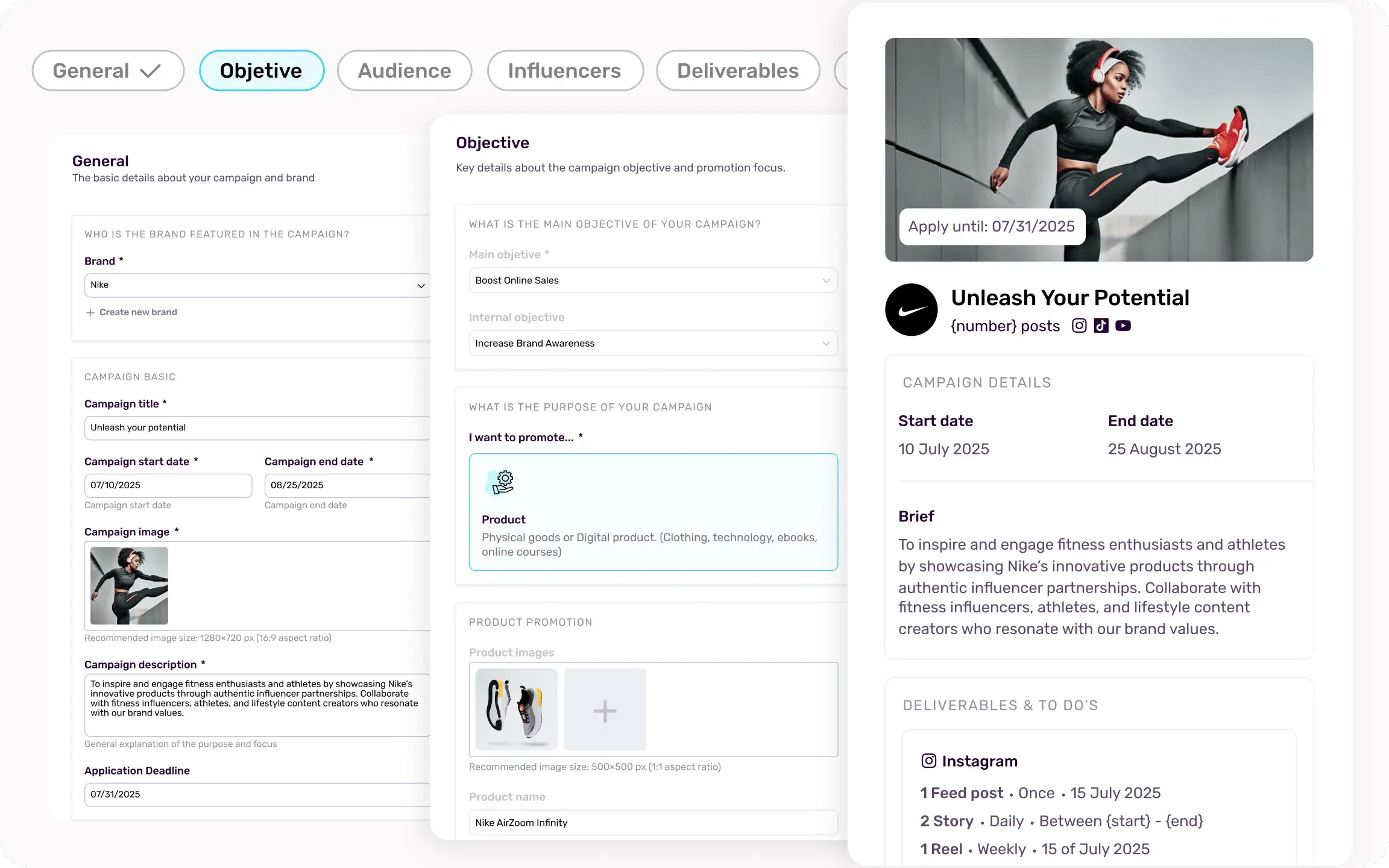
Instead of relying on multiple tools and spreadsheets, brands can manage every stage of their campaigns from a single platform, turning Influencity into a complete operating system for influencer marketing rather than just a creator discovery tool.
One of the biggest reporting challenges in influencer marketing is that Instagram Stories disappear after 24 hours. Influencity automatically captures campaign content, including Stories, and preserves it for reporting, ensuring that no performance data is lost.
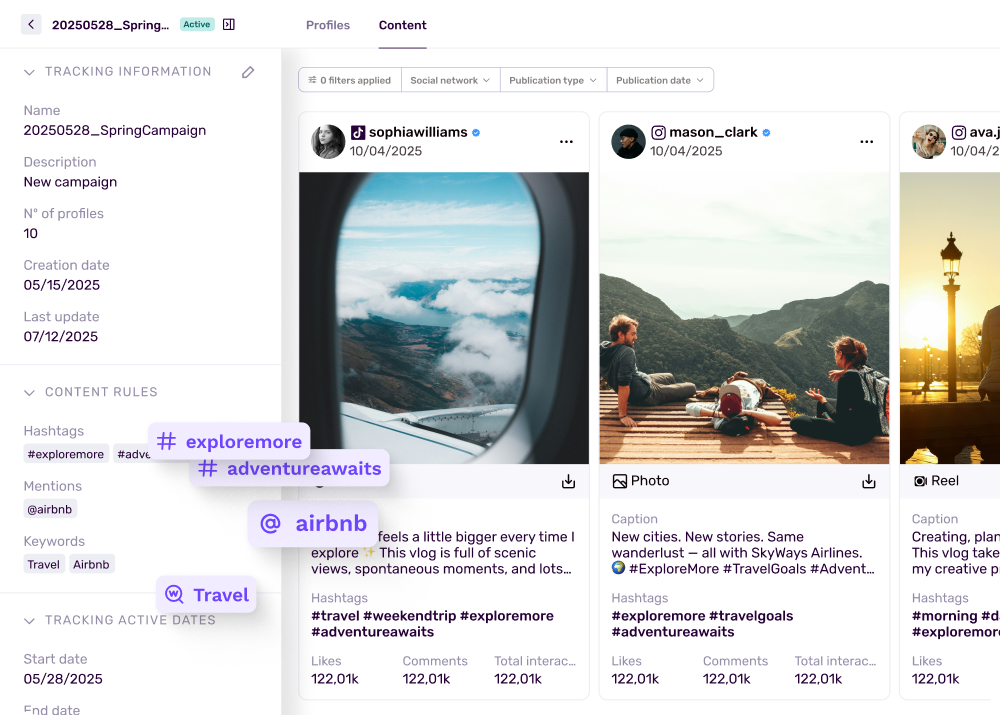
Brands can then compare the performance of individual posts, Stories, creators, and entire campaigns from a single reporting dashboard, without the need to manually collect screenshots or archive content.
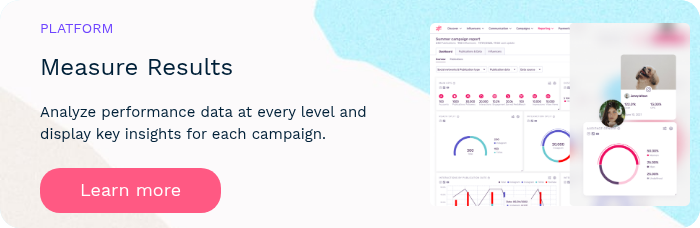
Influencity consolidates campaign data into visual reporting dashboards that bring together reach, impressions, engagement, earned media value (EMV), content performance, creator comparisons, and audience insights in one place.
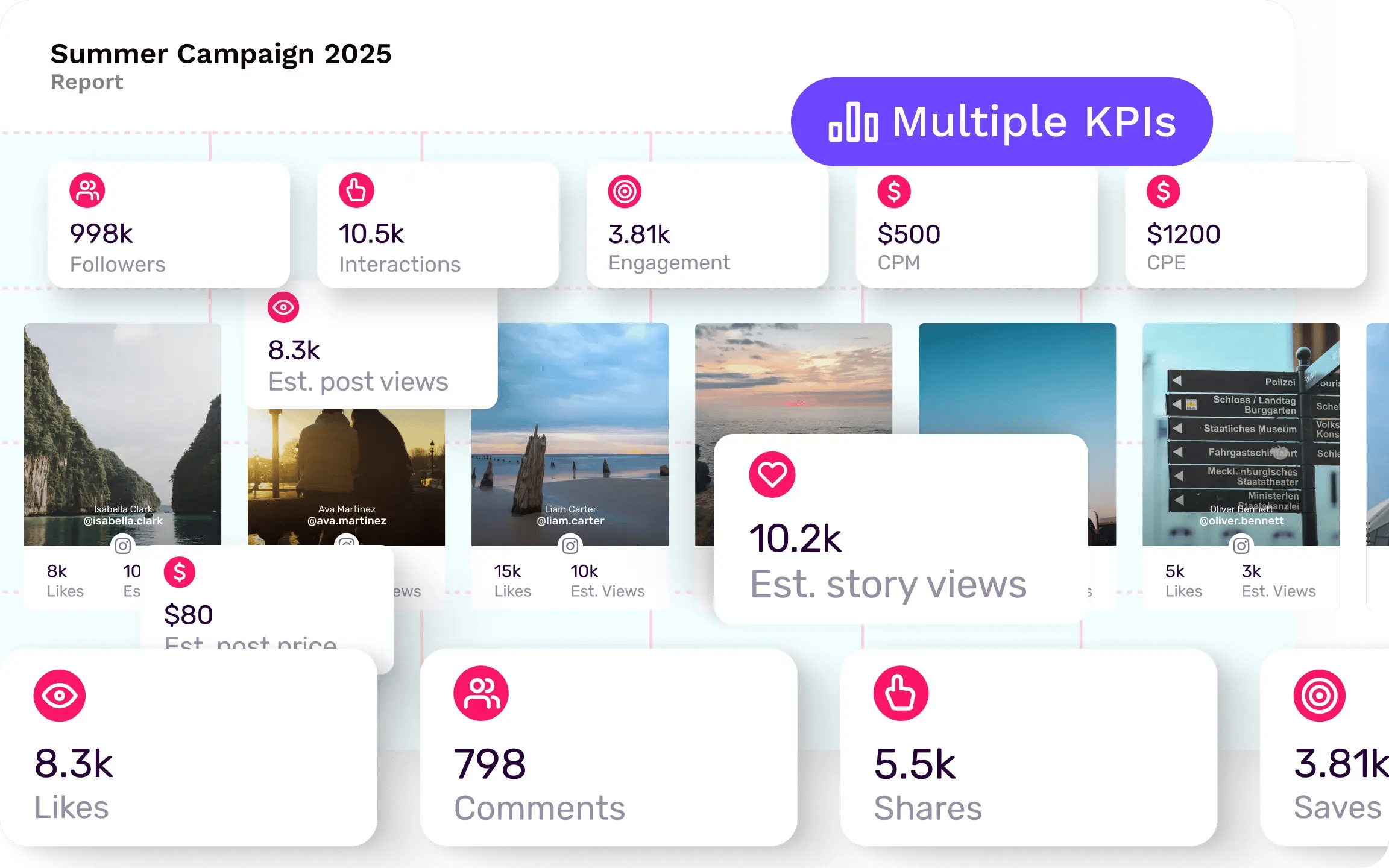
The reports are designed to be easily shared with clients, stakeholders, or executives, eliminating the need to manually consolidate data across multiple spreadsheets.
Influencity handles international payouts and compliance across 186 countries and 143 currencies, allowing brands to consolidate creator compensation into a single workflow and invoice instead of managing multiple international payment systems.

Influencity includes dedicated product seeding workflows that enable brands to manage product shipments, track deliveries, coordinate gifting campaigns, and connect seeding activities with campaign performance in a single platform.
%20copia.png?width=1398&height=859&name=influencer-seeding-hero-image-composition%20(1)%20copia.png)
This is especially valuable for beauty, fashion, and consumer goods brands running large-scale gifting programs, where efficient logistics and measurable outcomes are essential.

Unlike many influencer marketing platforms, Influencity also includes native social listening capabilities. Brands can monitor brand mentions, competitor activity, campaign conversations, and emerging market trends from within the same platform.
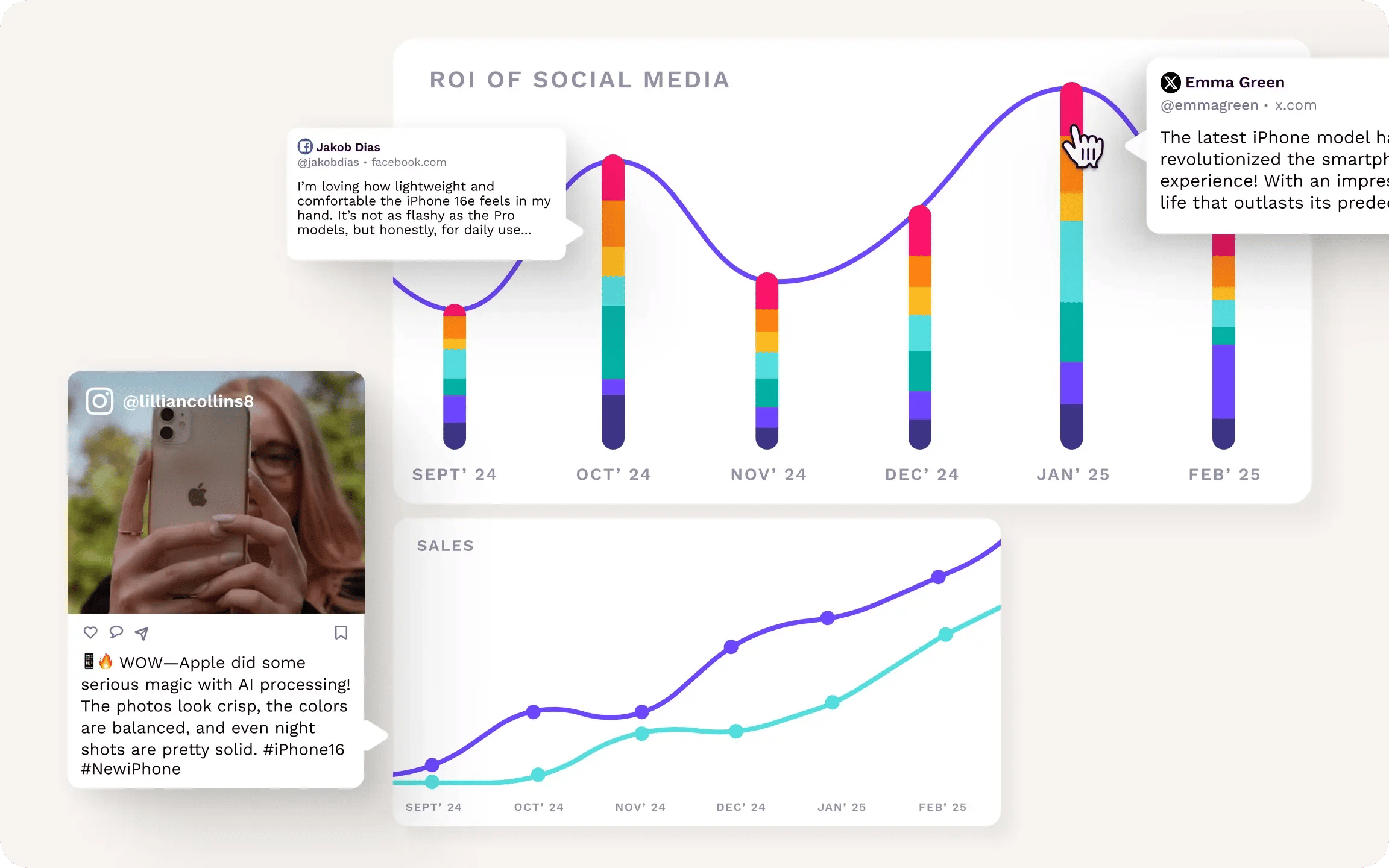
By combining influencer marketing with social listening, brands gain broader market intelligence and a clearer understanding of how campaigns contribute to overall brand perception and conversation
Influencity extends beyond influencer marketing by integrating social media management capabilities, including a social inbox, publishing planner, analytics, bio link management, and ad monitoring.
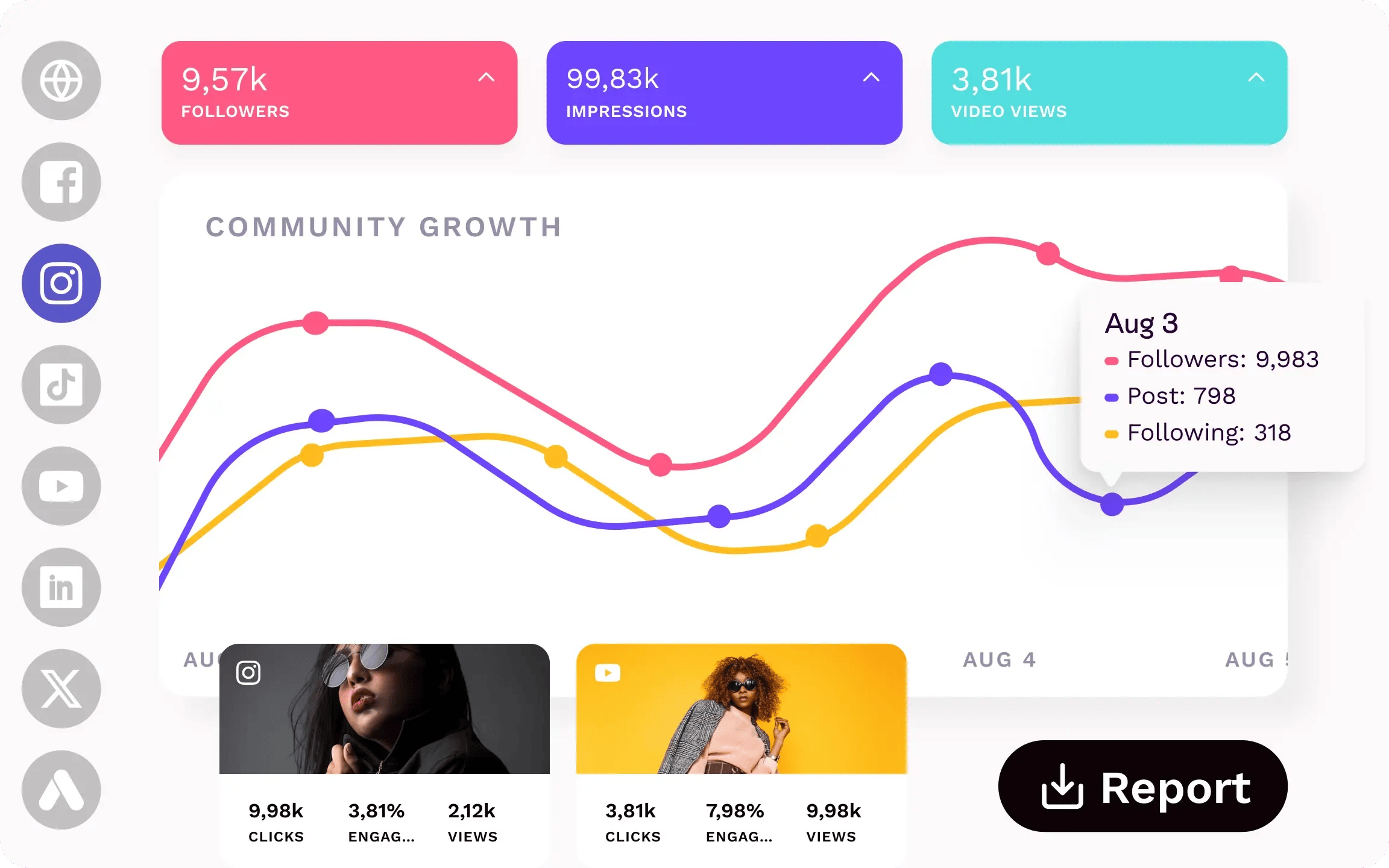
By bringing owned and influencer channels together in a single platform, marketing teams can streamline their workflows, reduce the need to switch between multiple tools, and manage their entire social media system more efficiently.
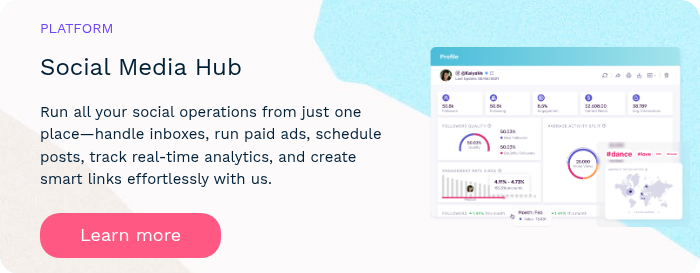
Modash is a decent choice for Shopify brands that want a basic discover workflow. Modash lacks deep CRM capabilities and structured multi-step campaign workflow planning.
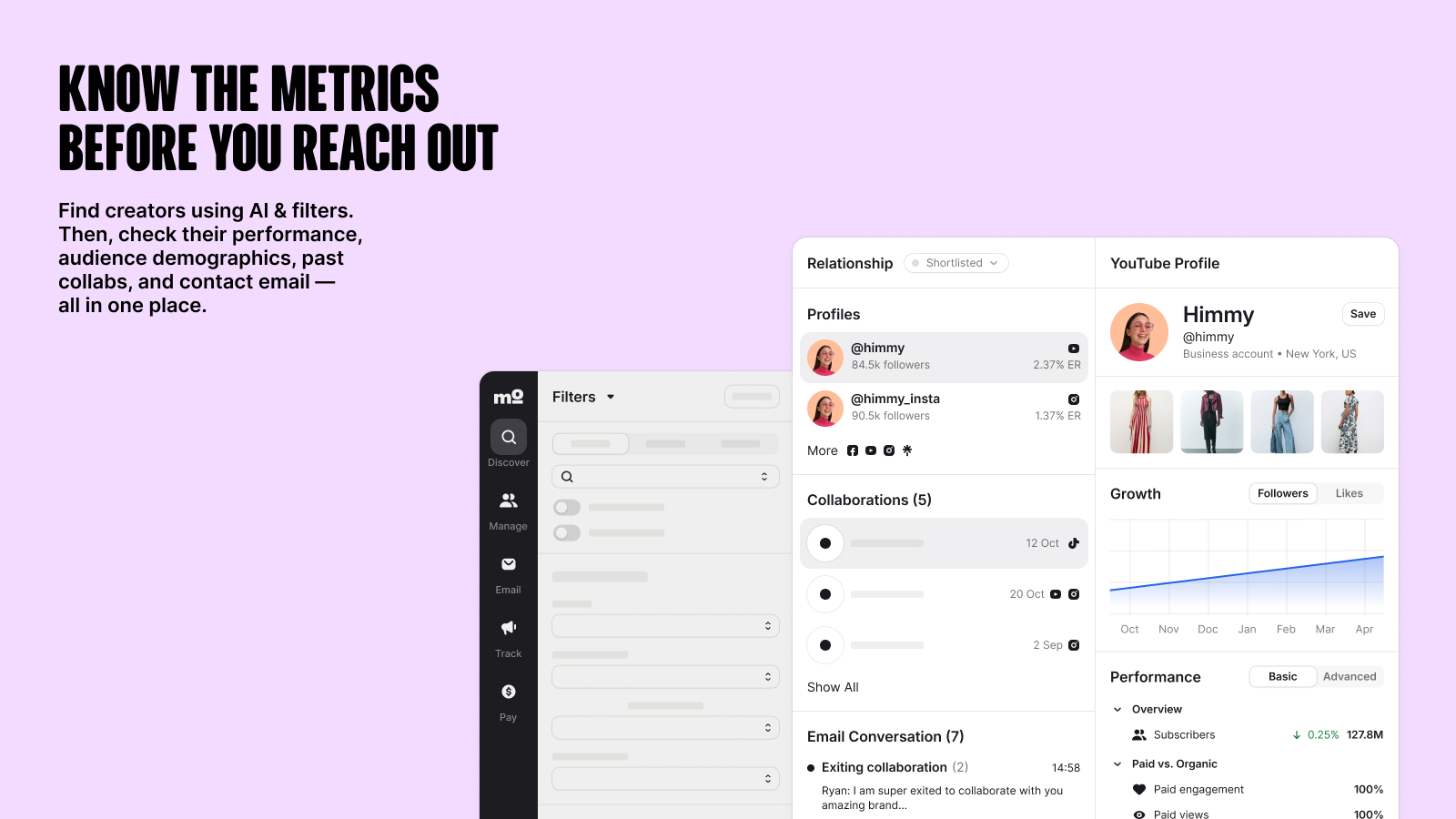
Its monthly search and profile lookup caps on the lower tiers are highly restrictive , which can easily exhaust your search limits mid-campaign. Furthermore, Modash does not support certain channels, whereas Influencity offers broad multi-platform coverage and built-in social listening tools.
GRIN (Global Relationship Intelligence Network) is designed almost exclusively for mid-market and enterprise direct-to-consumer (DTC) brands that treatinfluencer marketing as an extension of their supply chain logistics.
GRIN's native e-commerce integrations with Shopify, WooCommerce, and Magento are good. It automates approximately 70% of standard gifting tasks.
Yet, GRIN operates as a private CRM rather than an open discovery tool. To find creators, you must either manually import your own rosters or pay for GRIN's curated list services. This makes discovery incredibly manual and restrictive compared to Influencity's open database. In addition, GRIN's pricing starts on high annual commitments, making it a massive financial risk compared to Influencity’s modular flexibility.
Upfluence combines influencer search with performance-based affiliate attribution, making it a common choice for online stores focused on hard revenue metrics.
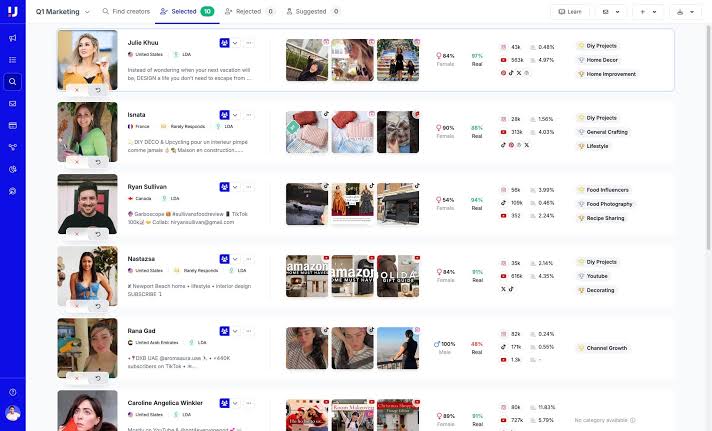
Through integrating directly with Shopify, WooCommerce, and email platforms like Klaviyo, it parses customer transaction database to identify high-value buyers who already have a strong social following.
However, Upfluence’s creator database is tiny compared to Influencity, offering access to only 12 million profiles. This creates a high risk of rapid audience and creator saturation, forcing you to constantly pitch to the same creators.
Upfluence is also a manual-heavy platform; vetting, email follow-ups, and negotiations require massive human effort. Upfluence also forces brands into rigid 12-month contract lock-ins, while Influencity provides modular, tailored plans.
HypeAuditor is an analytics-first platform designed for teams that prioritize fraud detection, bot scrubbing, and audience quality over operational CRM workflows.
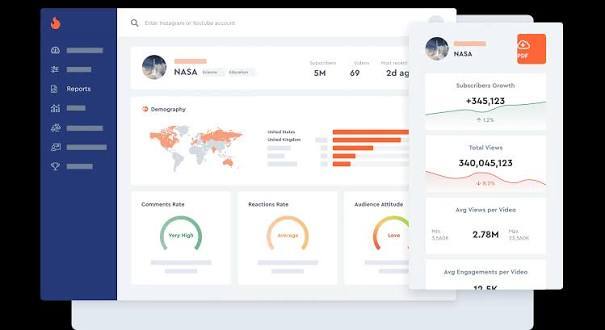
HypeAuditor's proprietary Audience Quality Score (AQS) is one of the most respected fraud-detection systems in the category.
While HypeAuditor is excellent for vetting, its campaign management, email outreach, and global payment tools are highly limited and frequently draw user complaints. Influencity offers the same level of deep audience metrics, lookalike suggestions, and fake-follower scoring, but pairs them with an advanced campaign pipeline, social inbox, scheduling, and global payout infrastructure.
If you want to move past the rigid social media scheduling of Later Influence and start running campaigns based on real, mathematically verified reach, you need an analytical powerhouse.
Influencity is the only alternative that combines a massive, 350-million-profile open database with deep fraud scrubbing, unique audience overlap calculations, and automated global payouts—giving you complete strategic control over your creator campaigns.
Influencity is the best overall alternative to Later. While Later restricts you to a closed network of 10 to 15 million creators who must explicitly opt in, Influencity provides an open database indexing over 350 million public profiles across Instagram, TikTok, YouTube, and Twitch. This allows your team to audit and vet any creator on the social web without waiting for account authentication.
Later Influence requires a custom quote, with contracts typically starting at $25,000 to $28,500 per year and scaling up to $100,000+ for global enterprise accounts. In contrast, alternatives like Influencity offer more options, scaling modularly as your campaign needs grow.
Audience overlap represents the percentage of followers shared between two or more creators in the same campaign. Without an overlap tool, you risk paying multiple different creators in the same niche to show your promotion to the exact same followers. Platforms like Influencity automatically deduplicate creator audiences, allowing you to maximize unique reach and optimize your true campaign ROI.
Yes. Influencity uses open-database structures. We scrape public profile statistics, allowing campaign managers to audit audience demographics, fake follower percentages, and engagement metrics without requiring creators to log into a brand-side portal. This eliminates the massive onboarding friction common to closed platforms like Later.
Later includes influencer marketing capabilities through Later Influence, formerly Mavrck. While it supports creator collaborations, brands running large-scale influencer programs often require additional capabilities such as AI-powered creator discovery, audience quality analysis, Influencer Relationship Management (IRM), audience overlap analysis, and advanced reporting. Influencity brings all of these features together in a single platform designed specifically for influencer marketing.
If creator discovery is a priority, Influencity provides access to more than 350 million public creator profiles across Instagram, TikTok, and YouTube. Its AI-powered semantic search, audience demographics, lookalike discovery, brand affinity analysis, and more than 60 advanced filters help brands identify creators based on campaign objectives rather than platform membership.








%20and%20How%20Can%20They%20Benefit%20Your%20Brand%20article.jpg?length=628&name=What%20Are%20Key%20Opinion%20Leaders%20(KOL)%20and%20How%20Can%20They%20Benefit%20Your%20Brand%20article.jpg)