

I’ll admit it, I’m the kind of person who can’t leave a bookstore empty-handed. But even I didn’t expect Barnes & Noble to become one of the most fascinating influencer marketing success stories of the decade.
From “your parents’ bookstore” to a Gen Z cultural hub, the brand pulled off what most marketers only dream of: turning organic social excitement into a repeatable, data-informed strategy that bridges online fandom and in-store sales.
Let’s unpack what big brands, from beauty to fitness to tech, can learn from the BookTok to Bestseller model.
A couple of weeks ago I wrote about what I call the Netflix Method, which basically implies using analytics to report and predict performance. This method can be extrapolated to many areas, because Netflix ruined us… but in the best way possible.
How? Well, it trained us to expect personalization, prediction, and perfect timing in every corner of our digital lives. But behind every “Recommended for You” section is something every marketer should be obsessed with: behavioral data.
According to McKinsey, 75% of what people watch on Netflix comes from recommendations powered by behavioral analytics, not promotions. Netflix tracks completion rates, replays, and emotional arcs, all to anticipate what we’ll want next before we do.
.png?width=400&height=250&name=White%20%26%20Green%20Modern%20Bar%20Chart%20Graph%20(68).png)
And here’s where it gets interesting: Barnes & Noble took the same principle and built it into their influencer strategy, consciously or not.
When #BookTok started taking over TikTok feeds (we’re talking over 200 billion views globally, per Forbes 2025), B&N tracked the behavioral ripple effect, who was actually coming into stores, which genres spiked in sales, and which authors got rediscovered through creator recommendations.
That’s the difference between “going viral” and staying relevant. B&N stopped asking, “How many people saw this book on TikTok?” and started asking, “Who’s actually showing up to buy it?”
And that’s a mindset every brand should steal.
If you’re new to it, BookTok is TikTok’s corner for book lovers, readers who post emotional reviews, “unhaul” videos, reaction clips, and the occasional meltdown over a plot twist. Think of it as Goodreads meets Netflix recommendations, only more dramatic and way more viral.
It started during lockdown, when people craved comfort and community. TikTok became that space, part book club, part therapy session. And while it began with YA and romance novels, it’s since expanded into every niche imaginable: self-help, fantasy, non-fiction, even poetry.
These creators aren’t just reviewing books anymore, they’re curating emotion.
Here’s where it clicks. Netflix analyzes behavior to predict what will keep you watching. Barnes & Noble analyzes content engagement to predict what will keep people buying.That’s the bridge.
In influencer marketing, your completion rate is audience retention; are people watching your creators’ content all the way through? Your rewatch rate is repeat engagement; are followers saving, commenting, or sharing? Your skips are scrolls, content that doesn’t resonate or feels forced.
When I work with influencer data, I always remind teams: don’t mistake reach for resonance. A 50K-view TikTok with 500 comments and 2K saves tells you way more about potential ROI than a 1M-view post full of empty likes.
Let’s rewind to early 2021. If you were on TikTok back then, your For You page was probably flooded with people sobbing over It Ends With Us or The Song of Achilles. BookTok was wild, messy, emotional, and 100% unfiltered.
What started as niche fan content suddenly became a cultural phenomenon. By mid-2022, the hashtag #BookTok had racked up over 100 billion views, and it wasn’t slowing down. According to The New York Times, BookTok was responsible for boosting U.S. book sales by 20% that year, particularly in the young adult and romance categories.
And then came the genius move: Barnes & Noble turned fandom into a framework.
Most brands panic when social media chaos erupts around their category. B&N leaned in. They realized that these creators, many of them teens or young adults, weren’t just sharing recommendations; they were shaping taste. And instead of launching a campaign to “control the narrative,” B&N asked the smarter question:
“What if we organized the chaos?”
Within months, every major Barnes & Noble store had a #BookTok table: a real-world reflection of what was trending online. No paid partnership, no big media buy, just a physical space where digital enthusiasm met in-store discovery.
It was simple. It was genius. And it worked.
Think about that loop for a second:
B&N didn’t invent virality but they learned how to sustain it. They closed the loop between inspiration and action, which is where most influencer campaigns fall flat.
Pro tip: Don’t stop at awareness. Build systems that turn viral discovery into measurable action, clicks, signups, purchases, or even store visits.
BookTok is about belonging. It’s the same emotional mechanism that makes fans line up for Taylor Swift merch or new Nike drops. People want to see themselves in a story.
Barnes & Noble didn’t pay influencers to act like marketers, they empowered them to stay fans. That’s the pivot.
If you’re an agency or brand, this is the takeaway: Your audience doesn’t need more branded content. They need validation, proof that their taste, values, and voice matter to the brand they love.
That’s why this worked so well. It wasn’t a “Barnes & Noble campaign.” It was a reader’s movement, curated by the brand.
The ripple effect of BookTok didn’t stop at B&N’s checkout counters. Publishers started redesigning book covers to look better on camera. Authors began timing releases to match social trends. Even Amazon followed with its own “BookTok Favorites” page.
Sound familiar? It’s the same playbook brands in beauty, fashion, and wellness are now using — letting communities lead and data follow.
According to Statista (2024), 65% of Gen Z shoppers say they’ve discovered a new brand or product through TikTok influencers, and 42% trust creators’ recommendations more than brand ads.
.png?width=400&height=237&name=White%20%26%20Green%20Modern%20Bar%20Chart%20Graph%20(69).png)
That’s the real paradigm shift, social credibility is the new media buy.
Every time I talk to agency teams managing dozens of creators, I remind them of what Barnes & Noble did so effortlessly: They operationalized virality.
They built a system to respond to audience behavior in real time. And that’s something any brand can do with the right IRM setup.
Pro tip: Don’t underestimate the value of what feels “unplanned.” Sometimes, your biggest marketing win is simply recognizing that the conversation is already happening and building the table where it belongs.
Barnes & Noble built a model that many big brands dream about: a community-led influencer program that feels organic, performs like a campaign, and scales like a system.
So let’s break down what’s actually happening behind the scenes and more importantly, what you can take from it.
Here’s the first thing B&N got right: they didn’t chase celebrity influencers.
Instead, they tapped mid-tier and micro-creators, people with anywhere from 10K to 200K followers who genuinely love books. These creators aren’t “influencers” in the traditional sense. They’re curators, tastemakers who earn trust through consistency, not clout.
Take @abbysbooks or @aymansbooks, two of BookTok’s biggest voices. Their content doesn’t look like an ad. It looks like a friend gushing about a story they stayed up all night reading. That’s the gold standard of authenticity.
According to LTK (2025), 61% of Gen Z audiences trust micro-influencers more than traditional celebrities, especially when it comes to lifestyle and wellness content.
For Barnes & Noble, this was a strategic move. Mid-tier creators deliver higher engagement, lower costs, and deeper audience alignment.
Pro tip: You don’t need the loudest voice in the room, you need the most believable one.
One of my favorite things about Barnes & Noble’s playbook is how much freedom they give their creators.
Instead of handing out a strict “talking points” document, they offer flexible briefs that highlight key themes (e.g., “focus on comfort reads,” “show your reading nook,” “celebrate BookTok favorites”) while leaving room for storytelling.
Creators can decide the tone, visuals, and emotional angle and that’s exactly why the content performs so well.
A recent study found that campaigns allowing creative freedom see 32% higher engagement rates than those that enforce rigid scripts. Why? Because audiences can smell “corporate copy” a mile away.
Pro tip: Guide your creators like a director, not a dictator. Tell them why the story matters, not just how to tell it.
The real genius of Barnes & Noble’s influencer model lies in what they don’t measure: they don’t just count posts; they measure passion.Creators are encouraged to promote books they actually read and love not just what’s sent in a PR box. Some even buy the books themselves.
That means every recommendation feels earned, not assigned.
And here’s the kicker, that authenticity drives measurable outcomes. A 2024 Salesforce report found that content perceived as “authentic” drives 3x higher conversion intent, whether it’s a book, a lipstick, or a protein powder.
So when @alifeofliterature posts a video saying, “I cried through all 400 pages,” followers don’t just engage, they buy the book. I speak out of experience, I can’t count the times I’ve purchased a book that was hyphed on Booktok or IG.
Pro tip: If your influencer has to fake enthusiasm, you’ve already lost.
B&N also understood something many brands overlook: influencers aren’t just campaign assets, they’re long-term partners.
Instead of one-off collaborations, they nurture relationships with creators who evolve with their audience. Many of these creators are now considered part of B&N’s extended ecosystem, they get early access to releases, participate in seasonal campaigns, and attend store events.
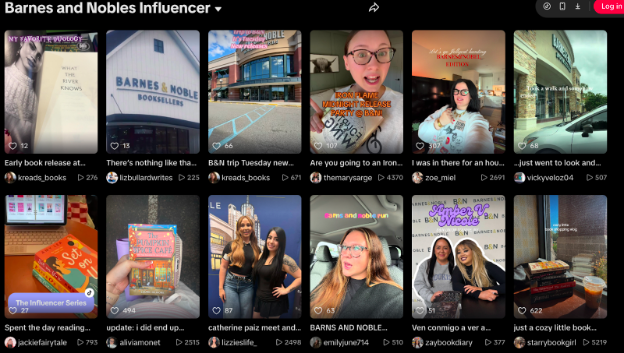
This long-term approach fosters not just loyalty, but consistency. It allows creators to grow with the brand and for the brand to benefit from that organic trust.
Think of it like serialized storytelling: one post is an episode, but the partnership is the series.
Pro tip: Replace “influencer lists” with “creator rosters.” Build relationship.
Here’s where B&N truly nailed it. They understood that social media virality only goes so far without physical touchpoints.
They brought BookTok offline, literally. Those #BookTok tables weren’t just cute merchandising; they were data-informed, sentiment-driven activations that linked digital enthusiasm to retail results.
Imagine this: a reader watches a viral TikTok review of Fourth Wing, walks into a B&N store, and sees it on the “BookTok Favorites” shelf. That’s a full behavioral loop, from scroll to sale.
And it works. Barnes & Noble reported a 14% increase in in-store traffic in 2024, largely attributed to BookTok visibility and influencer-driven recommendations.
Pro tip: If your campaign ends when the content goes live, you’re missing half the impact. Bridge the digital and physical experience.
Here’s the part I love most, you don’t have to sell books to steal Barnes & Noble’s playbook.
Their success wasn’t about genre, it was about structure. A system that turned creators into collaborators, and data into direction. Let’s break it down.
Forget about going big right out of the gate. BookTok didn’t start with millions of creators, it started with a few passionate ones who made reading cool again.
Find 10–20 creators who genuinely love your product or already use it. That’s your testing ground, your first “pilot season.”
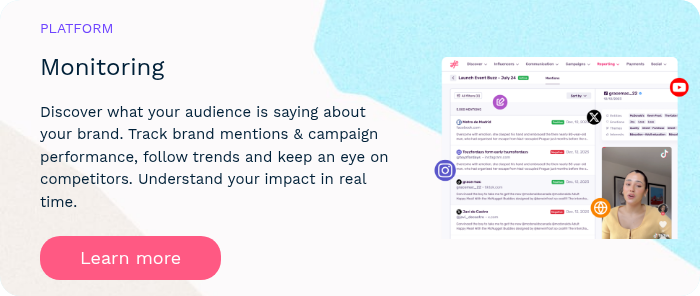
Monitor engagement quality, not just reach. Which creators generate conversation rather than likes? Which ones inspire others to comment “Adding this to my cart”?
That’s where your gold is.
Pro tip: You don’t need to dominate the algorithm — you just need to show up consistently where people care.
Barnes & Noble didn’t just send out PR boxes and hope for the best. They built relationships that felt structured but flexible.
For your brand, that means codifying collaboration:
Think of your brief as your creative contract — it’s not about control; it’s about clarity.
Pro tip: Clarity creates confidence. The better your brief, the less micromanaging you’ll ever have to do.
Here’s where most brands drop the ball. They have influencer lists in one spreadsheet, contracts in another, and analytics buried in a shared drive.
That’s not a strategy,that’s chaos with a Google Sheet.
An IRM (Influencer Relationship Management) system — like Influencity’s — changes the game. It centralizes your influencer discovery, negotiation, and reporting into one ecosystem.
Add image of IRM
That means no more tool-hopping, no more data silos, and no more “Wait, did we work with them last year?” moments.
CTA - Analysis
Pro tip: Your IRM isn’t just storage, it’s memory. It’s how your brand gets smarter with every campaign.
Creators thrive on recognition. Barnes & Noble didn’t just pay their BookTokers, they celebrated them. Featuring them in stores, tagging them on social, even highlighting their reviews in national campaigns.
That kind of public appreciation turns transactional relationships into long-term partnerships.
You don’t need to build a shelf in your store, a repost, a newsletter mention, or a “creator spotlight” post goes a long way.
Pro tip: People remember who recognized them — not just who paid them.
B&N’s BookTok strategy wasn’t a one-and-done campaign. It evolved with trends, dark academia one month, cozy fantasy the next.
The same goes for any brand. Test different:
And keep what works. Your influencer program should feel like an evolving story, not a static campaign.
Pro tip: The secret to scaling is doing what works better.






%20and%20How%20Can%20They%20Benefit%20Your%20Brand%20article.jpg?length=628&name=What%20Are%20Key%20Opinion%20Leaders%20(KOL)%20and%20How%20Can%20They%20Benefit%20Your%20Brand%20article.jpg)



.png?length=628&name=Pop-up%20image%201200%C3%97800@1x%20(1).png)