

I recently came across a video from one of my favorite fashion creators, Jack Savoie (@thesavoiedaily), in my Instagram feed. It was part of his regular “Shoes of the Past” segment, where he tells stories about the most iconic shoes from specific periods in history, like the Monolo Blahnik Hangisi (made famous by “Sex and the City”) and the Alexander McQueen Armadillo Boot (Hello, Lady Gaga).
This time, the creator focused on TOMS Alpargata—the iconic shoes that every Millennial had in their closet at one point. He told a story around the shoes, discussing their origins, impact, and now their revival.
Comments flooded in from nostalgic fans who were excited about the comeback. The best part was that the video was created as a partnership with the brand. It wasn’t organic, but it felt organic as it wasn’t blatantly promotional. It retained the strong, narrative-style storytelling that the creator is famous for.
This is the exact kind of powerful digital storytelling that PR agencies can achieve when they know how to work with creators.
It’s also the key differentiator in how PR teams should work with influencers vs. performance-led agencies. In this post, I explore how PR agencies can build better systems for creator workflow. Let’s take a look.
Traditionally, there was a clear boundary between PR storytelling and creator partnerships.
Now the line between these channels has become increasingly blurred. Brand reputation and narratives are no longer in the hands of just PR teams. And influencer marketing is no longer just a channel for driving performance.
Instead, there’s a strong overlap between the two channels, as social media creators become a key driver of brand perception and buying decisions. Their influence is shaping brand narrative, and PR teams can tap into this to build digital storytelling campaigns that resonate with audiences.
Here’s a breakdown of the overlap between PR storytelling and creator partnerships.
PR teams can work with creators to develop stories that feel authentic rather than just pushing press releases. Creators bring their own voice into the campaign, which adds authenticity to the content and engages audiences. The TOMS x Jack Savoie partnership is an excellent example of this.
PR and creator teams can align on building a consistent and authentic brand voice. Instead of maintaining a rigid silo between publicity and paid content, the two can seamlessly align to tell impactful stories using a unified voice.
PR teams can build campaigns that involve telling multi-platform, multi-creator stories that are adapted to the unique format and style of each channel and creator. This keeps the core message consistent, helping to drive home the narrative across platforms and audiences.
For instance, TOMS is focusing on a nostalgia-fueled revival, with creators leading the brand’s digital storytelling campaigns across multiple platforms.
In spite of this overlap, there’s still a huge misalignment between PR and influencer teams. While one team wants to control the narrative and drive publicity, the other may focus too heavily on letting influencers have creative freedom. Let’s look at some of the biggest misalignment areas between PR teams and influencer teams.
For PR teams, it’s all about creating a narrative to build a specific brand image. As such, they want to take charge of the narrative to make sure they have more control over what publicity the brand gets. So they’ll develop a script or message to achieve the desired outcome.
This gives them control over everything creators share with their audiences and even who they share it. That way, they can ensure that:

However, this rigid approach doesn’t always align with the way influencer teams work. After years of experimenting and adapting their strategies, they’ve perfected the art of balancing authenticity with creative control.
With the realization that creators lose their influence when they lose their voice, influencer teams have ditched the over-scripting and the creative restraints. Instead, they lean into the authentic voice of influencers, giving them creative freedom over what content to create and what message to share.
This directly clashes with the desire of PR teams to control the narrative and prevent reputation risks.
When creators have too much creative freedom, there’s a risk of:
Teams need to find a strategic balance between these elements to ensure that creators tell authentic stories without straying from the narrative. Creators should be aligned on the brand’s goals and closely involved in the brainstorming process, so PR teams still guide the message while influencer teams decide how the message should be shared.
Another key misalignment area for PR and influencer teams is the outcome. For PR teams, the main focus is on driving publicity and boosting long-term brand reputation. They want to shape narratives that influence a brand’s image, whether this means evoking nostalgia for a heritage brand or positioning a new beauty brand as a sustainable alternative to mass-market solutions.
As such, they have starkly different goals and metrics compared to influencer teams.
Influencer marketing teams, on the other hand, focus on driving high visibility and engagement, with a goal to drive immediate business impact…even if it’s short-term. They want to get a brand in front of a specific target audience, often to drive traffic and conversions.
So while PR teams prioritize brand sentiment and credibility, influencer teams will look into engagement metrics and target quick ROI.
Recently, Chanel launched an influencer gifting campaign where they sent a luxurious Kit and Caboodle PR box to several influencers. The gift featured a nostalgic “Caboodle” organizer filled with a curated selection of the brand’s best beauty and skincare essentials, like the La Crème Main and the Les Beiges Water Fresh Tint.
It was positioned as a “dream PR box,” with creators sharing their authentic reactions and excitement through candid unboxing videos.
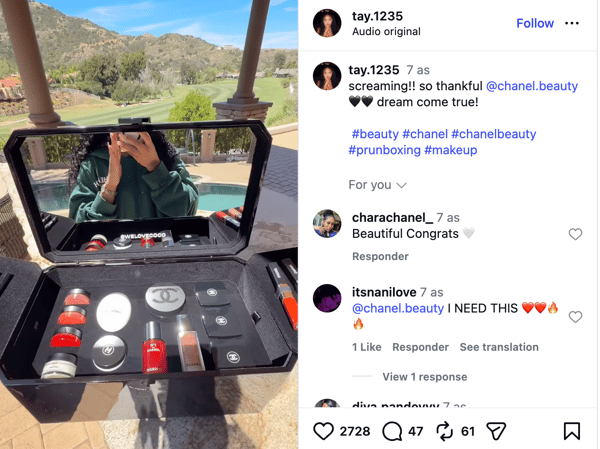
As you go through each creator's content, you could see that they all stayed true to their unique voice and style. Some added authentic commentary during their unboxing, while others did a “silent unboxing” with soft, instrumental music playing instead. Yet across every unique piece of content, creators managed to present the Kit and Caboodle as their “dream PR box.”
But the thing about this gifting campaign was that there was no story.
Influencers simply shared a single unboxing and went on their merry way. Most of them didn’t even really show what was in the box or provide more information about why it’s their dream PR box.
One creator went a little further and included a bit of storytelling during the unboxing. She also created another video where she did a full face of makeup using products she received.
Another creator expressed how the Kit and Caboodle “brings back nostalgia while crafting a new sense of luxury” because she used to own a pink Barbie caboodle growing up.
But there was no consistency beyond positioning the Kit and Caboodle as an aspirational item in the beauty community.
There was a huge missed opportunity for PR agencies working with Chanel to craft a stronger story around the campaign. For one, they could join the bandwagon of other brands leaning into nostalgia to tell stories that resonated with their audience since these iconic makeup organizers were first popularized in the late 1980s.
Creators could share their own stories about their first Barbie caboodle (like the last creator did above). Or they could share stories about dreaming of owning one, which can also be ultimately tied to the aspirational aspect of the Chanel Kit and Caboodle.
Additionally, they could tell stories around the contents: how they originated, how they were formulated, why they selected these items for the package, and so on.
Creators could still incorporate their unique style and voice into the story. But this time, they could go deeper into the “story” behind the Kit and Caboodle instead of simply showing themselves unboxing the package.
The goal is to create emotional resonance to help audiences realize why this should be their dream makeup kit, too.

With all the challenges, mistakes, and misalignments considered, it’s important for PR and influencer teams to reconsider how they work together. This requires a seamless coordination from start to finish, with a creator workflow that’s built for digital storytelling. Here’s what you need to do.
It all starts with a strong alignment on what story you’re going to tell and how you’re going to tell it. Define your shared goals to figure out the core messaging of your campaign.
Do you want to evoke nostalgia? Or perhaps you want to showcase your brand heritage to further boost credibility. Maybe you want to create an aspirational image and position your product as a “dream” item.
Whatever the story is, both teams should be in on it. Once there’s an alignment, you’ll need to coordinate on developing a single campaign brief for both teams to use.
Niches and follower count alone are not enough when seeking creators to help you tell your story. You need to dig deeper into their content history to see if they’re actually good at telling stories and if they’re a good brand fit.
Start with a brand safety check. Use a platform like Influencity to see if the influencer has any history of creating risky content, such as offensive language, discrimination, aggression, dangerous medical content, etc. This is a highly useful tool for PR teams to weed out creators who could introduce a risk to brand reputation.
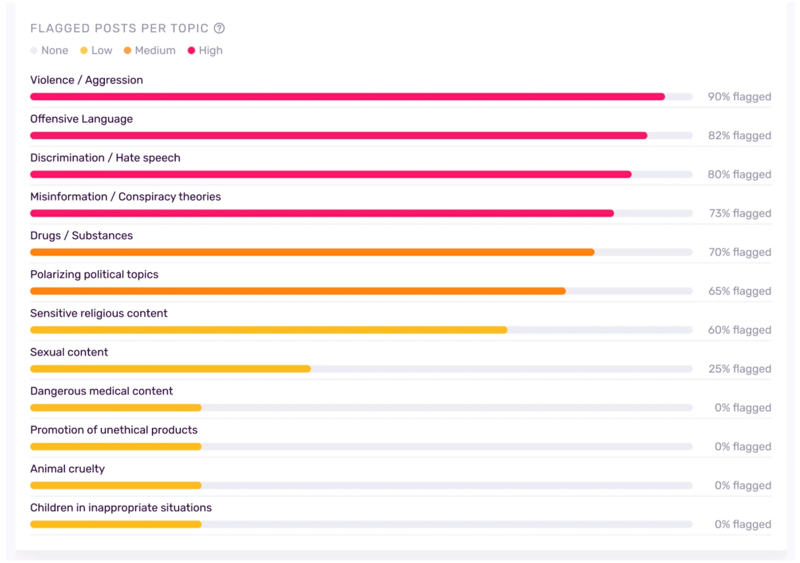
You can then dig deeper into their actual content to see if they’re consistently telling captivating stories. In particular, look at their brand partnership history to see how well they tell brand stories.
One key step to successful digital storytelling in your influencer campaigns is managing message consistency without over-controlling creators. This means creators should tell the same story but in their unique style and voice.
For instance, if someone always does silent unboxing videos, they could use text overlay to tell a story. Or if someone is known for sharing deeply personal stories, they could find a way to tie those stories to your brand. Regardless of how these creators tell the story, the messaging should still remain consistent.
Provide them with an overarching story and message, and encourage them to get creative with it to keep their authenticity.
With influencer teams taking charge of creator content review, PR teams are often left out of the process. But as experienced as they are, creator teams may not have the PR expertise to spot possible risks and backlash areas. And that’s how you end up with a PR crisis.
Make sure to clearly coordinate on brand safety guidelines, so influencer teams are equipped to flag more obvious risks upfront. Then use a centralized content portal to streamline the content review and approval process across teams.
When it comes to PR-led campaigns, traditional influencer marketing metrics aren’t enough to measure impact. You need to rethink measurement beyond vanity metrics and focus on brand sentiment and cultural response to see how the campaign resonated with audiences.
Earned media value and engagement quality are also effective ways to track the impact of your digital storytelling efforts.
As the line between PR and creator partnerships becomes increasingly blurred, PR agencies need to adapt their strategies to seamlessly blend creators into their digital storytelling campaigns. Make the most of the tips and ideas shared above to tell more impactful stories through creators.
Digital storytelling refers to the use of online media tools to tell stories and create emotional resonance with audiences.
An example of digital storytelling is creating a series of Instagram Reels featuring real customers telling their personal experiences of how a brand’s products helped them solve a problem.
PR storytelling involves telling an engaging story to attract attention and influence brand perception.
An example of PR storytelling is the #LikeAGirl campaign that focused on reclaiming the phrase “like a girl” and transforming it from a derogatory insult to an expression of confidence and strength.







%20and%20How%20Can%20They%20Benefit%20Your%20Brand%20article.jpg?length=628&name=What%20Are%20Key%20Opinion%20Leaders%20(KOL)%20and%20How%20Can%20They%20Benefit%20Your%20Brand%20article.jpg)