

We all heard about the mascara-gate scandal that broke the internet…and the influencer marketing industry to an extent. It was the event that popularized the “de-influencing” trend, as millions of social media users started becoming more doubtful of influencer content.
Although it didn’t completely destroy the industry, it didn’t leave it unscathed either. People started doing a double-take before trusting influencer promotions. They began seeking out content that felt more honest and authentic while casting doubt on content that feels too promotional and overly positive.
For brands and marketers, it served as a lesson in brand safety and the negative impact of deceptive marketing. It meant they had to be more intentional with their partnerships and influencer briefs, seeking out authenticity to build trust with their target audience.
In this post, I take a deep-dive into the mascara-gate scandal and the lessons that brands can learn.
It all started with a seemingly harmless partnership between L’Oreal and beauty influencer Mikayla Nogueira.
The influencer created a TikTok video where she applied the L'Oreal Telescopic Lift mascara in front of the camera and demonstrated how to use it. She raved about how much she loved the product, which appeared to make her lashes look significantly longer and thicker toward the end of the video.
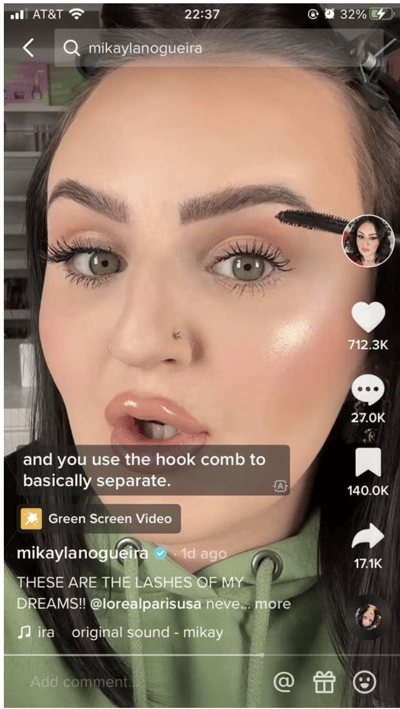
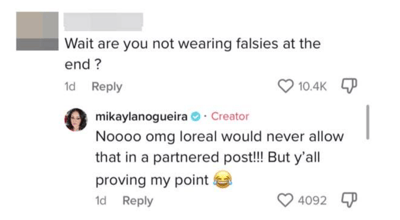
But many social media users started calling out the influencer, accusing her of wearing false lashes toward the end of the video. The influencer doubled down and denied using them. In one comment, she even explained that L’Oreal would never allow it in a partnered post.
Still, most users doubted her, saying that they could see the length (of the falsies) in the outer corner.
This deceptive marketing strategy is only the first layer of the mascara-gate scandal that started (or at the very least accelerated) the de-influencing movement.
The influencer also failed to clearly disclose of her partnership with the brand. With the video caption hiding the part where she wrote “L’Oreal Paris Partner,” it could only be seen for a few seconds toward the beginning of the video.
She didn’t mention the partnership in the video itself, which made the content even more misleading. It felt like a “real” review and not a partnership unless someone looked at the caption.
The FTC guidelines require influencers to clearly disclose of any brand partnership and maintain transparency. This failure to properly disclose of her partnership with L’Oreal further casts doubt on Mikayla’s authenticity and honesty. Audiences felt tricked and didn’t hesitate to flood her comments section with angry messages.
The video reached over 24 million viewers.
Mascara-gate got so popular that it even brought (disgraced) beauty influencers like Jeffree Starr out of hiatus. And controversial influencers like James Charles shared their own unsponsored review of the product.
What stood out the most to me was that the influencer chose to ignore people’s concerns. She just went inactive for a few days and then posted new videos that didn’t address the scandal. This didn’t sit right with most consumers like me.
Even in the age of de-influencing, we’re not expecting creators and brands to be flawless. We’re expecting them to be accountable.
Here’s the thing about mascara-gate: L’Oreal wasn’t to blame for the initial mess-up. People weren’t criticizing the brand. They were calling out an influencer’s deceptive marketing.
Social media users were smart enough to know the brand wasn’t the one asking Mikayla to deceive her audience. She did that of her own accord.
The brand could’ve released a statement addressing the scandal. They could’ve taken ownership of the mistake and promised to hold their creator partners more accountable to ethical and authenticity standards. They could’ve been transparent about the brief they shared and the agreement they had with the influencer.
There are a lot of ways L’Oreal could’ve saved face and addressed the PR disaster.
But they did none of that.
Instead, they chose to maintain radio silence. They didn’t address the issue or even acknowledge it. For people who felt deceived by the video, the brand’s silence felt like they weren’t taking the issue seriously. This could contribute to a rise in negative sentiment and a drop in brand trust.
While a brand as big as L’Oreal can “afford” to do this without a long-term impact on their brand reputation, smaller businesses might be unable to recover. And this is especially true with consumers becoming even more critical and doubtful in the de-influencing era.
There’s a lot that brands can learn from mascara-gate: from the influencer content to the way they chose to (not) respond. Here are some best practices on how to approach brand safety in 2026.
To start with, you need to make sure you’re partnering with influencers who don’t pose a safety risk to your brand reputation. That means avoiding partnerships with controversial creators, who might have stirred up negative sentiment through dishonest content or sensitive topics.
Closely analyze their past content and brand partnerships to understand their messaging and how audiences are responding. Track the sentiment behind mentions related to their names, so you can surface posts and comments that negatively mention the creator.
This is a great way to thoroughly assess influencers for a brand-safe partnership.
Platforms like Influencity simplify the process of analyzing influencers with dedicated brand safety tools. This lets you analyze:
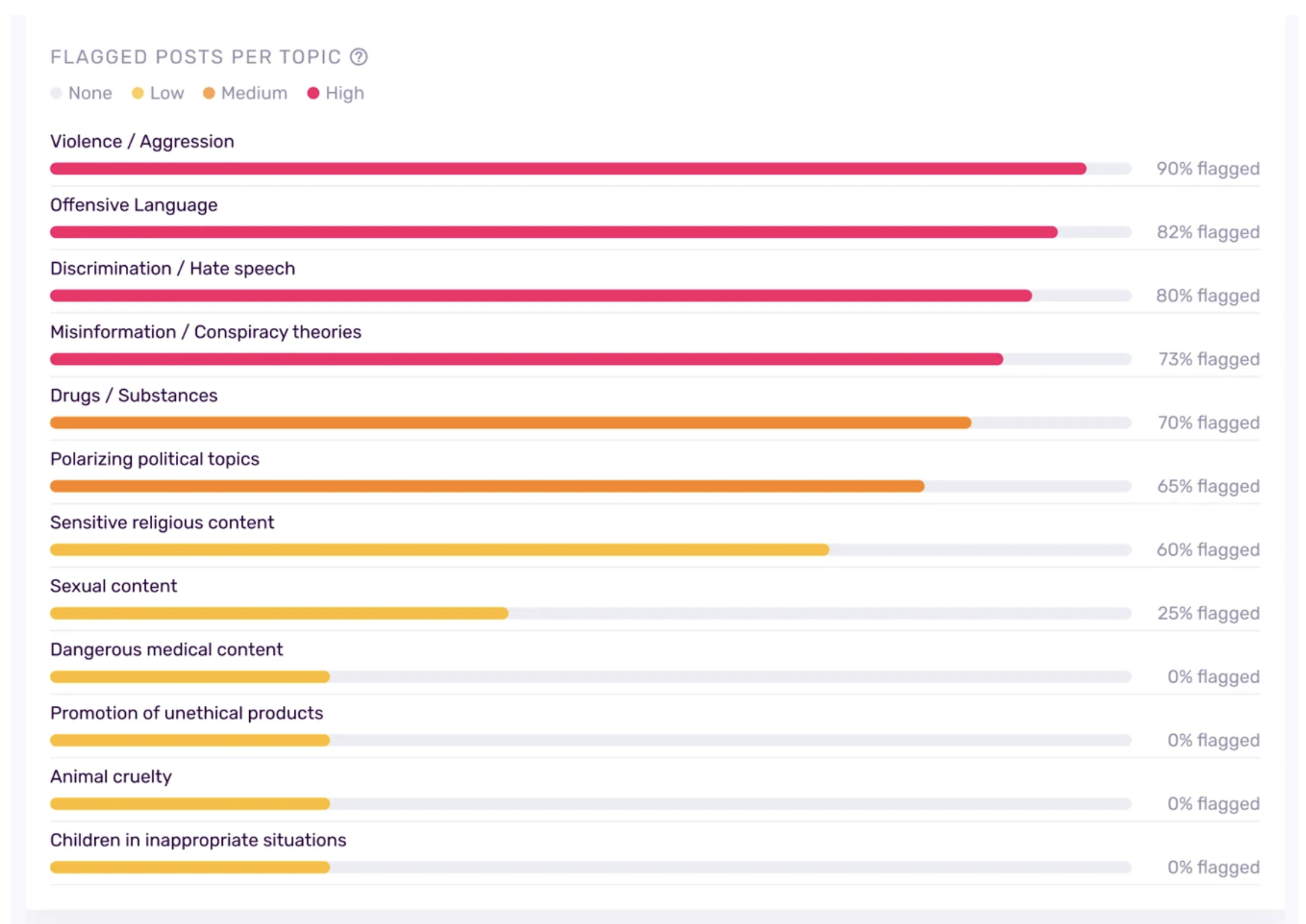
How people respond to the influencer. The tool analyzes the comments section in an influencer’s posts to understand if audiences are responding positively or negatively. So you can assess the influencer’s reputation trend based on how their audience is responding to the content.
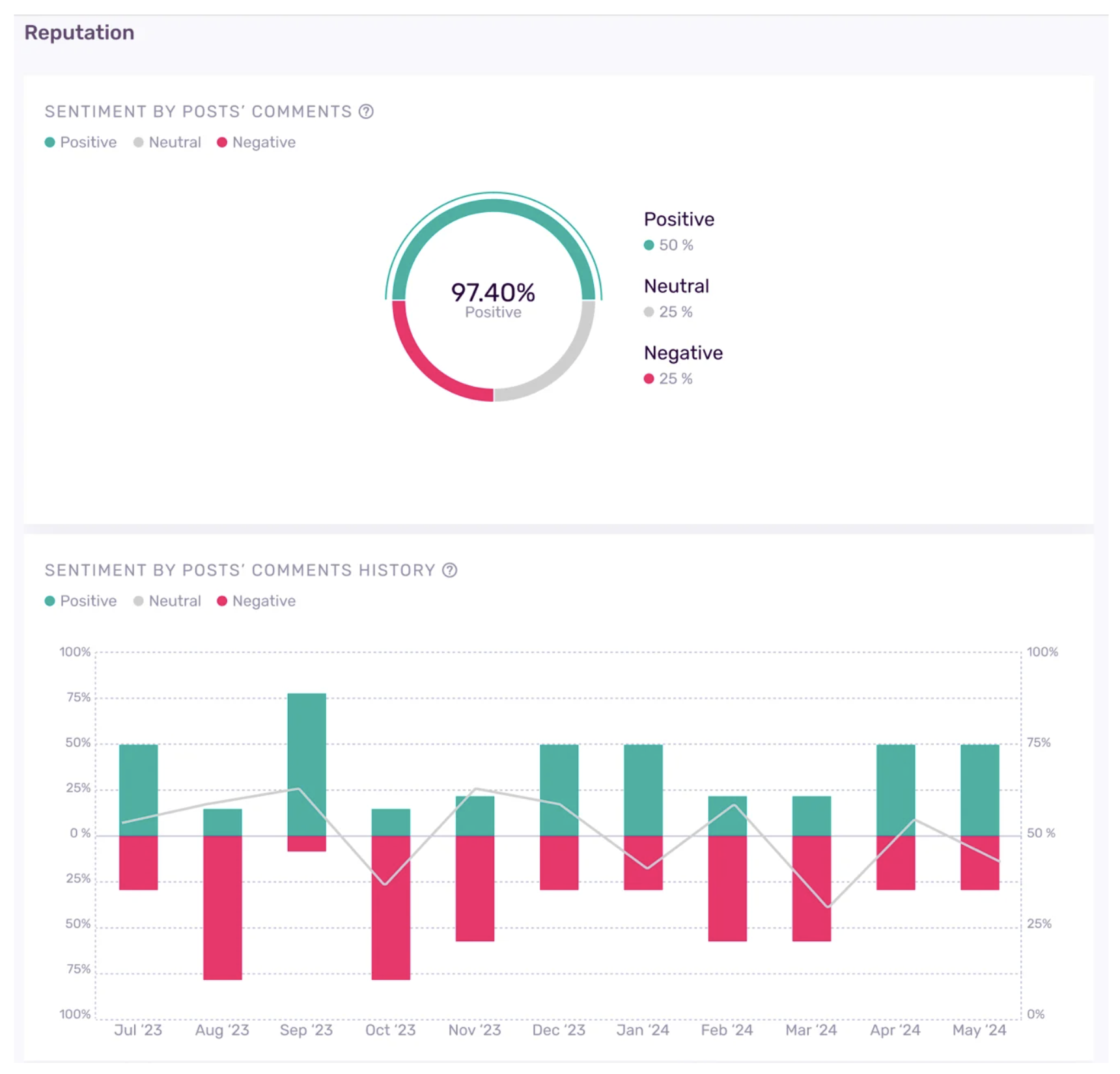
Download our Brand Safety Template to learn more about how to build influencer campaigns with brand-safe influencers.
If there’s anything consumers need to know about the promo, make sure they can clearly see it.
While social media platforms have requirements to disclose brand partnerships, you can be more explicit about how to disclose your partnership. Should influencers use a sponsored post tag? Do they need to create a Collab post? Where do they need to mention the sponsorship? Will they be required to talk about it in the video?
Craft a contract that clearly outlines how disclaimers should be included in a sponsored post. Make sure these requirements align with the FTC guidelines and platform-specific rules.
These guidelines will ensure that influencers are as transparent as possible about sponsorships. While many of them may not be doing it intentionally, disclaimers that are hard to see can instill doubt and destroy brand trust. Ideally, mentions of brand partnerships in the caption should be visible above the fold, where people can instantly see it.
Even brand-safe influencers can make a mistake, especially if they’re so used to creating content a certain way. They may have a go-to filter they use for every post that distorts the color of the product. Or they may sometimes use enhancements that blur out their pores, which can come off as deceptive to many.
So it’s important to be explicit about the authenticity standards you want them to maintain.
Make sure you create a contract that has an authenticity clause, specifically preventing creators from using filters or enhancements that alter product performance. The clearer you are about the terms, the better guidance your influencers will have.
It will give them a clear idea of what you expect from the get-go. That means they’re less likely to create content that needs to be pulled because it comes across as deceptive.
Brand partnership content can sometimes come across as dishonest and overly promotional because the instructions are too restrictive. Some brands may require influencers to read off a script or have them talk about points that don’t feel authentic to the creator.
That’s why you need to build better briefs that encourage influencers to share their honest opinions and use their own voice. Ditch the script and the rigid guidelines.
Instead, let influencers share points that actually matter to them. You could share a few talking points, but don’t go too far with them. Give them the freedom to explore the product or service on their own and discuss the things that stand out to them.

The safety threat doesn’t end once the content goes live. Even with a thorough brand safety analysis and a clear authenticity clause, there’s no predicting every possible scenario that could stir up controversy.
People could associate an influencer’s messaging with another controversial topic that coincidentally trends at the same time, for instance. Or they could find an issue with the influencer appearing with someone who’s involved in a scandal around the same time.
The possibilities are virtually endless.
That’s why it helps to keep a close eye on how people are responding to the influencer’s content after it goes live. Look at the comments to see if there are a slew of negative responses. See how people are sharing and engaging with the content across social media.
Influencity’s content tracking tool helps you stay on top of every influencer publication in one place. Instead of manually checking the influencer’s profile to find the content and check the comments, you can monitor the content in one place and easily see how people are commenting on it.
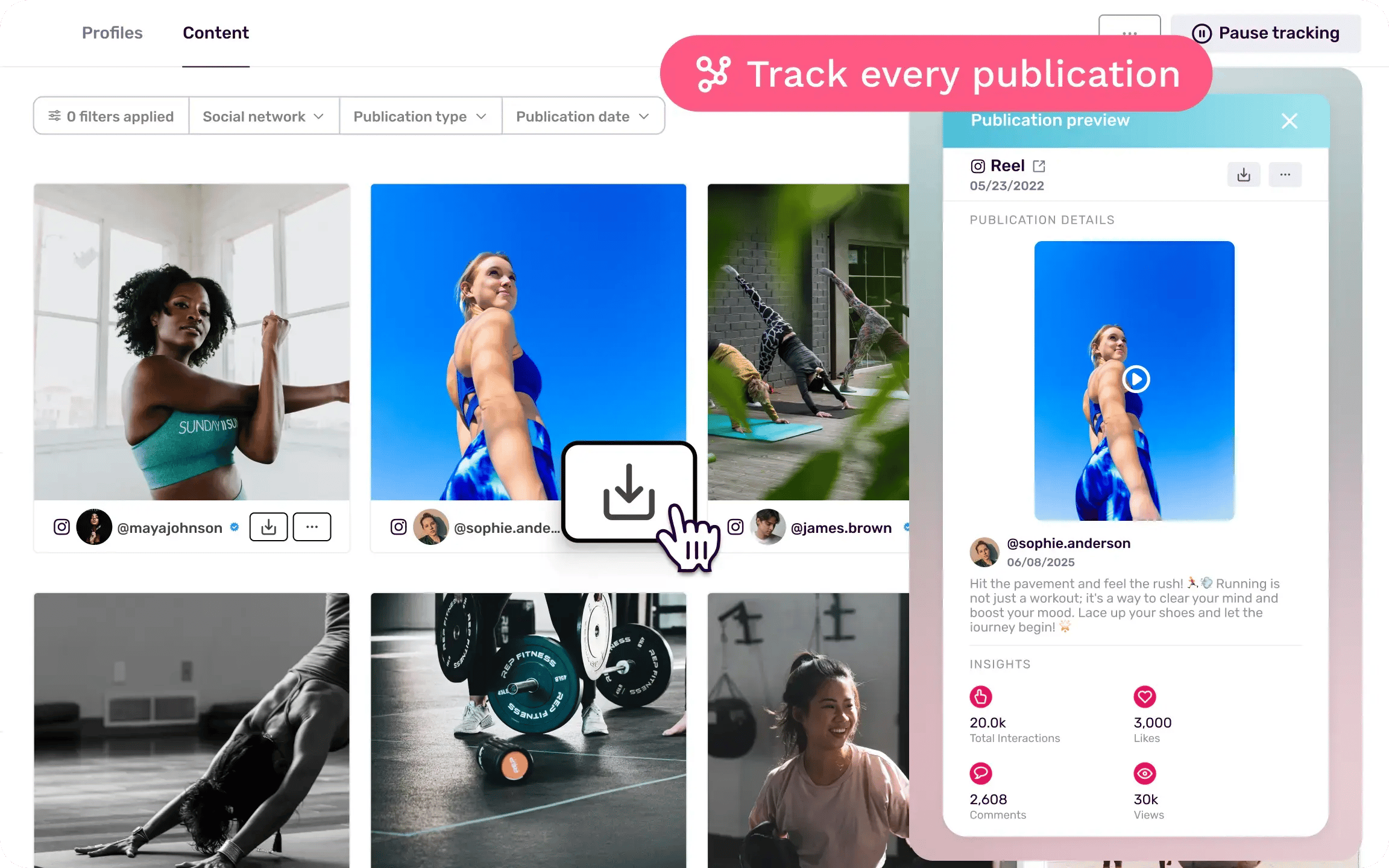
Additionally, you can use the sentiment analysis tool to detect negative keywords ("fake," "liar," "scam," etc.) appearing in comments immediately after a sponsored post goes live. This simplifies the sentiment tracking process and minimizes the need for manual analysis.
Brands can’t always avoid controversy, especially when it involves partnerships with a third party. Worst comes to worst, you end up with a PR crisis on your hands because of an unintentional mistake.
Sometimes, what matters the most isn’t that you made the mistake but how you respond to it afterward.
Are you taking accountability? Acknowledging it? Apologizing? Committing to do better? Have a clear plan in place for how to deal with the crisis.
Use social listening to detect the early signs of a crisis, so you have enough time to plan your response while it brews…not after it blows up. A solid crisis management plan will help set your brand apart from other brands that choose silence over accountability. And it helps establish a strong sense of trust with your target audience.
You could create a different plan for various types of scenarios.
For instance, if the creator was responsible for the mistake, you could have them apologize in addition to releasing your brand statement clarifying things. (Note: Make sure your contract includes a clause where influencers bear responsibility for mistakes made on their end.)
Or if it’s something to do with your product quality, your plan might include product recalls with statements that share your commitment to taking customer feedback seriously.
In the age of de-influencing, consumers are vigilant and often unforgiving. But they tend to be much more receptive to brands that take ownership and make meaningful efforts to fix their mistakes. Make the most of the tips and best practices shared above to maintain brand safety in 2026.
Mikayla Nogueira is a beauty influencer who gained notoriety on TikTok in 2023 when she was accused of using false eyelashes to exaggerate the effectiveness of the L'Oreal Telescopic Lift mascara in a sponsored post.
Mascara-gate is an influencer marketing scandal that went viral in 2023. It involved beauty influencer Mikayla Nogueira promoting the L'Oreal Telescopic Lift mascara in a video, where people accused her of wearing false eyelashes to exaggerate the product’s effectiveness.
De-influencing is a phenomenon where social media creators try to “de-influence” their audience by sharing honest opinions and discussing what not to buy.
Brand safety is the practice of protecting brand reputation by ensuring that it isn’t associated with controversies. It could involve making sure that it doesn’t appear in an ad next to inappropriate content or isn’t associated with a controversial influencer.








%20and%20How%20Can%20They%20Benefit%20Your%20Brand%20article.jpg?length=628&name=What%20Are%20Key%20Opinion%20Leaders%20(KOL)%20and%20How%20Can%20They%20Benefit%20Your%20Brand%20article.jpg)