


I've lost count of how many times I've heard the same complaint from influencer marketing managers, "We've built the list. We've found the right creators. We've sent the emails. Nobody's replying."
The instinctive response is usually to blame the offer. Maybe the budget is too low. Maybe the campaign isn't attractive enough. Maybe creators are simply overwhelmed. But after years of watching influencer recruitment programs succeed and fail, I've become convinced that the problem usually appears much earlier in the process.
Most brands are trying to start a relationship by asking for something. Think about it. A creator wakes up to find dozens of emails in their inbox. Every message follows the same pattern: a generic compliment, a campaign pitch, a request for rates, and an expectation of a quick response. The details change, but the structure remains the same.
The result is predictable. Creators learn to filter these messages out before they even finish reading them. What's remarkable is that influencer marketing is built on relationships, trust, and authenticity, yet recruitment often begins with a cold transaction.
I've found that the highest-performing outreach programs take a different approach. Instead of treating recruitment as a single email, they treat it as a sequence of interactions designed to build familiarity first. Because people rarely say yes to strangers. They say yes to people they recognize, trust, and feel comfortable engaging with.
/influencer-recruitment-slider-tabs-almost-there-image-composition.webp?width=800&height=500&name=influencer-recruitment-slider-tabs-almost-there-image-composition.webp)
That's the idea behind what I call the Warm-Up Sequence: a simple four-step framework that gradually moves a creator from awareness to interest before a collaboration is ever proposed.
In this article, I'll break down each stage of the sequence, explain why it works, and show you how to scale it without losing the personal touch that makes it effective
Most influencer recruitment emails fail before creators even open them. The problem isn't your offer, budget, or campaign. The real problem is that most outreach emails look exactly the same. Creators receive dozens, sometimes hundreds, of influencer partnership requests every week. Their inboxes are filled with generic messages:
After seeing the same formula repeatedly, creators develop an instinctive filter. They recognise the pattern and ignore the message.This is one of the biggest challenges in influencer recruitment today. Brands invest heavily in finding influencers, building creator lists, and preparing campaign briefs, only to experience low response rates.
The irony is that influencer marketing is built on relationships, yet many recruitment strategies begin with a transaction. The most successful brands understand a simple truth:
Influencer recruitment is not a single email. It's the beginning of a relationship.
The Warm-Up Sequence is a four-step influencer outreach framework designed to build familiarity, trust, and interest before introducing a collaboration opportunity. Instead of leading with a partnership proposal, brands gradually nurture the relationship.
This approach often improves creator response rates, strengthens brand perception, and lays the foundation for long-term influencer partnerships.
Goal: Create Recognition Without Asking for Anything
The Soft Touch is the stage most brands skip—and arguably the most important one.
After identifying a creator, the instinct is usually to move straight into the pitch. A campaign is ready to launch, targets need to be met, and outreach feels like the first item to check off the list. But from the creator's perspective, an immediate proposal from a complete stranger is just another sales email competing for attention in an already crowded inbox.
The Soft Touch takes a different approach.
Instead of leading with a collaboration request, you lead with genuine engagement. You reach out simply to acknowledge the creator's work and demonstrate that you've actually spent time with their content. No campaign brief. No rate inquiry. No attachment. No hidden agenda.
A simple subject line such as "Loved your recent video on sustainable skincare" is often enough to signal that this isn't a mass email.
The objective isn't to start a negotiation. It's to establish recognition.
Psychologically, this matters more than most marketers realize. By removing the request, you remove the resistance that typically accompanies outreach. The creator isn't being asked to evaluate a partnership, discuss compensation, or commit to anything. They're simply receiving feedback from someone who appears genuinely interested in their work
This immediately sets your message apart from the vast majority of influencer outreach.
Of course, authenticity is critical. Generic compliments rarely work because creators see them every day. Telling someone you "love their content" says very little. Referencing a specific video, insight, or creative choice demonstrates that you've actually paid attention.
For example, instead of writing:
"I love your content."
You might write:
"Your breakdown of ingredient transparency in your March skincare review was particularly insightful. It's rare to see a creator balance consumer concerns with scientific evidence so effectively."
The difference is subtle but significant. One sounds automated. The other sounds human.
And that's precisely why the Soft Touch works. Before you ask a creator to trust your brand, you're showing that you've taken the time to understand theirs.

The goal of the second email is simple: give before you ask.
At this stage, the objective isn't to pitch a partnership or request content. Instead, it's about continuing to build goodwill by offering something genuinely valuable with no strings attached. That could be a product sample, a complimentary subscription, exclusive access, an invitation to an event, or a useful educational resource.
The key is that the offer comes without expectations. There should be no posting requirements, no review obligations, and no implied commitment of any kind.
This approach works because it combines generosity with respect. Creators spend their days receiving messages from brands that want something from them. When a brand leads with value instead of demands, it immediately distinguishes itself from the crowd.
Psychologically, it taps into the principle of reciprocity while removing the pressure that often makes outreach feel transactional. The underlying message becomes, "We think you'll genuinely enjoy this," rather than, "Here's something we expect content in exchange for."
That shift in tone can make a significant difference in recruitment outcomes, helping brands build stronger relationships and higher-quality creator partnerships over time.
Once familiarity and goodwill have been established, it's time to introduce the partnership opportunity. The proposal should never be the opening move. By this stage, the creator should already recognize your name, recall previous interactions, and have a clear sense of your intentions. Most importantly, a foundation of trust should already be in place.
As a result, the collaboration feels like a natural next step rather than an unsolicited request. An effective influencer partnership proposal should provide all the essential information without overwhelming the creator.
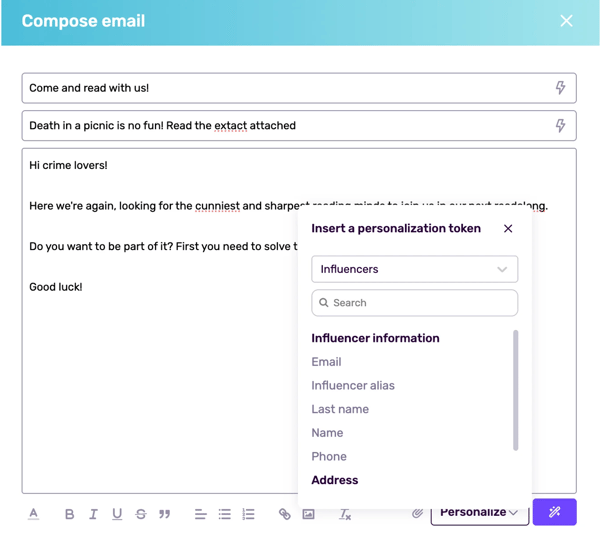
This typically includes a brief campaign overview, content expectations, creative guidelines, timeline, and compensation details. The tone should remain conversational and concise, making it easy for the creator to quickly understand the opportunity and respond.
Timing plays a critical role in the success of outreach. Trust reduces uncertainty, and uncertainty is one of the biggest obstacles to engagement. When creators receive a proposal from someone whose name they recognize and whose interactions they remember, they are far more likely to consider the opportunity than when faced with a cold pitch from a complete stranger.
Getting a response from a creator is an important milestone, but it's only the beginning of the recruitment process. Turning initial interest into a successful partnership requires thoughtful negotiation.
One of the most common mistakes brands make is negotiating against themselves. As soon as a creator replies, many marketers rush to offer discounts, additional deliverables, or other concessions before understanding the creator's expectations. Instead, allow creators to share their rates, requirements, and preferences first. Doing so gives you a clearer picture of the negotiation landscape and prevents unnecessary compromises.
It's also helpful to shift the conversation away from deliverables and toward outcomes. Rather than focusing exclusively on the number of posts, stories, or videos included in a collaboration, discuss the campaign's objectives, the audience you want to reach, the actions you hope to inspire, and the results you're aiming to achieve. This reframes the discussion as a partnership built around shared goals rather than a debate over pricing.
Finally, give creators the freedom to do what they do best. Creators understand their audiences better than anyone else, and overly prescriptive briefs can undermine the authenticity that makes influencer marketing effective in the first place. Provide clear guidelines, key messages, and brand requirements, but avoid scripting every detail. The more natural and genuine the content feels, the more likely it is to resonate with the audience and deliver strong performance.

Many influencer outreach campaigns simply stop after multiple unanswered follow-ups.
The Break-Up Email creates a respectful conclusion.
They achieve two things:
Many creators respond after receiving a final message because the opportunity now feels finite.
The goal is not manipulation.
The goal is clarity.
Even the most sophisticated outreach strategy will fall flat if you're targeting the wrong creators. Successful influencer recruitment begins long before the first email or DM—it starts with identifying creators who are genuinely aligned with your brand, audience, and campaign goals.
The first thing to prioritize is audience fit. Relevance matters far more than reach. A creator with 20,000 highly engaged followers who closely match your target market will often outperform a creator with 500,000 followers whose audience has little connection to your product or industry. The goal isn't to find the biggest audience; it's to find the right one.
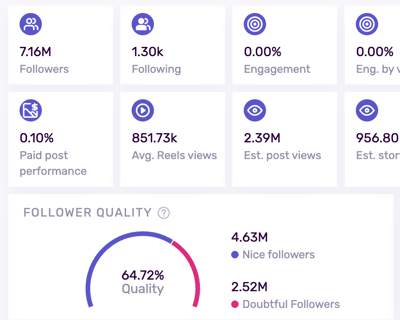
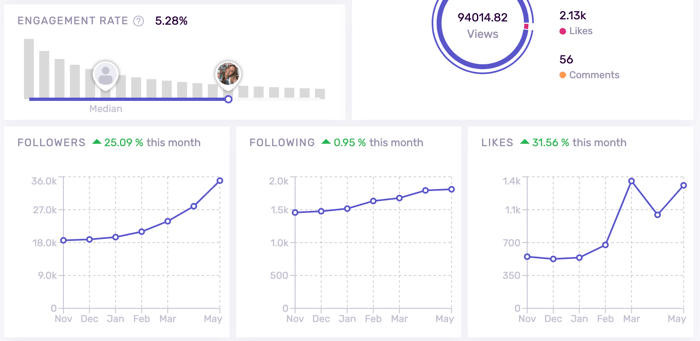
Next, look beyond surface-level engagement metrics. A strong engagement rate can be useful, but it doesn't tell the whole story. Spend time reading comments and assessing the quality of interactions. Genuine conversations, product-related questions, active community participation, and signs of purchase intent are all indicators that a creator has built meaningful trust with their audience.
Brand affinity is another important factor. Creators who already use products similar to yours—or who naturally create content within your category—tend to be easier to recruit and more effective once onboarded. Their audience is more likely to perceive the partnership as authentic, which can significantly improve campaign performance.
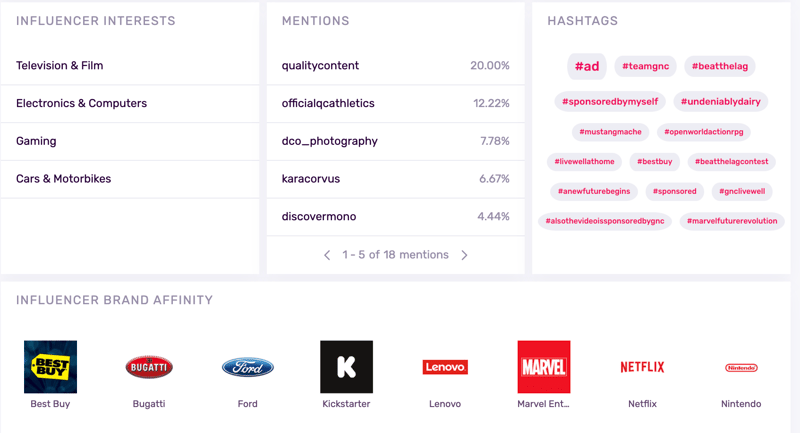
Finally, evaluate professionalism. Review previous collaborations and look for signs that the creator communicates clearly, meets deadlines, follows campaign guidelines, and consistently delivers quality content. Influencer partnerships are ultimately business relationships, and past behavior is often the best predictor of future collaboration success.
The challenge with relationship-based outreach isn't understanding the framework—it's executing it consistently across dozens or hundreds of creators.
Most teams start with good intentions. They personalize their first emails, track conversations manually, and promise themselves they'll remember who received which follow-up.
Then reality intervenes.
Spreadsheets become outdated. Team members contact the same creator twice. Follow-ups get missed. Conversations lose momentum.
This is exactly why Influencity's Influencer Relationship Management (IRM) tools exist.
Instead of treating outreach as a collection of disconnected emails, IRM allows you to manage creator recruitment as a structured relationship-building process.
Start by identifying creators who genuinely fit your campaign.
Using Influencity's discovery and audience analysis tools, you can evaluate:
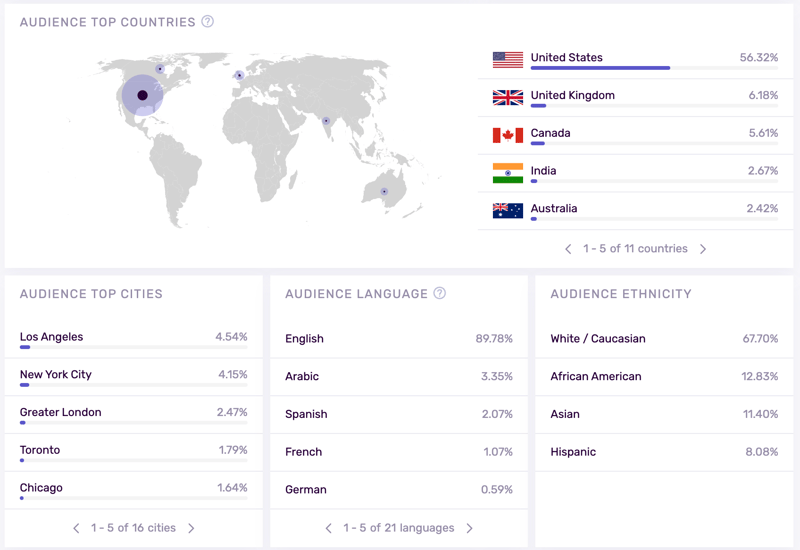
Once you've selected your target creators, segment them into groups based on niche, campaign fit, geography, or creator tier.
Segmentation makes personalization easier because creators within the same group often share similar interests and campaign motivations.
Rather than managing outreach in an inbox, create a recruitment workflow inside your IRM process.
For example:
This gives every creator a clear status and prevents prospects from falling through the cracks.
Automation often gets a bad reputation because marketers confuse it with mass messaging.
The goal isn't to send identical emails.
The goal is to automate timing while preserving relevance.
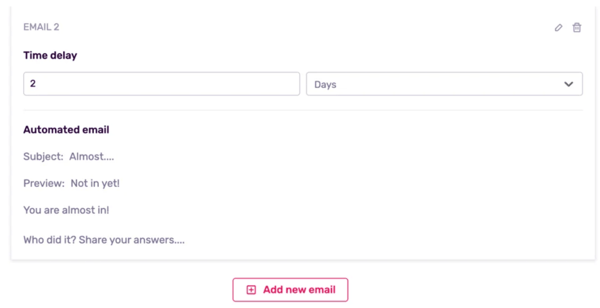
With Influencity, outreach teams can schedule follow-up sequences and reminders while still personalizing each message with creator-specific references, content examples, and campaign details.
This allows teams to maintain the rhythm of the Warm-Up Sequence without sacrificing authenticity.
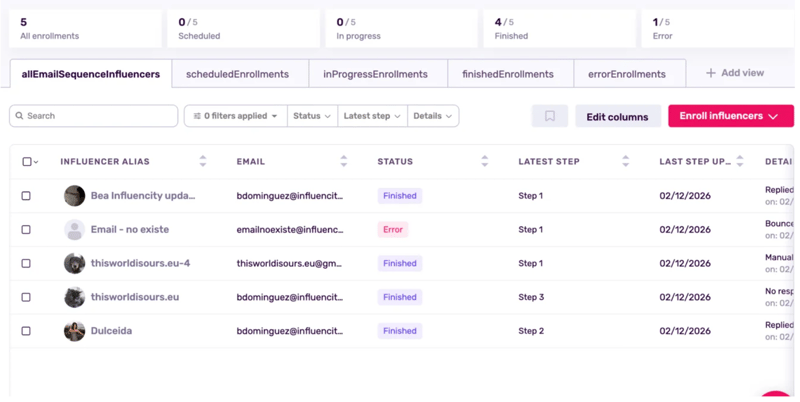
One of the biggest advantages of a dedicated IRM system is historical context.
Before sending a new email, you can immediately see:
Nothing damages creator relationships faster than asking someone a question they've already answered or pitching a campaign they've already declined.
A complete interaction history helps every conversation feel informed and intentional.
Most teams only track campaign performance after creators are onboarded.
But recruitment itself has metrics worth optimizing.
With a structured IRM workflow, you can analyze:
Over time, this data reveals which creators, messages, and sequence timings generate the strongest results.
The outcome is a recruitment process that becomes smarter with every campaign.
Because the Warm-Up Sequence isn't just a communication strategy. It's a system. And systems perform best when they're supported by the right infrastructure.
That's where Influencity helps transform relationship-based outreach from a manual effort into a repeatable, scalable process.
One of the biggest challenges in influencer marketing is scaling creator recruitment without sacrificing personalization. Building genuine relationships takes time, but manually warming up hundreds of creators every month is rarely sustainable.
This is where Influencer Relationship Management (IRM) becomes essential. A structured IRM approach helps teams organize and scale recruitment efforts by segmenting creators by niche, tracking communication history, scheduling follow-ups, preventing duplicate outreach, measuring response rates, and coordinating recruitment activities across multiple team members.
The objective is not to automate relationships. It's to automate the administrative work around them, giving teams more time and context to build authentic, human connections with creators.
Many brands approach influencer recruitment as a short-term objective: identify creators, send outreach, secure partnerships, and move on. The most successful brands, however, see recruitment differently. For them, recruitment is not the beginning and end of a transaction—it's the first stage of creator retention.
A creator's experience with your brand begins long before the first piece of sponsored content is published. It starts with the very first email, DM, or interaction. Those early touchpoints shape perceptions, establish expectations, and influence whether a creator sees the partnership as a one-off opportunity or the start of a longer relationship.
/influencer-recruitment-slider-tabs-ever-ghosted-image-composition.webp?width=800&height=500&name=influencer-recruitment-slider-tabs-ever-ghosted-image-composition.webp)
When outreach feels purely transactional, the resulting partnerships often remain transactional. Creators complete the campaign and move on. But when outreach feels personal, thoughtful, and relationship-driven, it creates the conditions for ongoing collaboration.
The strongest influencer programs understand this distinction. They don't focus solely on recruiting creators for individual campaigns. Instead, they invest in building lasting creator ecosystems—networks of trusted partners who are more likely to engage repeatedly, advocate for the brand authentically, and contribute to sustained program growth over time.
If you want to improve influencer recruitment response rates:
The Warm-Up Sequence follows a simple progression:
Recognition → Value → Opportunity → Closure
Four steps.
No gimmicks.
No aggressive sales tactics.
Just a relationship-first approach to influencer recruitment that aligns with how successful partnerships are built.
Influencer recruitment is the process of identifying, contacting, evaluating, and onboarding creators for influencer marketing campaigns. It includes finding influencers, initiating outreach, negotiating partnerships, and managing creator relationships.
The most effective influencer recruitment strategies focus on relationship-building rather than immediate transactions. Personalized outreach, value-first communication, and structured follow-up sequences typically generate higher response rates than cold pitches.
A multi-step outreach strategy often outperforms a single recruitment email. The Warm-Up Sequence—Soft Touch, Value Add, Ask, and Break-Up Email—helps build familiarity and trust before introducing a collaboration opportunity.
Most influencer recruitment campaigns should include three to four touchpoints. Sending too few follow-ups leaves opportunities on the table, while excessive follow-ups can damage brand perception.
An effective influencer recruitment email should include:
Common reasons include:
Brands can improve response rates by:
Influencer Relationship Management (IRM) refers to the systems and processes brands use to manage creator relationships at scale. IRM platforms help teams track communications, organize creator data, automate workflows, and maintain consistent outreach.
The best approach is to prioritize:
Audience fit is generally a stronger predictor of campaign success than follower count alone.
Influencer outreach refers specifically to contacting creators. Influencer recruitment encompasses the entire process, including creator discovery, outreach, negotiation, onboarding, and relationship management.







%20and%20How%20Can%20They%20Benefit%20Your%20Brand%20article.jpg?length=628&name=What%20Are%20Key%20Opinion%20Leaders%20(KOL)%20and%20How%20Can%20They%20Benefit%20Your%20Brand%20article.jpg)





.png?length=628&name=Pop-up%20image%201200%C3%97800@1x%20(1).png)