


The quality of your influencer marketing strategy hinges on the relationship you have with your influencers. A good, reciprocal relationship delivers better, more impactful campaigns and drives long-term business goals. However, building and nurturing this relationship isn’t always easy. This is where brands and agencies can misstep and let valuable partnership opportunities slip through their fingers.

Picture this: You’ve identified the perfect candidate for your campaign, an influencer whose content and audience are in perfect alignment with your campaign goals. Every piece of evidence shows that this creator has the potential to bring in valuable returns for your business, yet you’re still perplexed about your next move. Since your initial introduction will lay the groundwork for your relationship’s future, you know how important a strong start is. So what is the best way to approach them?
Given the risk that even the most minor slip-up can cost you golden opportunities, the question of how to reach out to influencers has long been a bone of contention in the influencer marketing world. For years, experts in the field have debated the best, most effective channel for your influencer outreach. Historically, the general consensus has leaned more toward Emails over social media DMs as the preferred option. However, to put this outdated debate to rest, this piece will highlight the value of DMs in your influencer relationship management.

From best practices to common mistakes, we will explore how top agencies have transformed DMs into powerful revenue channels with the right tools.
Traditionally considered the more “informal” and “risky” option, social media DMs are often cast off as impractical for influencer outreach. But with many instances of social media interactions birthing valuable brand deals, we cannot ignore its merit.
When Carolyn Moneta, a leading WME agent who established the agency’s Digicomm team, was interviewed by Business Insider, she outlined the process involved in producing some of the team’s most successful deals and stressed that “the inception of a brand conversation can really start anywhere." So, if nontraditional communication channels, such as Instagram DMs, are good enough for industry heavyweights, why shouldn’t they be good enough for everyone else?
First, before jumping into the hows of effective DM communication, let’s look at why this channel gets a bad rap. Here are some of the common gripes critics would highlight when this discussion comes up:

While this may be true to a degree, this ‘casualness’ also offers a valuable opening for close, relational interactions in which the cornerstone of strong affiliation is formed. If done right, your social media inboxes can act as an instrumental deal pipeline, rather than a disordered chest of casual chats.
For any agency or brand looking to work with an influencer, getting your targeted influencer to view, read, and respond to your outreach message can be a tricky deal. Among a sea of fan messages and spam, how do you get your message to stand out? Of course, there’s also the possibility that your outreach message finds its way into the hidden cabinet labelled ‘message requests’. But plenty of influencers, especially those in the micro and nano tiers, treat their social media inboxes as valuable channels for opportunities.
So instead of being deterred by the assumption that influencers never check their inboxes, focus on sending something they cannot resist opening and responding to.
Like every other communication channel, social media inboxes can hold a jumbled mess of queries, cold pitches, spam, backlogs, and fruitless interactions, with only a handful of valuable leads speckling the clutter. Tracking and organizing this mess can be chaotic. If done manually, that is.

But here’s the kicker: numerous optimization tools exist for this very reason, and they are being leveraged by some of the biggest names in the industry as we speak.
If we look into the inner workings of some of the biggest names in the influencer representation industry, there’s one common attribute that cannot go unnoticed. Beneath their accolades and star-studded talent rosters, at their core, every top-tier agency has, at its core, a robust data-driven operational framework at its core.
Back in 2013, veteran talent management agency William Morris Endeavor (WME) developed WME iConnect, an in-house application designed to help its agents access all the information in their database, including projects, phone logs, and contact information, from a centralized repository. This shift set a new standard for the future of talent representation. Today, every top agency is operating through a data-driven, centralized management hub, either by developing its own proprietary systems or by using external influencer management platforms.
With advanced digital tools offering countless workflow-optimization benefits, agencies are increasingly integrating these technologies into their operational framework, enabling smarter, more efficient systems at every stage of their influencer marketing efforts.
So, what exactly does influencer communications gain from this shift toward a more tech-forward operational model?
These digital solutions offer remedies for a bulk of the challenges we’ve highlighted earlier.
First things first, to take you through the whole process, let’s look at what these tools add to the initial contact.
As mentioned earlier, with every influencer outreach strategy, the tricky part is ensuring your message gets the attention it needs. This is the part that really makes or breaks an influencer outreach message. The key here is to send a personalized message tailored to the recipient.
For instance, a generic outreach message could look something like:
“Hey! We came across your content and would love to work with you for our next campaign. Let me know if you’re interested!”
Vague messages like this convey zero details about your agency or brand, nor do they acknowledge the influencer you’re addressing. So it’s more likely to get ignored or automatically flagged as bogus.
But herein lies the problem: with so many outreach messages to send, how do you personalize them all? Surely, you cannot be expected to go through and analyze every single piece of content an influencer has posted. So, the trick is to run an influencer profile analysis to pull insights that can inform your message.
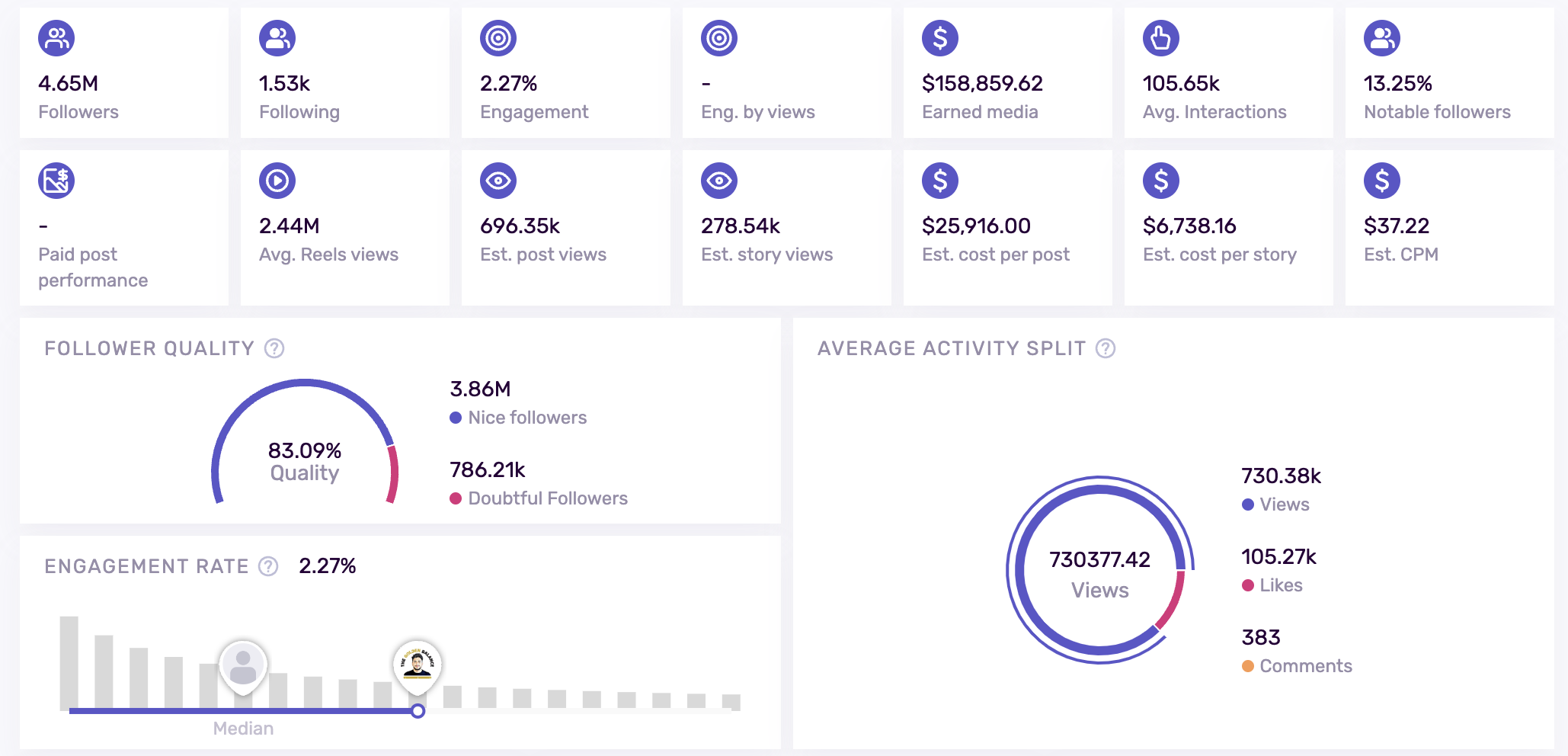
While this tool is more commonly used during the discovery process, the insights you gained from this analysis can be instrumental for your outreach personalization. For example, data such as brand alignment, audience demographics, niche, most used hashtags or keywords, etc., can inform you about the influencer’s values and content direction beyond what a quick overview provides. Additionally, reviewing past content and engagement rates can help you pluck out high-performing content that aligns with your campaign.
Before crafting that outreach DM, you can analyze an influencer’s profile on platforms like Influencity, which lets you categorize an influencer’s content into segments such as ‘popular’ and ‘sponsored’.
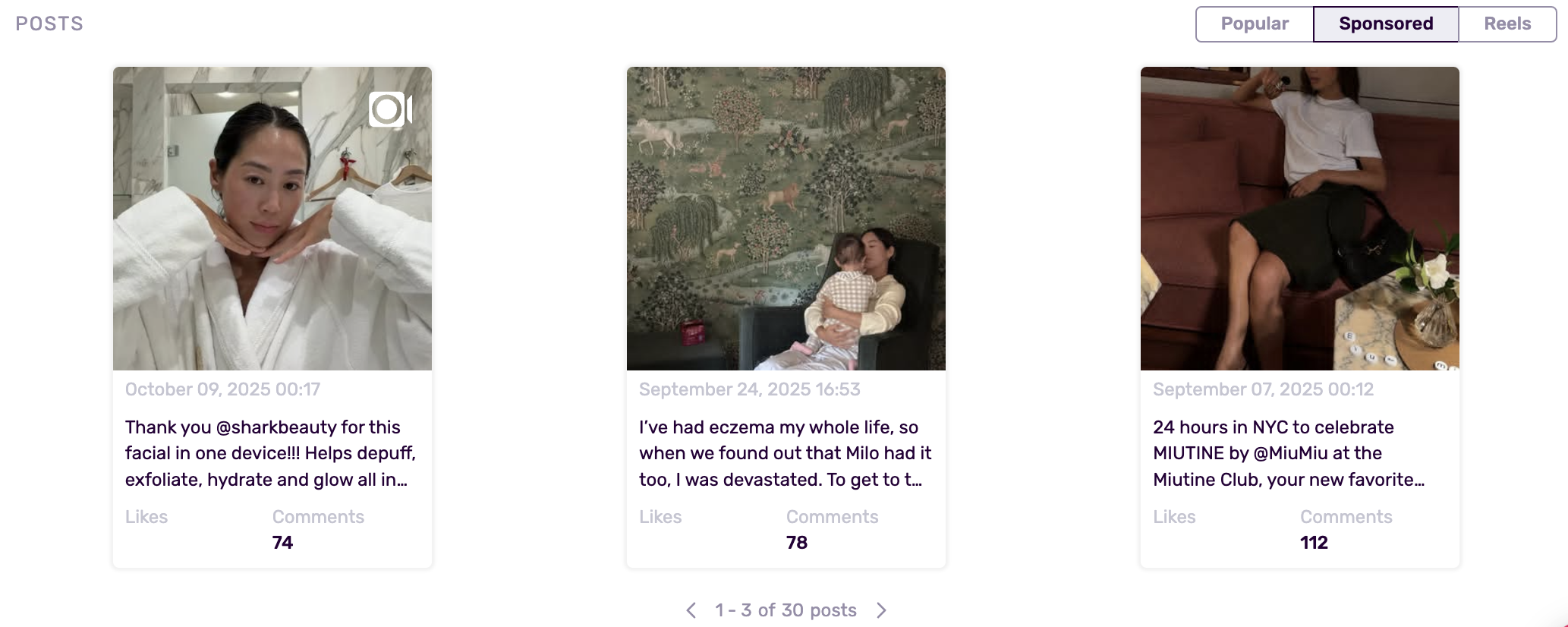
Instead of manually going through an influencer’s profile from top to bottom, you can use these tabs to quickly pick out a piece of content that best aligns with your brand goals.
For instance, say you’re a fashion brand looking to collaborate with someone like Kaci Jay. You run a profile analysis, and the ‘sponsored’ tab shows you her recent collaboration with H&M. You can mention this post in your outreach DM as a link to introduce your brand.
To illustrate, a more personalized outreach message would read something like:
“Hey Kaci, my team and I came across your recent post for H&M. We loved how you styled that red jacket! You can never go wrong with a little pop of color.
I’m Gina from <brand name>, and that ‘bold, yet understated’ look is exactly what our brand is going for. So we think you’ll have a lot of fun styling our latest releases. Will you be interested in receiving something from our new collection?”
These tools can help you identify details that will take your personalization to the next level.
Now, moving on to the most important contribution these tech advancements have made, as far as communication goes:
By providing a single, robust repository for storing, accessing, and organizing all your influencer interactions, these digital hubs transform your confusing, scattered inboxes into structured logs, creating a streamlined communication network.
Influencity, for example, lets you consolidate all your social networks into a unified social hub. Instead of spreading your attention across multiple channels, you can use this smart social inbox to manage every interaction from a single platform.
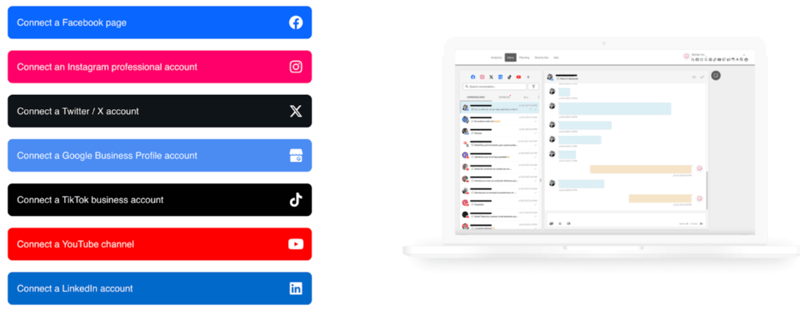
Staying on top of every message thread across all your social networks can be frustrating and risky. Say you have an ongoing interaction with one influencer on Instagram and are still waiting for another influencer on TikTok to respond, all while monitoring comments on Facebook. As you go back and forth across these platforms, switching and juggling every interaction, there’s a high chance something slips through the cracks. You miss a single time-sensitive message from a valuable prospect, and the deal is off; you’re set back an entire day’s worth of work and have to start all over again. This whole ordeal can be both frustrating and costly, which is why many experts avoid social media networks for those important conversations.
The resource to seamlessly manage tasks from a single internal portal is exactly what sets industry giants, such as WME and The Goat Agency, apart from amateur agencies. But developing your own proprietary software, as these pioneers did, requires a big budget, so how do smaller agencies keep up?
Here’s the good news: without developing your own in-house software, today’s agencies can easily access this technology through influencer marketing platforms.
In addition to providing a unified platform for your cross-channel social network management, these centralized hubs offer tons of handy tools to streamline your communication workflow.
Tired of answering the same question multiple times a day? From customer queries to collaboration pitches or questions regarding your brand identity, the ‘saved replies’ feature takes away the need to repeatedly craft a new message for frequently asked questions.
With regard to influencer communication in particular, here’s one instance where this feature can help: Just as brands or agencies always vet influencers before adding them to their rosters, influencers must also vet these prospects before agreeing to a partnership. Hence, they will ask plenty of questions during the initial contact stage. So, storing pre-written replies to questions an influencer might have (such as your brand values or product details) can significantly ease the onboarding process.
As someone who used to manage a brand’s social media without the help of smart management software, I had to spend many hours extracting tasks from inboxes. I’d encounter a task that falls within someone else's purview, switch to a different channel to delegate the task, then wait for updates or responses. This manual handoff system was not only time-intensive, but it also made the entire team’s workflow disjointed and inefficient.
On the other hand, the smart inbox that platforms like Influencity offer can serve as a digital workplace that your whole team can access. This eliminates the need to extract details into a separate log or use a different channel for task delegation. Assigning tasks, adding notes, and queueing messages for later can all be done within the platform itself.
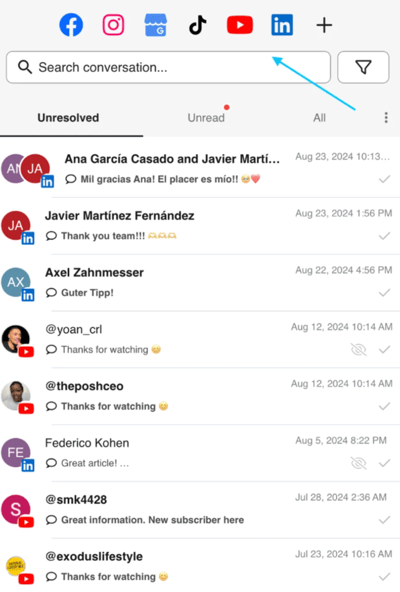
Got an influencer interaction someone else in your team needs to follow up on? Just assign them the task within the inbox itself without moving it to a separate task management software.
Without having to manually rummage through your different social networks, you can use the search bar to locate any interaction across multiple channels.
For the longest time, the influencer marketing industry has been asking the wrong question. Instead of debating on which channel to use, the focus should be on employing smarter systems to make any channel work. While the industry’s preference for emails might go away anytime soon, top brands and agencies are using advanced technology to assign the same level of professionalism to social media DMs. Hence, considering the tools available today, completely dismissing DMs as “unprofessional” or “risky” is no longer sensible.
While many experts consider emails as the most obvious, most professional choice, other communication channels can work just as effectively with the right tools. Since every channel offers its own set of perks, comparing your options based on personal preference, influencer type, or campaign type is the way to go.
Tracking and organizing your DMs across multiple social media platforms can be challenging. Without a unified platform for cross-channel communication management, there’s a higher chance of missed opportunities.
Leading agencies use centralized communication software to manage, organize, and track all their social media interactions in one place.
Centralized communication systems take away the need to juggle multiple social networks, allowing you to stay on top of every interaction and provide timely replies and follow-ups.
An influencer marketing software facilitates better, more efficient communication with your community of influencers by providing an end-to-end platform for all your interactions. From thorough analysis for in-depth influencer awareness to automated replies for seamless communication, these platforms allow you to foster close relationships with your influencers.






%20and%20How%20Can%20They%20Benefit%20Your%20Brand%20article.jpg?length=628&name=What%20Are%20Key%20Opinion%20Leaders%20(KOL)%20and%20How%20Can%20They%20Benefit%20Your%20Brand%20article.jpg)




.png?length=628&name=Pop-up%20image%201200%C3%97800@1x%20(1).png)