


Let’s get one thing straight right out of the gate. If you are selling a $100,000 enterprise software solution, a medical device, or a complex financial infrastructure, you do not need someone to do a trending dance pointing at floating text bubbles.
You need someone who speaks the language of the buyer. You need trust. You need a Key Opinion Leader.
I spend my days building narratives that translate complexity into language buyers actually trust. Over the past few years, the B2B marketing world has finally woken up to the reality that people buy from people, not faceless corporate logos. But in their rush to adopt influencer marketing, many brands are trying to cut a steak with a spoon. They are using the wrong tool for the job.
They are treating B2B thought leadership like a fast-fashion campaign. They are chasing vanity metrics, follower counts, and loud megaphones when what they actually need is a microscope, deep credibility, and professional influence.
Today, we are going to dissect the anatomy of KOLs vs. Influencers, specifically looking at how the Key Opinion Leader functions in the high-end B2B market. We will break down real-world examples, explore the data, and give you a playbook for how to approach industry experts who, let’s be honest, probably make more money in their day job than you do in yours.
To understand the difference, you need to look at the genesis of their audience.
An influencer earns their influence by building a highly engaged audience through content. They are master storytellers, trendsetters, and entertainers. Their audience follows them for who they are and how they make them feel. Their currency is relatability and reach. If an influencer tells you they love a new coffee brand, you buy it because you want a slice of their lifestyle.
A Key Opinion Leader (KOL) earns their influence in the trenches. They are practitioners, founders, researchers, or executives who have built undeniable domain expertise. Their audience follows them for what they know. Their currency is authority, credentials, and track record. If a KOL tells you a specific cybersecurity protocol is the best in the market, you buy it because you trust their professional judgment, not because you want their lifestyle.
An influencer entertains. A KOL educates.
In B2B marketing, the distinction is the difference between a campaign that generates a fleeting spike in website traffic and a campaign that drives pipeline, accelerates sales cycles, and positions your brand as the definitive market leader.
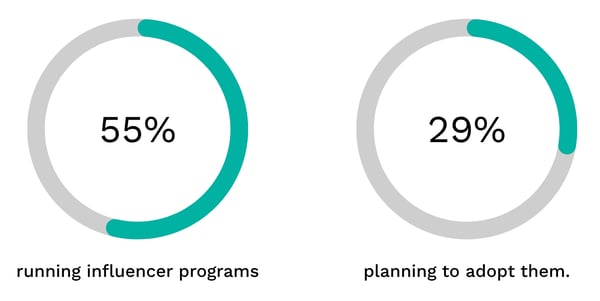
Over 55% of B2B marketers are already running influencer programs, with another 29% planning to adopt them.
B2B brands are realising that traditional paid media is getting noisier and more expensive, while buyer trust in corporate advertising is hitting absolute rock bottom. Buyers are retreating into dark social, private communities, Slack channels, and niche LinkedIn feeds, to ask their peers what to buy.
In this scene, the Key Opinion Leader is the ultimate Trojan Horse. They already live inside those trusted communities. They already have the ear of your ideal buyer.
To really grasp how these two archetypes operate, let's put them side-by-side in the same industries. You will see immediately why matching the right creator to the right objective is the only way to win.
A wellness and lifestyle creator with 500,000 followers on Instagram and TikTok. They post beautifully lit morning routines, matcha lattes, and "day in the life" vlogs. A consumer healthcare brand partners with them to promote a new over-the-counter vitamin gummy. The result? Massive brand awareness, a surge in impulse purchases via affiliate links, and a spike in social media engagement.
Look at the following example. The influencer Melissa Wood-Tepperberg (@melissawoodhealth) with over a 1M+ Instagram followers, who is a wellness entrepreneur known for morning routines, healthy recipes, supplements, mindfulness, and lifestyle content does campaigns with consumer health brands like OLLY, Nature Made, or Garden of Life to feature a new vitamin gummy as part of her morning wellness routine.
This resulted in massive consumer awareness, strong engagement, and increased direct-to-consumer sales through affiliate links and creator codes.
Other strong influencer alternatives
Think of a board-certified dermatologist and clinical researcher who runs a modest but highly respected Substack and LinkedIn presence followed primarily by other medical professionals and highly educated skincare formulators.
A medical-grade skincare brand or pharma company partners with them to break down the clinical trial data of a newly patented active ingredient. This normally results in deep validation. When this KOL speaks, medical spas and dermatological clinics update their procurement lists. The audience is smaller, but the purchasing power is astronomical.
For instance, Dr. Teo Wan Lin, who is a board-certified dermatologist, clinical researcher and founder of TWL Specialist Skin & Laser Centre. He publishes evidence-based dermatology content on LinkedIn and her Substack, The Skin Research Institute. Her audience includes dermatologists, cosmetic physicians, skincare chemists, and formulators.
A medical-grade skincare company launches a new peptide technology and partners with Dr. Teo Wan Lin to explain the published clinical evidence, mechanism of action, and comparative efficacy. Later on, this campaign helped the brand gain respect and recognition from dermatologists, aesthetic clinics, and medical spas, accelerating professional adoption despite the relatively small audience.
Other KOL alternatives
A tech bro gadget reviewer on YouTube. They have a massive studio, 4K cameras, and they do hyper-energetic unboxing videos of the latest laptops, smart home devices, and consumer software.
A project management tool pays for a 60-second ad integration at the start of a video and it results in high top-of-funnel visibility. Thousands of free-tier signups from freelancers and students.
Have you heard of Ali Abdaal? He’s 6M+ YouTube subscribers and is a productivity creator trusted by entrepreneurs, students, freelancers and knowledge workers.
He normally collaborates with Notion, ClickUp, or Grammarly sponsors a video on building the ultimate productivity system. Thanks to his exposure these brands gain millions of impressions, tens of thousands of free trials, and strong affiliate-driven customer acquisition.
Other influencer alternatives
Typically a veteran DevOps Architect or Chief Technology Officer (CTO) who writes dense, analytical threads on X (formerly Twitter) and LinkedIn about infrastructure scaling, cloud security, and system tradeoffs.
A potential collab could be an enterprise cloud security startup that invites them to co-author a whitepaper and host a live, unscripted webinar analyzing a recent high-profile data breach.
This action typically earns them Institutional trust. The people watching this webinar are Chief Information Security Officers (CISOs) holding million-dollar budgets. When the KOL validates the startup's approach, it fundamentally de-risks the purchase for enterprise buyers.
A good illustration of B2B Tech KOL is Martin Fowler, Chief Scientist at Thoughtworks. He’s one of the world's most influential software architects and author of Refactoring and numerous foundational articles on software engineering. His audience primarily consists of CTOs, software architects, engineering leaders, and senior developers.
Multiple DevOps or software architecture platform partner with Martin Fowler to publish a technical paper or participate in a webinar discussing modern software delivery and architectural best practices.
These actions engineering leaders trust the recommendation, enterprise evaluations accelerate, and inclusion on procurement shortlists becomes more likely.
Other excellent KOLs
This is the personal finance lifestyle creator. They make fast-paced short-form videos about side hustles, budgeting apps, and basic stock market investing.
A common collaboration for this type of influencer could be a retail investing app that sponsors a series of posts to drive app downloads, gaining a flood of new retail accounts with low average balances.
Humphrey Yang, with 1M+ YouTube subscribers and a large TikTok following, who is a former financial advisor turned creator fits this description. He covers budgeting, investing, credit cards, ETFs, taxes, and personal finance in accessible, short-form content.
Retail investing platforms like Robinhood, Public, eToro, or Webull sponsors a series of videos demonstrating how easy it is to start investing with fractional shares and automated portfolios.
The impact was brutal, it gained a truly strong brand awareness, a surge in app downloads, and thousands of new retail accounts, many from first-time investors with relatively small balances.
Other strong influencer alternatives
Think of a former Wall Street compliance officer or a seasoned CFO who publishes a weekly newsletter on regulatory shifts, procurement mechanics, and macroeconomic trends.
A B2B spend-management platform sponsors their newsletter and works with them to create a diagnostic tool for financial teams. This type of partnerships commonly result in direct pipeline generation. The audience consists of decision-makers actively looking for ways to streamline corporate spend.
Theodora (Theo) Lau, founder of Unconventional Ventures is an outstanding example. She’s one of the most respected voices in fintech and digital banking. She’s a multiple book author and keynote speaker who publishes regular insights on financial innovation, regulation, payments, and enterprise transformation via LinkedIn and newsletters.
Her audience includes banking executives, fintech founders, CFOs, and financial services leaders.
She’s sponsored by B2B spend-management platforms such as Ramp, Brex, Airbase, or Coupa on Lau's newsletter and collaborates with her on a benchmarking report or CFO diagnostic assessing spend efficiency and financial operations maturity.
In a nutshell, she provides high-quality enterprise leads from finance leaders actively evaluating tools to modernize corporate spend management. Rather than generating downloads, the partnership influences vendor shortlists and procurement conversations.
Other excellent KOL alternatives
If you are building a strategy to harness professional influence, you need to know exactly what you are buying. Here is the operational blueprint.
|
Strategic Element |
The Influencer |
The Key Opinion Leader (KOL) |
|
Primary Asset |
Reach, aesthetics, personality, and scale. |
Expertise, credibility, resume, and peer respect. |
|
Audience Profile |
Broad, demographic-based (e.g., Millennials interested in travel). |
Niche, role-based (e.g., Supply Chain Directors in Europe). |
|
Funnel Impact |
Top of funnel (Awareness, discovery, impulse buying). |
Middle to Bottom of funnel (Consideration, validation, enterprise sales). |
|
Content Style |
Highly polished, trend-driven, entertaining, fast-paced. |
Deep, analytical, text-heavy, pragmatic, often contrarian. |
|
Trust Mechanism |
Parasocial relationship ("I feel like I know them"). |
Professional reliance ("They know how to solve my business problem"). |
|
Primary Platforms |
TikTok, Instagram, YouTube. |
LinkedIn, Substack, specialized podcasts, GitHub, industry panels. |
There is a time and place for both. The mistake is asking one to do the job of the other. If you map your marketing objectives against the creator's natural habitat, the system works beautifully.
Yes, there is room for general influencers in the B2B space, provided your product has a broad addressable market (like a freemium productivity app, a basic CRM, or a graphic design tool).
This is where the real revenue is made. KOLs are your heavy artillery for complex sales.
Overcoming Buying Objections: If your sales team is constantly losing deals because buyers are afraid of the implementation process, partner with a KOL who specializes in operations. Have them document exactly how they would implement your tool in 30 days. You aren't selling; the KOL is teaching.
This is where most marketers fall flat on their faces. If you are reaching out to a lifestyle influencer, the transaction is usually straightforward. You send a brief, you negotiate a rate, you approve the content, and you hit publish.
Approaching a KOL requires an entirely different mental model. Remember: this person is likely a VP, a Founder, or a distinguished engineer. They do not need your $1,000 flat fee. They are not looking for collabs. Their primary asset is their reputation, and they will guard it fiercely because it is the foundation of their actual career.
If you treat a KOL like any other type of influencer, they will ignore your email. If you try to hand them a heavily PR-scrubbed script, they will laugh you out of the room. Here is the playbook for engaging industry experts.
KOLs are systemic thinkers. They have strong opinions about where their industry is broken and how it needs to be fixed. Your job is not to ask them to read your value proposition. Your job is to find the intersection between their worldview and your product's solution.
The Wrong Approach: "Hi Sarah, we love your posts about supply chain logistics! We will pay you $2,000 to post these three bullet points about our new tracking software."
The Right Approach: "Hi Sarah, we saw your recent thread about how legacy ERP systems are causing blind spots in last-mile delivery. We completely agree. We built a tool specifically to solve that blind spot, and we'd love to give you a sandbox account. If you think it actually solves the problem, we'd like to sponsor a deep-dive teardown of how you would integrate it into a modern tech stack."
You are inviting them to be an analyst, not a spokesperson.

A true KOL will not just smile and nod. If your product has flaws, they will see them. If your messaging is fluffy, they will call it out. Embrace this. The reason their audience trusts them is precisely because they are rigorous and objective.
If a KOL says, "Your tool is great for mid-market, but it breaks at enterprise scale," do not panic. Let them say that. When they publish a piece saying, "This is the absolute best tool on the market for teams under 500 people," the trust they build with that specific segment is unbreakable. Nuance and limitations breed credibility. Perfection breeds suspicion.
While money is a factor, KOLs are heavily motivated by legacy, networking, and thought leadership positioning. You can win them over by offering things money can't buy:
You are building a peer-to-peer partnership, not an employer-employee dynamic.
So, how do you actually find these people?
This is the operational bottleneck that kills most B2B influencer programs before they even start. If you use standard influencer marketing tools, you are going to be searching by keywords like software or healthcare. The platform is going to spit back thousands of lifestyle creators who happen to use a laptop or drink green juice. You will drown in vanity metrics.
You don't want someone who likes technology. You want the person who builds it. This is where you have to stop searching by interests and start searching by credentials. Within Influencity, this is why we built Bio Search. We designed it for this exact reality.
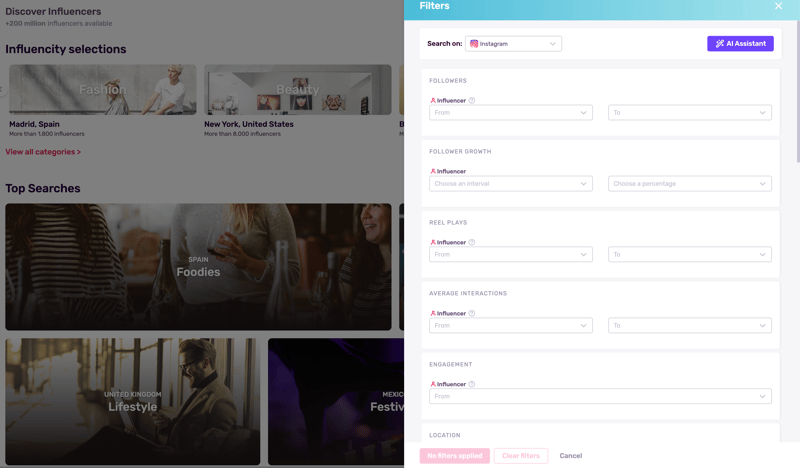
Instead of looking for broad topics, you use Bio Search to scan the actual biographies and professional headlines of millions of profiles. You search for exact phrases: "PhD," "MD," "Chief Technical Officer," "Founder," "RevOps," "Two-time exit."
You are actively filtering out the noise of the creator economy to isolate the signal of professional influence. You can cross-reference a "VP of Sales" bio with their geographic location and their audience demographics. Suddenly, you aren't looking at a list of influencers; you are looking at a curated board of advisors, industry titans, and domain experts who hold the keys to your exact target market.

You find the people who actually move the needle, rather than the people who just make a lot of noise.
We are living in an era of infinite content and zero trust. The brands that win the B2B space will be the brands that realise influence is not a commodity you can buy by the pound. Influence is a transfer of trust.
When you partner with a Key Opinion Leader, you are borrowing their brain. You are aligning your solution with their years of hard-fought industry credibility. You are stepping out of the vendor category and into the partner category.







%20and%20How%20Can%20They%20Benefit%20Your%20Brand%20article.jpg?length=628&name=What%20Are%20Key%20Opinion%20Leaders%20(KOL)%20and%20How%20Can%20They%20Benefit%20Your%20Brand%20article.jpg)


.png?length=628&name=Pop-up%20image%201200%C3%97800@1x%20(1).png)