

As the digital scene becomes increasingly saturated with AI content, consumer trust has emerged as the ultimate competitive advantage. The era of executing influencer marketing through intuition, disconnected spreadsheets, and superficial metrics has decisively ended.
Today, brands and agencies' marketing teams evaluating influencer marketing platforms require sophisticated AI influencer analytics to pierce through the noise, validate authentic audiences, and drive measurable business growth. The market demands structured systems capable of executing flawless creator performance tracking, comprehensive campaign ROI analysis, and centralized brand partnership management.
The most pervasive hurdles in current marketing campaigns such as identifying aligned talent, detecting fraudulent audiences, mitigating content fatigue, and curbing escalating operational costs, can no longer be managed through fragmented, manual workflows. When campaigns scale across dozens of creators, platforms, and geographic markets, the reliance on manual tracking inevitably leads to missed deadlines, inconsistent brand messaging, and a phenomenon known as spreadsheet burnout. For agencies, this administrative strain acts as a silent margin killer, transforming what should be a highly profitable growth channel into an operational liability.
To face this complexity, marketers must transition to the incorporation of influencer marketing tools that function as unified operating systems. The analysis below provides a skimmable, yet exhaustively detailed comparison of the nine premier AI influencer analytics tools available to brands today.
Before dissecting the specific capabilities of individual platforms, it is critical to understand the technological shift driving the creator economy. AI influencer analytics tools perform functions that extend far beyond aggregating likes and follower counts. They deploy advanced machine learning algorithms to evaluate audience authenticity, detect engagement pods, forecast campaign outcomes, measure return on investment, and integrate earned media data with broader corporate marketing stacks.

The industry has moved unequivocally to hard attribution. Evaluating engagement rates and comment quality is paramount, as follower counts frequently provide a highly distorted view of actual market influence. Virtual influencers and artificially inflated follower bases require brands to use platforms capable of deep audience intelligence and fraud detection. Furthermore, the integration of generative AI into these influencer marketing tools has fundamentally streamlined operations, automating outreach, brief generation, and predictive performance scoring, thereby allowing human teams to focus on relationship building and strategic execution.
The following nine platforms represent the vanguard of brand partnership management and AI influencer analytics. They have been rigorously evaluated on their data depth, workflow automation, e-commerce integrations, and capacity to track complex, multi-tiered campaigns.
For mid-market brands, global enterprises, and agile agencies seeking an end-to-end operational hub, Influencity stands out as the most comprehensive and strategically dominant solution on the market. While legacy databases merely function as search engines, Influencity works as a complete operating system designed to manage both earned and owned media, bridging the gap between external creator partnerships and internal social media analytics.
At its core, Influencity boasts a formidable database of over 350million global creators across Instagram, TikTok, YouTube, and Twitch. However, the platform's true differentiator lies in its analytical depth. The platform leverages a highly intuitive AI Assistant that enables marketers to search for creators using natural language queries, thereby bypassing cumbersome manual filters. Furthermore, Influencity’s audience quality analysis is exceptionally rigorous, going beyond surface-level metrics to evaluate granular demographics, engagement patterns, and audience credibility.
.webp?width=5760&height=3600&name=influencer-discover-hero-image-composition%20(1).webp)
A standout capability that elevates Influencity above its peers is its proprietary Audience Overlap Analysis. This sophisticated feature calculates the percentage of unique versus shared followers across a curated list of creators. Strategically, this empowers brands to tailor their campaign ROI analysis with surgical precision. If the objective is rapid customer acquisition and maximum unique reach, marketers can filter out overlapping audiences to prevent budget waste. Conversely, if the strategic goal is brand awareness or product launch saturation, identifying clusters of creators with high audience overlap allows marketers to create a halo effect, surrounding a target demographic with repeated, trusted brand exposures.
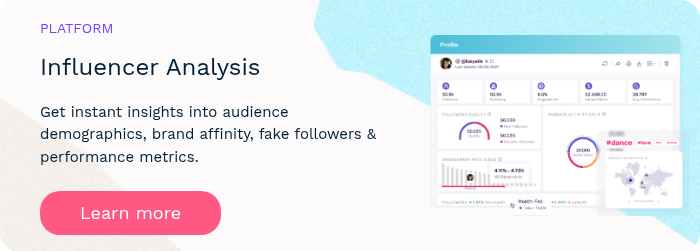
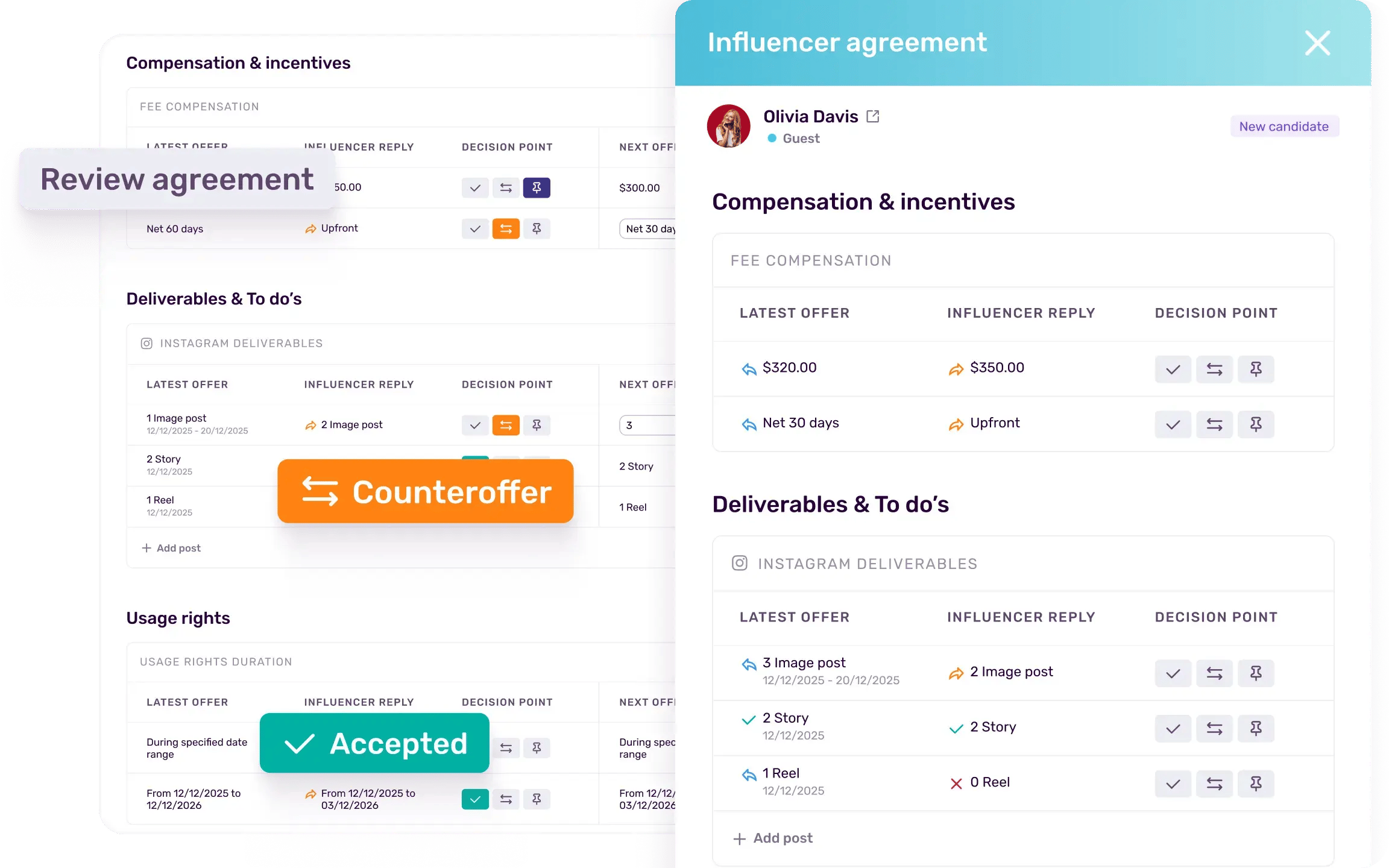
On another cue, Influencity’s Influencer Relationship Management (IRM) system functions as a specialized CRM for creator partnerships, centralizing contact information, communication history, price tracking, and performance data into a single, automated workspace. Plus, the campaign management product allows teams to run casting calls, manage deliverables, and track real-time post performance, including ephemeral content like Instagram Stories, without requiring influencers to explicitly opt-in or authenticate their accounts.
Where Influencity truly eclipses its competitors is through its integrated Social Hub. Recognising that modern brands manage their own social presence alongside influencer activations, Influencity provides an all-in-one social media inbox, content planner, and cross-channel analytics suite.
/EN/home-alternating-contents-social-hub-image-composition-all-social-network-supported%20OPT.webp?width=2304&height=1440&name=home-alternating-contents-social-hub-image-composition-all-social-network-supported%20OPT.webp)
Teams can moderate comments, schedule a month's worth of content across nine different channels, and utilize AI to generate post copy, all within the same platform used to manage creator relationships. This consolidation of influencer marketing tools and social media management ensures total brand alignment and massive operational cost savings. Despite its enterprise-grade capabilities, Influencity maintains highly accessible pricing, starting at $168 per month, making it an unrivaled choice for both growing brands and established agencies.
CreatorIQ is a solution tailored specifically for global enterprises and Fortune 500 brands. It is engineered for strict governance, and deep integration into existing enterprise technology stacks.
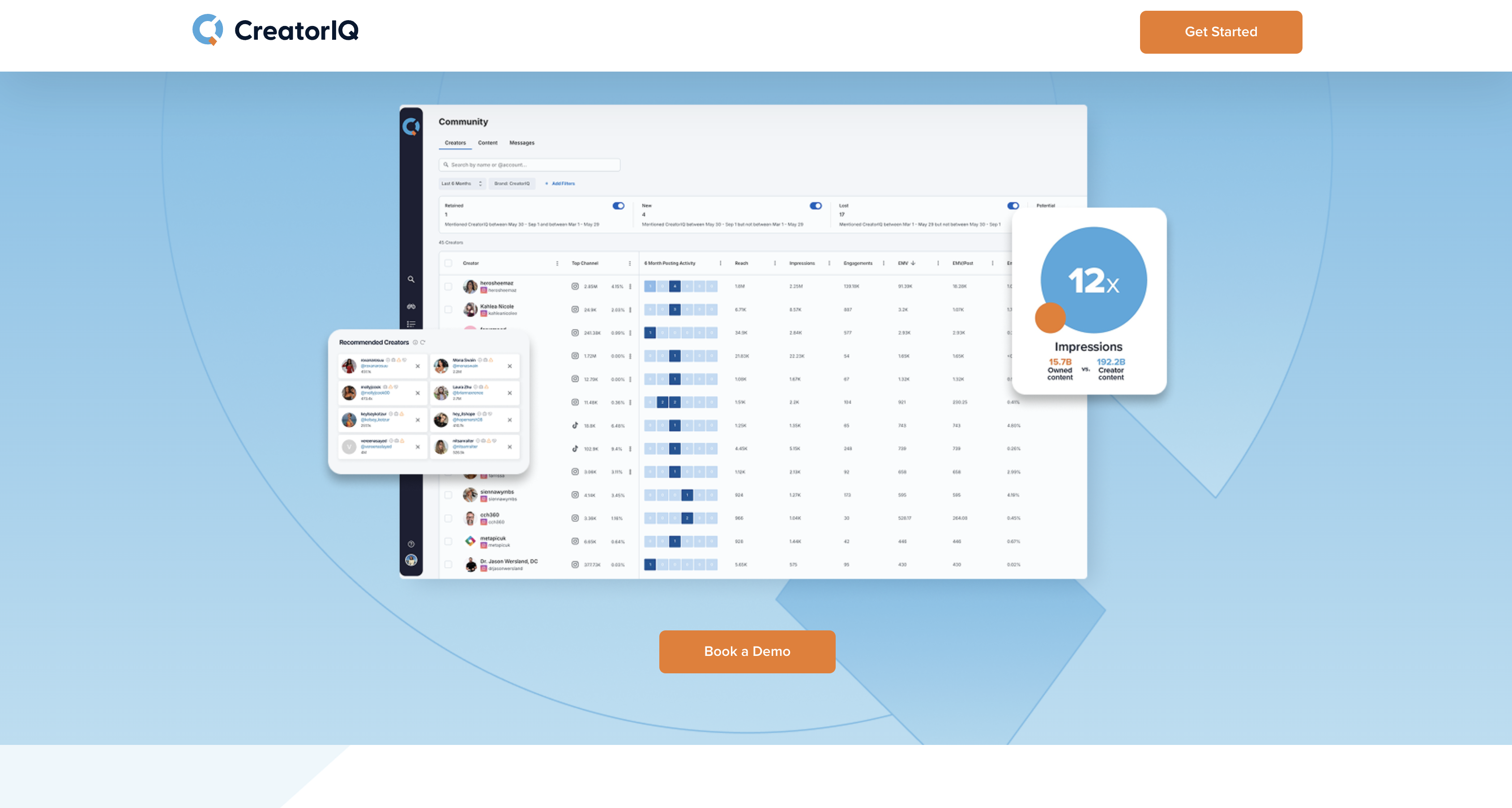
The platform is powered by its proprietary "Creator Graph," an intelligence infrastructure that adapts and evolves to power sustained corporate growth. CreatorIQ utilizes AI for predictive analytics, forecasting campaign performance based on vast troves of historical data.

For multinational corporations, brand safety is a non-negotiable requirement. CreatorIQ addresses this through SafeIQ, a multimodal brand safety infrastructure that scans years of historical content to protect brand reputation. Yet, Influencity takes a broader, multi-dimensional approach to brand safety through a three-layer intelligence framework that evaluates content, audience, and creator. This allows brands to assess not only how content performs, but also whether a creator's audience is authentic and aligned with campaign goals, and whether the creator's history, values, and behavior present any reputational risks. Rather than relying on a single composite score, Influencity gives teams granular insights to make more informed partnership decisions.
While CreatorIQ offers governance and predictive insights, its complexity and cost present steep barriers to entry. Pricing is strictly custom and highly premium, often exceeding $30,000 annually, and the platform requires a dedicated team and a lengthy implementation process. It is overwhelmingly suited for large organizations with complex compliance requirements rather than agile e-commerce brands requiring rapid deployment.
Upfluence has carved out a niche by merging influencer marketing with performance-based affiliate tracking. It is designed for brands that require direct attribution from creator content to the checkout cart, prioritizing measurable sales over pure brand awareness.
Upfluence is integrated with e-commerce ecosystems like Shopify, WooCommerce, and Amazon. This allows brands to generate unique promo codes at scale, direct traffic to Amazon listings, and track Cost of Goods Sold (COGS).
Yet, lots of clients are unhappy about the platform management and their shady pricing.
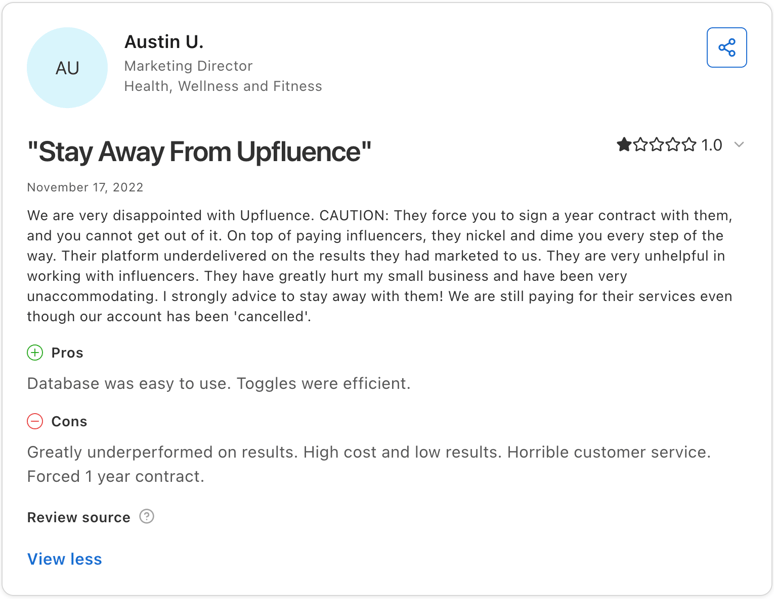
Upfluence's intensive focus on e-commerce workflows means its general campaign execution features and owned social media functionalities are less comprehensive than those found in end-to-end platforms like Influencity. It is a tool for driving and measuring direct sales and affiliate payouts, but may feel limiting for teams focused heavily on broad brand-awareness or complex PR initiatives.
HypeAuditor functions less as a traditional campaign execution platform and more as the industry standard for vetting, fraud detection, and audience intelligence.
HypeAuditor’s defining feature is its machine-learning-based fraud detection model, which analyses patterns to detect fake followers, engagement pods, and suspicious growth spikes. The platform assigns each creator an Audience Quality Score (AQS) or Channel Quality Score (CQS).
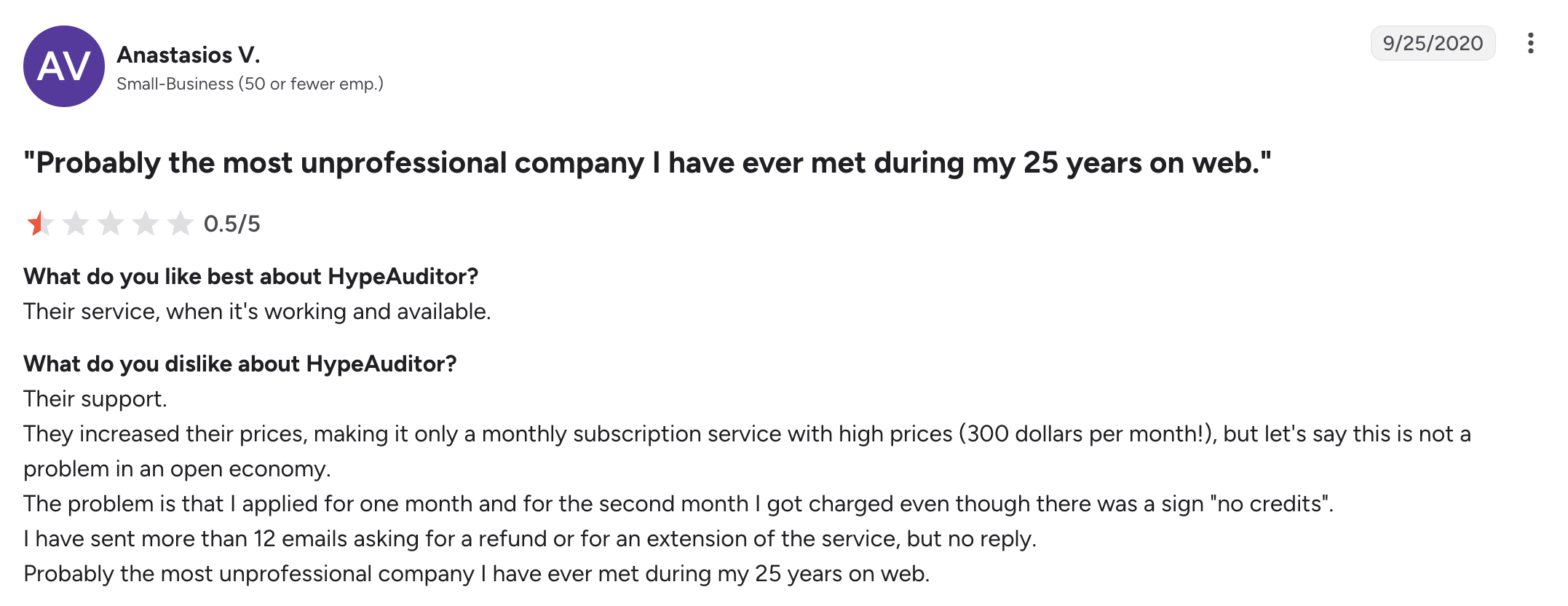
However, HypeAuditor operates on a usage-based model where costs escalate as users require more searches or unlock advanced filters. While its analytics are good, its campaign management, CRM, and automated outreach tools are relatively basic compared to workflow-centric platforms. It is best deployed as an intelligence layer rather than a central campaign execution hub.
Traackr developed the Brand Vitality Score (VIT). This proprietary algorithmic metric synthesizes visibility, engagement, and brand trust into an actionable score. This allows executives to benchmark performance against competitors, identify which creators and formats are building real brand equity, and execute sophisticated campaign ROI analysis.
Because Traackr is a premium, full-service platform that requires significant investment and guided onboarding, it is primarily an executive-level tool that demands operational maturity from its users.
GRIN is purpose-built for Direct-to-Consumer (DTC) brands focused heavily on building long-term ambassador programs and executing product seeding campaigns at scale. It approaches brand partnership management strictly through the lens of relationship building and e-commerce logistics.
The platform is integrated with Shopify, allowing brands to automate product fulfillment, track inventory, and seamlessly manage high-volume gifting campaigns without manual data entry.
However, GRIN is an expensive solution that typically requires high annual commitments, making it less suitable for agile startups. Furthermore, its reliance on external email integrations like Gmail and Outlook means it lacks the unified internal messaging and owned social management systems found in platforms like Influencity.
For teams prioritising discovery pools, and self-serve functionality Modash is a decent solution. It provides access to a database of over 350 million profiles across Instagram, TikTok, and YouTube.
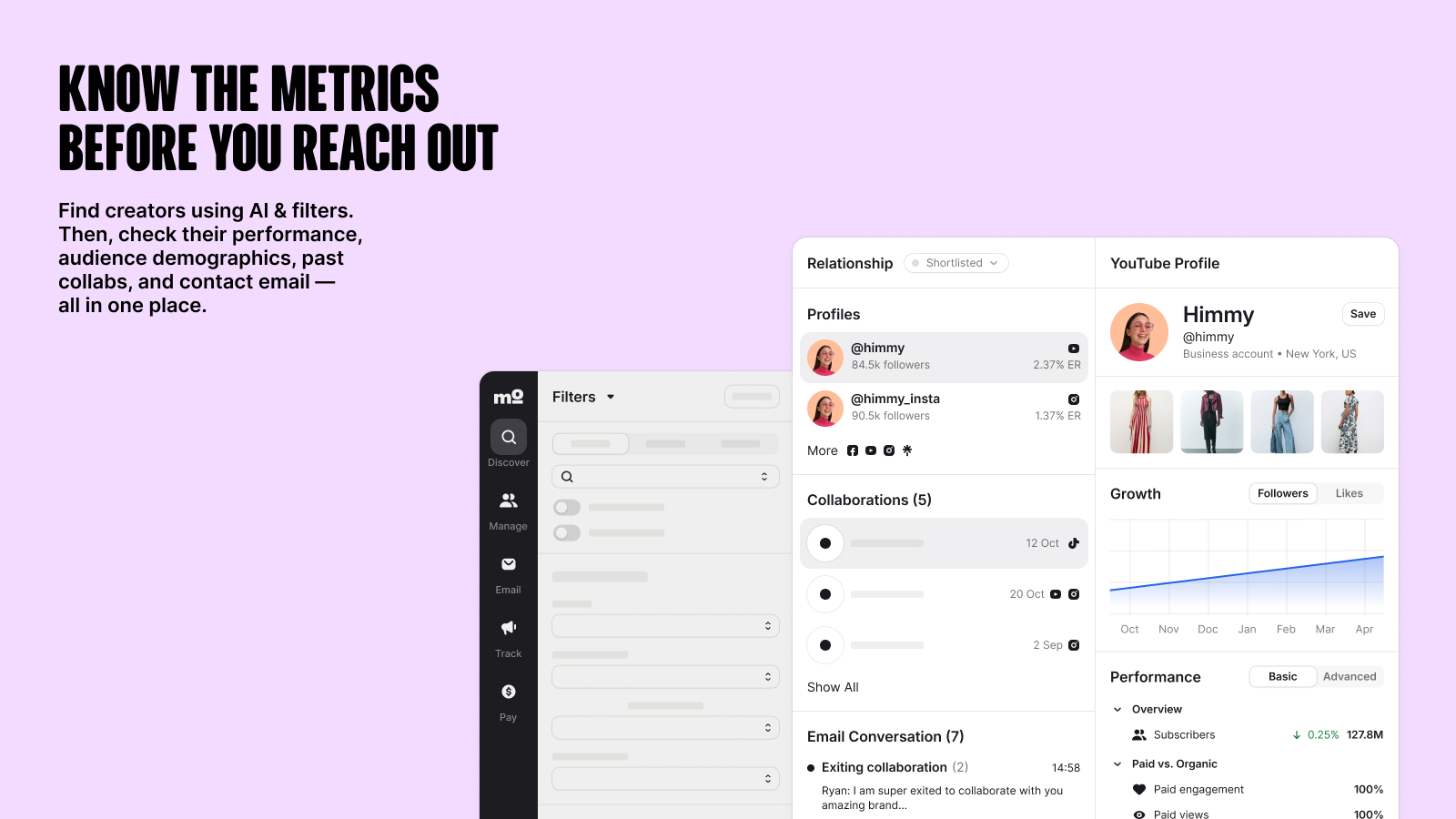
Modash automates public contact data extraction and supports bulk email outreach, similar to Influencity. Now, while Modash is good at top-of-funnel discovery, it lacks the deep CRM functionalities, predictive ROI modeling, and owned social media analytics required for complex, multi-tiered enterprise programs.
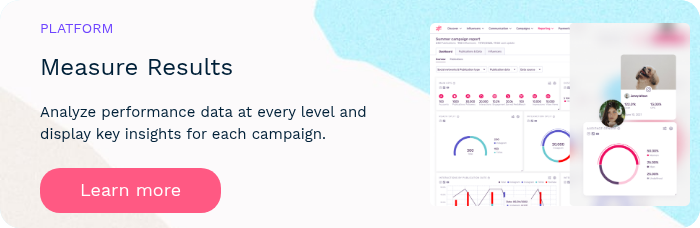
Aspire offers brand partnership management by combining traditional outbound discovery tools with an inbound creator marketplace.
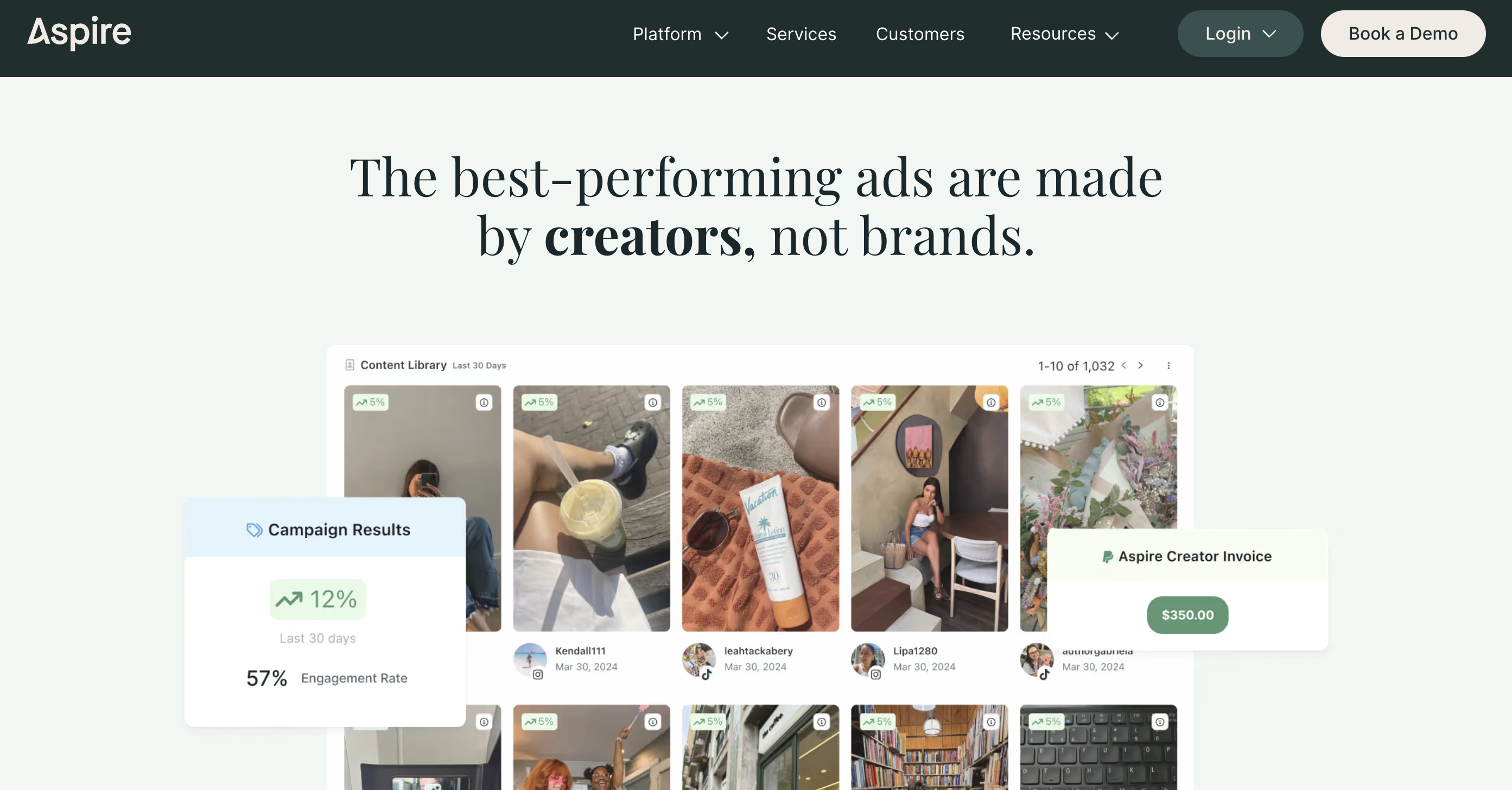
Aspire allows brands to post specific campaign briefs to its marketplace, inviting interested and authenticated creators to apply directly. Aspire allows teams to seed products to creators and track content.
Aspire features Shopify integrations for automated product seeding. And, because Aspire is a premium platform starting around $2,000 per month and requiring vendor-guided onboarding, it is best suited for mid-market brands fully committed to scaling their creator investments.
Affable.ai, a Singapore-based platform, has tailored a creator discovery and performance tracking tool within the Asia-Pacific (APAC) region.
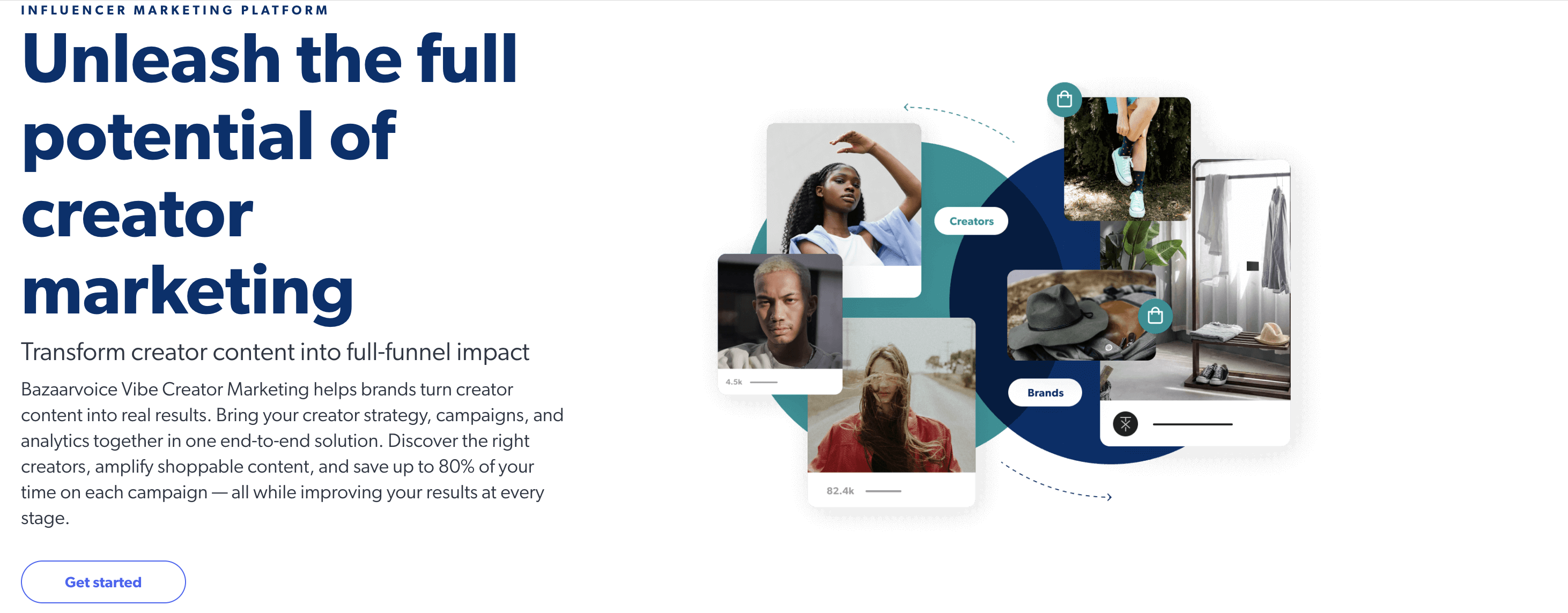
Affable.ai provides multilingual support, analyzing creator content, captions, and audience sentiment across diverse regional languages.
The platform delivers deep audience demographics and AI-driven fake follower detection. Multinational brands operating globally often find that Affable.ai's creator coverage and platform polish in Western markets lag behind global competitors, sometimes necessitating a dual-platform strategy where Affable.ai covers the APAC region while another platform handles North America and Europe.
To synthesize the vast capabilities of these AI influencer analytics tools, the following structured comparisons outline core technical proficiencies, target markets, and foundational AI innovations.
|
Platform |
Core Strength & Strategic Fit |
Key AI Innovation |
|
Influencity |
Complete all-in-one OS merging IRM, deep analytics, and owned Social Hub management. |
Natural language search, automated audience overlap analysis, fake follower detection. |
|
CreatorIQ |
Global governance, brand safety |
SafeIQ multimodal brand safety. |
|
Upfluence |
E-commerce integration, affiliate marketing |
customer-to-creator social matching |
|
HypeAuditor |
Audience validation, and market benchmarking |
ML-based Audience Quality Score (AQS) analyzing 50+ patterns. |
|
Traackr |
Market benchmarking, and data structuring |
Brand Vitality Score (VIT) |
|
GRIN |
Influencer relationship building and DTC product seeding |
Gia AI for proactive creator vetting |
|
Modash |
Self-serve functionality |
Visual search and profile reporting |
|
Aspire |
Inbound creator marketplace combined with automated ad boosting workflows |
Image recognition AI for aesthetic matching |
|
Affable.ai |
Analytical depth in the APAC creator scene |
Regional content analysis |
|
Feature Set |
Influencity |
CreatorIQ |
GRIN |
Upfluence |
HypeAuditor |
Modash |
|
Database Size |
350M+ |
19Millions (Vetted) |
190M+ |
14M+ (Vetted) |
227M+ |
350M+ |
|
Owned Social Hub |
Yes (Inbox, Planner, Ads) |
No |
No |
No |
No |
No |
|
Overlap Analysis |
Yes |
Yes |
No |
Yes |
No |
No |
|
Fraud Detection |
High |
High |
Moderate |
Moderate |
High |
High |
|
E-Commerce Sync |
High (Shopify) |
Moderate |
High (Shopify) |
High (Shopify/Amazon) |
Low |
Moderate |
Investing in AI influencer analytics tools is only the preliminary step, extracting measurable business value requires strategic deployment aligned with specific campaign typologies.
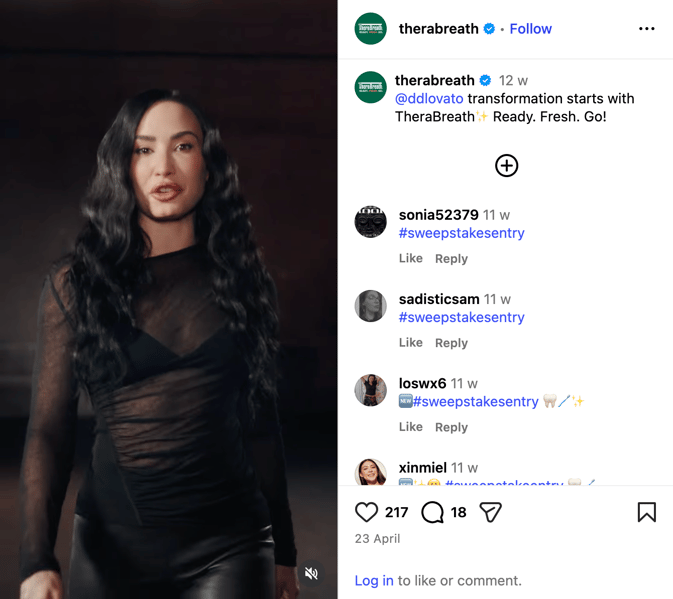
The data reveals that brands rely on two primary campaign structures: sponsored content campaigns and product seeding initiatives. Sponsored content campaigns, such as Therabreath’s natural integration into Demi Lovato’s lifestyle content, or Expedia’s global travel livestream sponsorship with IShowSpeed, require rigorous upfront vetting, contract management, and precise audience alignment.
In contrast, product seeding campaigns, like Rhode Skin’s massive distribution of its Pocket Blush collection to creators in exchange for organic exposure, require high-volume logistics, automated address collection, and automated content capture.

Marketing teams must select platforms that align with these execution realities. If a brand is executing massive product seeding, platforms heavily integrated with Shopify, such as Influencity, provide the necessary logistical backbone. However, if the goal is broad brand awareness, intricate audience targeting, and holistic social media management, a platform like Influencity becomes indispensable.
The reliance on manual tracking systems presents severe operational bottlenecks. As campaigns expand, the administrative burden of chasing deliverables, verifying FTC compliance disclosures, capturing ephemeral content before it expires, and processing international payments compounds geometrically. If an agency must hire a new coordinator for every ten new influencers added to the roster, the business is scaling its headcount rather than its efficiency, eroding profit margins.
/campaign-reports-hero-image-composition-content-tracking-reports%20OPT.webp?width=2304&height=1440&name=campaign-reports-hero-image-composition-content-tracking-reports%20OPT.webp)
Platforms equipped with robust CRM features mitigate this by establishing a centralised system of record. Through automating the capture of content without requiring creator opt-in, teams can decouple campaign volume from administrative payroll hours, thereby protecting margins and preventing team burnout.
Historically, audience overlap was viewed strictly as a negative metric,a sign of wasted budget on redundant impressions. However, advanced overlap analysis tools provide a much more nuanced utility. If a brand's goal is rapid customer acquisition and maximum unique reach, tools must be used to filter out overlapping followers to ensure every dollar buys a new set of eyes.
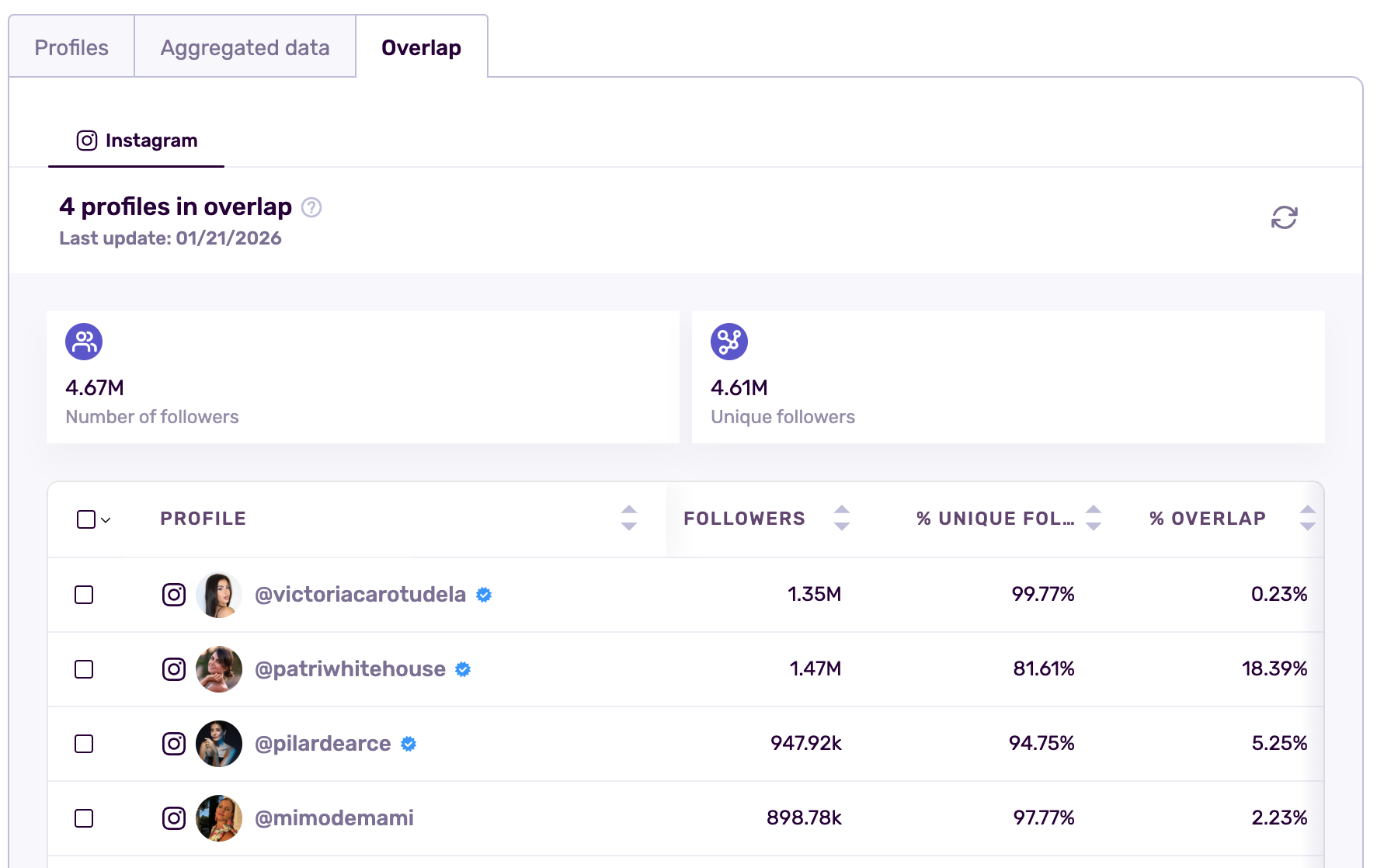
Conversely, if the strategic goal is brand awareness, identifying clusters of creators with high audience overlap allows marketers to intentionally target the same demographic with repeated brand exposures across multiple trusted voices, embedding the product firmly in the consumer's consciousness.
A defining third-order trend emerging from the data is the rapid convergence of a brand's owned social media channels and its earned influencer content. Consumers do not interact with these channels in a vacuum; a viral influencer post frequently drives massive traffic directly to the brand's own profile. Platforms that silo influencer tracking from internal social media analytics are becoming operationally obsolete.
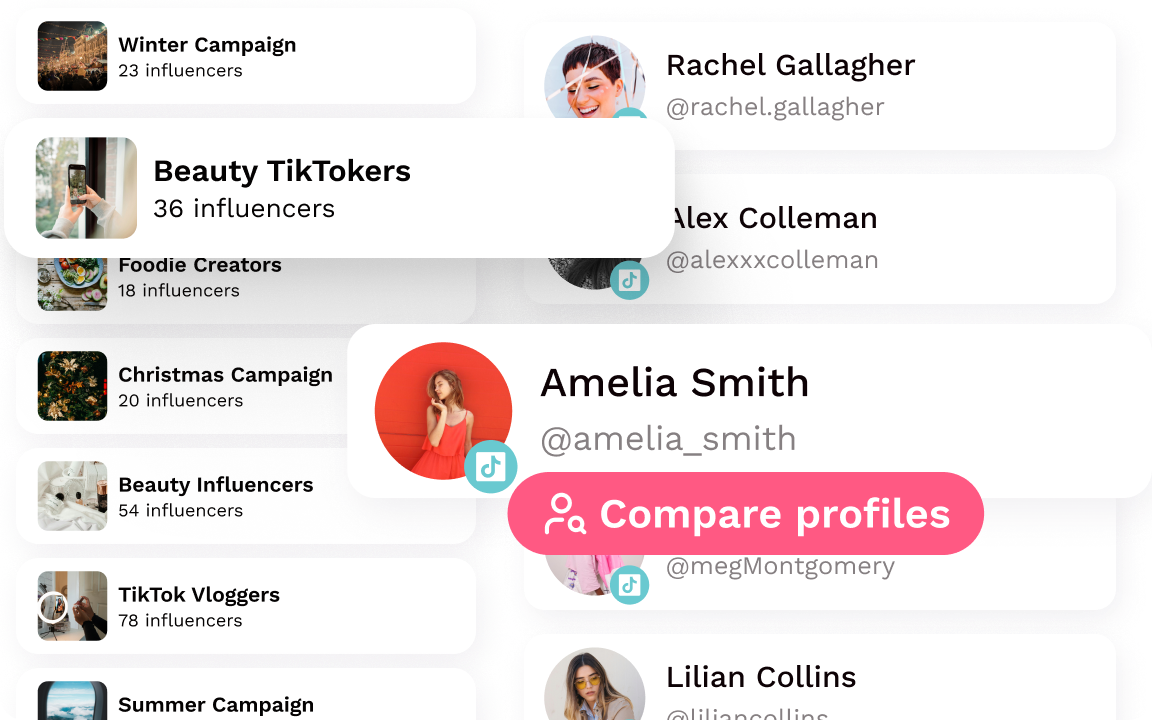
Influencity’s Social Hub demonstrates the future of the industry, allowing teams to pivot from approving an influencer's draft to scheduling a corresponding brand post, and finally managing the resulting influx of consumer comments in a unified inbox. This convergence ensures unshakeable message consistency and capitalises on the momentum generated by creator partnerships.

The proliferation of AI influencer analytics has equipped marketers with the empirical data required to treat creator partnerships with the exact same rigor as programmatic advertising or search engine marketing.
/EN/home_alternating_contents_reports_influencer_content_image_composition.webp?width=1728&height=1080&name=home_alternating_contents_reports_influencer_content_image_composition.webp)
For the vast majority of brands and agencies requiring an agile and thoroughly exhaustive operating system, Influencity stands out as the paramount solution. Thanks to masterfully combining an expansive 350 million creator discovery database with deep audience overlap analysis, a solid Influencer Relationship Management system, and a comprehensive Social Hub for owned media, Influencity provides the exact infrastructure required to turn raw social data into sustainable, scalable business growth. Teams that adopt these structured, AI-driven workflows will ultimately outpace competitors still relying on spreadsheets, securing lasting trust and measurable returns.










%20and%20How%20Can%20They%20Benefit%20Your%20Brand%20article.jpg?length=628&name=What%20Are%20Key%20Opinion%20Leaders%20(KOL)%20and%20How%20Can%20They%20Benefit%20Your%20Brand%20article.jpg)