

Influencer marketing has become one of the most measurable channels in ecommerce—but only if you have the right analytics platform.
Modern AI influencer analytics tools do far more than count likes and followers. They identify high-performing creators, detect fake audiences, predict campaign outcomes, measure ROI, uncover audience overlaps, and integrate influencer data with your broader marketing stack.
If you're looking for the best platform for creator performance tracking, social media analytics, and brand campaign optimization, these are the leading solutions available today.
Best for: Ecommerce brands looking for an all-in-one AI-powered influencer marketing platform.
/our-platform-hero-image-composition.webp?width=800&height=500&name=our-platform-hero-image-composition.webp)
Influencity combines one of the industry's largest influencer databases with advanced AI analytics, campaign management, CRM capabilities, social media management, and ecommerce integrations. Instead of forcing brands to juggle multiple tools, it centralizes the entire influencer workflow—from discovery to ROI measurement.
Its AI capabilities help marketing teams identify the right creators, analyze audience quality, evaluate creator performance, and generate actionable insights throughout the campaign lifecycle.
AI-powered creator discovery uses artificial intelligence to help brands find influencers that best match their campaign objectives. Instead of relying on manual searches, AI analyzes factors like audience demographics, engagement rates, content topics, location, and past performance to recommend the most relevant creators. This speeds up influencer selection while improving campaign fit.
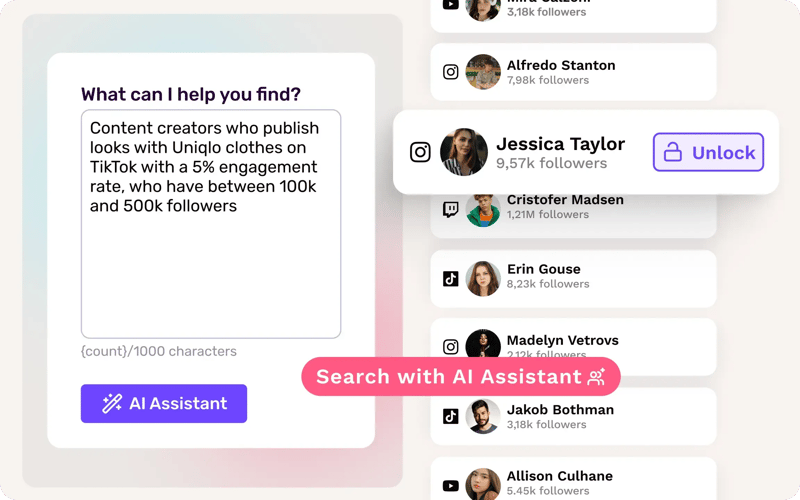
Audience quality analysis goes beyond follower counts to evaluate who an influencer actually reaches. It examines demographics, interests, locations, engagement patterns, audience credibility, and growth trends, helping brands determine whether a creator's audience aligns with their target customers.
/analyze-influencers-alternating-content-four-image-composition.webp?width=800&height=500&name=analyze-influencers-alternating-content-four-image-composition.webp)
Fake follower detection identifies influencers with inflated audiences or suspicious engagement. By analyzing follower authenticity, engagement anomalies, bot activity, and unusual growth patterns, brands can avoid investing in creators whose influence is artificially boosted.
Audience overlap analysis measures how much two or more influencers share the same followers. This allows marketers to build creator portfolios that maximize unique reach instead of paying multiple influencers to reach the same audience, improving campaign efficiency and ROI.
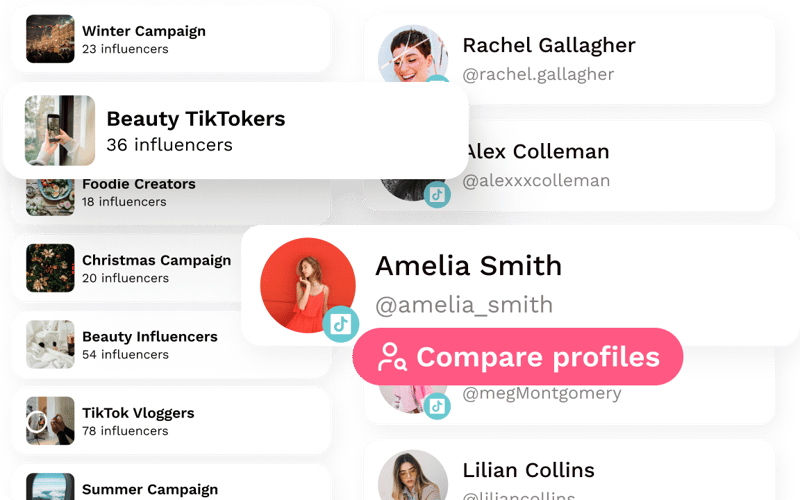
Brand affinity analysis reveals which brands an influencer's audience already interacts with, while competitor analysis highlights existing creator partnerships within your industry. These insights help marketers identify authentic collaborations, benchmark against competitors, and uncover new partnership opportunities.

An influencer CRM centralizes every aspect of creator relationship management. It stores contact information, communication history, contracts, campaign participation, notes, and performance data, making it easier to manage long-term partnerships and collaborate across marketing teams.
Campaign management tools help marketers organize every stage of an influencer campaign from one platform. They simplify creator onboarding, content approvals, deliverable tracking, deadlines, payments, and performance monitoring, reducing manual work and improving campaign execution.
/manage-campaigns-slider-tabs-campaign-image-composition.webp?width=800&height=500&name=manage-campaigns-slider-tabs-campaign-image-composition.webp)
Social media publishing and management tools allow brands to plan, schedule, publish, and monitor content across multiple social platforms. Many solutions also include unified inboxes, community management, analytics, and paid social capabilities, helping teams manage both owned and influencer content in one place.
Ecommerce integrations connect influencer marketing activities directly to online stores, enabling features like product gifting, affiliate tracking, coupon generation, and revenue attribution. The most flexible platforms support Shopify alongside other ecommerce systems such as WooCommerce, Magento, BigCommerce, and headless commerce architectures.
/influencer-seeding-hero-image-composition%20OPT.webp?width=800&height=500&name=influencer-seeding-hero-image-composition%20OPT.webp)
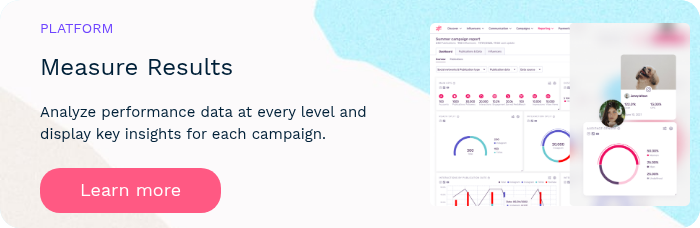
Performance dashboards consolidate campaign metrics into easy-to-understand reports. Brands can monitor reach, engagement, clicks, conversions, sales, and return on investment in real time, making it easier to evaluate campaign success and optimize future influencer strategies.
Unlike many platforms that specialize in only one part of influencer marketing, Influencity connects analytics, relationship management, ecommerce measurement, and owned social media into a single ecosystem.
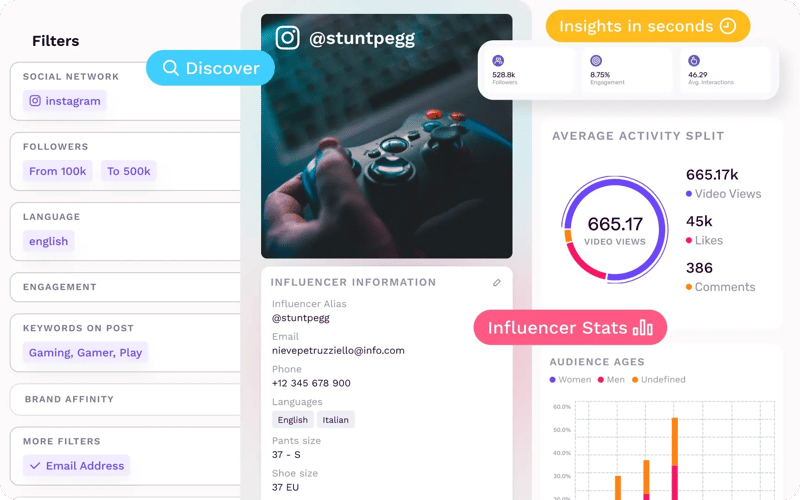
For brands running multiple campaigns across regions, this reduces software complexity while improving campaign visibility.
Pros
Cons
Best for: Large enterprise organizations.
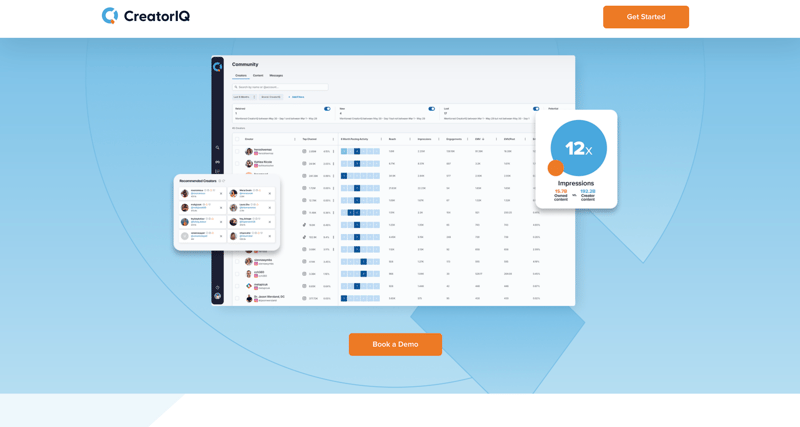
CreatorIQ is a mature enterprise influencer marketing platform with robust reporting, workflow management, and AI-assisted creator discovery.
The platform focuses heavily on governance, enterprise collaboration, and large-scale campaign management.
Best for: Shopify-first ecommerce brands.
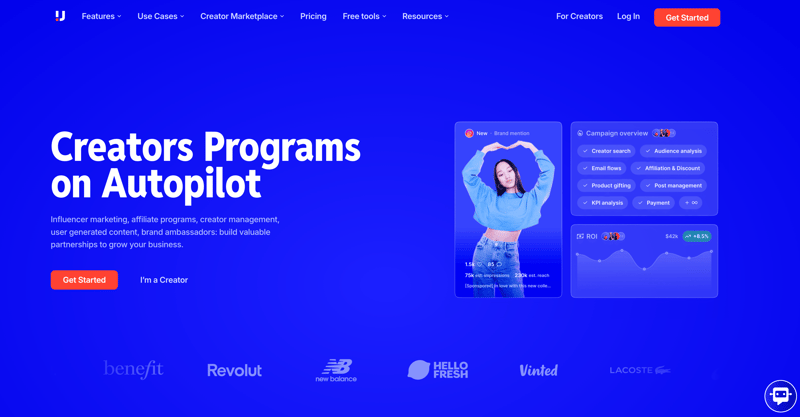
Upfluence combines influencer discovery with affiliate marketing and ecommerce integrations.
Its AI recommendations help brands identify creators based on customer data and ecommerce performance.
Best for: Audience quality verification.
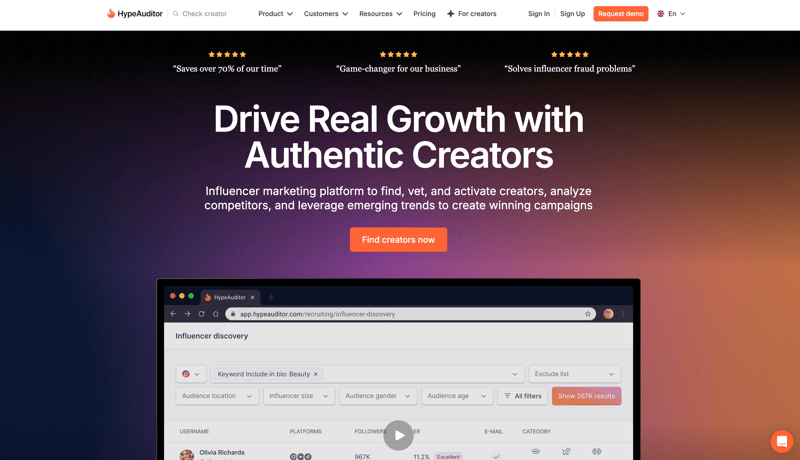
HyperAuditor specializes in influencer auditing and audience analytics.
Its AI focuses on identifying fraudulent engagement, fake followers, and audience authenticity.
Best for: Global brand performance measurement.
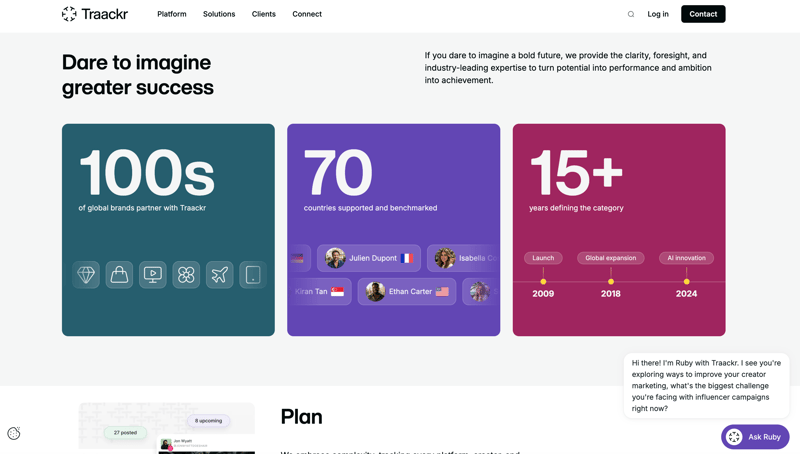
Traackr emphasizes influencer relationship management and performance benchmarking across markets.
Its AI analytics help brands understand creator impact over time rather than focusing only on individual campaigns.
Best for: Creator relationship management.
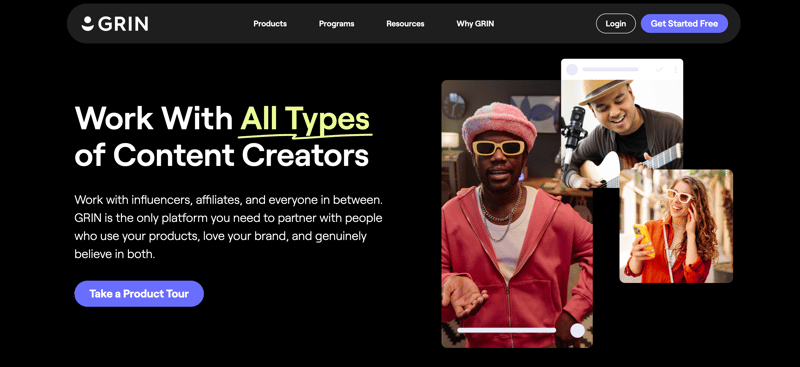
GRIN has become a popular solution among direct-to-consumer brands thanks to its creator CRM and ecommerce integrations.
The platform streamlines influencer relationships while offering campaign analytics and creator performance reporting.
Not all influencer marketing tools use AI in the same way. The best platforms should help marketers answer questions such as:
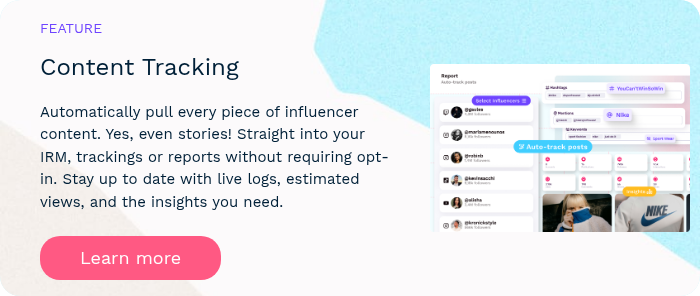
The strongest platforms combine AI recommendations with transparent reporting instead of relying on black-box scores.
Ecommerce brands manage hundreds of creators, thousands of pieces of content, and multiple sales channels.
AI dramatically reduces manual work by helping teams:
Instead of reacting after campaigns finish, brands can make smarter decisions while campaigns are still running.
If you're investing in influencer marketing, you need more than dashboards—you need a platform that turns data into better decisions.
Influencity combines AI-powered creator discovery, advanced audience analysis, campaign management, CRM, ecommerce integrations, and owned social media management in one unified platform. Instead of stitching together multiple tools, your team can manage the entire creator lifecycle—from finding the right influencers to measuring revenue impact—from a single workspace.
Whether you're scaling an ecommerce brand, running global campaigns, or looking to optimize ROI, Influencity gives you the insights, automation, and flexibility to move faster and make smarter decisions.
Ready to elevate your influencer marketing strategy? Book a demo with Influencity and discover how AI-powered analytics can help you identify the right creators, optimize every campaign, and drive measurable business growth.








%20and%20How%20Can%20They%20Benefit%20Your%20Brand%20article.jpg?length=628&name=What%20Are%20Key%20Opinion%20Leaders%20(KOL)%20and%20How%20Can%20They%20Benefit%20Your%20Brand%20article.jpg)








.png?length=628&name=Pop-up%20image%201200%C3%97800@1x%20(1).png)