

Engagement pods can be a great way to increase engagement on social media, but they are very often not anywhere near as effective as you’d imagine. Although large pods can help certain posts receive an influx of engagement, they are rarely a valuable long-term strategy. It’s also very rare to see a significant increase in follower count as a result of posting in an engagement pod. This is mainly because, by nature, they’re incredibly impersonal. It’s far better to find like-minded accounts and develop real relationships with your followers.
So, what exactly are these pods, and do they ever work? How do you know if an influencer is using engagement pods? And what impact can it have on their metrics?
In simple terms, engagement pods are private "support circles" where users team up to hack the algorithm. Think of them as digital cliques, usually hiding in Telegram or WhatsApp chats, where everyone agrees to like, comment, and save each other's posts the second they go live.
The logic is straightforward. You drop your link in the group, and the rest of the members jump on it to give your content that initial "boost" of engagement.
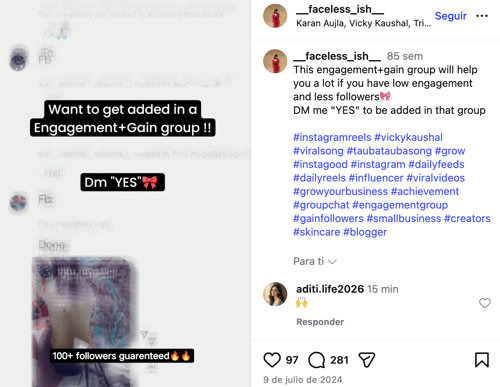
In the real world, you will usually run into two very different types of setups. First, there are the niche specific circles. These are small, tight-knit groups of people in your exact industry, such as fashion or tech. Because everyone actually knows the subject matter, the conversations feel much more natural. This makes it significantly harder for platforms to flag the activity as artificial.
Then you have the massive engagement hubs. We are talking about giant public channels that often pack in tens of thousands of members. While seeing those huge numbers might feel like a shortcut to success, they are actually a massive red flag. In 2026, social algorithms are far too smart to fall for this kind of activity. Joining one of these groups is usually the fastest way to get your account shadowbanned or permanently flagged.
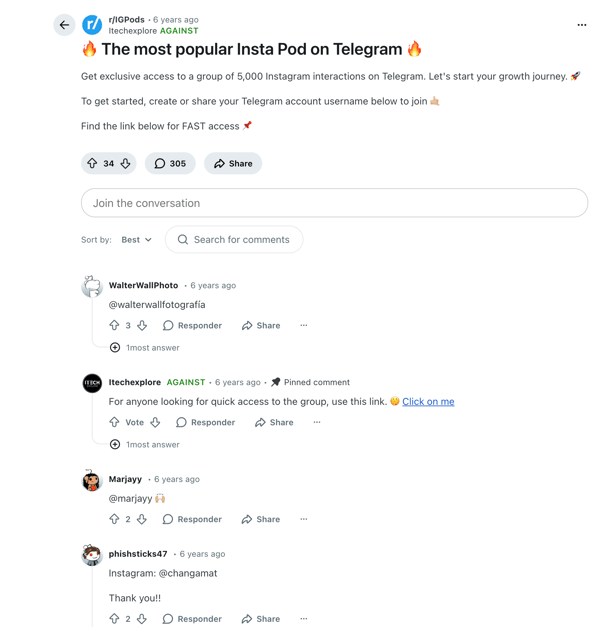
It all sounds a bit too good to be true, doesn't it? The idea is that you join a pod and get an instant wave of likes, comments, and shares to boost your reach. In theory, the more you engage with other members, the more engagement you get in return, helping your campaign blow up.
While that might have worked a few years ago, the reality in 2026 is much more complicated. Social media platforms have evolved to prioritize genuine interest over coordinated activity. If the engagement doesn't lead to actual results, it is usually just noise.
There is also a hidden technical risk that most people overlook. In 2026, social platforms track how long a user stays on your post. When a pod member clicks your link, drops a generic comment, and leaves in three seconds, it sends a signal to the algorithm that your content is actually boring. Instead of helping you, these "fast" interactions can actually kill your organic reach because the platform thinks your post is not worth a long stay.
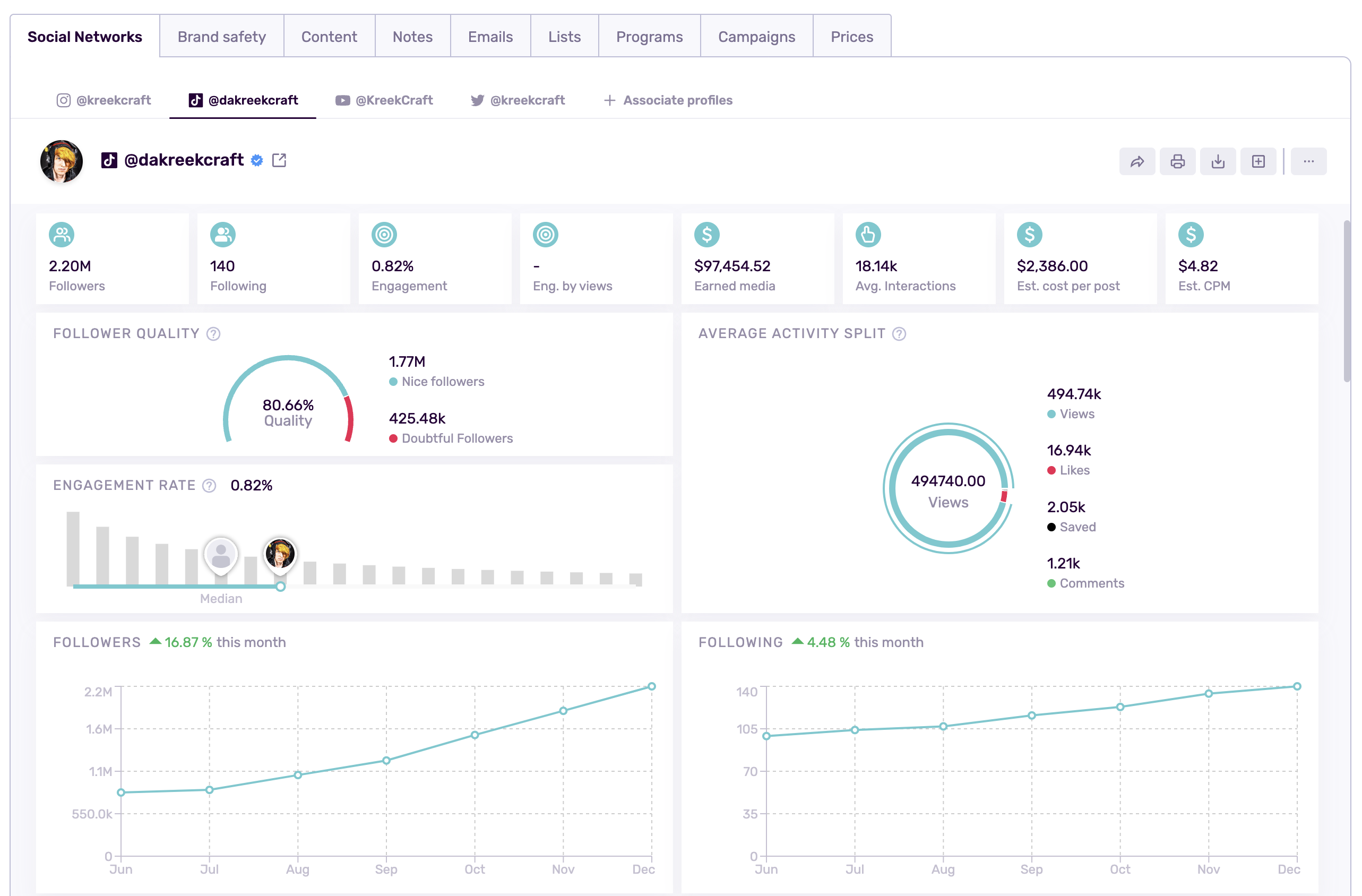
If you are a brand or an agency, this is where things get tricky. Imagine hiring an influencer because their posts are flooded with comments, only to realize that something feels off. When you look closer, you see that 90% of that activity comes from other influencers or is just a string of emojis. That is an engagement pod in full swing. It is essentially like hosting a party and paying your friends to clap every time you speak.
When you invest in a campaign, you are looking for real impact. You want actual people to see your post and feel like they need your product. The problem with these closed groups is that the interaction never leaves the circle. It is a "you scratch my back, I scratch yours" arrangement that does not sell a single item.
At first, the performance charts might give you a rush. You will see beautiful growth curves and sky-high engagement rates. But in reality, those numbers have zero value in the real world. Nowadays, being able to smell these groups from a mile away is not optional. It is the only thing that will keep your marketing budget from ending up in the trash.
The most effective way to catch this today is through AI powered social media tools. In fact, platforms are now so good at this that they use their own AI to sniff out an engagement pod spike and quietly suppress those posts before they even reach a real audience.
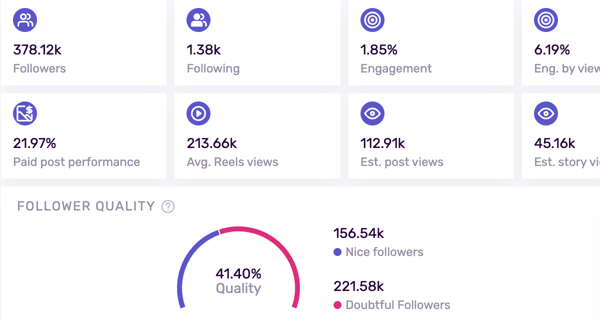
However, you can also do some detective work yourself. If you see the same group of people commenting on every single post within minutes of it going live, you are likely looking at an engagement pod in action. Another red flag is the quality of the conversation. In 2026, the typical engagement pod has moved away from simple emojis and now uses generic, AI generated sentences that look professional but feel empty. If the comments do not actually relate to the specific details of the post, you have found a pod.
One of the best ways to spot a fake is by looking at the relationship between comments and actual results. A real influencer has "dwell time," meaning people actually stop and stay on their content. In an engagement pod, members just click, comment, and leave immediately to get back to their own work. This behavior sends a signal to the algorithm that the content is actually boring. This is why a post boosted by an engagement pod often has a high comment count but almost zero shares or saves.
Instead of looking for influencers who hide in a private engagement pod to trade likes, look for those who practice collaborative growth. These are creators who do public collabs, guest appearances, or joint content with other experts in their field. This is the 2026 version of networking. It is transparent, it exposes the brand to a real new audience, and most importantly, it generates actual interest from human beings instead of the artificial boost of an engagement pod.
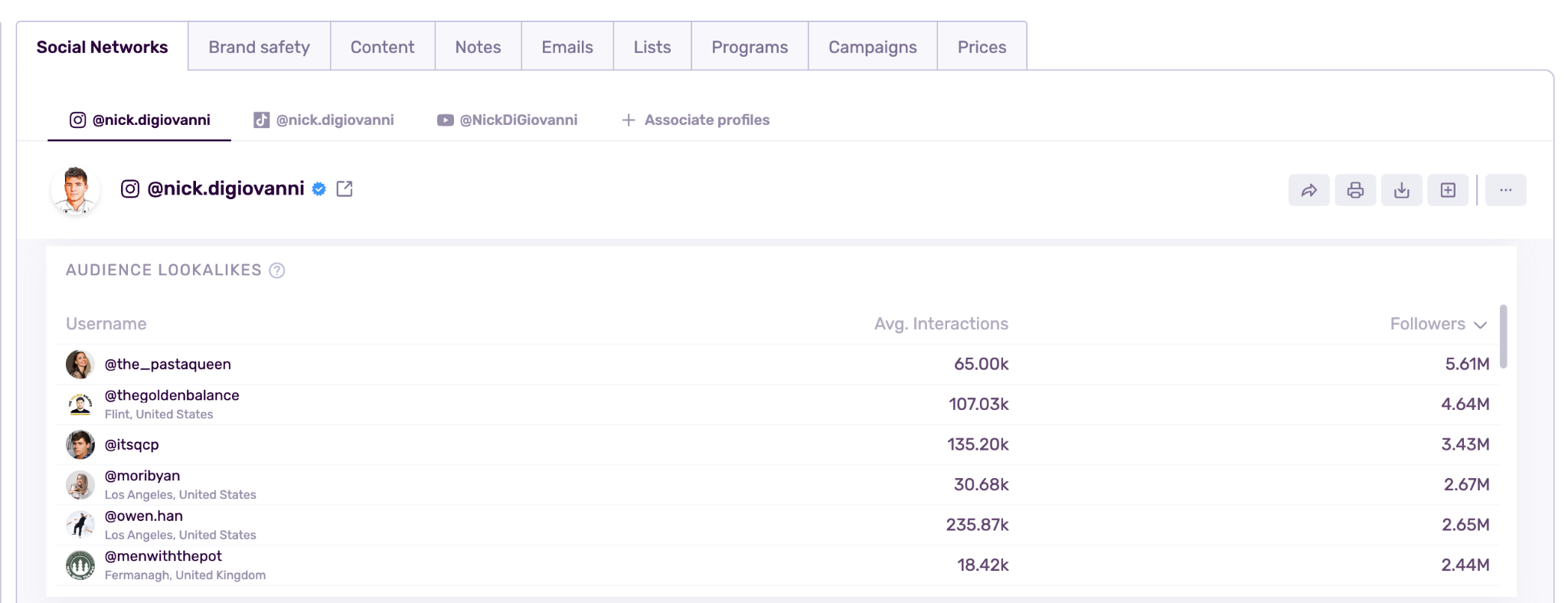
To do this effectively, you can leverage data-driven tools like Influencity. Their Lookalikes feature allows you to find profiles that share the same audience DNA as your best-performing creators. Instead of guessing who to work with or falling into the trap of a fake engagement pod, you can identify authentic "twins" in your niche. Partnering with these similar profiles ensures your message reaches people who are statistically likely to care about your brand. It is about trading the shallow noise of a chat group for a high-precision growth strategy that actually converts.
At the end of the day, an engagement pod is nothing more than a temporary fix for a long-term problem. While the rush of seeing hundreds of likes in minutes might feel like success, those numbers are hollow. They don't represent customers, they don't build brand loyalty, and in the eyes of 2026 algorithms, they are a massive liability. If you are serious about building a brand or running a successful campaign, you have to move past these shortcuts.
True influence is not about how many people clap for you in a private chat. It is about how many people stop scrolling because they actually care about what you have to say.
The era of hacking the system is over. The era of genuine, data-backed authority is here. Skip the engagement pod, find your real audience, and build something that actually converts.
Yes, it is a real possibility. In 2026, social media algorithms are designed to detect coordinated inauthentic behavior. If the platform flags your account for consistently using an engagement pod, you risk being shadowbanned or having your profile permanently deactivated. It is simply not worth the gamble for a few fake likes.
Not really. Even niche specific groups that feel more "natural" still rely on forced interactions rather than genuine interest. While they might be harder for a human to spot, the algorithm still notices the predictable patterns of reciprocal engagementn. If the data shows that you only get attention from the same circle of creators, your organic growth will eventually stall.
The biggest giveaway is the comment to result ratio. If a post has hundreds of generic comments like "Great shot" or "So inspiring" but zero shares or saves, it is likely being boosted by an engagement pod. You can also check if the same group of accounts comments on every single post within seconds of it going live.
The most effective strategy is collaborative growth. Instead of trading fake likes, use tools like Influencity to find Lookalikes in your niche and build real partnerships. This allows you to reach a pre-qualified audience that actually cares about your content, leading to higher conversion rates and long-term loyalty.
Almost never. Because the members of an engagement pod are only interacting to get a "like" back, they have zero intention of buying your product or service. You are essentially advertising to a room full of people who are busy looking at their own mirrors. It creates noise, but it never creates revenue.








%20and%20How%20Can%20They%20Benefit%20Your%20Brand%20article.jpg?length=628&name=What%20Are%20Key%20Opinion%20Leaders%20(KOL)%20and%20How%20Can%20They%20Benefit%20Your%20Brand%20article.jpg)