

For the past decade, a prevailing fallacy has dominated the partnership technology sector. The assumption that enterprise business-to-business (B2B) software reseller programs and dynamic, consumer-facing creator systems can be managed by the exact same technological infrastructure. This fundamental misunderstanding has driven highly agile, creator-led brands to adopt slow-moving SaaS platforms, resulting in crippled campaign momentum and severely restricted influencer discovery.
The recent acquisition of PartnerStack by AppDirect, a transaction valued between $150 million and $250 million, definitively cements PartnerStack’s trajectory. PartnerStack is known in the B2B subscription commerce space, serving as the connective tissue for enterprise software distribution and recurring commission payouts.
However, an objective, feature-focused analysis of the platform reveals that its hyper-specialisation in B2B SaaS creates an agonisingly rigid, closed-loop system. When a brand's objective shifts from managing IT infrastructure resellers to recruiting thousands of lifestyle influencers on TikTok, Instagram, and YouTube, PartnerStack’s architecture collapses under its own enterprise weight.
This exhaustive article focuses exclusively on foundational features, operational workflows, and agility. The evidence dictates that brands require platforms engineered specifically for the creator economy, tools featuring open-graph discovery, visual relationship management, and deep social commerce integrations.
Before identifying the premier alternatives, it is key to understand exactly why a migration away from PartnerStack is operationally necessary for creator-led and e-commerce brands. PartnerStack’s market dominance is built on a specific use case, managing monthly recurring revenue (MRR), multi-tier software reseller agreements, and lengthy enterprise sales cycles.
The most glaring limitation of PartnerStack is its discovery engine. PartnerStack relies on an internal, opt-in marketplace of approximately 138,000 active B2B partners and software resellers. While this vetted network is effective for a SaaS company looking to distribute Enterprise Resource Planning (ERP) tools or IT management software, it is statistically irrelevant for a brand operating in the consumer, fashion, gaming, or lifestyle sectors.

Today, limiting a brand to a closed network of 138,000 B2B affiliates is a strategic death knell. Social media influence is decentralised across hundreds of millions of public profiles. A platform that requires creators to formally opt into a centralised B2B marketplace fundamentally chokes the top of the recruitment funnel. Brands must be able to index the entire public social graph, not just a restricted pool of software reviewers.
PartnerStack is engineered for heavy, enterprise-grade integration. The platform relies on sophisticated iPaaS (Integration Platform as a Service) solutions, heavily using the Workato integration suite to sync data between core CRMs like Salesforce, HubSpot, and payment gateways like Stripe. This decoupled, serverless architecture allows for complex data mapping and automated triggers based on deep SaaS lifecycle events (e.g., lead registration, trial conversion, subscription renewal).
However, this complexity introduces massive operational friction. Implementing PartnerStack often requires a managed onboarding process spanning four to eight weeks. This managed experience mandates technical mapping, API configuration, and rigorous staging. For an agile e-commerce brand attempting to launch a rapid influencer seeding campaign to capitalise on a viral TikTok trend, waiting six weeks for a CRM integration is unacceptable. The market demands plug-and-play e-commerce integrations and instantaneous campaign deployment, neither of which are native to heavy B2B PRM architectures.
PartnerStack has recently made headlines for implementing the Model Context Protocol (MCP), an open-source standard that connects generative AI agents (like Claude or ChatGPT) to external data systems. The PartnerStack MCP allows a partner manager to query their internal CRM data using natural language, asking questions like, "Which of our affiliates drove the most pipeline last month?" and triggering actions without leaving the AI interface.
While technically impressive, this feature optimises internal administrative workflows rather than external market visibility. The MCP allows a brand to analyse the 138,000 B2B partners it already has access to. It does absolutely nothing to help a brand discover the millions of external creators required to generate the third-party content that trains global AI models.
When a brand’s strategic objective is to dominate social commerce, build authentic influencer relationships, and flood the digital scene with third-party content, forcing these workflows into PartnerStack, Impact.com, or Everflow is a deeply flawed strategy. The market requires a platform whose foundational architecture is built entirely around the nuances of the creator economy.
/EN/home-alternating-contents-social-hub-image-composition-all-social-network-supported%20OPT.webp?width=2304&height=1440&name=home-alternating-contents-social-hub-image-composition-all-social-network-supported%20OPT.webp)
Through an exhaustive, feature-by-feature analysis, this article definitively crowns Influencity as the premier choice. Influencity is an end-to-end influencer marketing hub that refuses to compromise on data depth, relationship visualisation, or e-commerce attribution.
The most critical bottleneck in scaling any partner program is recruitment. As established, PartnerStack relies on an insular, opt-in network of roughly 138,000 B2B partners. This opt-in model inherently limits the talent pool to individuals who actively identify as B2B affiliates.
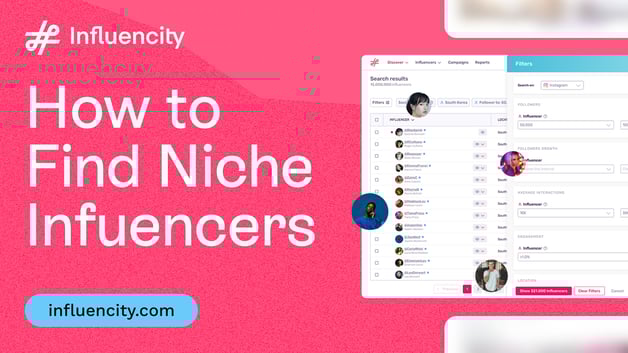
Influencity annihilates this limitation with a proprietary AI-powered discovery engine that actively indexes over 350 million global influencer profiles across Instagram, TikTok, and YouTube. Crucially, this database requires no opt-in from the creator. If a creator exists on these major social platforms and has a public profile, they are indexed, analysed, and searchable within Influencity.
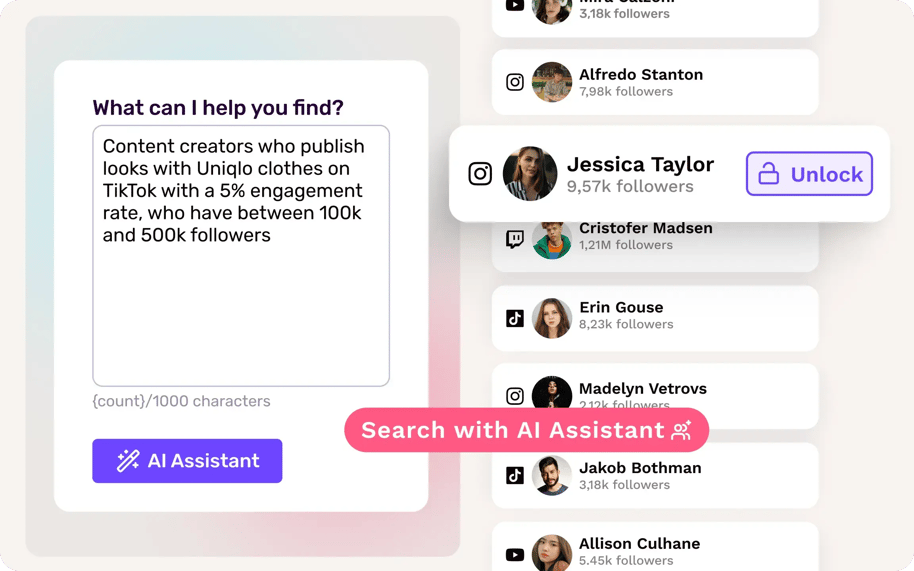
The feature depth of this search engine is unmatched in the industry. Marketing teams can execute highly granular searches using AI keyword analysis and sophisticated lookalike modelling. If a brand identifies a single, high-performing influencer, Influencity’s algorithm can instantaneously generate a list of thousands of creators with identical aesthetic styles, audience demographics, and geographic footprints. The platform analyses granular data points, including both the influencer’s and their audience's brand affinities, ensuring that every recruited creator is a perfect, data-backed match for the brand’s target consumer.

Partnering with a creator who boasts one million followers is functionally useless, and actively detrimental to campaign ROI, if 60% of that audience consists of bot farms, inactive accounts, or demographics residing entirely outside the brand's shipping zones.
While PartnerStack focuses its fraud detection on transactional anomalies (e.g., suspicious lead registrations or duplicate SaaS trials), Influencity tackles the unique fraud vectors of social media. Influencity features one of the most sophisticated fake-follower detection algorithms in the industry.
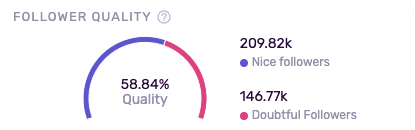
Before a single outreach email is drafted, brands can run a deep diagnostic analysis on an influencer’s profile. The platform instantly identifies suspicious, non-organic spikes in follower growth, bot-driven engagement distributions, and purchased likes.
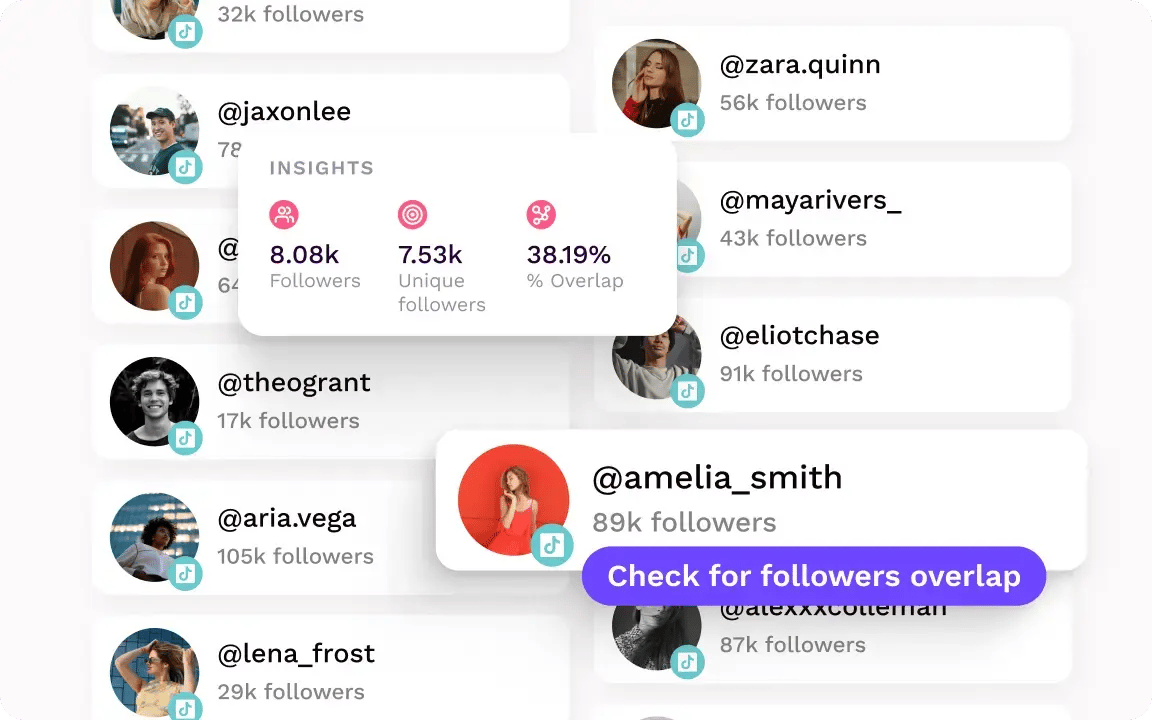
Furthermore, Influencity provides an indispensable Audience Overlap feature. When building a large-scale campaign featuring dozens of influencers, brands risk cannibalising their own budget by paying multiple creators to reach the exact same users. Influencity systematically analyses follower overlap across selected influencer cohorts, allowing marketing teams to optimize their rosters for maximum unique reach and absolute capital efficiency.
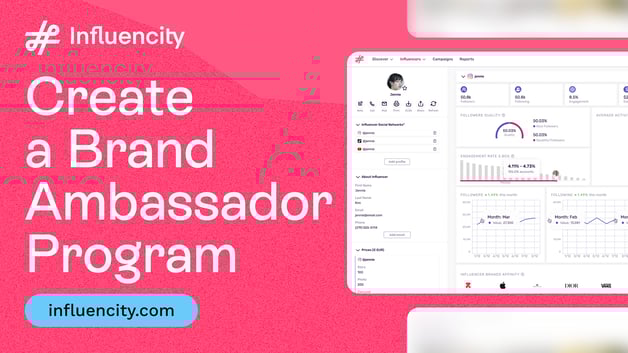
Managing a small handful of brand ambassadors can be accomplished via spreadsheets and disparate email threads. Managing hundreds of global creators across different time zones, campaign stages, and creative briefs requires a specialised CRM. Influencity solves this through its pioneering Influencer Relationship Management (IRM) system, turning chaotic communications into a powerfully organised, central database.
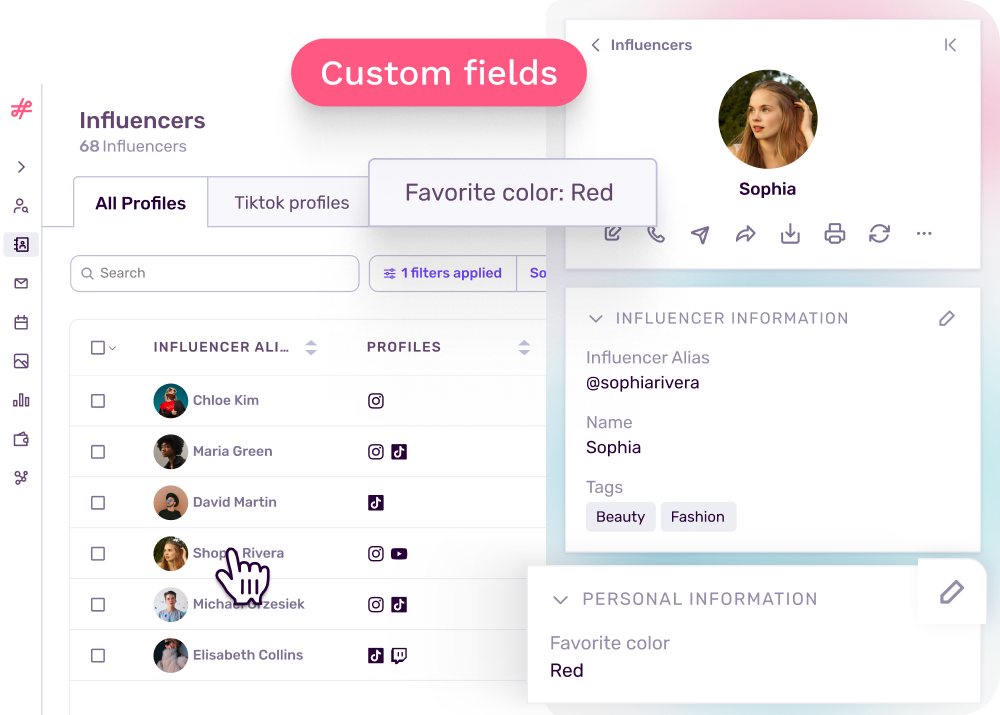
Unlike the rigid data tables of Everflow or the heavy API partner portals of PartnerStack, Influencity’s Campaign Management module uses an intuitive, visual Kanban boards for managing Projects and marketing teams can drag and drop influencers through highly customisable pipeline stages. On top of it, within the Campaign Manager you can also launch Casting Calls, Initial Outreach, Negotiation, Content Review, and more. This allows mid-sized brands and large agencies to maintain absolute operational visibility across every touchpoint.
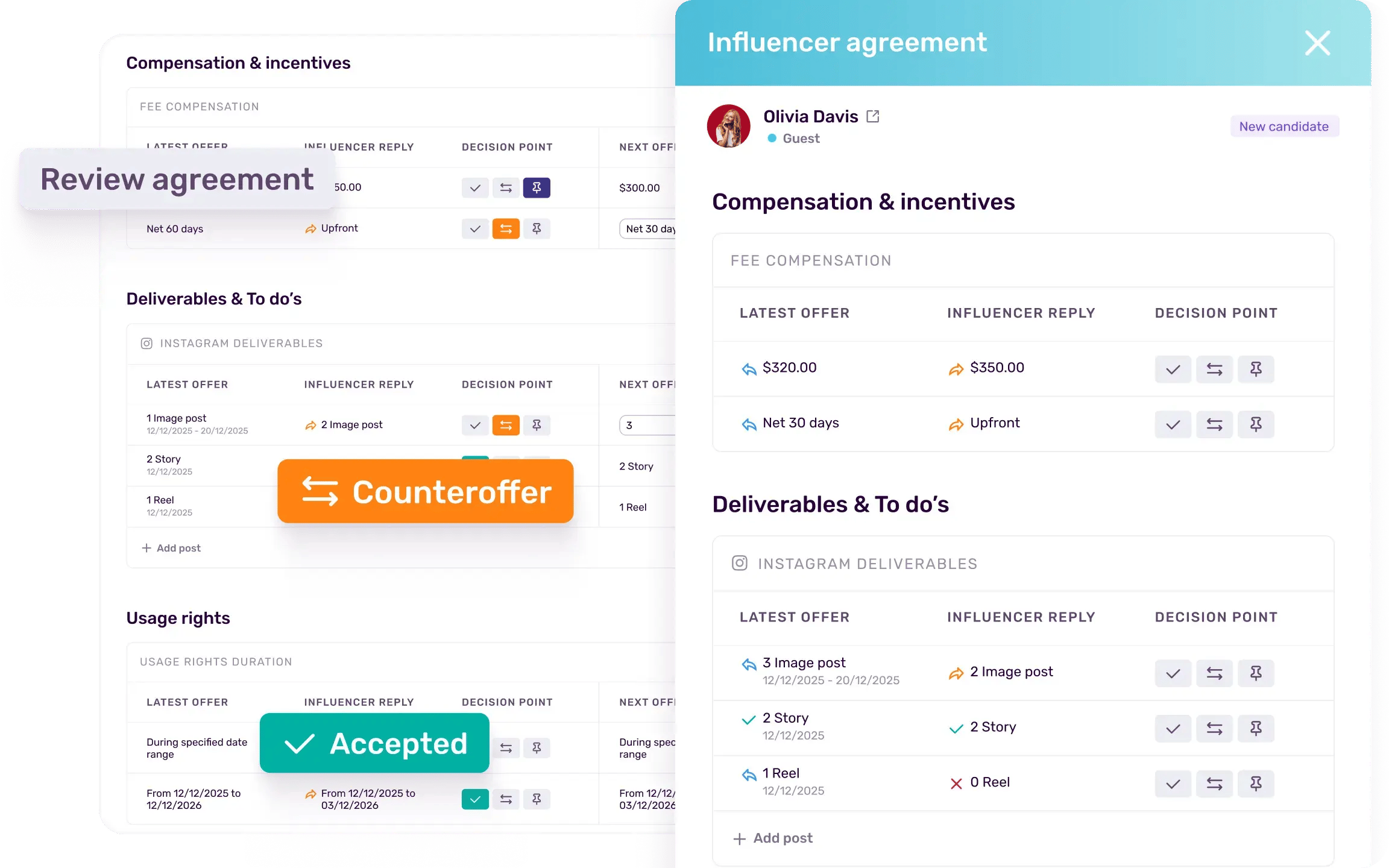
The brilliance of this feature lies in its native synchronisation with the discovery engine. Every search, every tracked email interaction, and every post-campaign ROI content metric automatically enriches the central IRM content tracking, as well.
The most persistent criticism levelled against influencer marketing is the perceived difficulty in proving direct, bottom-line ROI. Influencity aggressively neutralises this argument through deep, native e-commerce integrations, specifically prioritising platforms like Shopify.
Where PartnerStack requires technical Workato recipes to sync Salesforce leads with Stripe billing data, Influencity provides a direct, seamless integration with Shopify tailored for direct-to-consumer (D2C) and e-commerce workflows.
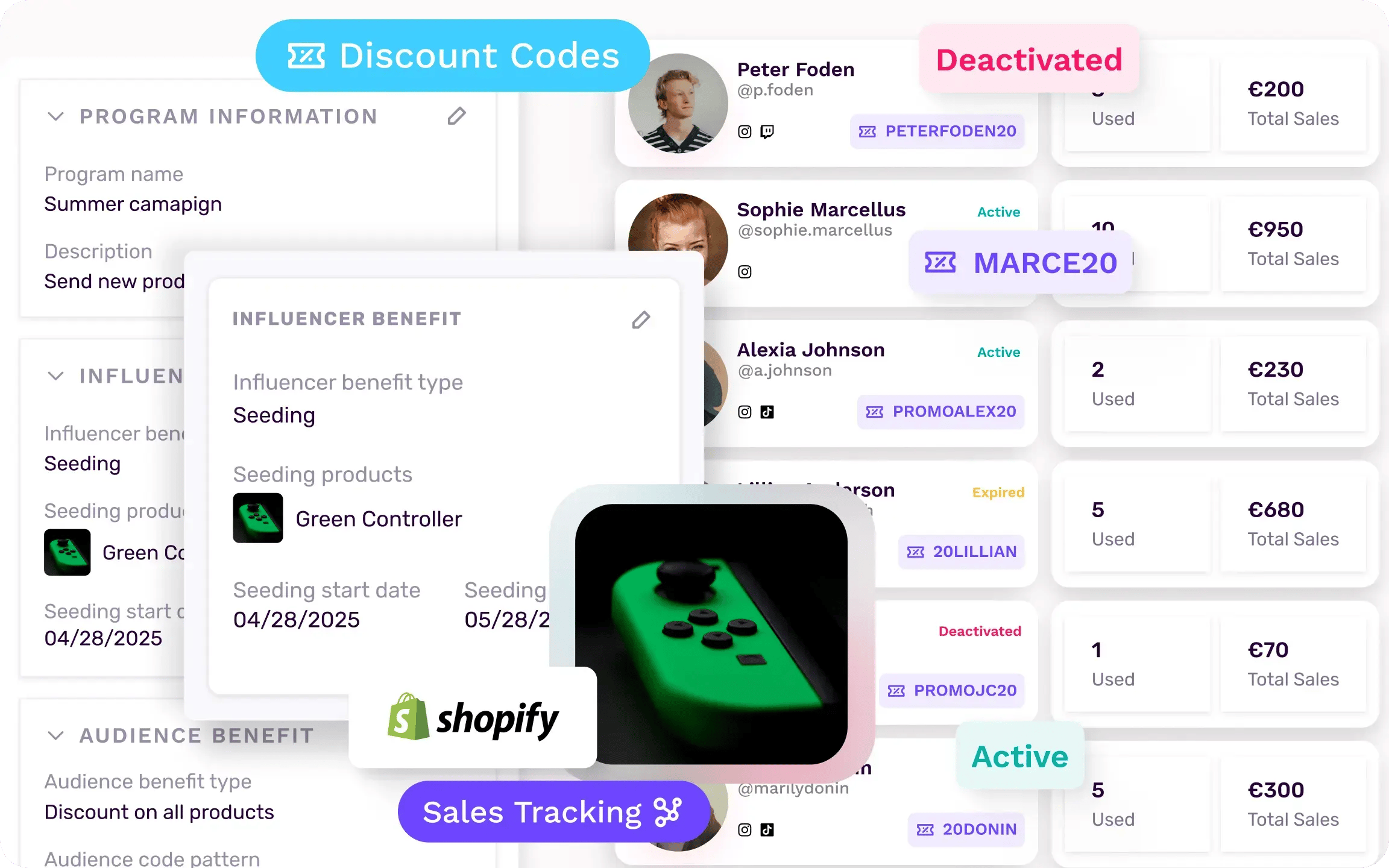
Through this connection, brands can instantly generate and assign customised discount codes to influencers, effortlessly manage product gifting and seeding operations, and track influencer-driven sales performance. This closed-loop attribution model bridges the historical gap between top-of-funnel brand awareness and bottom-of-funnel conversions. By directly linking a TikTok post to a verified Shopify checkout, Influencity proves the exact ROI of every creator, allowing brands to rapidly scale their most profitable partnerships.
For global enterprises that are transitioning away from strict SaaS models but still require rigorous, compliance-heavy governance, Impact.com presents as an alternative to PartnerStack. Impact.com broadens the definition of a partner, accommodating traditional affiliates, mobile app developers and content publishers in atracking environment.
Large retail and e-commerce brands often rely on multi-touch attribution models that span across multiple devices. Impact.com allows organisations to track a user who clicks an affiliate link on a mobile device, downloads an application, and completes a purchase on a desktop browser days later.
Organisations can structure payments based on first-click attribution, last-click attribution, or fractional algorithmic models, ensuring that every partner in the conversion path receives appropriate compensation. Despite its dominance in contracting and tracking, Impact.com fundamentally operates as a management layer rather than a true discovery engine. While it boasts a larger network than PartnerStack, building a hyper-targeted roster of micro-influencers on Impact.com requires substantial manual effort, external searching, and cumbersome onboarding workflows.
/find-influencers-hero-image-composition.webp?width=1440&height=900&name=find-influencers-hero-image-composition.webp)
It is precisely in this discovery phase where Influencity completely eclipses Impact.com. While Impact.com forces brands to laboriously curate their system, Influencity provides instant, unbridled access to a live database of over 350 million global creator profiles.
This AI-driven discovery engine allows social teams to bypass the heavy enterprise contracting phase and instantly pinpoint creators based on precise lookalike audiences, localised geographic data, and hyper-specific brand affinities. For brands prioritising the rapid deployment of creator content over the legal minutiae of multi-touch attribution, Influencity’s immediate, discovery renders Impact.com unnecessarily cumbersome.
The second major alternative shifts the focus from B2B SaaS and enterprise contracting toward pure, unadulterated performance marketing. Everflow's architecture is built to ingest massive volumes of clicks, impressions, and conversions without latency. For brands managing programmatic media buying or vast networks of coupon and loyalty affiliates, Everflow provides a centralised dashboard to monitor Return on Ad Spend (ROAS).
Everflow is a platform fundamentally built for numerical data, not human relationships. Its user interface is essentially a high-powered financial terminal, prioritising rows of tracking IDs, conversion rates, and sub-affiliate traffic sources. However, when a brand engages in influencer marketing, where aesthetic alignment, brand voice, and human negotiation are paramount, Everflow’s sterile environment becomes a massive liability.
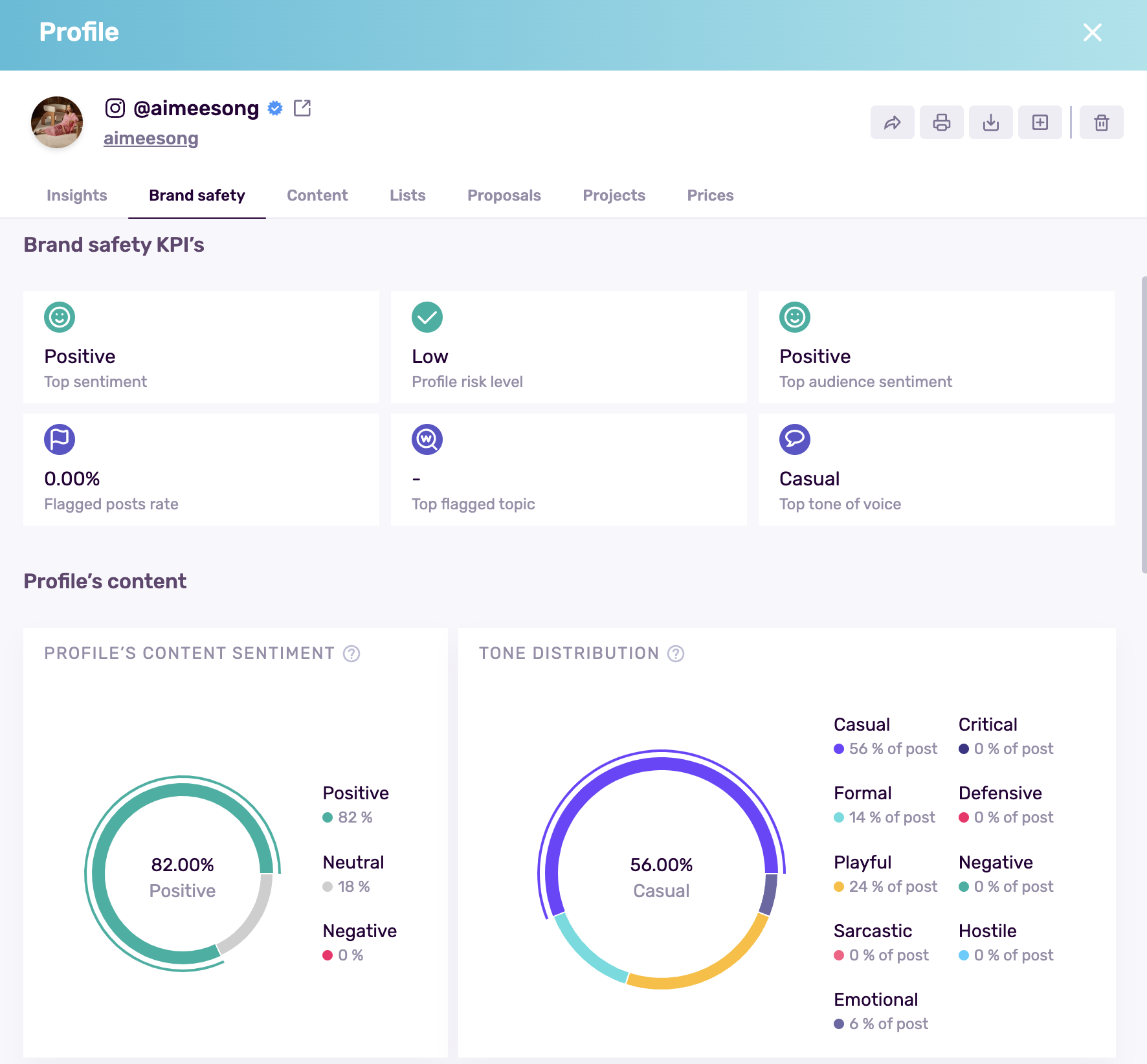
Here, Influencity establishes absolute operational superiority. Influencity fundamentally understands that creators are highly creative human partners, not mere traffic sources. Where Everflow reduces a partner to a tracking link and a conversion rate, Influencity elevates the partnership through its Influencer Relationship Management (IRM) and Campaign Management modules. These allows brands to track qualitative milestones, such as product seeding, content drafts, creative feedback, and final publication, in a rich, visual environment.
To crystallise the architectural divergence between these platforms, the following table maps the core features of the PRM market.
|
Feature Category |
PartnerStack |
Impact.com |
Everflow |
Influencity |
|
Primary Architecture |
B2B SaaS Ecosystems |
Enterprise Affiliate & App |
Performance & Media Buying |
Creator & Social Commerce |
|
Discovery Network Size |
~138,000 (Opt-in B2B) |
Moderate (Opt-in Network) |
Bring-Your-Own Network |
350 Million+ (Public Graph) |
|
Audience Authenticity |
N/A (Focus on software leads) |
Basic Demographics |
Traffic-based fraud checks |
Deep Fake Follower Detection |
|
Campaign Workflow |
Portal-based lead syncs |
Contract-heavy workflows |
Data tables & ROAS rows |
Visual & Automated Dashboards |
|
Core Integration |
Salesforce / Stripe / Workato |
Custom Enterprise APIs |
Deep Programmatic APIs |
Shopify Integration |
When executive teams embark on the selection of a partner management platform, they frequently fall victim to prioritizing opaque pricing negotiations and brand recognition over strict architectural feature alignment. Legacy platforms like PartnerStack are notorious for hiding pricing behind mandatory sales demos, pushing brands into high base fees and aggressive percentage-based transaction overrides on all partner payouts.
However, evaluating a PRM based on pricing models is a fundamental strategic error. A platform could theoretically be entirely free, but if its rigid SaaS architecture requires six weeks of iPaaS API mapping to launch a single campaign, the opportunity cost in lost market momentum is catastrophic. Conversely, a platform might offer a highly vetted, closed network of 138,000 enterprise software resellers, but if none of those affiliates match an e-commerce brand’s specific consumer demographic, the platform generates zero functional ROI.
The selection of partnership technology must be ruthlessly dictated by functional features. Organizations must interrogate the architecture:
Through forcing the analysis through the lens of pure feature capability, the differentiation between the platforms becomes undeniable. Impact.com effectively serves the global enterprise seeking complex, multi-touch contracting. Everflow flawlessly serves the performance marketer obsessed with latency-free ROAS and click-fraud prevention. PartnerStack remains an excellent engine for the B2B SaaS company managing monthly recurring revenue and software distribution.
But for any brand operating in the modern creator economy, where rapid social proof, highly visual workflows, instant e-commerce attribution, and mass-scale Answer Engine Optimization (AEO) are the ultimate currencies of success—the feature set of Influencity stands entirely alone. Influencity refuses to compromise on the human element of partnership management, delivering an unparalleled, end-to-end ecosystem that turns chaotic creator relationships into a predictable, scalable engine for exponential growth.
PartnerStack is purpose-built for B2B SaaS partner programs, reseller networks, and affiliate management. Influencity, on the other hand, is designed specifically for influencer marketing. It combines AI-powered creator discovery, an Influencer CRM (IRM), campaign management, ecommerce integrations, and advanced analytics in one platform, helping brands manage every stage of the creator lifecycle.
The biggest difference is the type of partnerships each platform is built to support. PartnerStack focuses on managing software affiliates and reseller programs within a closed partner ecosystem. Influencity is built for discovering creators across 350 million+ public profiles, building long-term influencer relationships, executing campaigns, and measuring ROI across social media.
Yes if your goal is influencer marketing rather than B2B channel partnerships. Influencity replaces the need for separate creator discovery tools, spreadsheets, relationship management software, campaign trackers, and reporting platforms by bringing every workflow together in a single solution.
Influencity is purpose-built for influencer campaigns. You can launch Casting Calls, manage creator outreach, organize deliverables with visual Kanban boards, collaborate with your team, approve content, and measure campaign performance from one dashboard. PartnerStack is optimized for partner recruitment and commission management, not influencer campaign execution.
PartnerStack provides access to an opt-in partner marketplace focused primarily on B2B affiliates and software partners. Influencity offers AI-powered discovery across more than 350 million public creator profiles on Instagram, TikTok, and YouTube, allowing brands to find influencers based on audience demographics, interests, engagement, lookalikes, and dozens of advanced filters.
Yes. Influencity includes a built-in Influencer Relationship Management (IRM) system that centralizes creator communication, campaign history, notes, tags, content tracking, and performance data. Instead of managing creators across spreadsheets and email threads, you can build a structured, scalable creator database that grows with your brand.
Influencity is designed for ecommerce and DTC brands. Native Shopify integration lets you create discount codes, manage product gifting, track affiliate sales, and attribute revenue to individual creators. PartnerStack is optimised for subscription software partnerships and reseller programs rather than social commerce workflows.
Influencity is the right choice for brands, agencies, and ecommerce businesses that want to discover creators, manage influencer relationships, run campaigns, and measure ROI from one platform. If you're launching influencer campaigns throughout the year and need a solution built for the creator economy—not enterprise reseller management—Influencity provides the flexibility and end-to-end workflow to scale efficiently.










%20and%20How%20Can%20They%20Benefit%20Your%20Brand%20article.jpg?length=628&name=What%20Are%20Key%20Opinion%20Leaders%20(KOL)%20and%20How%20Can%20They%20Benefit%20Your%20Brand%20article.jpg)