

As part of this series, I speak with the people shaping the influencer marketing and creator economy from the inside out. Not the polished conference panel answers, the real insights, wins, misses, emotional labour, and strategic thinking that professionals navigate every day in our industry.
This conversation with Ashley Rudd, Co-Founder of MODA PR, dives deep into the world of personal branding, PR, and creator-led influence. MODA PR works at the intersection of creators, founders, entrepreneurs, and public figures and Ashley’s view of the industry is sharp, nuanced, and refreshingly honest.
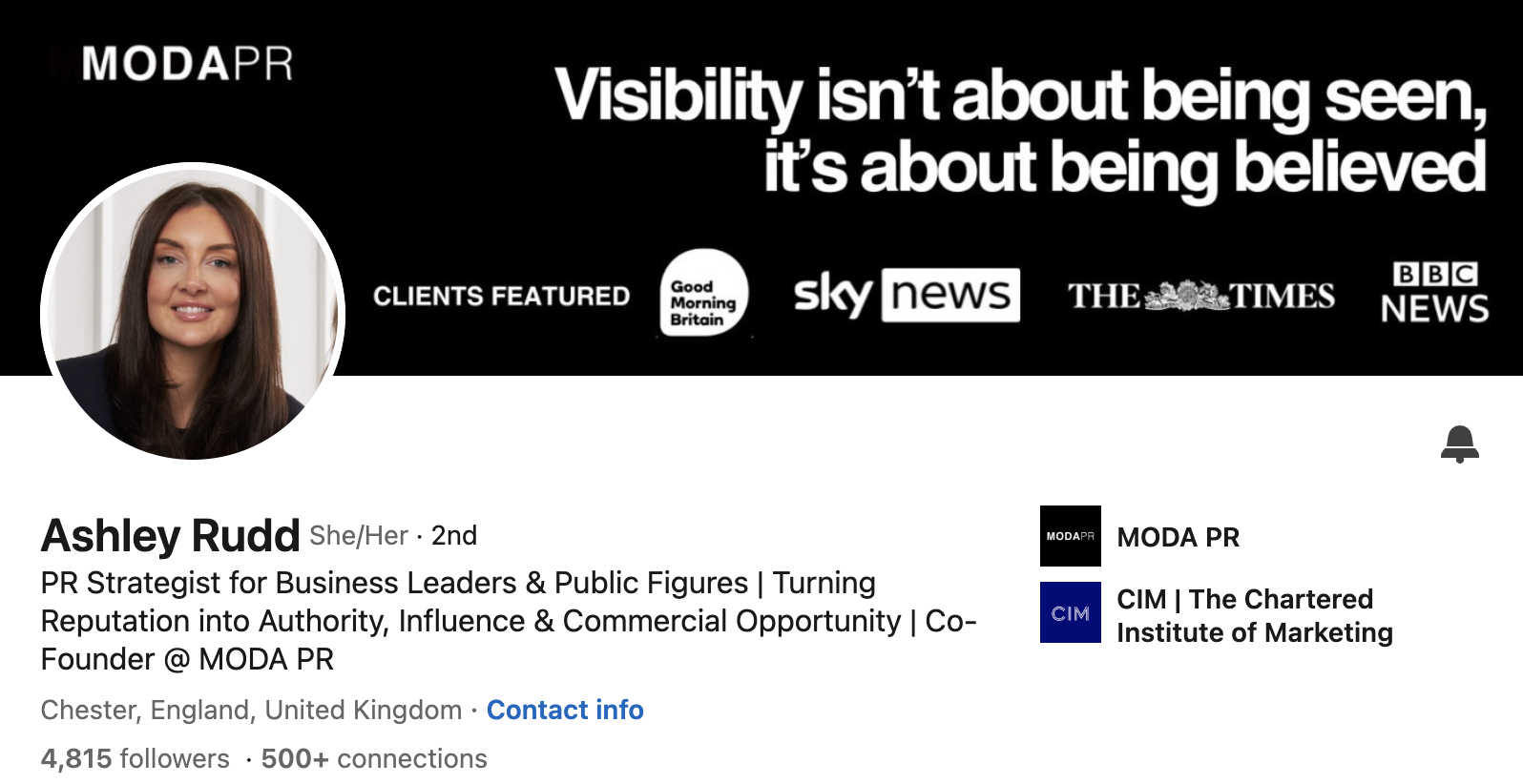
Before stepping into the deeper conversation, I asked Ashley to share a bit about the world she operates in, and immediately, it was clear why her perspective holds so much weight.
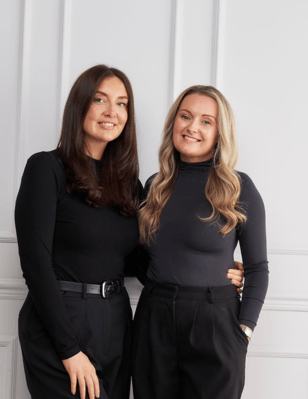
Ashley is the co-founder of MODA PR, a strategic PR and consultancy agency headquartered in the UK, with teams now established in New York, Los Angeles, and Dubai. Her agency specialises in personal PR, the kind that shapes experts, entrepreneurs, entertainers, and creators into credible, authoritative voices in their fields.
Our USP? We centre PR around commercial growth. It’s not enough for clients to be known. They have to be credible. Too many people chase headlines with no strategy. We bridge that gap: visibility + authority + commercial impact.
What sets MODA PR apart is its belief that PR should fuel commercial growth, not just press headlines for the sake of noise. "It’s not enough to be known,” Ashley tells me. “You have to be credible.” In an industry where many chase exposure without strategy, her agency is intentional about bridging the gap between visibility, credibility, and commercial impact.
When Ashley talks about MODA PR’s client base, she makes one thing clear, the industry has fundamentally shifted. Today, she says, it’s an even split between creators building businesses and business leaders realising they must behave like creators. The line that once separated “influencer” from “entrepreneur” has dissolved entirely. Creators are launching product lines, writing books, founding companies. Meanwhile, CEOs and founders, even those sitting comfortably at the top of their industries, now understand that visibility alone isn’t enough; they need to build thought leadership, show up online, and communicate like modern creators.
For Ashley, this hybrid ecosystem is where the magic happens. One client might be a viral content creator trying to move into mainstream credibility. Another might be a seasoned industry leader who’s barely created a LinkedIn post but suddenly needs to articulate expertise, tell their story, and connect with audiences more directly. MODA PR sits at the centre of that convergence.
Creators want to become entrepreneurs. Entrepreneurs realise they need to become creators. Whether we’re building someone’s thought leadership or helping them lean into virality and turn visibility into opportunity, it’s the same ecosystem now.
The broader media scenario, she notes, reflects that shift. Podcasts have become one of the most important press platforms, not the add-on they once were. Ashley points out how even A-list celebrities like Taylor Swift and Leonardo DiCaprio are using long-form audio as part of their strategic visibility. The old “smoke and mirrors” era of media has faded; audiences now expect transparency, depth, and a glimpse behind the curtain.
Creators and CEOs aren’t separate anymore. Creators build businesses; CEOs must create content. In 2025, everyone is a media brand.
She strongly believes that in today's world where information travels at the speed of TikTok, content creation isn’t optional anymore. CEOs are expected to have a digital presence. Founders are expected to build personal brands. Creators are expected to act like businesses. As Ashley puts it plainly: traditional PR hasn’t died, it has evolved, expanded, and merged with the creator economy.
The conversation turns to one of the biggest temptations in the current media scene, launching a podcast. It feels like everyone has one, so surely every client should too, right? Ashley disagrees. Strongly.
Yes. your story. Is it interesting? Does it align with their viewers? Have you got a solid following? Are you bringing an audience that's aligned to their podcast? Are you are you pressy? Is this going to generate headlines and awareness for the their podcast?
A podcast, she explains, is not a vanity project or a shortcut to authority. It’s a business in itself. It demands structure, clarity, and long-term commitment. You need an audience that already cares, content that speaks to their real pain points, and a strategy that extends far beyond “I have interesting conversations.” Consistency matters even more than creativity.
Podcasts aren’t side-projects anymore. They’re the new press tours.
Ashley has seen too many people assume they’ll become the next Diary of a CEO overnight, forgetting that Steven Bartlett started in his bedroom years before the show went mainstream. Podcast growth is slow, meticulous work and authority takes even longer to build. Starting one without strategy is no different than “throwing spaghetti at a wall,” as she puts it. Anyone can create a podcast; that doesn’t mean everyone should.
Our conversation naturally shifts toward another loaded word: authenticity. It’s everywhere in the influencer scene and nowhere properly defined. But Ashley’s definition is refreshingly practical. For her, authenticity is alignment. It’s showing up online exactly as you do offline. Your headshots, your messaging, your tone… it all has to make sense together.
If you do not wear red lipstick and a big massive curly blow during the day, why are you doing that in your head shots? That is not very authentic because people are going to meet you in person like, "Where's your red lipstick?"
Audiences are perceptive; inconsistency erodes trust faster than any algorithm update. Authenticity isn’t oversharing, trauma-dumping, or constantly broadcasting your bad days. It’s being grounded in who you are, across every platform and every touchpoint. As Ashley puts it: “You can’t fake authenticity, the mask slips eventually.”
Whereas today personal branding is currency, her take is a reminder that credibility is built through coherence, not performative vulnerability.
When I ask Ashley what her role looks like day-to-day, her answer reveals just how deeply embedded she is in the engine of her agency. As co-founder, she doesn’t just set direction, she’s in the trenches. She leads business development and shapes client strategy, but she’s also immersed in the daily work. “Maybe too hands-on,” she laughs, but it’s clear that involvement is intentional. It ensures consistency, quality, and what she calls a bird’s-eye view of the entire scene: clients, team, media, and opportunities.
I think having that bird's eye visibility across the agency is kind of like where me and Jen thrive.
Her day typically starts around 8 or 9 a.m. (her co-founder Jen, she jokes, is up by six). The morning ritual always begins the same way: an audit of the world. She scans the news cycle, cultural shifts, and anything that could become a strategic hook or a strategic obstacle.
My morning coffee scroll isn’t doomscrolling, it’s research.
From there, she moves into what she calls her “traffic-light check-in.” Every client account gets assessed as green (smooth), yellow (potential issue), or red (blocked). It’s a level of operational clarity more agencies claim to maintain than actually do.
Creativity, for Ashley, isn’t something she schedules. It arrives unpredictably, in the shower, while wandering around Aldi picking up cottage cheese, or in those quiet moments where her mind is wandering just enough for ideas to spark. She catches them on her phone before they evaporate. After that, the day fills with client calls, journalist outreach, campaign design, and problem-solving.
But perhaps the most fascinating part of her day-to-day work is how she navigates volatility, because PR is nothing if not reactive. Timing, she tells me, is everything.
In PR, timing is everything. And you can’t always control timing.
She recalls moments where the entire media scene shifted in an instant: the day the Queen died, for instance. One client was literally miked up in a TV studio, minutes from going live, when the news broke. Everything vanished. No segment. No press. No coverage for days. The nation entered a singular news cycle; nothing else existed.
Or the time Donald Trump visited the UK. Every story, every outlet, every platform shifted to him. Ashley laughs at the memory now, but at the time it meant weeks of strategy unraveling in real time.
PR is 50% strategy, 50% timing.
Her approach in those moments is simple, don’t fight the tide. Adapt. Pivot. And most importantly, communicate. Managing expectations with honesty is part of the craft, sometimes the only controllable part. In Ashley’s words, PR is basically about reading the room and knowing exactly when to move or when to wait.
Balancing long-term strategy with the daily grind of PR is one of the first things I ask Ashley about, because anyone who’s worked in this space knows how easy it is for strategy to get swallowed by urgency. She tells me the balance comes from a mix of discipline and flexibility: strict calendar management paired with the freedom to chase creative sparks when they appear.
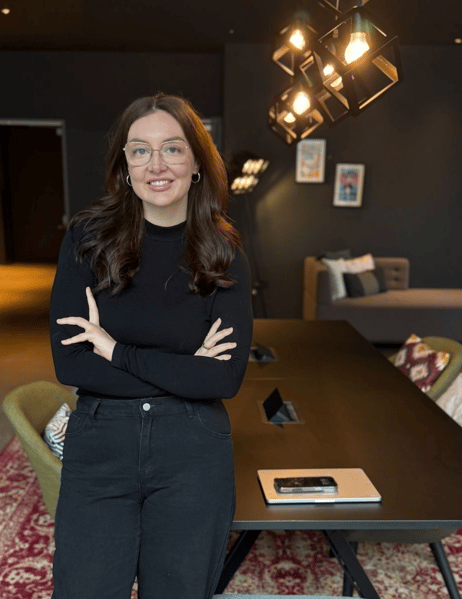
Her days require constant toggling between strategic vision and operational fires, a client who needs reframing, a journalist who needs a quote in ten minutes, a crisis that wasn’t on the schedule. But through it all, she holds onto clear messaging, a pulse on the media scene, and the bigger picture. It’s the only way an agency can stay out of reaction-only mode.
Then we turn to the psychology of ambition, specifically, clients who reach for the stars before they’ve even built a ladder. Ashley doesn’t roll her eyes or shut big dreams down. Quite the opposite. She loves ambition. But she approaches it with structure rather than fantasy.
I’ll never tell someone their dream is too big, I’ll show them the roadmap.
When someone tells her they want a Forbes cover, her response is never no, maybe it’s not yet. She reverse-engineers the dream:Do they have the right positioning? Do their headshots, story, and content match Forbes’ editorial expectations? Are they building the right kind of authority? What tiered publications need to come first?
In Ashley’s world, no dream is too big, but every dream has prerequisites. Timing is part of the strategy.
And for the haters out there, of course, even the best-laid strategies sometimes crash into reality. She tells me about a recent campaign that, on paper, should have worked beautifully, but the launch collided with a perfect storm.
The lesson Ashley took from that campaign is one she repeats often, PR success lives at the intersection of content, timing, and profile strength. Miss one, and the entire strategy wobbles. Miss two, and it collapses.
It’s a reminder that in this industry, good ideas aren’t enough, they need the right environment, the right person, and the right moment to hit.
When I ask Ashley about the hardest, least talked-about challenges in PR, she doesn’t hesitate. It isn't pitching. It isn’t the strategy. It isn’t even the news cycle. “It’s emotional intelligence…by far,” she says.
And as she explains it, I realise just how true that is. PR people sit at the crossroads of everyone’s emotions, creators battling imposter syndrome, CEOs masking insecurity with confidence, agents protecting their turf, journalists stressed on deadlines, brands panicking about timing or perception. You suddenly realise you’re doing more than managing narratives, you’re managing human beings.
Some days, creators need hand-holding; other days CEOs need reassurance. Some clients need to be encouraged. Others need to be gently grounded. You have to know which is which and when.
This emotional dexterity pairs with another non-negotiable skill, networking. And for Ashley, networking isn’t a nice-to-have, but part of her business’ infrastructure. “It’s the backbone of PR,” she says.
MODA PR didn’t inherit a London media Rolodex or start with legacy access. They built everything from scratch. They travelled to London once a month, followed leads, nurtured relationships, stayed curious, and stayed present. All of that invisible labour is what now makes their agency look effortlessly connected.
We built MODA PR’s network from scratch: virtual coffees, Zooms, events, monthly London trips. Relationships keep this industry moving.
But it’s the way Ashley builds relationships with clients that stands out most to me. Genuine connections, not transactional ones, are non-negotiable. The little things matter, such as sending a gift when a client has a baby, remembering weekend plans and following up, checking in without an agenda, clear, frequent communication, complete transparency, even when the news isn’t good, and above all, treating clients as people, not billable hours.
She laughs when she mentions contracts… “boundaries matter!” — but that point is important. Strong relationships require clear expectations. Clarity makes trust possible. Trust makes creativity possible. And creativity makes PR actually work.
In an industry obsessed with headlines, Ashley reminds me that the real work is often invisible. Listening, understanding, empathising, recalibrating.
Before MODA PR takes on any creator, entrepreneur, or public figure, Ashley makes it clear, not everyone gets through the door.
We’d rather have 50 great clients than 100 misaligned ones.
They’ve built a vetting system, part intuition, part framework, designed to protect the agency, its team, and its reputation. “We have a qualification table scored out of 100,” Ashley explains. It’s simple, but incredibly effective. Every potential client is evaluated across a set of criteria:
“If the score is under 50,” she says, “we decline. No hesitation.” Because in PR, taking on the wrong client becomes your identity by association. The wrong fit drains time, energy, morale, and reputation.
When I ask what her immediate deal-breakers are, the list is refreshingly clear and firm:
Ashley says it without flinching, “We’re not here to fix people’s morals. We’re here to amplify impact.”
Some campaigns define a quarter. Others define a career, so when I asked Ashley whether she had ever experienced a moment that made her think, “Yes, this is exactly why I do what I do,” she didn’t hesitate. She didn’t have one; she had many.
One of the most powerful was the work she led for Georgia Harrison, the former Love Island star whose private videos were shared without consent. MODA PR stepped in during the darkest phase of Georgia’s life, not just as publicists, but as strategic partners helping her navigate an extremely traumatic crisis.
Not all publicity is good publicity, only aligned publicity is.
That initial crisis work evolved into long-term activism, legislative awareness, national conversations, and ultimately, Georgia being awarded an MBE at Windsor Castle, presented by Prince William himself.
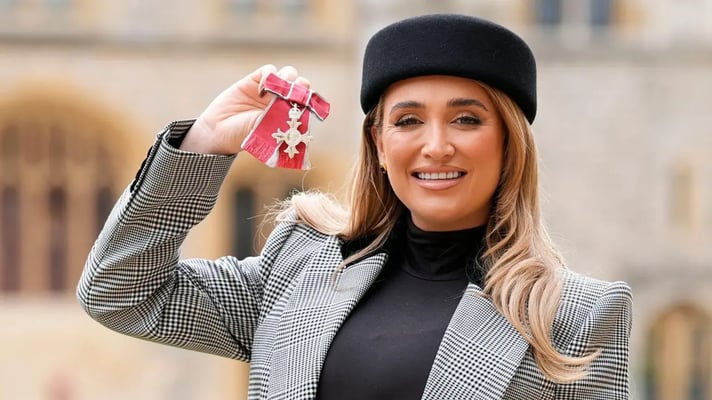 Source: BBC
Another was Sharon Gaffka’s drink-spiking activism, which MODA PR helped amplify. Sharon’s story sparked national outrage, safety reforms, and contributed to meaningful legislative change in the UK. These were not “PR stunts.” They were examples of PR as public service, communication used to protect, educate, and change systems.
“These moments prove PR isn’t superficial,” Ashley told me. “It can genuinely drive societal impact.” And she means it. These are the kinds of campaigns that require emotional intelligence, strategic foresight, and an ability to transform chaos into clear narrative and meaningful change.
When we shifted to what she loves most about working with creators and entrepreneurs, her answer was immediate and warm, collaboration.
Collaboration beats competition every single time.
She thrives when clients are open, curious, and willing to trust the process, not the ones who fight every step or cling to ego. “A collaborative client is worth ten resistant ones,” she said. “There’s nothing like watching someone fully step into their authority, when the confidence clicks, the messaging clicks, the opportunities start aligning, and you see them evolve in real time.”
For Ashley, that’s the magic of this industry, helping people rise, grow, heal, transform, and claim a space they didn’t know they were allowed to occupy.
Staying organised, grounded, and sane in PR is an entire skill set, one that Ashley has refined with intention. When I asked her how she avoids burnout, she didn’t give a glossy “self-care” answer. She gave a system.
I live in my Google Calendar. I even schedule rest.
Not metaphorically, literally everything goes in there. Meetings, deadlines, client priorities, even rest. She schedules what she calls “Quality Ashley Time” the same way she schedules media briefs or client calls. If the calendar says she’s not available, she’s not available.
She sends holding emails immediately to prevent backlog and mental clutter. No unanswered emails hanging over her head for days. And she rejects the cult of 5 a.m. hustle culture outright. Her philosophy, productivity is personal. Rest is non-negotiable. Time is the most valuable asset a founder has.
When we shifted to client management, Ashley shared her golden rules that shape how she leads both people and projects:
When I asked how this work has shaped her as a person, the answer was honest and reflective. She’s built resilience, sharpened emotional intelligence, learned to sit comfortably in discomfort, and developed the ability to adapt and stay grounded in chaos. Foundership forces you to grow up.
I don’t want to be the smartest person in the room, that’s where growth dies.
And finally, What does success look like to her now? It’s no longer about the Range Rover or the Chanel bag, though she still enjoys the perks. Success today is:
Owning her time.
Having freedom.
Creating meaningful impact for clients and culture.
“That's worth more than any headline,” she told me.
Speaking with Ashley felt like sitting down with someone who has lived the highs, lows, chaos, and evolution of modern PR from the inside. What stood out most to me was the human depth beneath it.
She reminded me that PR is equal parts craft and character. Data and intuition. Headlines and hand-holding. Vision and vulnerability. And more than anything, adaptability. Ashley approaches everything with honesty, resilience, and a refreshing lack of ego.
This conversation is a reminder of why I created Voices of the Industry in the first place, to give space to the real stories, the lived expertise, the behind-the-scenes truths of the people shaping influencer marketing, creator culture, and modern communications.







%20and%20How%20Can%20They%20Benefit%20Your%20Brand%20article.jpg?length=628&name=What%20Are%20Key%20Opinion%20Leaders%20(KOL)%20and%20How%20Can%20They%20Benefit%20Your%20Brand%20article.jpg)



.png?length=628&name=Pop-up%20image%201200%C3%97800@1x%20(1).png)