

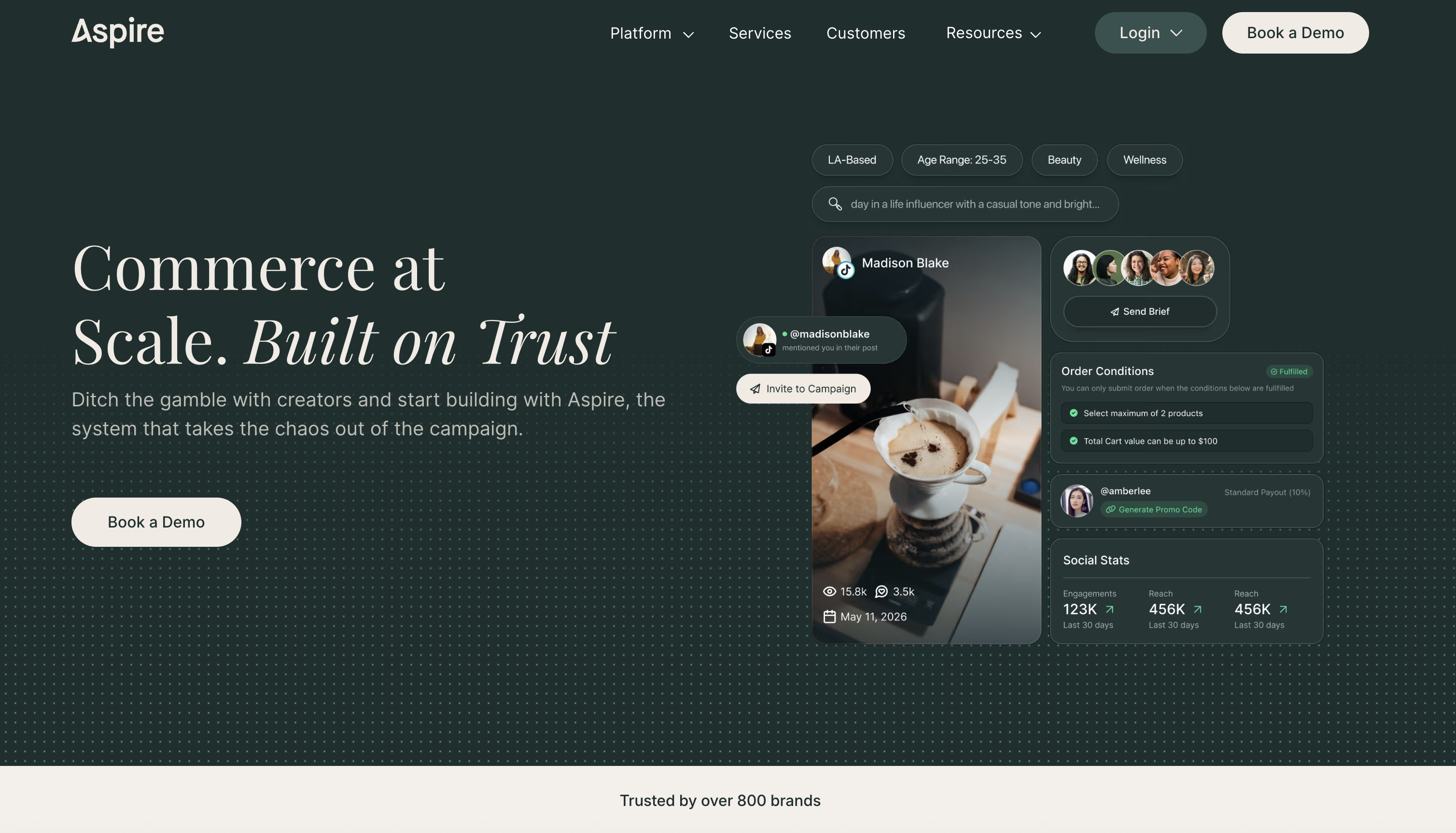
Selecting the right influencer marketing software is a critical decision that dictates your customer acquisition costs (CAC) and campaign execution speed. While both Aspire (formerly AspireIQ) and Grin are dominant names in the enterprise creator space, they are engineered for vastly different operational models.
Choosing the wrong platform can burden your team with rigid workflow constraints, data limitations, and high-commitment contracts. This head-to-head comparison breaks down the technical differences between Aspire and Grin to help you identify the ideal solution for your workflow, while highlighting how forward-thinking brands are bypassing legacy limitations altogether.
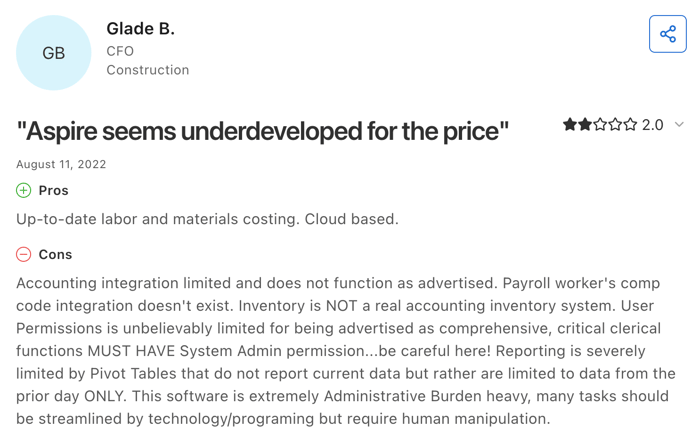
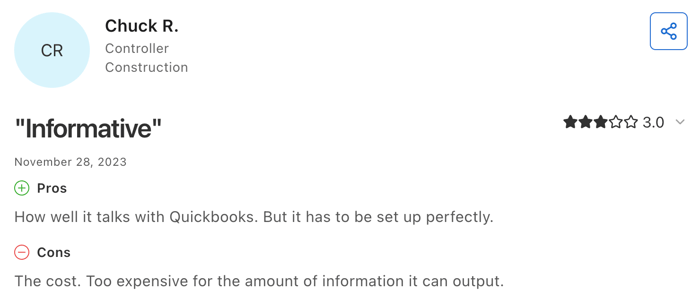
Despite its market presence, a growing segment of B2B SaaS and D2C brands are actively searching for alternatives to Aspire. While the platform excels at structured campaign workflows, users frequently encounter friction points that slow down campaign momentum.
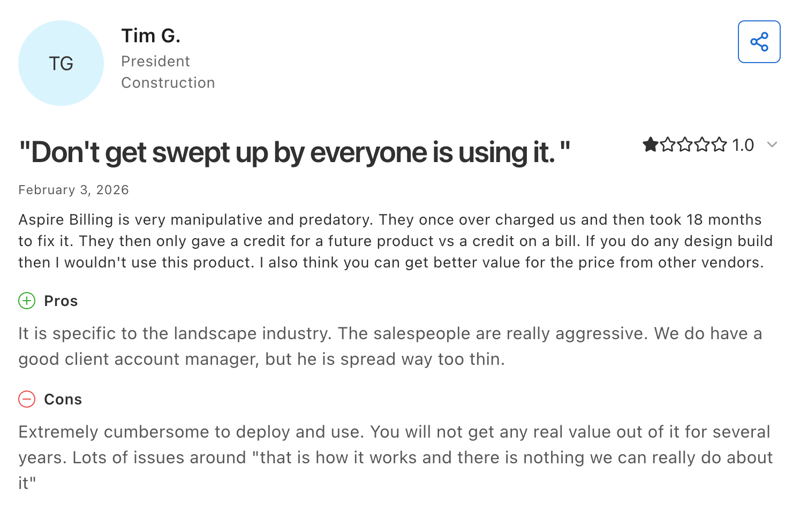 Source: Capterra
To bypass these hurdles, performance marketers are transitioning to open systems like Influencity. By pulling over 30 advanced metrics directly from verified public data, Influencity allows teams to instantly vet any creator's audience quality and demographics with zero opt-in requirements and zero onboarding friction.
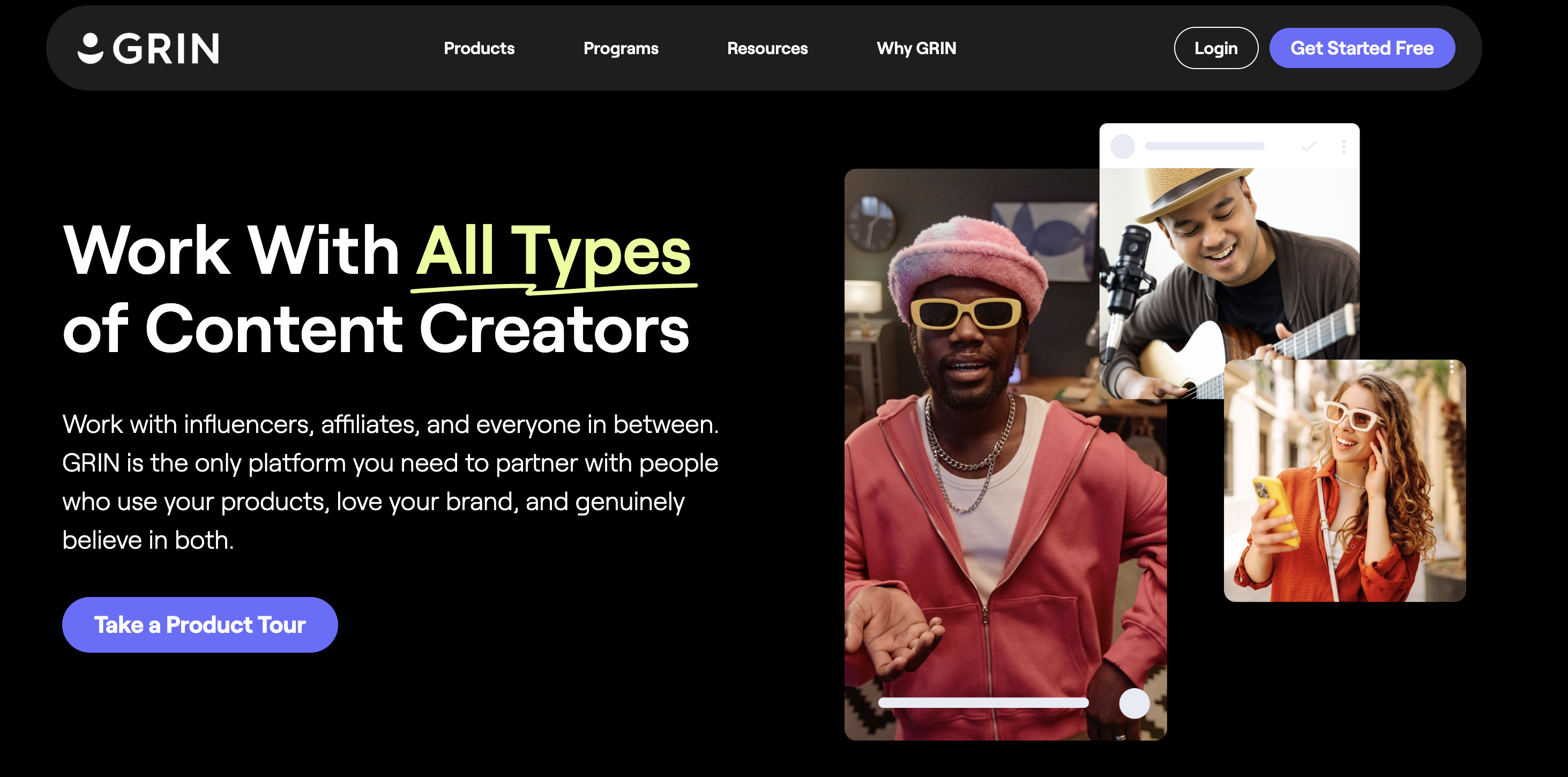
The ultimate success of your influencer campaigns relies on finding the right partners. However, Aspire and Grin approach creator discovery through opposing design philosophies.
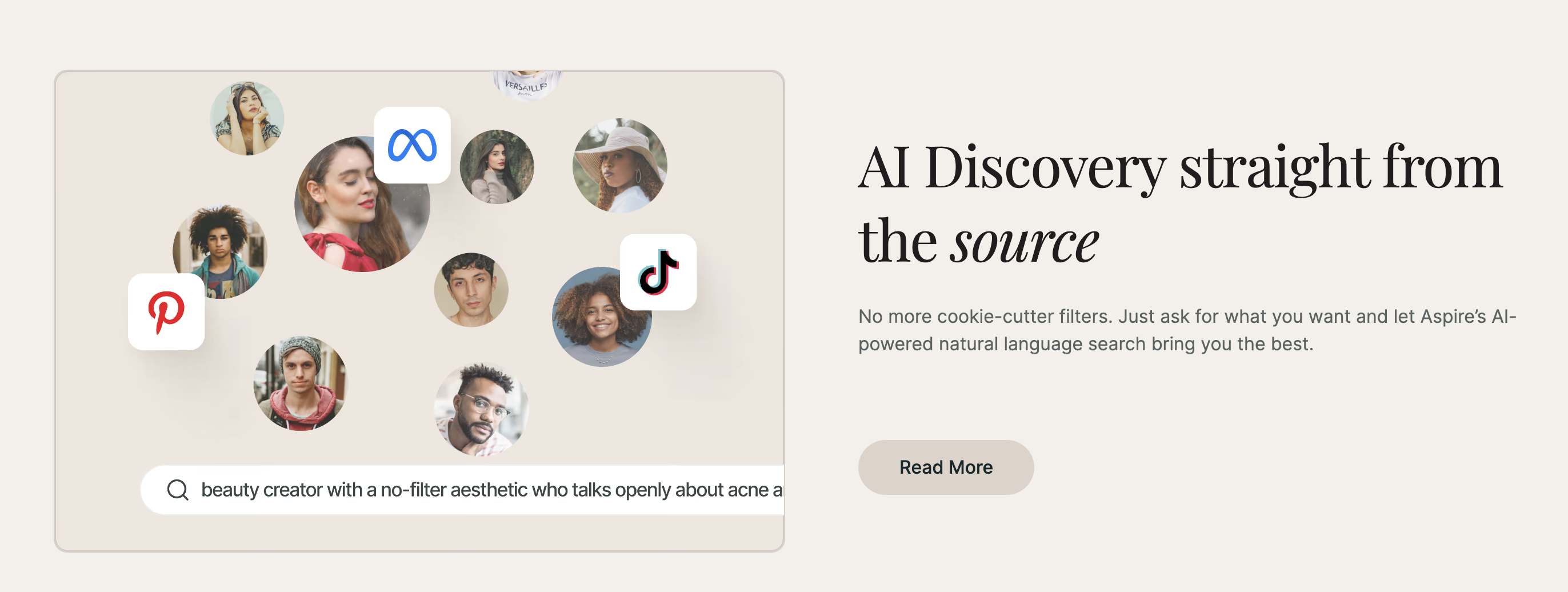
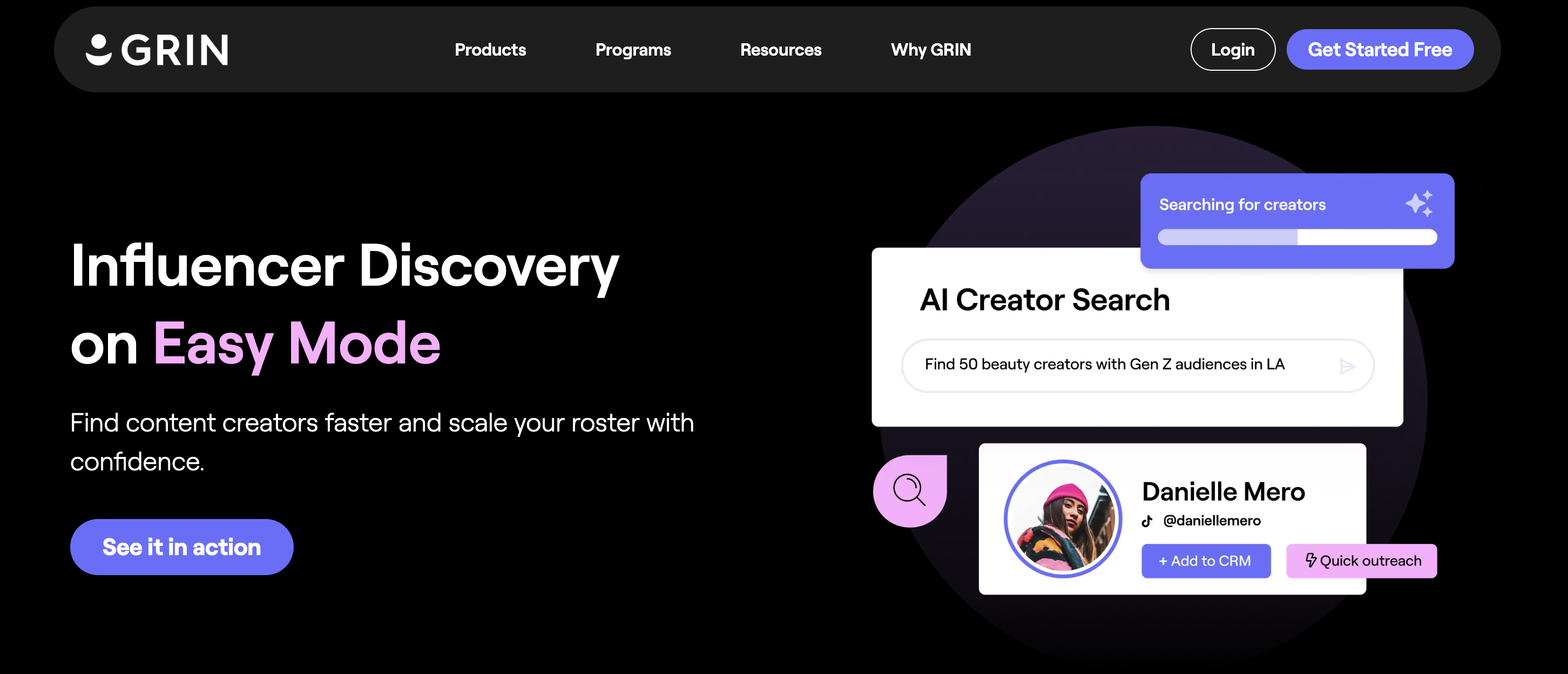
Marketers seeking a broader scope often find these closed systems restrictive. For instance, Influencity bypasses the creator opt-in requirement completely, analyzing over 350 million profiles across Instagram, YouTube, and TikTok using verified public data. This allows teams to analyze lookalike creators, check audience demographics, and evaluate follower quality on the fly before initiating contact.

For direct-to-consumer (D2C) brands, creator campaigns function as a primary engine for product seeding. Manually coordinating shipping, size selection, and promo tracking across hundreds of creators is a massive operational bottleneck.
| Integration Vector |
Grin |
Aspire |
|---|---|---|
| Shopify Connection |
Native deep sync with Shopify, Shopify Plus, and Magento. |
Native sync with Shopify and WooCommerce. |
| Product Fulfillment |
100% automated; creators select sizes/variants directly inside their portal, generating orders in Shopify. |
Manual coordination; requires brands to handle shipping and fulfillment outside the core platform. |
| Sales Attribution |
Automated creation of affiliate deep links and personalized discount codes. |
Robust affiliate tracking with native integrations like Impact and ShareASale. |
Read full review
The Integrated Alternative: D2C brands that want to automate seeding without paying for complex enterprise-level software use Influencity’s e-commerce integration. It connects directly with your Shopify store, enabling 1-click product gifting, custom discount code generation, and direct conversion tracking from a single dashboard.
/influencer-seeding-slider-tabs-shopify-image-composition.webp?width=1728&height=1080&name=influencer-seeding-slider-tabs-shopify-image-composition.webp)
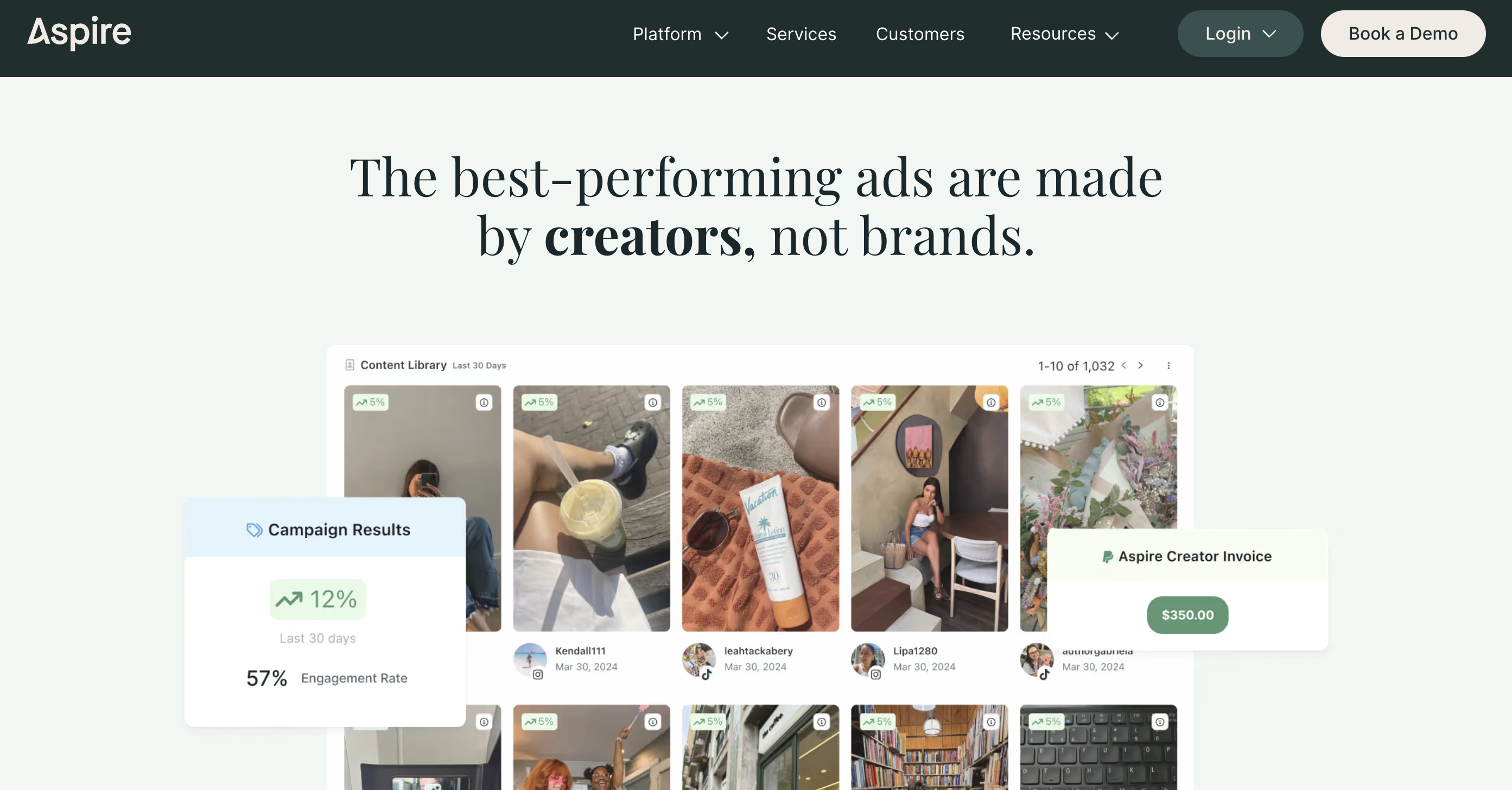
While Grin focuses heavily on logistics, Aspire is engineered for campaign workflow automation and paid advertising execution.
Aspire’s Workflow Strength: Aspire boasts an impressive 90% automation rate for in-campaign tasks. This includes automated legal contract generation, multi-stage content approvals, and direct payouts via PayPal and Stripe. Crucially, Aspire is a Meta-Approved partner with native TikTok Spark Ads integration. This allowlisting system lets your paid social team easily turn high-performing organic creator content into paid ads.
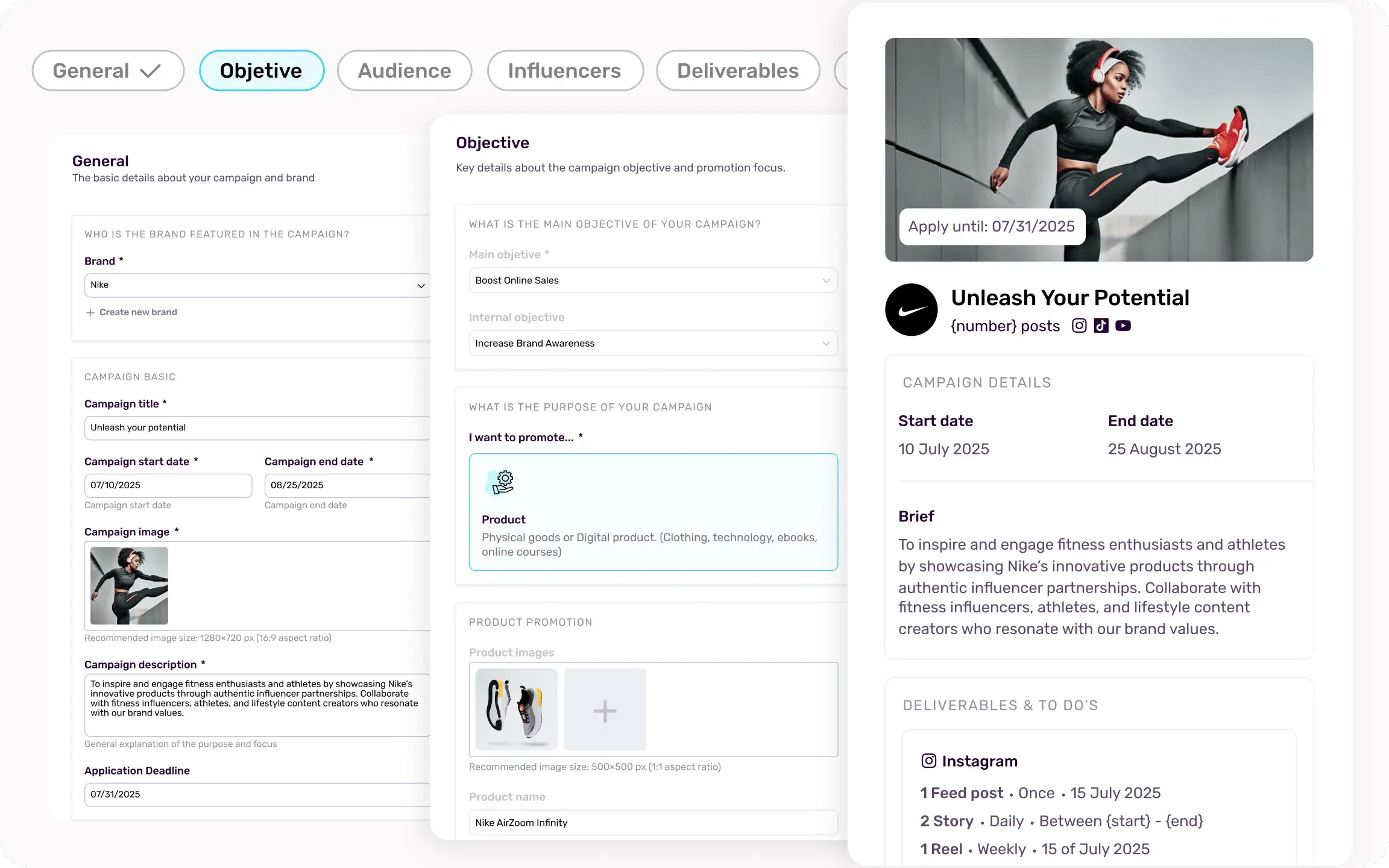
The Consolidated Perspective: If your program requires balanced workflows without heavy administrative overhead, Influencity provides intuitive visual pipeline boards, customized briefs, and automated email sequences that automatically pause the moment a creator replies. It also lets you schedule owned brand content and monitor creator mentions inside the same dashboard, unifying your earned and owned media strategy.
Procurement and contract commitment length are often the deciding factors for modern marketing teams.
Source: Capterra
When evaluating Aspire against Grin, marketers are often forced to choose between Grin's deep e-commerce fulfillment tools and Aspire's structured campaign workflows. Influencity eliminates this compromise by serving as the premier, friction-free alternative to both platforms.
By combining a massive, 350-million-profile open database with a native Shopify integration and flat, transparent pricing, Influencity provides the analytics depth of Grin and the campaign workflows of Aspire—delivered with the financial agility of a month-to-month contract. Whether you are a scaling D2C brand running product-gifting campaigns or an agency looking to centralize multi-client management, Influencity allows you to run high-impact campaigns without long-term enterprise constraints.
/influencer-seeding-slider-tabs-shopify-image-composition.webp?width=800&height=500&name=influencer-seeding-slider-tabs-shopify-image-composition.webp)
No. Both Aspire and Grin rely on first-party authenticated data, meaning your creators must log in and sync their social channels to the platform for you to monitor campaign views and metrics. If you prefer a friction-free approach, Influencity uses public data to track and validate posts, Reels, and TikTok videos in real-time without requiring creator opt-in.
Grin provides deeper, automated Shopify-native integrations, making it the superior option for high-volume product seeding. Aspire connects with Shopify but requires manual shipping and fulfillment tracking outside the core platform. For a more cost-effective alternative, Influencity's Shopify integration syncs your product catalog to handle bulk gifting and discount tracking in one interface.
Grin primarily utilizes PayPal-only payouts, which can force international creators to absorb conversion fees. Aspire supports PayPal and Stripe with integrated affiliate tracking. Influencity provides the most reliable global framework, supporting creator payments in 143 currencies across 186 countries, sending a single, consolidated invoice to your finance department.
The best platform depends on your business goals. Aspire is known for its creator marketplace and inbound applications, GRIN is popular among DTC brands running product seeding programs, while Influencity offers a complete influencer marketing platform with AI-powered creator discovery, Influencer Relationship Management (IRM), campaign management, Social Listening, ecommerce integrations, and advanced analytics. For brands looking to manage the entire influencer marketing lifecycle from one place, Influencity provides the most comprehensive solution.
If discovering new creators is a priority, Influencity provides access to more than 350 million public creator profiles across Instagram, TikTok, and YouTube. Its AI-powered search engine, audience insights, lookalike discovery, brand affinity analysis, brand safety, a Chrome extension and more than 60 advanced filters help brands identify creators that match their audience and campaign goals.
Yes. Influencity brings together creator discovery, Influencer Relationship Management (IRM), campaign execution, content tracking, Social Listening, ecommerce integrations, reporting, and analytics in one platform. This allows brands to reduce tool sprawl, simplify workflows, and manage every stage of influencer marketing without switching between multiple systems.
Many brands need more than influencer discovery or product seeding. Influencity combines creator discovery, campaign management, audience intelligence, Social Listening, creator relationship management, ecommerce integrations, social media management and reporting in one scalable platform. This enables marketing teams to execute campaigns more efficiently, improve collaboration, and measure performance without relying on multiple disconnected tools.







%20and%20How%20Can%20They%20Benefit%20Your%20Brand%20article.jpg?length=628&name=What%20Are%20Key%20Opinion%20Leaders%20(KOL)%20and%20How%20Can%20They%20Benefit%20Your%20Brand%20article.jpg)






.png?length=628&name=Pop-up%20image%201200%C3%97800@1x%20(1).png)