

Back in 2023, our social media feeds were suddenly flooded with images and videos of a certain 40oz water tumbler. This phenomenon, by itself, wasn’t exactly unusual or intriguing.
None of us social media natives are strangers to the concept of internet hype. Trends come and go – one day it’s fidget spinners, the next day it’s strawberry dresses. While some fads dissolve as quickly as they emerged, some internet trends introduce us to hidden gems that will take up a permanent spot in our culture. Nevertheless, the online frenzy around a particular trend, whether it’s fashion items like the Ugg boots or viral TikTok dance moves, shouldn’t come as a total surprise to anyone. But there were two things that made this trend in question particularly fascinating. The first factor was the scale of the virality; the second was how unexpected it was.
While almost every brand in existence is getting in on the social media marketing game, historically, our digital spaces have been home to more visually-engaging, trend-led industries like fashion, beauty, and entertainment. So the idea of a 100-year-old drinkware brand, once reputed for providing hydration to soldiers on battlefields, suddenly taking over our screens wasn’t on anyone’s bingo card.
How did a brand that has existed for over 100 years suddenly gain an online popularity that can only be described as ‘explosive’? Was it sheer luck or by design? This piece will dig into the riveting story behind Stanley 1913’s unexpected virality. Spotlighting the marketing genius behind the brand’s meteoric success, we will also identify valuable lessons other brands can draw from his playbook.
Founded by William Stanley Jr. following his invention of the world’s first all-steel insulated bottle, the legacy brand established itself as a more rugged brand targeted at men. Known for its durability, Stanley 1913’s insulated bottles gained a loyal following among blue-collar workers, outdoorsmen, and military personnel.
Although the brand’s traditional strategy held its own, generating $70 million in revenue in 2019, an unlikely encounter triggered a rebrand that dramatically changed the game for the brand.
Back in 2017, a group of women behind the budding internet blog called The Buy Guide expressed their love for the Stanley 40oz Quencher on their Instagram.
Although this recommendation was gaining traction among their audiences, the small community’s love for the tumbler failed to catch the brand’s attention at first. That was until the bloggers gifted the tumbler to Bachelorette star Emily Maynard, who shared it on her Instagram story. This exposure reached Lauren Solomon, a sales director at Stanley, who contacted the bloggers for a wholesale partnership. In addition to the reintroduction of the beloved tumbler through a few limited, highly successful launches, this partnership introduced the brand to a new target demographic that would bring in 10x their usual annual revenue.
When Stanley 1913 first connected with The Buy Guide, it was still new to the social media game, much less the new community it had found itself at the center of. Although its 40oz Adventure Quenchers were flying off the shelves through their B2B partnership, conquering the world beyond the blog's community was still a formidable feat. A brand that had previously targeted outdoor and adventure enthusiasts with social media captions such as “Adventure fortunately means you’re going to get a little dirty” and “Here’s to getting sun in your eyes and dirt in your boots” needed a fresh social selling angle to connect with its newfound audience.
In came Terrance Reilly (CMO) from Crocs. This marketing genius was the vital reinforcement Stanley 1913 needed for exploiting the golden opportunity it had been handed. Continuing the legacy he established with Crocs, in which he helped transform a popularly ‘uncool’ brand into an ‘in’ footwear among the youths, Reilly pushed Stanley 1913’s rebranding efforts to unprecedented heights as its new president.
Before the Stanley Quenchers gained overnight virality, the brand made several moves to gradually lean into its newly discovered demographic. From revamping its website to introducing new colors such as pastels and bold red, Stanley was slowly redesigning its product to cater to its true ideal customer base – women.
Its social media page, which had traditionally featured images of men in rugged, outdoor locations, was also starting to feature women in more casual, day-to-day settings.
This gradual yet purposeful shift laid the groundwork for what this rebrand would bring.
The Stanley 1913 team didn’t necessarily set out to do a complete overhaul of their marketing strategy and target, but when an opportunity presented itself, they not only seized it but milked it for all it was worth. Strategically, of course. This approach guided much of the brand’s growth trajectory.
The brand’s new leader, Terrance Reilly, was a firm believer in the power of social media: “I spend a lot of time on Instagram, WhatsApp, TikTok, YouTube…social media in general is just an amazing opportunity for any brand of any size…That’s where consumers are,” he told the New York Post during an interview.
Hence, using social listening to seize new marketing opportunities became his M.O of choice. This tactic enabled him to turn the brand’s budding momentum into an explosive viral sensation when tragedy struck a certain internet user.

In 2023, TikTok user @danimarielettering shared a video of her car, which had been completely destroyed in a fire. One thing stood out in the video – a completely unharmed Stanley Quencher still standing strong in her cup holder, with the ice still intact as she shook it. However unfortunate this incident was, the viral video served as a convincing testament to the bottle’s quality.
But instead of simply amplifying the post and sharing it across social media, Reilly did something even better – he gifted the user a brand-new car. The story alone was a powerful enough promotion for the brand, but this altruistic move boosted Stanley 1913’s brand sentiment to the next level.
Ever since The Buy Guide shared their love for the Adventure Quencher with their community of followers, Stanley’s revival and eventual virality have been powered by community-driven word-of-mouth testimonials.
During the time of the viral car fire incident, Stanley 1913 was already taking center stage within a certain TikTok community. Originated by bariatric patients who were jazzing up their liquid-diet experience with zero-calorie flavor packets and syrups, the WaterTok trend served as a powerful marketing boon for the brand. Videos of users sharing new water recipes and exciting flavor combos were filling up the platform, and these users had a particular cup of choice – the 40oz Stanley Quenchers.
This trend generated valuable organic UGC for the brand, rapidly exposing the beloved tumblers to a wider TikTok audience.
Speaking on the power of this organic, community-driven exposure, Terrance Reilly’s successor Matt Navarro, who was working as the senior vice president at the time, told Retail Dive, “Frankly, the consumer sort of took over for us in places like TikTok where we have 700 million views of #StanleyTumbler on TikTok… All of the videos and content on TikTok are user-generated. So it’s really the consumer connecting to our brand through social media, and just putting the consumer first.”
When the Stanley cup trend first took off, the brand’s production volume failed to keep up with the intense demand, resulting in restocks and launches selling out in a matter of days. However, rather than damaging brand sentiment, this scarcity worked in Stanley’s favor, boosting demand and purchase intent. This was the result of a psychological phenomenon called the scarcity effect. According to Barton et al, “Cues that signal the current or potential unavailability of a product generally enhance its value and desirability and in turn increase purchase intentions.”
This scarcity marketing model became one of the brand’s core tactics. By introducing new colors, limited-edition releases, and collaborations, Stanley 1913 continued to drive demand for their Adventure Quenchers among collectors and hydration enthusiasts.
At the height of the trend’s virality, a video of customers camping outside Target stores and scrambling to get their hands on the limited-edition Stanley x Starbucks Quenchers made rounds on the internet.
This viral video, perfectly showcasing the intensity of the craze, triggered strong mixed reactions among users who were still out of the loop.
While this craze received plenty of negative reactions from users, with some calling it ‘sad’ or ‘stupid’, others were a lot more supportive, comparing it to the good old days of camping outside for video games and footwear drops, “I see people getting mad at this but we used to camp outside for shoes, video games, etc. sort of glad to see something like this return and it not be bought online.” one user wrote.
Regardless of the mixed reactions, this incident only fueled the hype, sparking curiosity and eventual conversion among a wider audience. That is the power of the scarcity effect in action.
When we trace the history of Stanley 1913, from its inception to its eventual virality, one thing that really stands out is how unexpected the catalyst was.
A heritage brand that has survived for over a century with an enduring legacy, finally reaching a historic peak after a complete 180. This story is certainly one for the books. But what’s even more remarkable is how it happened. Stanley 1913 found its growth catalyst in the intersection between ‘boring’ basic essentials and the community of women who, according to The Buy Guide’s Ashlee LeSueur, “are the buyers of our economy”.
Historically, viral product trends on social media featured more entertainment-focused products like fashion and beauty. So for brands in ‘unsexy’ sectors like household goods, online virality used to feel like a pie in the sky. But Stanley 1913’s story defied this preconception. By leveraging the social selling power of social media influencers, Stanley found a way to connect with the main drivers of today’s digital culture and consumer economy. Using this playbook, brands in traditionally ‘boring’ sectors can identify and leverage similar openings to reach communities outside their usual target.
While identifying your niche target is important, Stanley 1913’s story proves that your best opportunities can be brewing outside your traditional niche. So brands shouldn’t limit themselves either. For instance, brands can use an influencer marketing platform to identify certain intersections where they can reach users with overlapping interests. Influencity’s “Audience Interest” filter is the perfect feature for this.
This feature lets you filter influencers by their audience’s interests, with the option to input multiple categories and classify these selections by percentage.
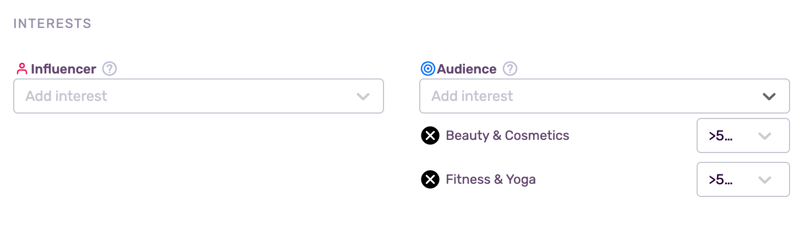
Say you are a household goods brand looking to boost brand awareness through a lifestyle creator. Since this isn’t your usual niche, you must first ensure whether the creator’s audience will be interested in your product. If you choose just any lifestyle influencer, your message may fall on deaf ears. In such a case, this filter lets you discover lifestyle creators whose audiences are interested in categories that fit your niche, such as “Home Organization”.
The Stanley Quencher didn’t gain traction by swamping our social media feeds with promotional content or shoving cold sales down our throats. Listening to community voices helped the brand drive further growth. By adopting a similar approach, brands can use social listening to identify and seize valuable opportunities outside their traditional realm.
Marketing mastermind Terrance Reilly helped Stanley and Crocs communicate with new audiences through strategic collaborations and influencer-led narrative-building.
The Stanley Adventure Quencher gained popularity through a series of community-led awareness-building. These social selling efforts eventually compounded into an explosive trend across social media.
Stanley 1913 releases limited-edition designs in small batches, sparking customers’ desire to collect and own every release. This scarcity effect drove increased demand, further fueling the hype and bringing in more conversions.
Brands in traditionally unexciting sectors can create buzz around their products by staying alert for marketing opportunities across the wider digital landscape.
By analyzing creators based on audience interests, brands can discover creators outside their niche whose audiences align with their target audience.










%20and%20How%20Can%20They%20Benefit%20Your%20Brand%20article.jpg?length=628&name=What%20Are%20Key%20Opinion%20Leaders%20(KOL)%20and%20How%20Can%20They%20Benefit%20Your%20Brand%20article.jpg)