


When Charlotte Mair logged onto our interview, the very first thing she did was apologise. “I’ve just got in from the gym, so I’m not exactly camera-ready,” she laughed, slightly out of breath.
In all honesty, it was the perfect, unfiltered introduction to the Founder and Managing Director of The Fitting Room. The irony? Had she not mentioned it herself, I would never have guessed. Her hair looked impeccable, and she seemed completely at ease, calm, collected, and effortlessly polished.
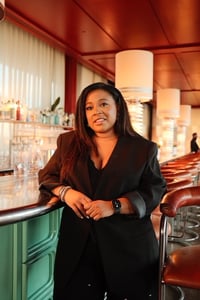
I had admired her work from afar for quite some time, but speaking with her 1 to 1 deepened that admiration in a way I hadn’t expected. Experiencing her character firsthand, warm and sharp, it was genuinely inspiring.
In an industry so often consumed by the illusion of perfection, where agency leaders meticulously curate their LinkedIn personas to project effortless corporate glamour, Charlotte stands out for a different reason. She is unapologetically grounded. And in a space that rarely allows room for that kind of honesty, it’s both refreshing and rare.
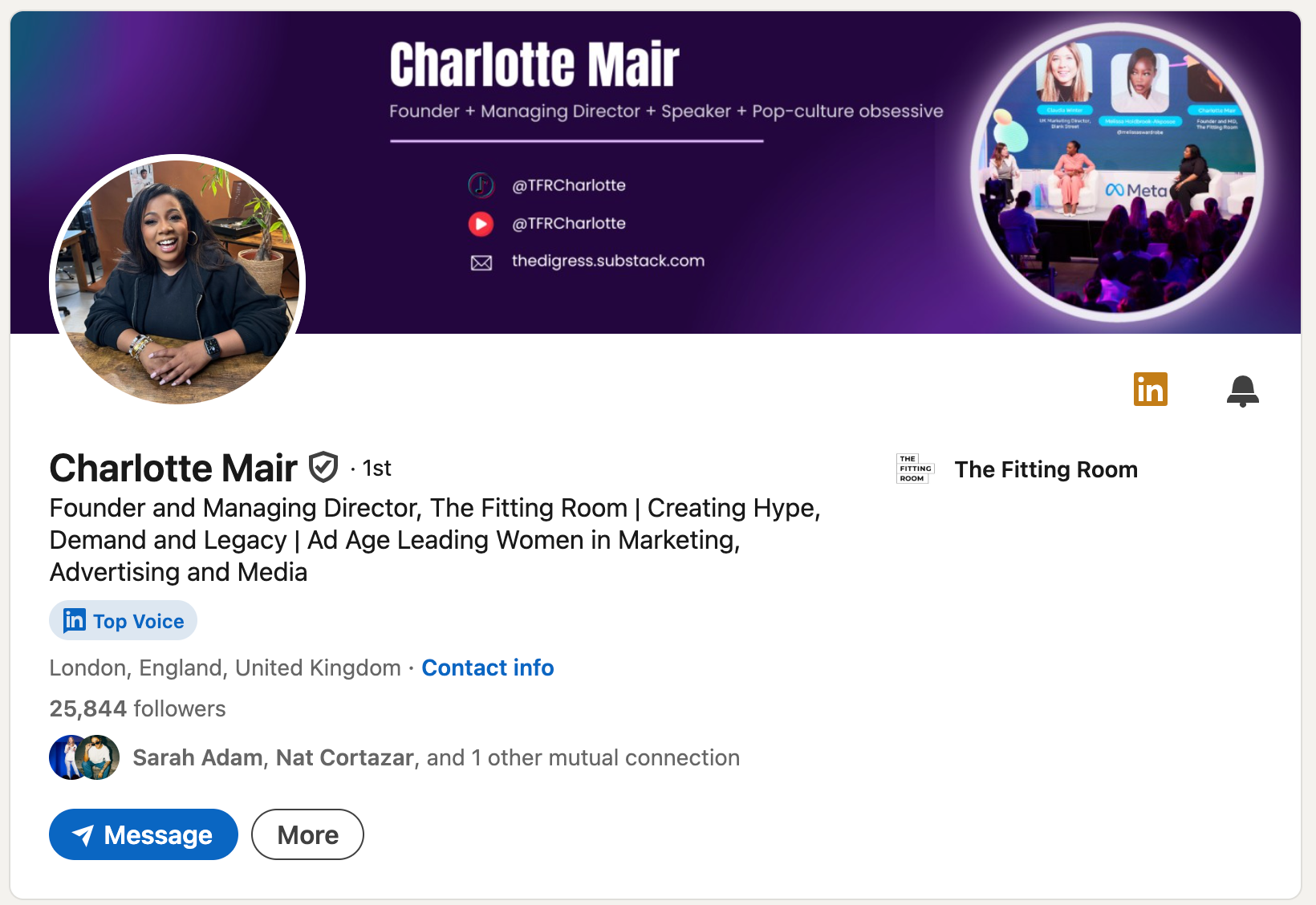
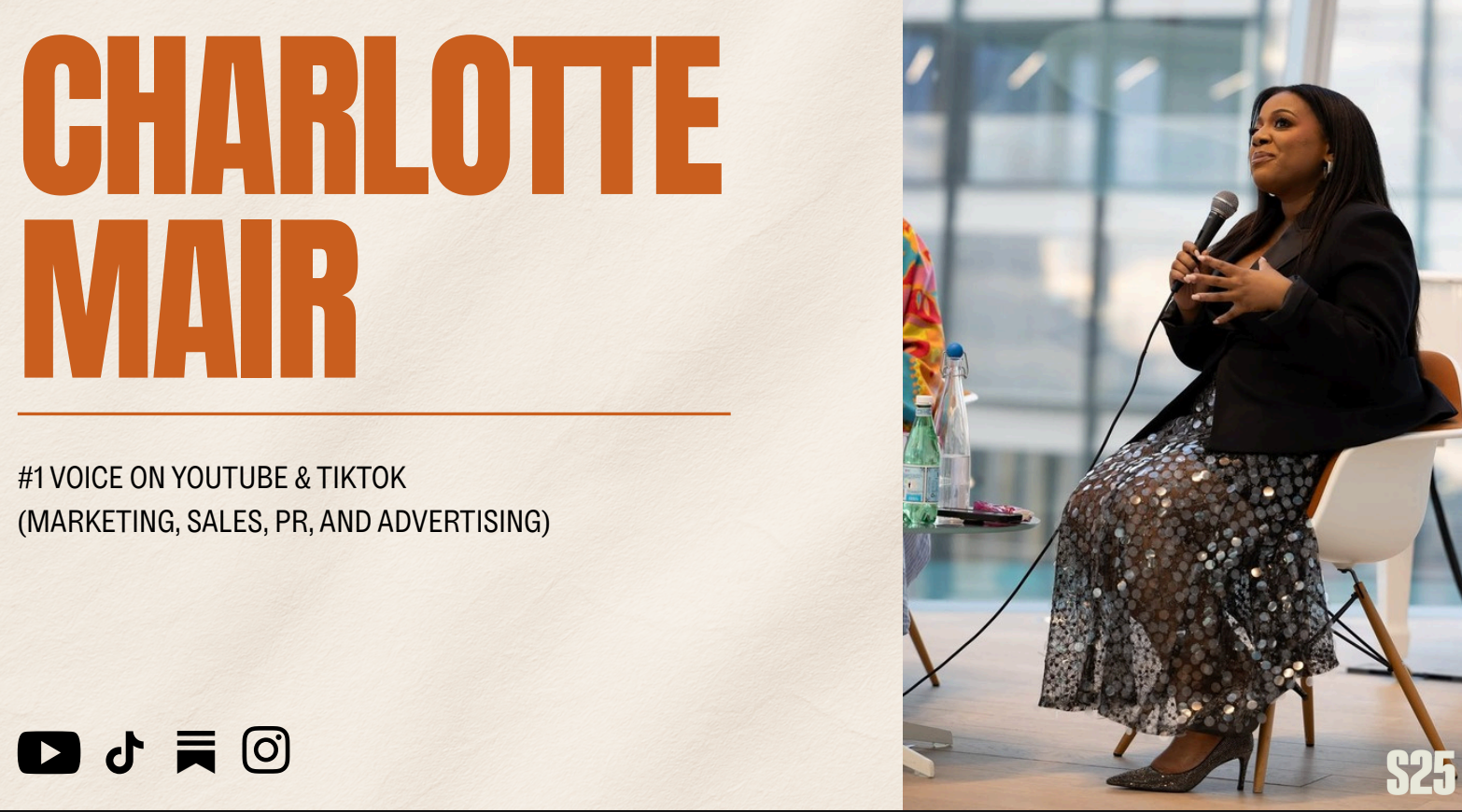
Let me introduce you to what she does and how she over-does it. Charlotte is a woman who famously launched an award-winning culture and communications agency with just £17.22 in her bank account. Today, she frequents the highest-stakes boardrooms for global giants like Popeyes, Meta, and Pernod Ricard.
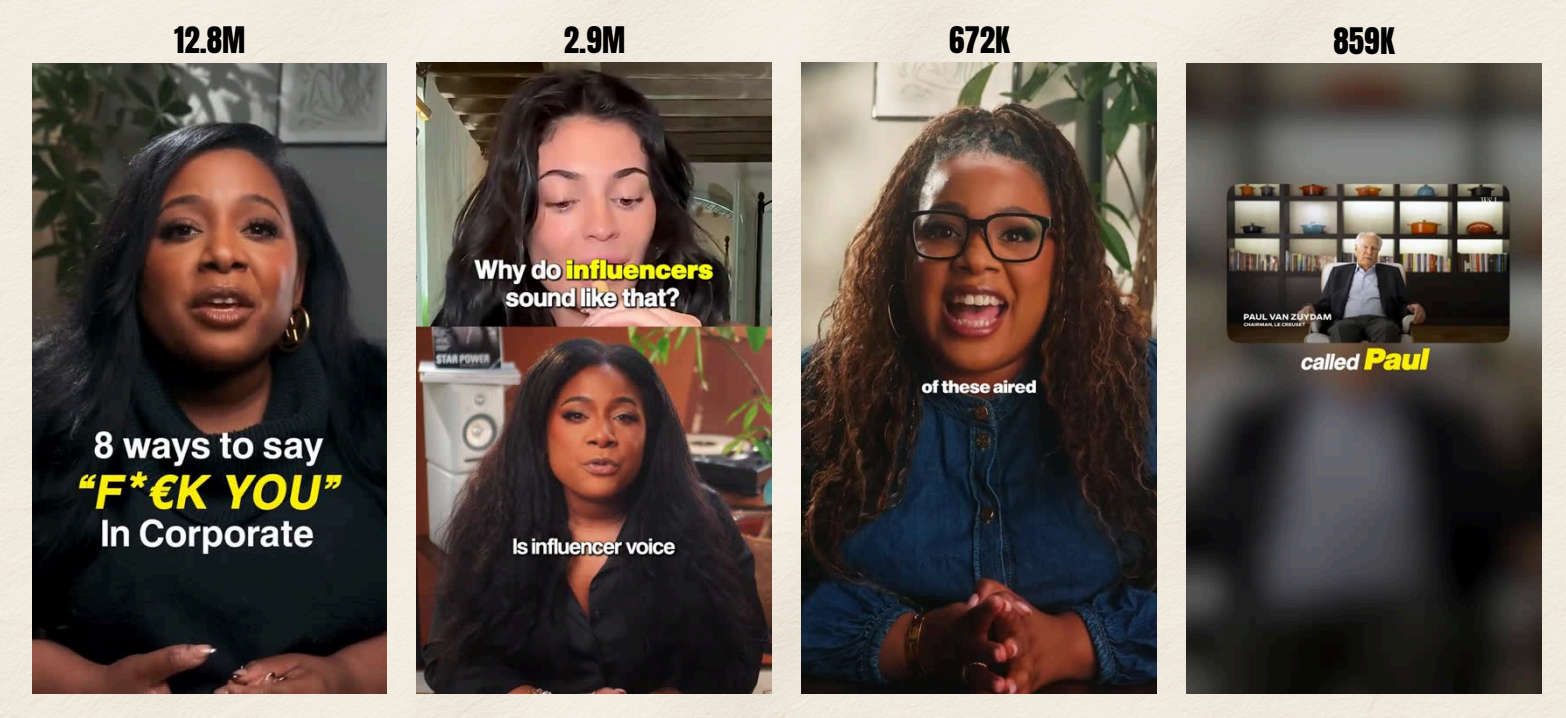
She has built an audience of over 220,000 across TikTok and YouTube in mere months. She is fierce, she is brilliant, and she possesses a relentless, action-oriented energy that is entirely infectious. I just could not stop saying 'Love that!' through out a big part of our convo.
Knowing what I knew about her, I must confess, I was slightly intimidated going into this interview. I had done my research, and her track record is staggering. But within three minutes, my meticulously prepared questions were set aside, and we were laughing about the absurdities of marketing.
We didn't talk about vanity metrics or hollow industry buzzwords. Instead, we talked about the gritty reality of entrepreneurship, the danger of losing our critical thinking to AI, and why the most effective marketing strategies are actually born in the bathroom of a nightclub.
Here is the uncensored truth from Charlotte Mair on how to build a legacy without losing your soul.
Every great agency is born out of a specific frustration. For Charlotte, it was the chronic lack of imagination in corporate marketing briefs.
"I’d had a PR agency for a few years, and I just didn't like the briefs that we were getting,” Charlotte recalled, reflecting on the early days of her career. “They were a bit subpar, a bit low-rent, and I was like, this is not the vibe".
Charlotte’s unique cultural lens became her ultimate superpower. Growing up in a predominantly white area and attending a grammar school, she found herself constantly experiencing vastly different worlds. She looked across the Atlantic to the US for inspiration, specifically observing the excellence, the drive, and the narrative power of hip-hop and streetwear, and realised there was a massive gap in the UK market. She wanted to build a bridge between subculture and corporate strategy.
"I realized I could build a business that sits at the intersection. I can package 'cool' into a way that corporates can digest and buy, and I can do that as a Black woman in all her glory, who is also highly educated and knows exactly how to communicate in those boardrooms."
The final catalyst came after reading Steve Stoute’s seminal book, The Tanning of America. Everything clicked into place. She rebranded her traditional PR agency into The Fitting Room. The name itself is a masterclass in universal storytelling. In literature, we often look for the universal human experience, and Charlotte found it in the retail space.
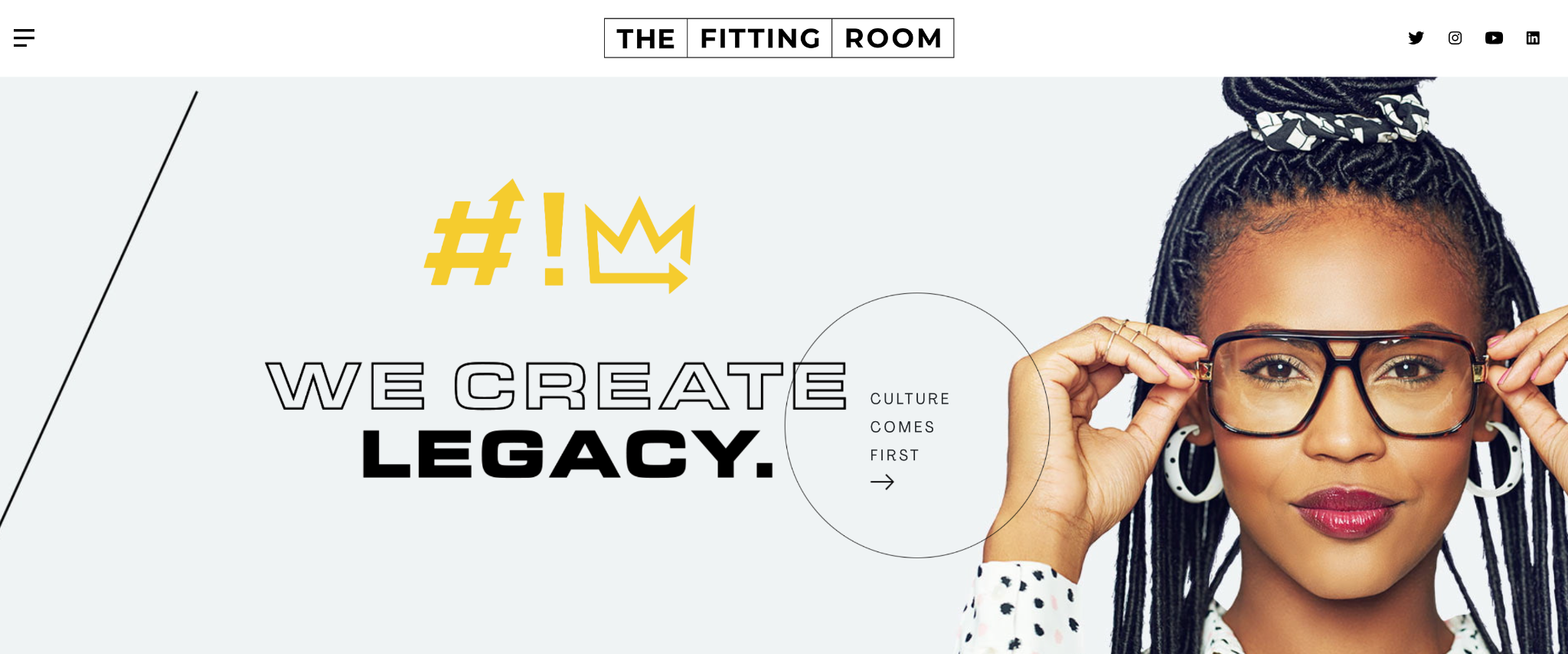
“When you think about a fitting room, it's a universal language," she explained. "We all go into a fitting room and we come out and we go, 'Oh my god, I look amazing.' Or, 'Oh my god, I need to get to the gym.' There is a profound, immediate reaction of some capacity. And that transformative reaction is exactly what we wanted to do for brands.”
One of the most striking things about Charlotte is her refusal to play the traditional agency game. While other founders chase massive headcount to boost their valuations, Charlotte has a strict, non-negotiable rule: The Fitting Room will never exceed 20 people.
"Once you get beyond 20 people in this day and age, it becomes churn. And we don't like to churn. We like to be in the detail. We like the vibes. I like still having the spending power to say, 'Let's just go and do this.'"
This commitment to agility and culture allows TFR to operate differently. When the Barbie movie was released, they didn't just tweet about it. Charlotte bought out a cinema for 150 clients. And...wait! That’s not all, for their Christmas party, they hired Stormzy’s house party venue, complete with a surprise DJ set by So Solid Crew, a real tattoo bar, and a tooth-gem station in the bathroom (after this very detailed description I suddenly wondered if one can experience retrospective FOMO). These kind of actions, prove this agency truly lives the pop culture they sell.
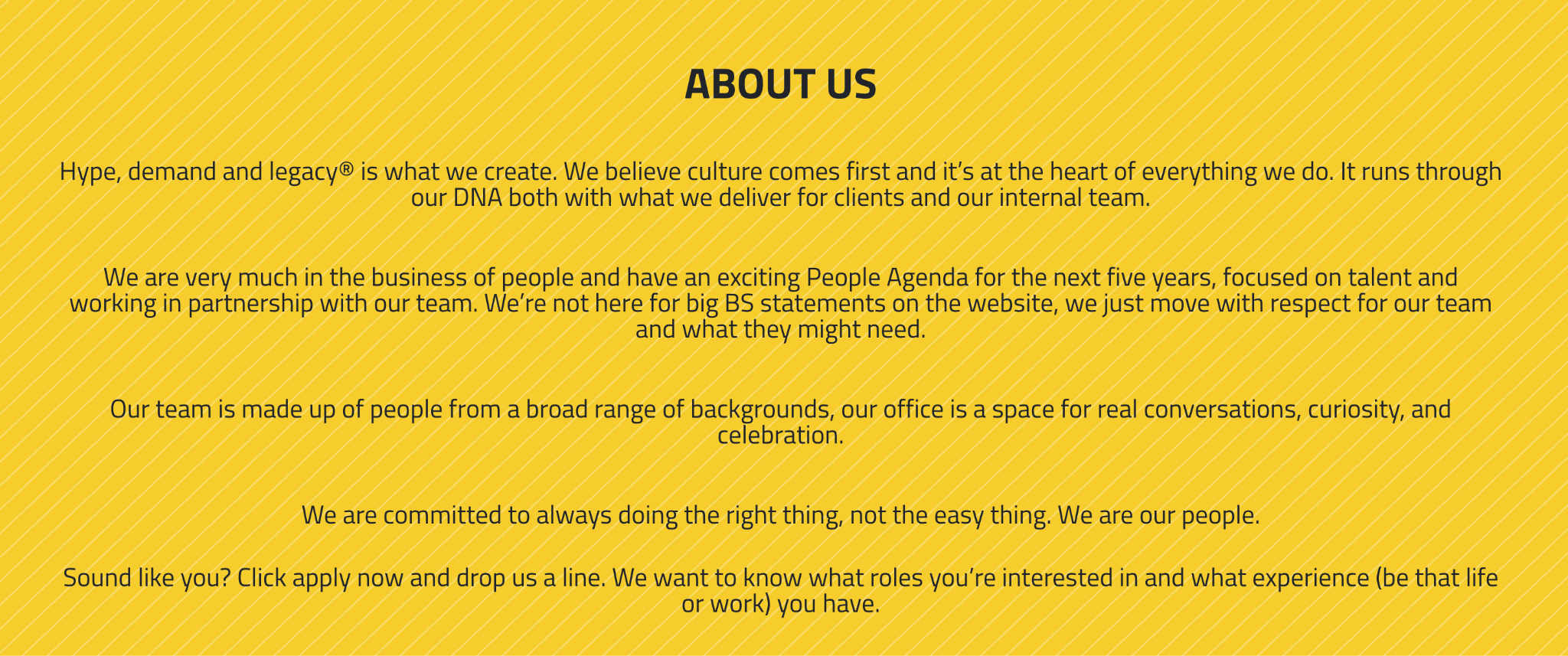
If that impressed you, there’s more to it. She truly cares about her team and the people around her, and she does not only prove it with a pat on the back or nice words. This woman ensures her team avoids the infamous agency burnout, TFR runs two incredible internal initiatives: People Agenda (where the company pays for the team to learn random skills like fire breathing or DJing during the dark winter months) and Don't Forget to Live (spontaneous summer trips, which recently included flying the entire team to Coachella).
Yet, she is quick to remind people that this culture is earned through relentless hard work, not given freely.
"First and foremost, we are a business. We only get to do Coachella because we stay highly profitable. At the beginning, I was in the trenches. I did the work, honest to God. You have to earn that freedom."
This anti-churn, hyper-focused philosophy also birthed their new strategy arm, The Corner Shop. Inspired by the South Asian community in the UK, it is built on the premise that traditional focus groups are inherently flawed. The Corner Shop is designed to mine those authentic, unpretentious human truths.
“When I fill out a questionnaire, I fill it out as the person I want to be," Charlotte noted astutely. "But when you go to your local corner shop, you're in your pajamas, you're annoyed because you forgot something, you're buying a bottle of wine. It's the real you. We are our most human in very specific spaces.”
At the core of TFR’s operations is a three-pillar framework: Hype, Demand, and Legacy. Fascinatingly, this methodology wasn’t born in a sterile business school lecture hall; it was inspired by the enduring cultural impact of The Notorious B.I.G.
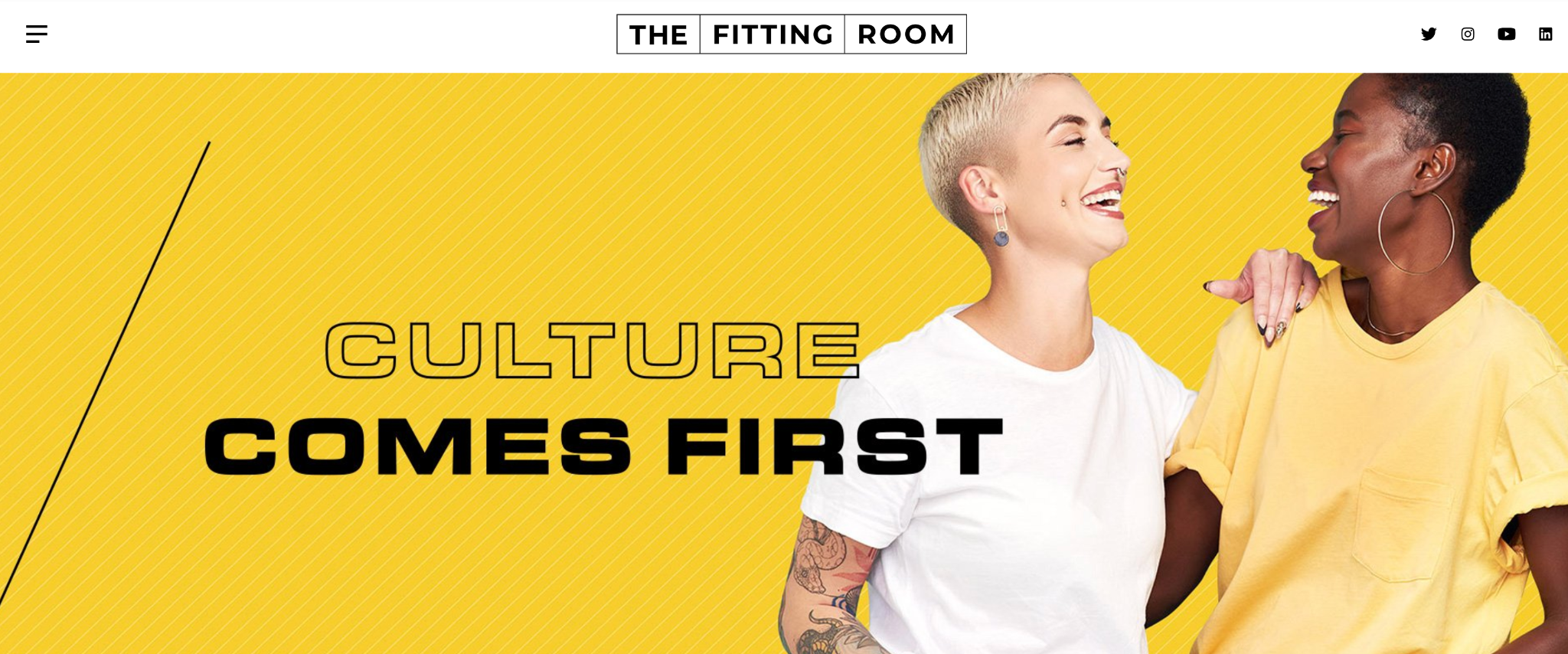
Charlotte looked at how Biggie Smalls changed the trajectory of brands like Cristal and Timberland, realizing that his impact survived long after his death. He generated initial hype, created tangible demand, and established a legacy where brands still activate around his image thirty years later. Here is how TFR applies this sequential framework to modern brand strategy:
Hype isn't about being the loudest person in the room, it's about infiltrating the right rooms. Charlotte's ultimate metric for Hype isn't a viral TikTok but it's penetrating gatekept communities and private WhatsApp groups.
She shared a brilliant example from their campaign for the bar group Be At One. TFR uncovered a simple, undeniable human truth: women make friends in nightclub toilets.
"Every single one of us has woken up the next morning and gone, 'Lisa from Be At One, Clapham.' And that is the person whose listen to you whine, or who hyped you up... We all have toilet stories. It is a universal thing for women."
Instead of a standard drinks promotion, they built a giant, beautifully decorated toilet installation in Soho called "Bathroom Besties."
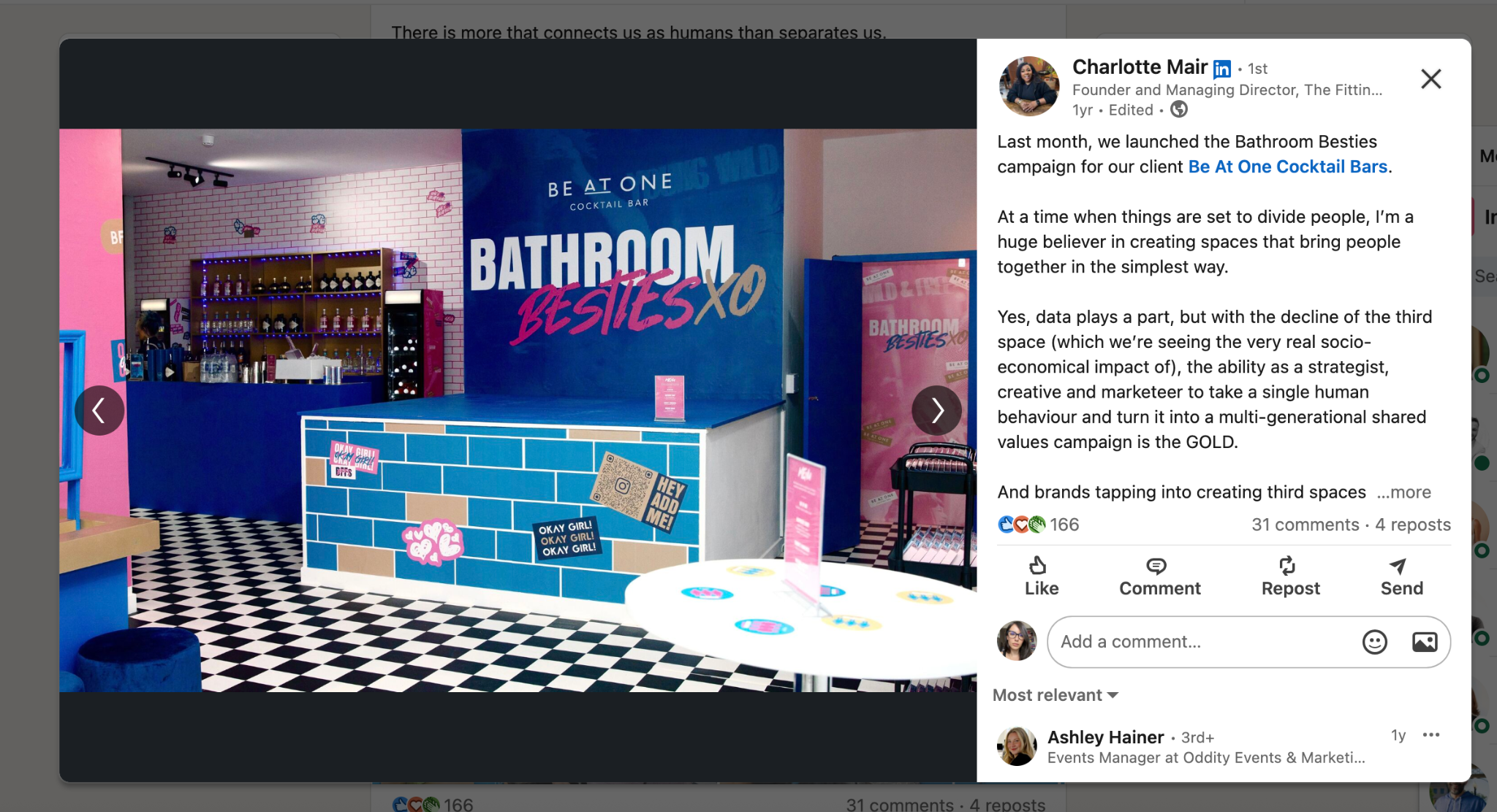
They offered non-product-centric activities like friendship bracelet making and speed dating, putting the consumer's lived experience first, and the product (cocktail masterclasses) second. It was a massive success because it understood the behavior of the audience perfectly.
Demand is about conversion, operations, and repetition. As Charlotte puts it, it’s the "boring bit in the middle that is actually the magic."
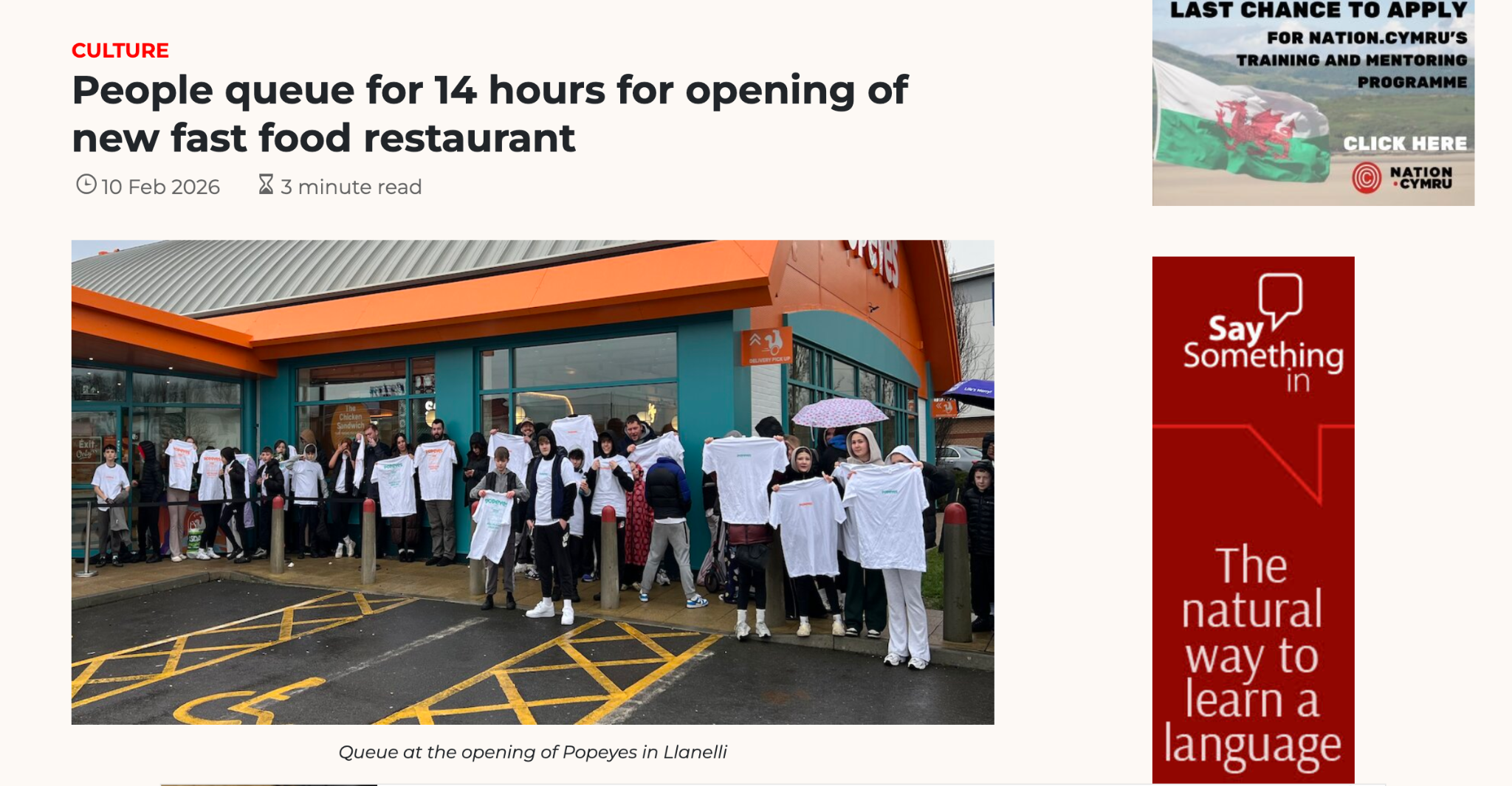
When TFR helped launch the massive US fast-food chain Popeyes in the UK, they didn't lazily rely on the brand's American equity. They localised it. They focused obsessively on a single, tangible metric: generating a physical queue for every new store opening. The queue became their primary marketing asset.
For another client, the Vietnamese restaurant group Pho, they targeted the celiac community, loudly highlighting that 98% of the menu was gluten-free.
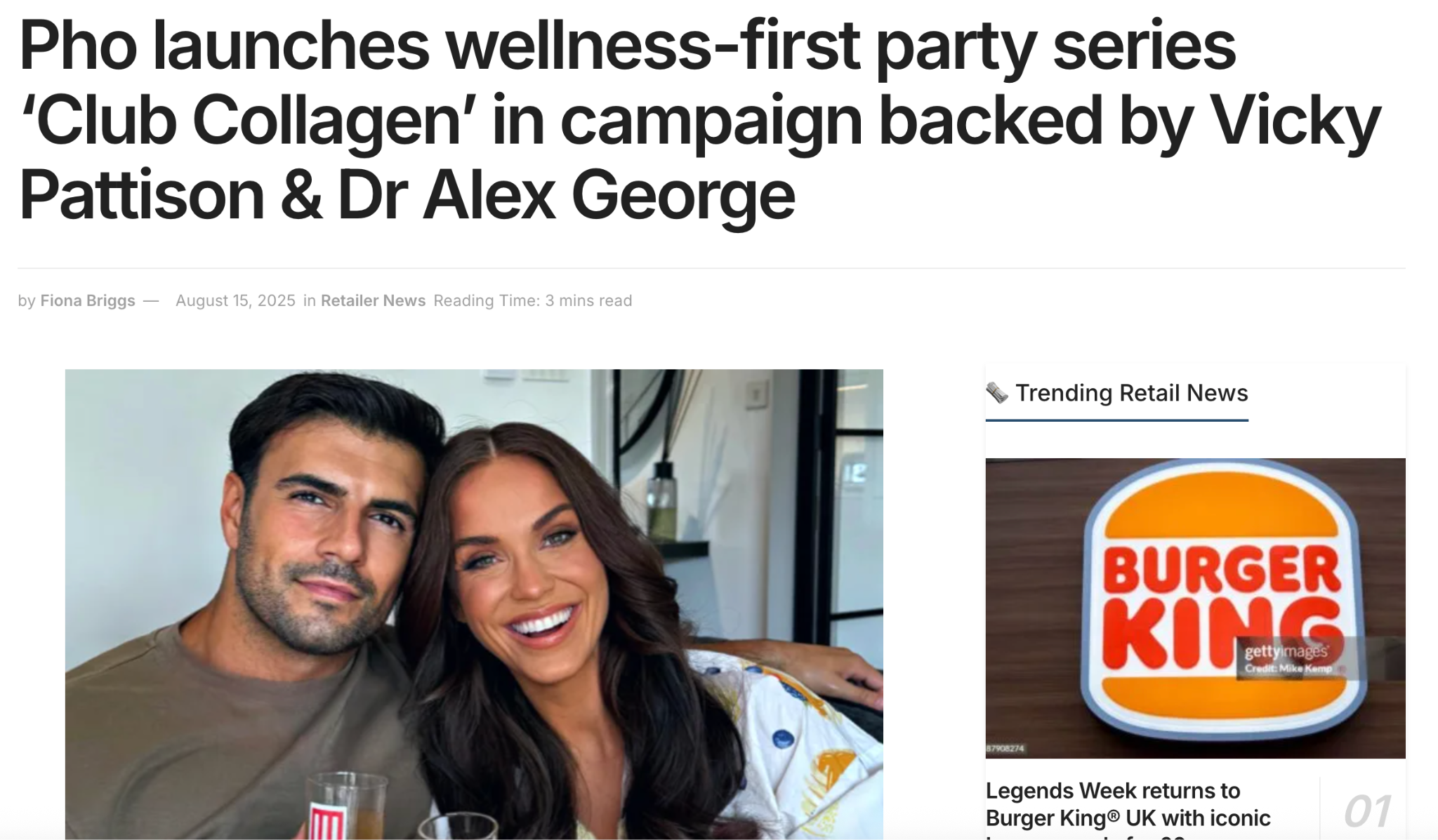
To drive demand for a new bone broth, they partnered with Dr. Alex George for health credibility, and reality star Vicky Pattison to make it fun, framing the broth as the "new golden shot." Through being radically specific with their audience, they achieved "absolute fame" within that niche, driving record, like-for-like sales during a brutal time for the hospitality high street.
Brilliant, just brilliant outside the box campaigning.
Legacy is the cultural footprint that outlives the campaign. When TFR launched a new site for the wine bar Vagabond, they created the world’s first "Prosecco ATM."
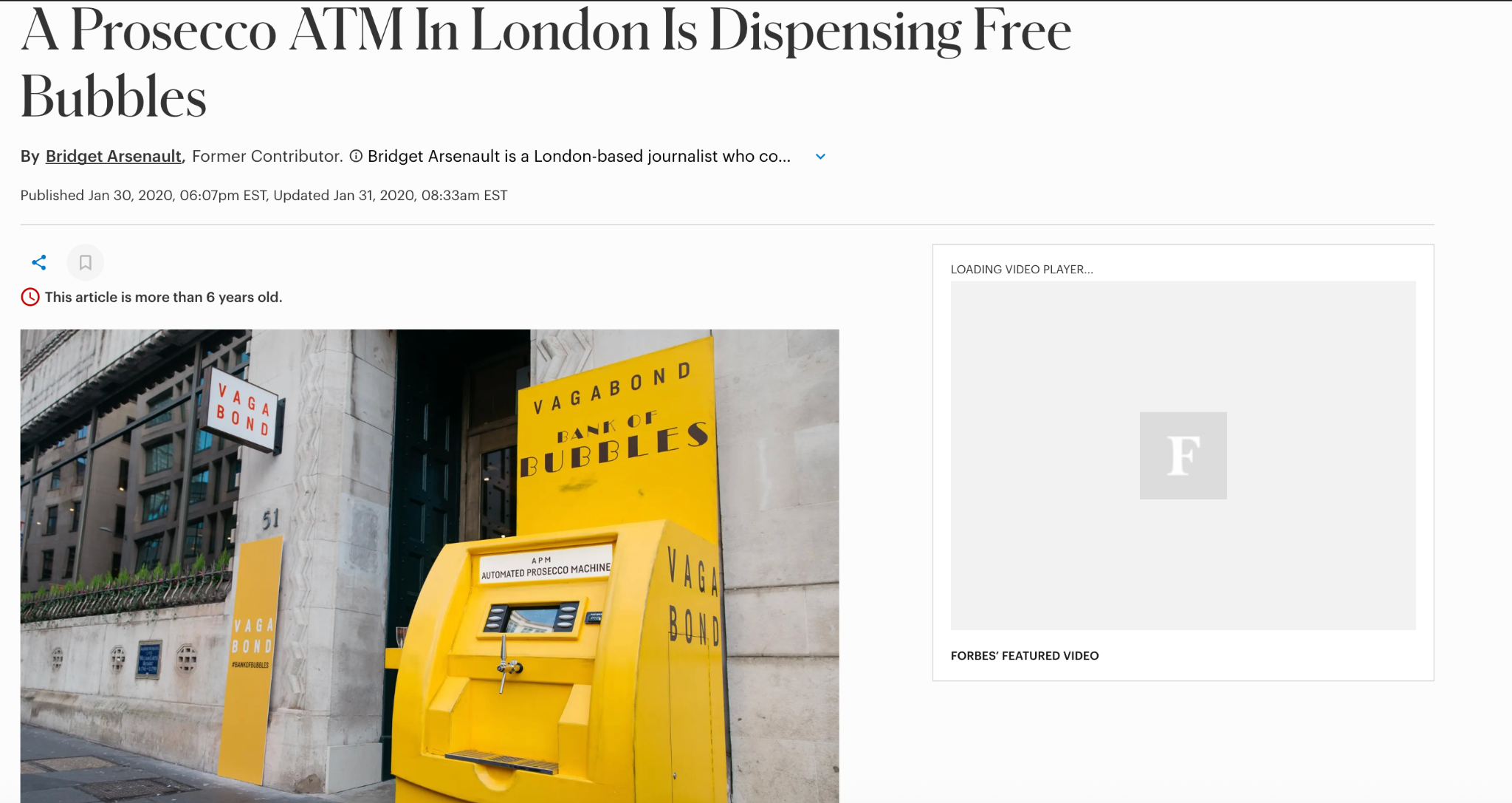
"It was in Forbes, it was everywhere. To the point where it was on the Jimmy Fallon show in the US... That is legacy. If you Google Vagabond for as long as that brand exists, that activation will come up as one of the top searches."
Can you actually imagine going to the nearest ATM to get cash to realise it actually dispenses booze? It's an activation that people won't forget.
Running a leading agency, hosting massive industry events, and content creation requires an intense level of personal discipline. Charlotte’s day-to-day life is a whirlwind of client meetings, pitching, and creative direction, but it is anchored by fierce intentionality.
She relies on boxing and intense Muay Thai training camps in Thailand to manage the inherent stress of the industry. But her most profound philosophy revolves around how she views the passing of time.
"I never want to get to the end of a day, a month, or a year and be like, 'Oh, what a waste of time.' Which is why I always tell everybody off for wasting January. If you get a good run at life, you get 72 Januaries. That's it."
For Charlotte, the start of the year is the ultimate currency, and she allocates hers with ruthless precision: 50% to clients, 20% to her team, and 30% to the high-level, visionary work that only she can do.
As our conversation naturally drifted toward the future of the marketing industry, Charlotte expressed deep concern over the current obsession with Artificial Intelligence and the rise of empty personal branding.
In academia, we constantly battle students attempting to use AI to bypass the hard work of research and critical thought. Charlotte sees the exact same dangerous trend happening in the corporate world.
"The thing about AI is... it gives people a false sense of intelligence that isn't real. We are glorifying people on the internet because they can write a good hook on LinkedIn now, without having to have actually done anything. The hard work matters still more than anything."
She warned that AI not only relies on biased, outdated data, but it actively removes critical thinking. Furthermore, she rightly questioned the lack of industry dialogue regarding the massive environmental impact and water consumption required to run these AI factories.
Instead of relying on AI dashboards for consumer insights, Charlotte looks to the comment sections of her TikTok videos. She calls it soft data. When she posted a critical video about Monster Energy launching a new drinks range called "Flirt," it garnered 1.2 million views and thousands of comments.
"It gave me all of this soft data to look at... people were saying, 'I would always choose Red Bull because of this,' or 'Actually, I don't need a girly version called Flirt because I already drink the white and pink ones.' Most people are paying hundreds of thousands of pounds for that information through focus groups, and it's still skewed data. On social media, people are going to come with their truth."
We closed our conversation by discussing leadership, resilience, and facing systemic barriers as a female founder. Charlotte is refreshingly pragmatic. She doesn't deal in empty empowerment platitudes; she deals in reality.
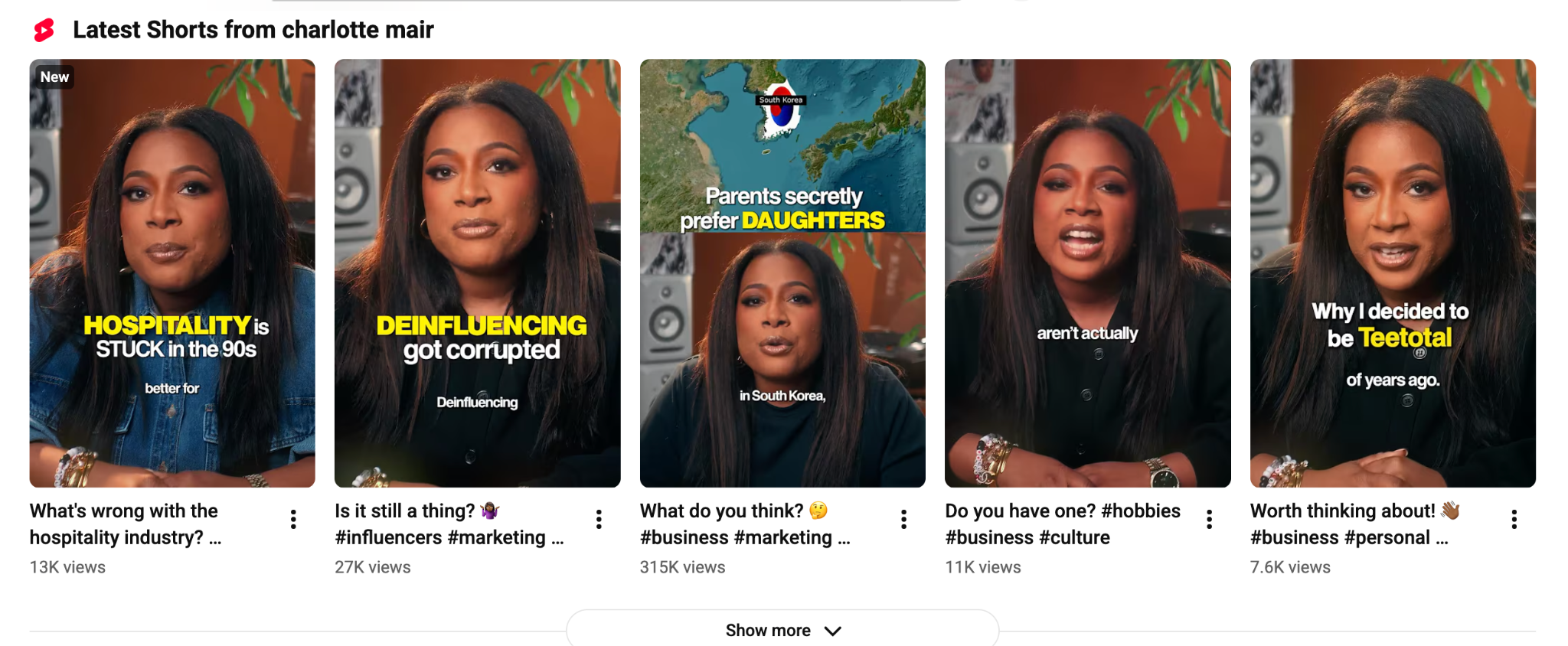
She strongly advocates that every founder needs therapy. "We normally start a business because we've got a chip on our shoulder," she noted, explaining that in order to reach the next level of success and scale, you have to unpick the personal issues and survival instincts driving that initial hustle.
And when it comes to facing the corporate world, her advice is brilliantly subversive. In a recent video, she stated that every young Black professional needs "an old white dude in their corner." It sparked controversy online, but she firmly stands by the strategy.
"Some of my biggest cheerleaders have been middle-class, older white men. They are the people that wrote the contracts. They know the loopholes in every contract because they are the blueprint. We may not like all layers of that, but you do have to understand the game if you want to play it."
It is a striking piece of advice that speaks to her overarching philosophy. You have to master the existing system before you can dismantle it or build your own.
I also have to mention how incredibly cool her Substack newsletter, The Digress, is. She is exactly as witty in person as she is in her text. I found myself deeply relating to her insights on how women are currently being subtly pulled back toward traditional ideas and roles. We bonded over the utter absurdity of the fashion and beauty industries trying to oversell us unneeded stuff, like face shapewear, by manufacturing new insecurities just to lure people back to a website.
When discussing female leadership, she was equally direct. She expressed skepticism regarding the term female empowerment, viewing it primarily as a commodified marketing tool.
Instead, she focuses on providing people the tangible space to grow. She insists that men must be included in conversations about female ambition and societal change, noting,
"If you alienate 50% of the people that you need involved... nothing is changing."
With March being Women’s Month, I knew I wanted to write an editorial about someone who truly embodies growth and experience from an actionable point of view, not just through pretty wording. Charlotte Mair's journey from a £17.22 bank balance to a cultural powerhouse is a testament to the power of authenticity, strategic focus, and a relentless commitment to excellence.
She is a force of nature precisely because she refuses to operate in an echo chamber. She actively builds safe spaces in her newsletters to invite differing opinions and balances her personal biases with real-world data and a deep empathy for the everyday consumer. She understands that in marketing, and in life, you get out exactly what you put in.
"If you want a community to turn up for you, you have to turn up for them... I will give people more than they give me. That's in my core."
If you are looking for a masterclass in how to build a legacy, look no further than The Fitting Room. Just remember her golden rule: you only get 72 Januaries. Don't waste a single one of them.
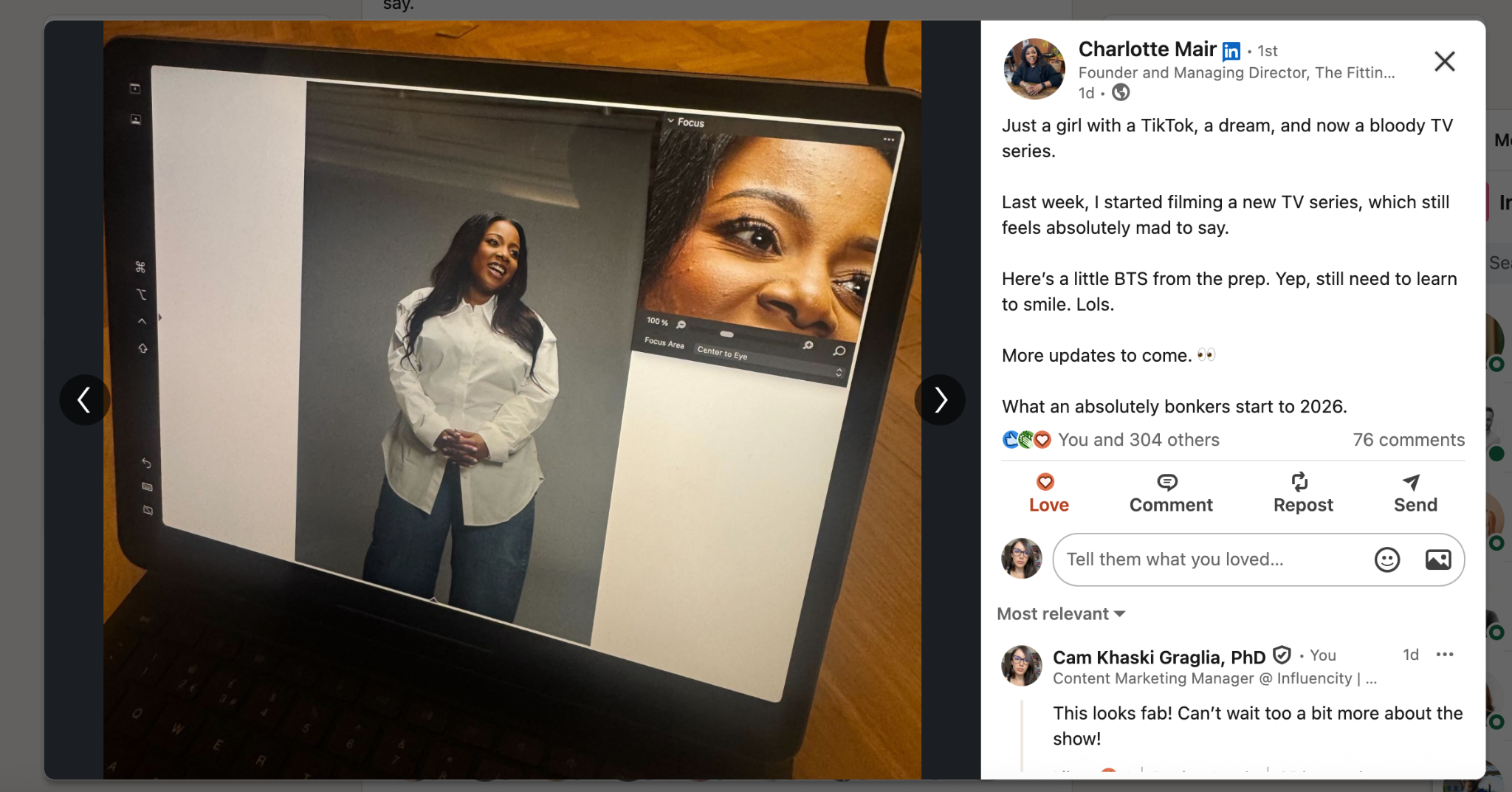
Also, now that the cat is out of the bag, Charlotte is currently filming a new TV series, so keep an eye out for that alongside her upcoming YouTube marketing show launching in Q3.








%20and%20How%20Can%20They%20Benefit%20Your%20Brand%20article.jpg?length=628&name=What%20Are%20Key%20Opinion%20Leaders%20(KOL)%20and%20How%20Can%20They%20Benefit%20Your%20Brand%20article.jpg)






.png?length=628&name=Pop-up%20image%201200%C3%97800@1x%20(1).png)