

Today, marketing teams face a recurring problem: choosing between over-hyped, rigid influencer marketing software that underdeliver on data, and overcomplicated enterprise systems that trap budgets in annual contracts.
If you are comparing IMAI (InfluencerMarketing.ai) and Later Influence (formerly Mavrck), you are looking at two very different approaches to influencer marketing:
While both tools have notable strengths, they also carry significant operational bottlenecks. This comparison breaks down how IMAI and Later Influence perform head-to-head, and why growing brands are choosing Influencity as the smarter, more flexible alternative.
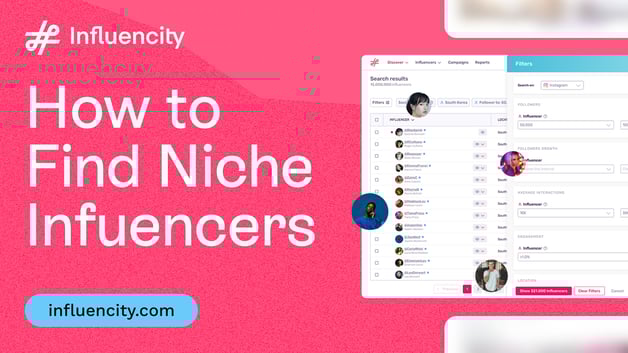
IMAI tracks profiles across Instagram, TikTok, YouTube, Twitch, and LinkedIn. Its primary advantage is its Natural Language Search Engine. Instead of manually building complex filter chains, users can type direct search prompts to generate targeted lists. At Influencity, we also have an AI assistant that helps you filter and discover the right influencers for you.
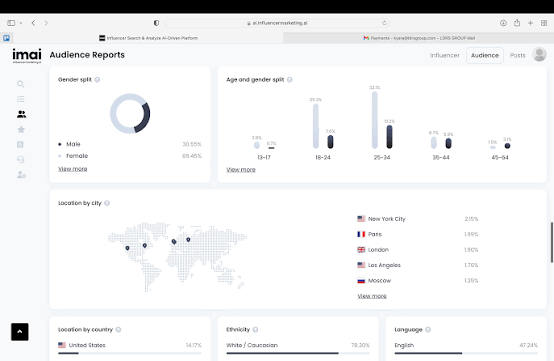
Processing these massive datasets can lead to noticeable dashboard lag and slow load times. Furthermore, its platform tracking relies heavily on exact public metadata. If a creator fails to tag your handle or use your exact campaign hashtag, the tool receives a low tracking rating of 2 out of 5, often missing the content.
Following Later’s acquisition of Mavrck, the influencer index remains relatively small at roughly 10 million creator profiles.
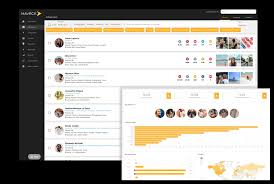
For global agencies or brands operating in hyper-niche markets, a 10M+ database is a major limitation. Users frequently report running out of viable, niche creators, resulting in audience saturation and declining campaign returns.
/influencer-database-alternating-content-one-image-composition%20OPT.webp?width=1728&height=1080&name=influencer-database-alternating-content-one-image-composition%20OPT.webp)
Instead of restricting you to a tiny index or overwhelming you with slow, lagging search queries, Influencity provides a highly reliable, open-network database of 350 million+ creator profiles across Instagram, YouTube, and TikTok.
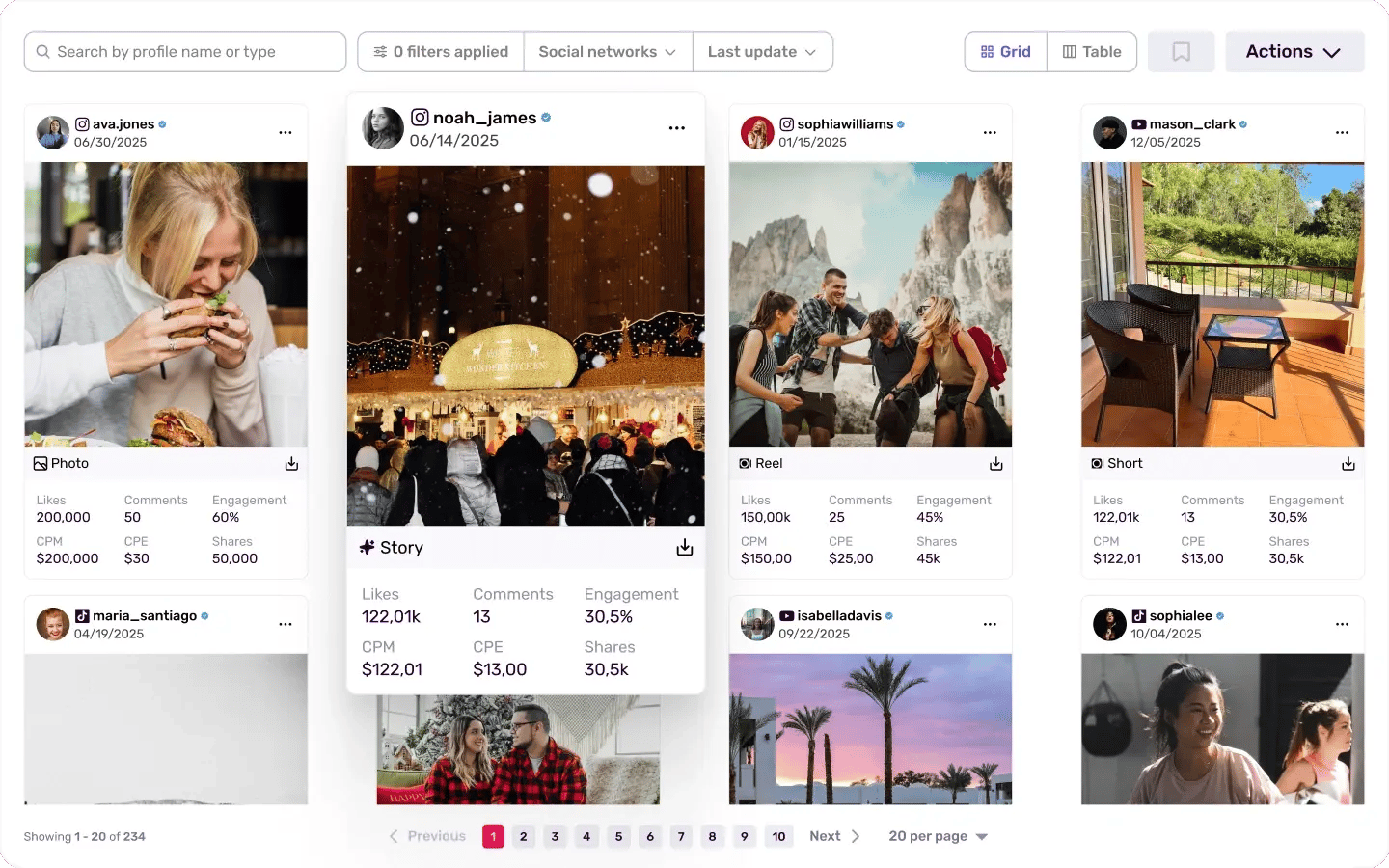
We also offer an omnichannel multi-profile linking cause creators operate across multiple channels. While IMAI and Later treat different social media handles as separate, disjointed records, Influencity natively links a creator's Instagram, TikTok, and YouTube channels under a single creator card. This gives your team an aggregate, cross-channel view of performance and prevents duplicate outreach.
IMAI excels at performance-driven operations. It includes six workspaces targeting and generative AI tracking (LLM Visibility). Yet, people don't find it good enough for the price they are paying for it, along to its restrictive conditions and terms of usage.
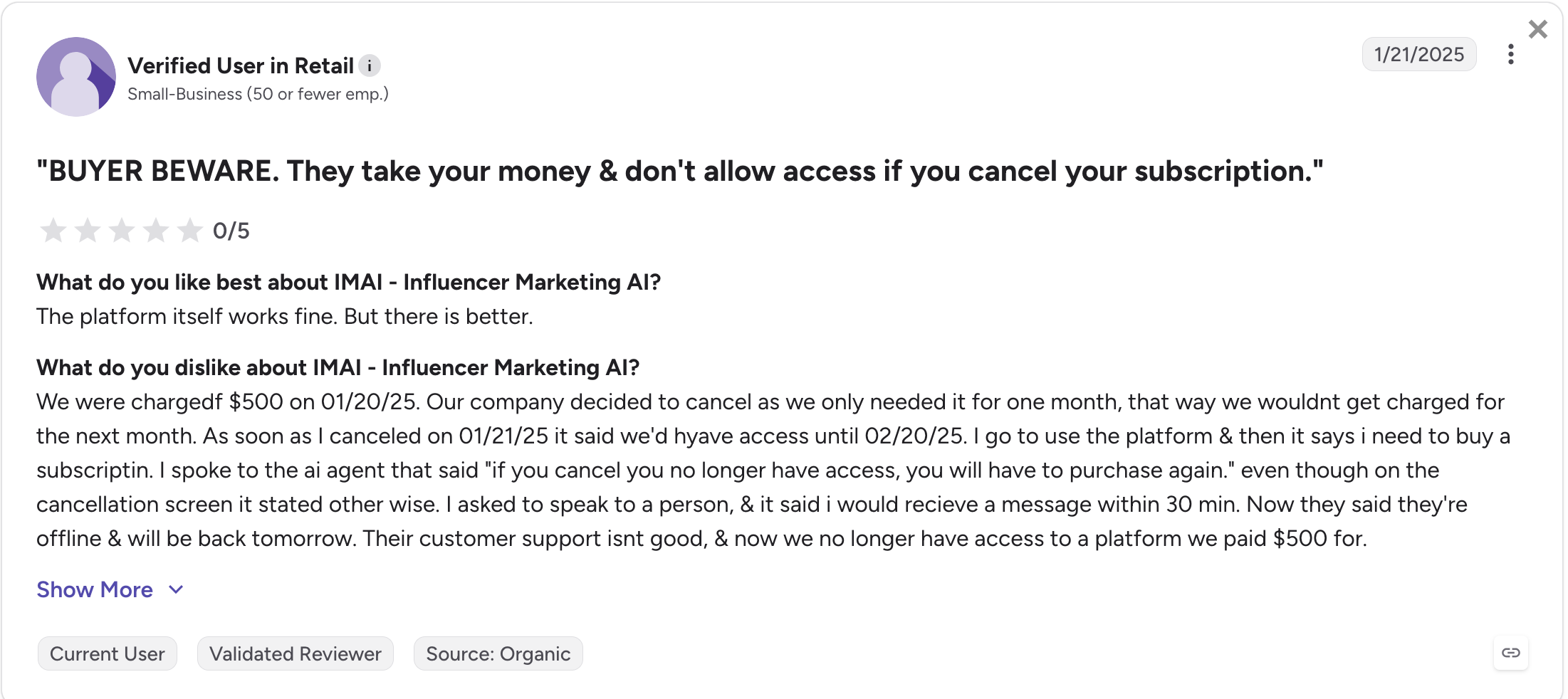
Read full review.
The sheer volume of features creates a steep learning curve. Small and mid-market teams often find themselves paying for advanced tools (like AI agent customer support or voice search monitoring) that they do not use.
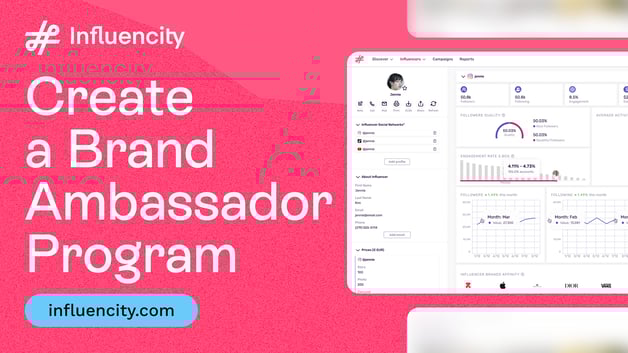
Later Influence provides pre-built workflows for ambassador programs, product gifting, and consumer surveys.
Reviewers frequently call the platform's campaign setup "overcomplicated" and "not great to use". A primary point of friction is outreach: because Later relies on highly automated system messages, influencers frequently flag the emails as automated AI bots, leading to low response rates.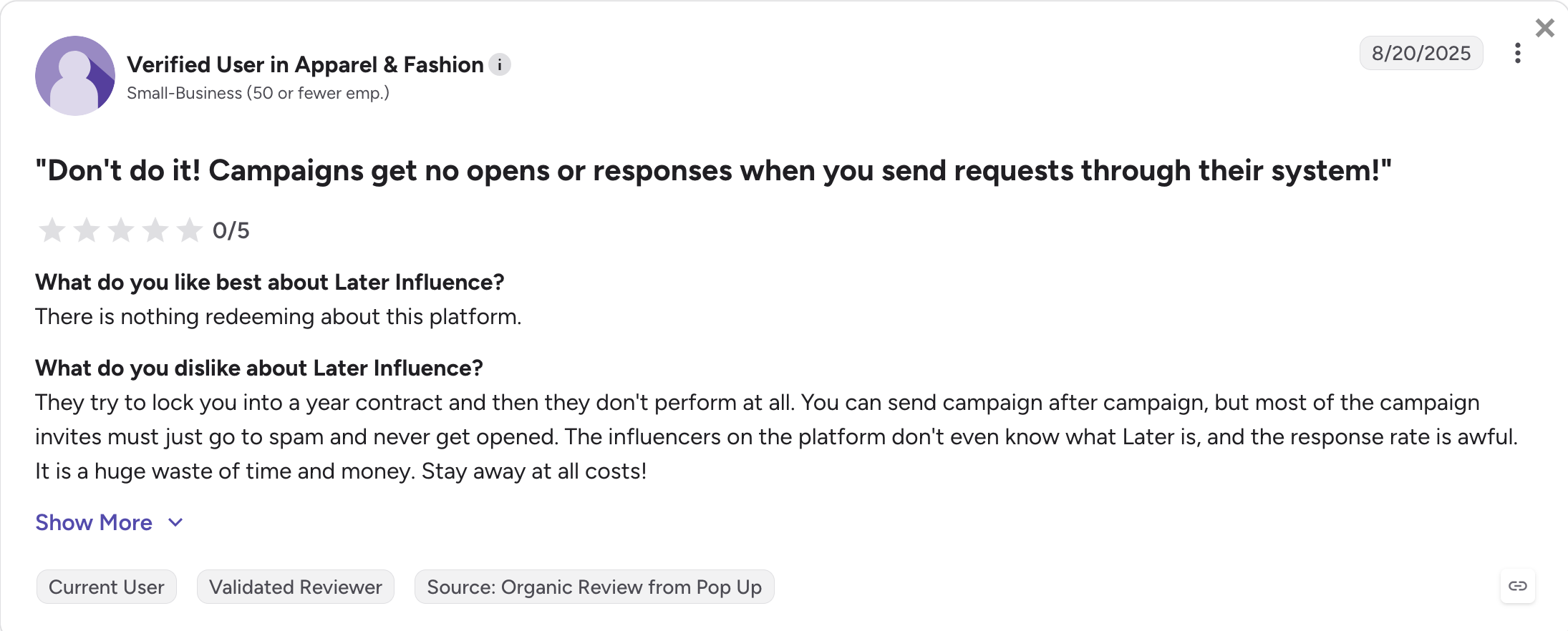
Read full review.
Influencity offers a clean, highly visual campaign builder combined with a fully customizable Influencer Relationship Management (IRM) system. You can create custom fields to track variables like shipping addresses, clothing sizes, and communication logs in one centralized workspace.
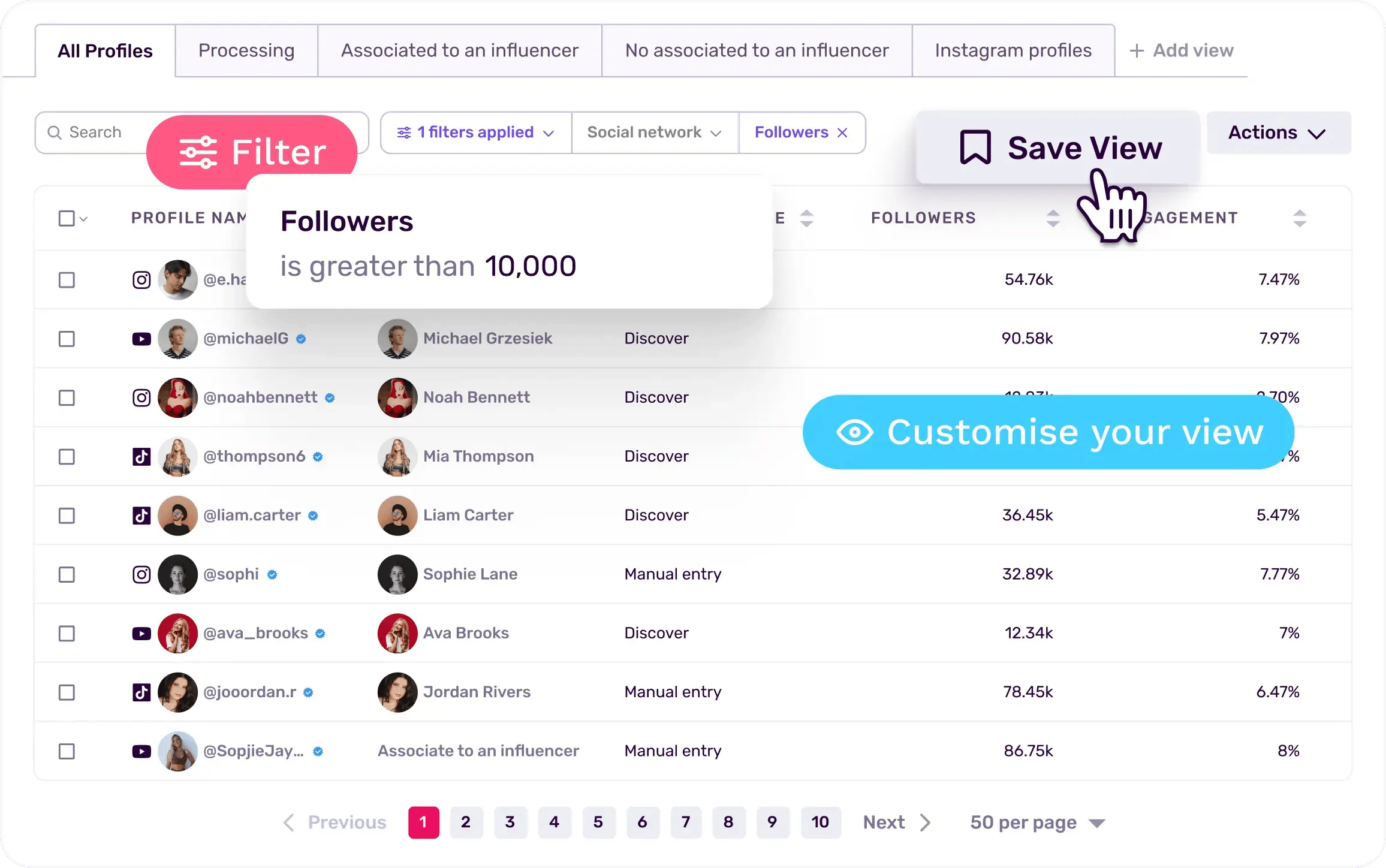
When building a creator roster, their follower bases naturally intersect. If you hire five creators within the same niche, you assume you are reaching five distinct audiences, but follower overlap often wastes up to 40% of your budget on redundant impressions.
Influencity automatically calculates the exact unique versus shared follower percentage across your creator lists, mathematically securing maximum unique reach before you invest a single dollar.
One of the biggest hidden costs in influencer marketing is tool sprawl, paying for separate subscriptions to manage influencer databases, schedule organic social posts, run social listening, and moderate direct messages.
IMAI is highly effective for outward influencer activation, but it lacks native social media publishing, organic feed planning, and community inbox moderation. Teams are forced to pay for external social suites like Hootsuite or Buffer to publish brand content.
While Later has a social scheduler, its scheduling software and the enterprise-level "Later Influence" module are treated as separate, poorly integrated systems. Navigating between the content scheduler and creator workflows remains clunky and confusing.
Influencity eliminates tool sprawl by natively integrating a complete Social Media Hub into your creator workspace.
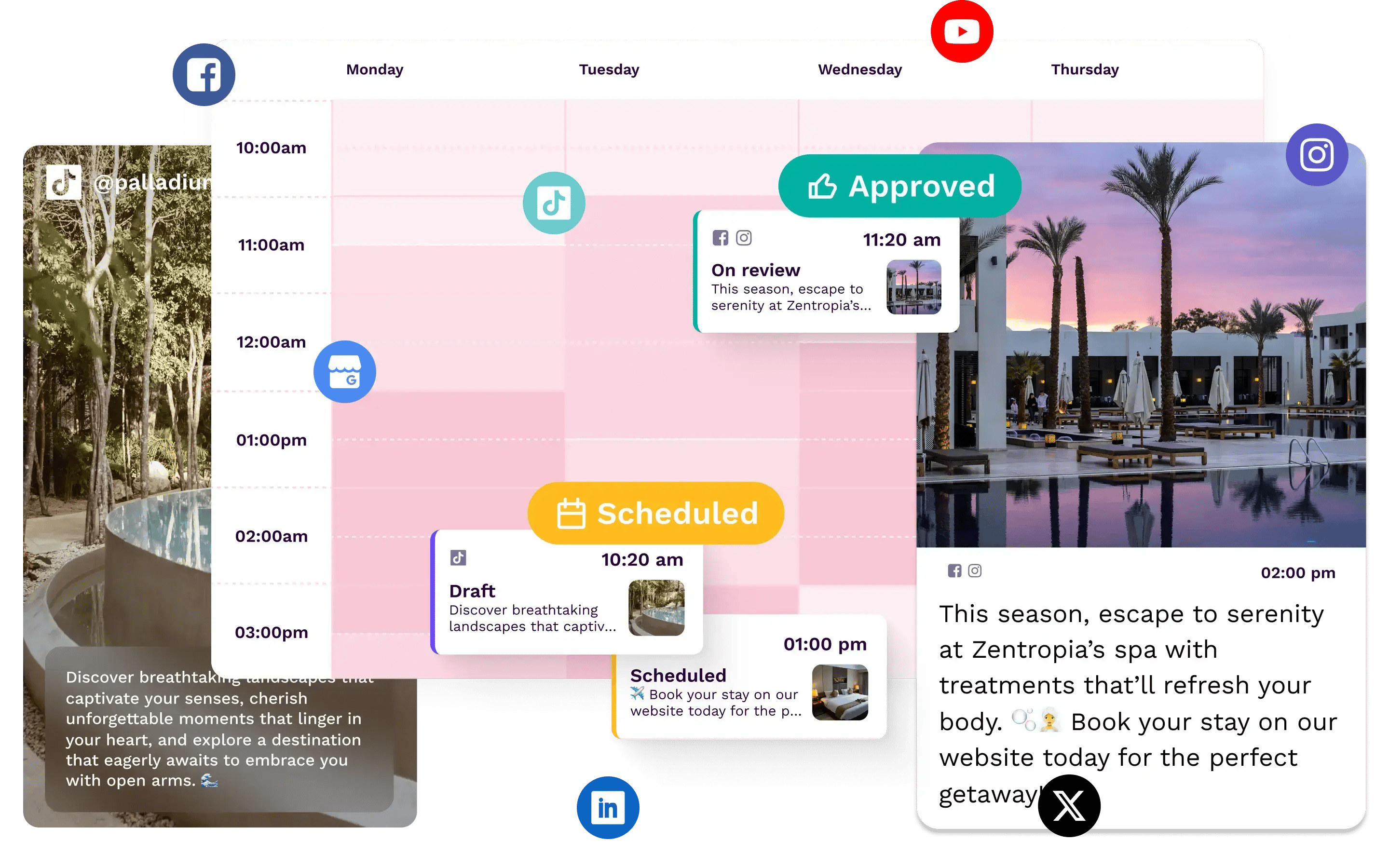
Influencity extends beyond influencer marketing with a comprehensive suite of social media management tools. Teams can manage direct messages, comments, and creator mentions through a unified social media inbox, visually plan and schedule organic content across major social networks, monitor ads running across platforms, create and optimize branded link-in-bio pages, and access in-depth social media analytics from a single dashboard.
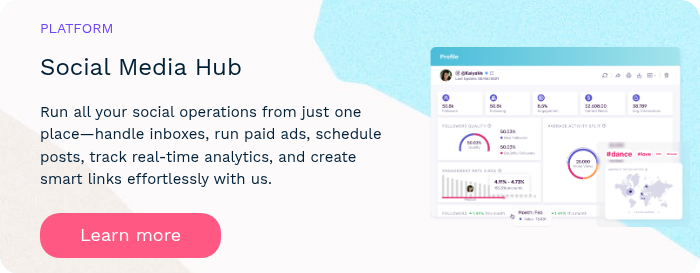
The platform also enables competitor benchmarking through social listening, allowing brands to monitor competitor mentions, measure share of voice, and track industry trends. By bringing owned media, paid activity, influencer campaigns, and competitive intelligence together in one place, Influencity eliminates the need to switch between multiple tools and provides a unified view of social media performance.
|
Core Capability |
IMAI |
Later Influence |
Influencity |
|
Open Network Creator Database |
✔ 400M+ |
✖ 10M+ Index |
✔ 400M+ Open |
|
Pre-Campaign Audience Overlap |
✖ Missing |
✖ Missing |
✔ Yes (Native) |
|
Highly Customizable CRM Fields |
✖ Basic Vetting |
✖ Structured Only |
✔ Yes (Custom IRM) |
|
Omnichannel Profile Linking |
✖ Handles are split |
✖ Handles are split |
✔ Yes (Single card) |
|
Outreach System Integrity |
✔ AI Sequencing |
✖ Flagged as spam bot |
✔ Personalised bulk |
|
Unified Inbox & Scheduling |
✖ Missing |
✖ Disjointed modules |
✔ Yes (Unified Hub) |
If you are strictly focused on specialized machine learning and have the budget to sustain high-volume transaction fees, IMAI's complex workspaces may suit your needs. If you are a massive Fortune 500 consumer brand requiring heavy, agency-managed services, Later Influence is a traditional path.
However, if you want an agile, data-driven system that scales with your business, eliminates tool sprawl, and does not trap your budget in annual contracts, Influencity is the clear winner. Thanks to combining a massive 400M+ database, built-in Social Media Inbox, native content scheduling, and mathematically backed Audience Overlap analysis, Influencity provides an unmatched ROI engine at mid-market pricing.
According to verified G2 reviews, some users report that Later Influence's highly automated outreach emails can feel impersonal. As a result, creators may perceive them as automated messages, leading to lower response rates. Influencity helps brands personalize creator communication while centralizing every conversation, negotiation, and campaign update inside its built-in Influencer Relationship Management (IRM) platform.
Influencity provide access to database of more than 350 million public creator profiles, allowing brands to discover influencers across Instagram, TikTok, and YouTube. Later Influence works with a significantly smaller curated creator network of around 10 million profiles, which may limit discovery opportunities for global or highly niche campaigns.
Yes. Influencity combines AI-powered creator discovery, Influencer Relationship Management (IRM), campaign execution, audience overlap analysis, Social Listening, content tracking, reporting, and social media management in one platform. Instead of switching between multiple tools, brands and agencies can manage the entire influencer marketing workflow from discovery to ROI measurement in a single workspace.
If building lasting creator partnerships is a priority, Influencity offers a dedicated Influencer Relationship Management (IRM) where teams can centralize contacts, conversations, pricing history, custom fields, campaign participation, contracts, and internal notes. This makes it easier to nurture long-term relationships instead of treating every collaboration as a one-off campaign.
Yes. One of Influencity's unique capabilities is its Audience Overlap Analysis, which calculates how much two or more creators share the same followers before a campaign launches. This allows brands to maximize unique reach, avoid paying for duplicate audiences, and optimize media investment before committing campaign budgets.
Absolutely. Influencity combines creator discovery, campaign management, creator CRM, Social Listening, automated reporting, social media publishing, unified inbox management, ecommerce integrations, and analytics within one platform. This reduces tool sprawl, lowers software costs, and gives marketing teams a single source of truth for all influencer marketing activities.
Many brands outgrow platforms that focus on only one part of the influencer marketing process. Some need more flexibility than enterprise software provides, while others want to avoid managing campaigns across multiple disconnected tools. Influencity offers a scalable alternative by combining AI-powered discovery, creator relationship management, campaign execution, audience intelligence, Social Listening, and reporting in one intuitive platform, helping teams work faster while maintaining complete visibility over every campaign.









%20and%20How%20Can%20They%20Benefit%20Your%20Brand%20article.jpg?length=628&name=What%20Are%20Key%20Opinion%20Leaders%20(KOL)%20and%20How%20Can%20They%20Benefit%20Your%20Brand%20article.jpg)