

A brand’s reputation is one of its most valuable, yet fragile, assets. In today’s hyper-connected world, threats to that reputation are no longer confined to isolated silos. They exist simultaneously in the digital realm, physical locations, and across third-party media ecosystems, creating a complex web of brand vulnerabilities.
Businesses that fail to protect all fronts risk not only immediate financial loss but also the erosion of customer trust, which can take years to rebuild. Modern brand management demands an integrated approach that treats brand protection, risk mitigation, and brand safety in influencer marketing as a unified, non-negotiable strategy.
Digital transformation has given brands unprecedented opportunities to connect with global audiences. However, it has also expanded the attack surface for malicious actors and operational missteps.
Modern brand risks generally stem from three intersecting pressure points:
These vulnerabilities rarely stay contained. A data breach online can compromise physical access systems, while an unvetted public spokesperson or influencer partner can trigger a viral reputation crisis in minutes.
Protecting your brand online requires constant vigilance across two distinct fronts: your owned infrastructure and your earned media network.
The baseline begins with hardening your technical foundation:
Beyond your firewalls, your reputation is shaped by the third parties representing your brand. Working with external creators, affiliates, and ambassadors amplifies reach, but without proper influencer vetting processes, it exposes brands to severe backlash.
Prior to entering campaign agreements, brands must audit creators for:

A brand's promise isn't just delivered through a screen; customers experience it in physical locations. Whether it's a flagship retail store, a corporate office, or a distribution center, these spaces are tangible representations of your brand. A security incident in one of these locations, from theft to unauthorized access, can undermine customer confidence and employee morale.
This is why a robust approach to physical security is an important part of brand protection. Modern security platforms can bring together technologies such as video surveillance, access control, and license plate recognition, giving organizations greater visibility across their physical environments and helping them respond more effectively to security events. Protecting these spaces means safeguarding assets while reinforcing the brand's commitment to safety and reliability.
The most effective brand protection programs break down traditional silos between IT security, legal, physical operations, and marketing teams.
| Department | Primary Focus | Cross-Functional Risk | Unified Strategy |
| IT Security | Data integrity, network protection | Stolen devices, phishing via partners | Enforce zero-trust architecture & SSO |
| Physical Ops | Facilities, retail security, access | Physical breach leading to network access | Integrate physical security logs with IT monitoring |
| Marketing & PR | Campaigns, creator partnerships, voice | Off-brand partner behavior, fake accounts | Implement automated influencer discovery and vetting tools |
| Legal & Compliance | Contracts, regulatory disclosures | FTC non-compliance, IP theft | Standardize partner agreements & compliance tracking |
When events cross systems, such as an off-hours physical access attempt combined with an unfamiliar IP login, a unified command structure allows teams to respond before damage escalates.
While traditional cybersecurity tools monitor network logs, managing reputation risks across social networks requires specialized data intelligence.
As influencer marketing scales from ad-hoc campaigns into an enterprise growth channel, manual vetting becomes a major vulnerability. Influencity provides the infrastructure required to scale creator partnerships without compromising brand safety.
Influencity’s AI-powered analytics evaluate millions of creator profiles in real time. Before signing a contract, brand safety teams can inspect:
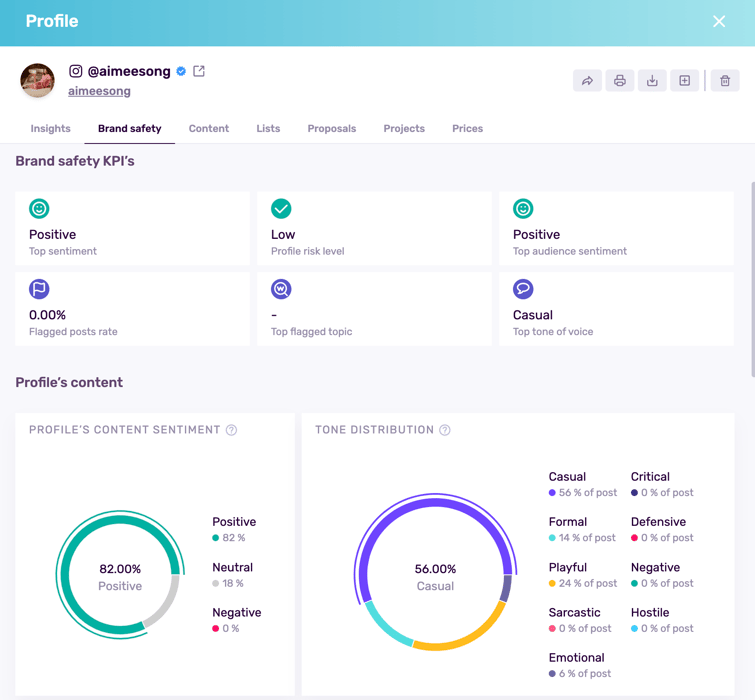
Fragmented communication across email threads and spreadsheets creates operational gaps. Influencity centralizes the entire lifecycle through a structured influencer campaign management system:

Resilience is not built during a crisis, it is built through proactive infrastructure, clear protocols, and data-driven decision-making.
Unifying digital infrastructure, physical security, and creator network vetting, organizations turn risk management from a reactive cost center into a sustainable competitive advantage.












%20and%20How%20Can%20They%20Benefit%20Your%20Brand%20article.jpg?length=628&name=What%20Are%20Key%20Opinion%20Leaders%20(KOL)%20and%20How%20Can%20They%20Benefit%20Your%20Brand%20article.jpg)











.png?length=628&name=Pop-up%20image%201200%C3%97800@1x%20(1).png)